
Dallas Mold Air Sampling
The primary IAQ-related scope is mold spore-trap air sampling. It collects airborne fungal spores onto a selected medium for laboratory analysis at a documented location and time.
Mold spore sampling is not VOC, particulate-matter, general-allergen, or asbestos testing. It does not measure every pollutant or provide comprehensive indoor air quality analysis, and the requested method, locations, count, laboratory, and reporting level must be confirmed before work.
See the broad DFW air-quality hub or the detailed mold air-sampling service for the primary scope.
How the Scope Is Selected
The property question, history, visual and moisture context, access, and intended use inform reasoned sampling locations. An indoor/outdoor comparison may be appropriate for some questions, but is included only when confirmed.
Surface mold sampling and moisture/humidity inspection are separate methods that may be discussed when they fit the property question. They are not included automatically and must be scoped for the property question.
Written findings identify the agreed work, submitted samples, laboratory information, and limitations. Results do not diagnose symptoms, prove exposure or causation, or establish health effects.
When a Focused Sample May Fit
A property owner may ask about selected mold air sampling when:
- odors, visible conditions, or moisture history create a focused property question;
- an assessment needs selected air-sample context alongside visual or moisture observations; or
- a transaction or other property decision calls for documented findings within a defined scope.
What Results Can and Cannot Establish
The report describes submitted samples, documented locations and times, laboratory findings at the level supported by the method, and any comparison context included in the scope. Findings can add property context when considered with visual observations, moisture information, and history.
Results cannot measure every pollutant, characterize every area, locate every concealed source, establish a whole-property condition, diagnose symptoms, prove exposure or causation, or establish health effects. Health questions belong with a qualified healthcare provider; repair, remediation, and occupancy decisions belong with appropriate property professionals.
Separate Categories and Methods
Mold air sampling is distinct from surface mold sampling and moisture/humidity inspection. Each uses a different method and answers a different property question; no combination is a universal IAQ test.
These mold and moisture methods are not a substitute for separately scoped environmental services. No additional testing category is implied by a mold air sample.
Have a Dallas property question? Read the detailed mold air-sampling service, review the DFW hub, or call 940-240-6902 to discuss scope.
Related reading
For additional decision-making context, see our guide to situations that may prompt an air-quality testing conversation and our questions to ask when comparing testing providers. Confirm the method and scope for the property rather than relying on a general checklist.
Areas We Serve
Frequently Asked Questions
How much does mold air sampling cost in Dallas?
Pricing depends on the agreed property scope, selected locations, sample count, method, laboratory analysis, access, and timing. Call 940-240-6902 for a property-specific quote.
What does a Dallas mold air sample measure?
A selected spore-trap sample provides laboratory information about captured mold-related material at a documented location and time. It does not measure every pollutant or provide comprehensive IAQ analysis.
Can air sampling detect mold behind walls?
Air sampling cannot reliably locate concealed mold or establish conditions inside an inaccessible assembly. Visual, moisture, property-history, and targeted investigation may provide additional context.
Is an outdoor comparison always included?
No. An indoor/outdoor comparison may be appropriate for some questions, but it is included only when the locations, timing, method, and intended use are confirmed.
Does mold air sampling test all indoor pollutants?
No. Mold spore sampling does not measure every pollutant and is not comprehensive indoor air quality analysis. Other categories or methods must be separately scoped and confirmed.
Can results diagnose symptoms or prove exposure?
No. Laboratory findings do not diagnose symptoms, prove exposure or causation, or establish health effects. Discuss health concerns with a qualified healthcare provider.
Discuss Mold Air Sampling
Contact us for current scheduling availability.
Related Real Inspection Cases
Mold Found Below a Leaking Mini-Split
A commercial client in Waco, Texas requested a limited mold assessment after an employee raised concern about possible mold in a work area. The assessment focused on two rooms. In the Front Room, a wall-mounted mini-split was actively dripping, with evidence of water traveling down the wall to the floor line. Surface testing confirmed fungal growth behind the flexible cove base below the mini-split. Air samples from both rooms were below the outdoor reference and did not indicate airborne fungal amplification at the sampled locations and time.
View Case Study →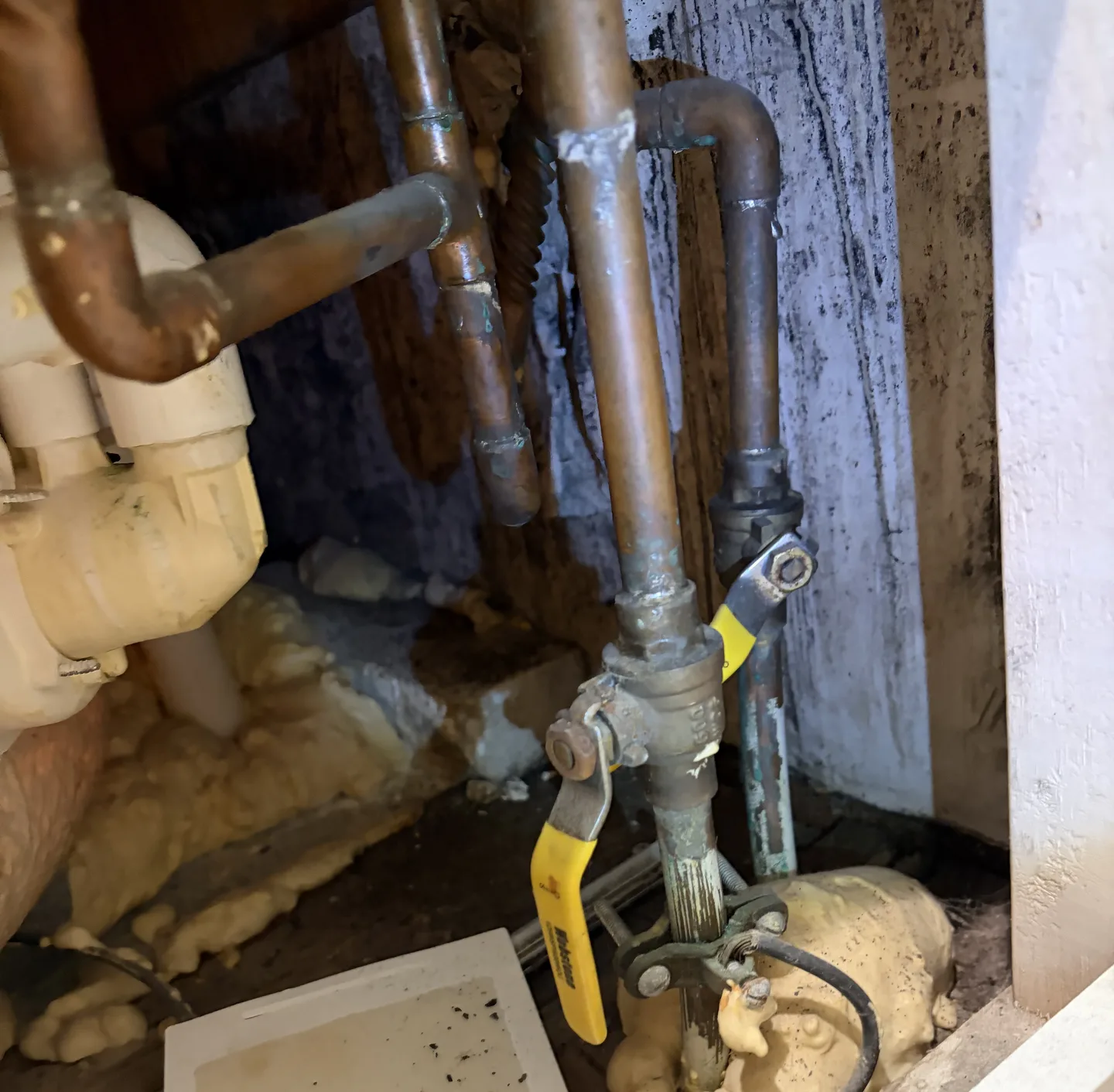
Hidden Mold Found Beneath a Jetted Bathtub
A homeowner requested a limited mold assessment of a master bathroom drop-in jetted tub and an upstairs bathroom. Through an existing faucet-end access panel, the assessor observed dark growth on concealed wall surfaces and framing behind the supply plumbing. A surface swab returned Heavy Stachybotrys and Moderate hyphal fragments, and Stachybotrys was detected in master-bath air. Growth was confirmed at the faucet-end area; all cavity-wall surfaces not visible from the opening remained suspected, not confirmed. After the initial assessment, a contractor reported an office-closet moisture anomaly at the wall shared with the shower and supplied photographs showing apparent crawlspace subfloor water damage. Mold Testing Dallas did not personally observe or independently measure those later conditions. The water source remained unconfirmed, with both shower and tub plumbing requiring investigation.
View Case Study →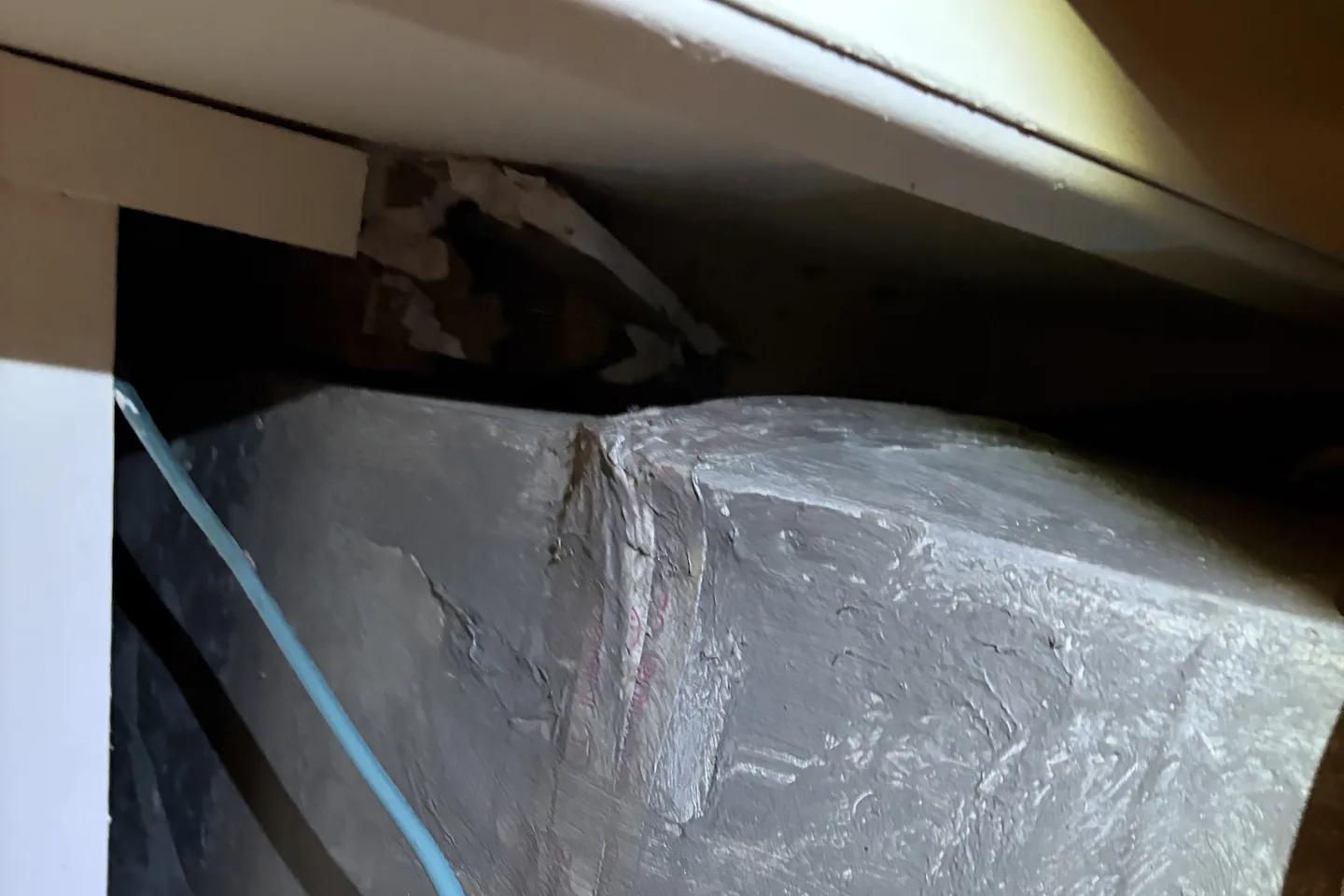
Musty Bedroom Traced to Attic Air Leakage Around an HVAC Closet
A Dallas homeowner requested a limited mold assessment for a persistent musty bedroom odor, reported prior HVAC-related flooding that had already been mitigated, and discoloration visible through an existing wall opening. During active rain, the assessor observed no active water intrusion, visible current water damage or elevated comparative moisture responses on accessible surfaces. Borescope inspection found no suspect growth within its limited field of view. Large unsealed gaps connected the vented attic to an HVAC closet that opened into the bedroom, and a musty odor was noted there. Bedroom humidity measured 61.9%. In the assessor's professional opinion, attic-air entry was the most likely odor source and a likely contributor to the elevated humidity.
View Case Study →Mold Confirmed Inside an HVAC Supply Plenum in Dallas
A homeowner who had recently purchased an older Dallas residence requested an independent assessment after an HVAC contractor opened the supply plenum and observed apparent fungal growth. Brown growth and a surface swab supported fungal growth on the sampled plenum surface. Room-air samples did not indicate airborne fungal amplification relative to the same-day outdoor reference. The homeowner had the plenum replaced by others. Five days later, follow-up indoor air samples remained low, with no detectable Aspergillus/Penicillium-like spores or hyphal fragments. No outdoor reference was collected on the second visit: this was an air re-check, not a formal clearance assessment.
View Case Study →