Get Our Free Guide: 5 Tips for a Mold-Free Texas Home
Learn practical ways to document moisture concerns, maintain accessible areas, and decide when a professional property assessment may be useful.
Check your downloads!
Your guide is downloading now. If it doesn't start, click here.
Professional Moisture & Humidity Inspection in Dallas
Moisture can support fungal growth. Our inspectors use thermal imaging cameras and professional-grade moisture meters to document possible water intrusion and humidity patterns.
Scheduling depends on scope and current availability
Thermal imaging cameras identify temperature patterns for selected follow-up
✓
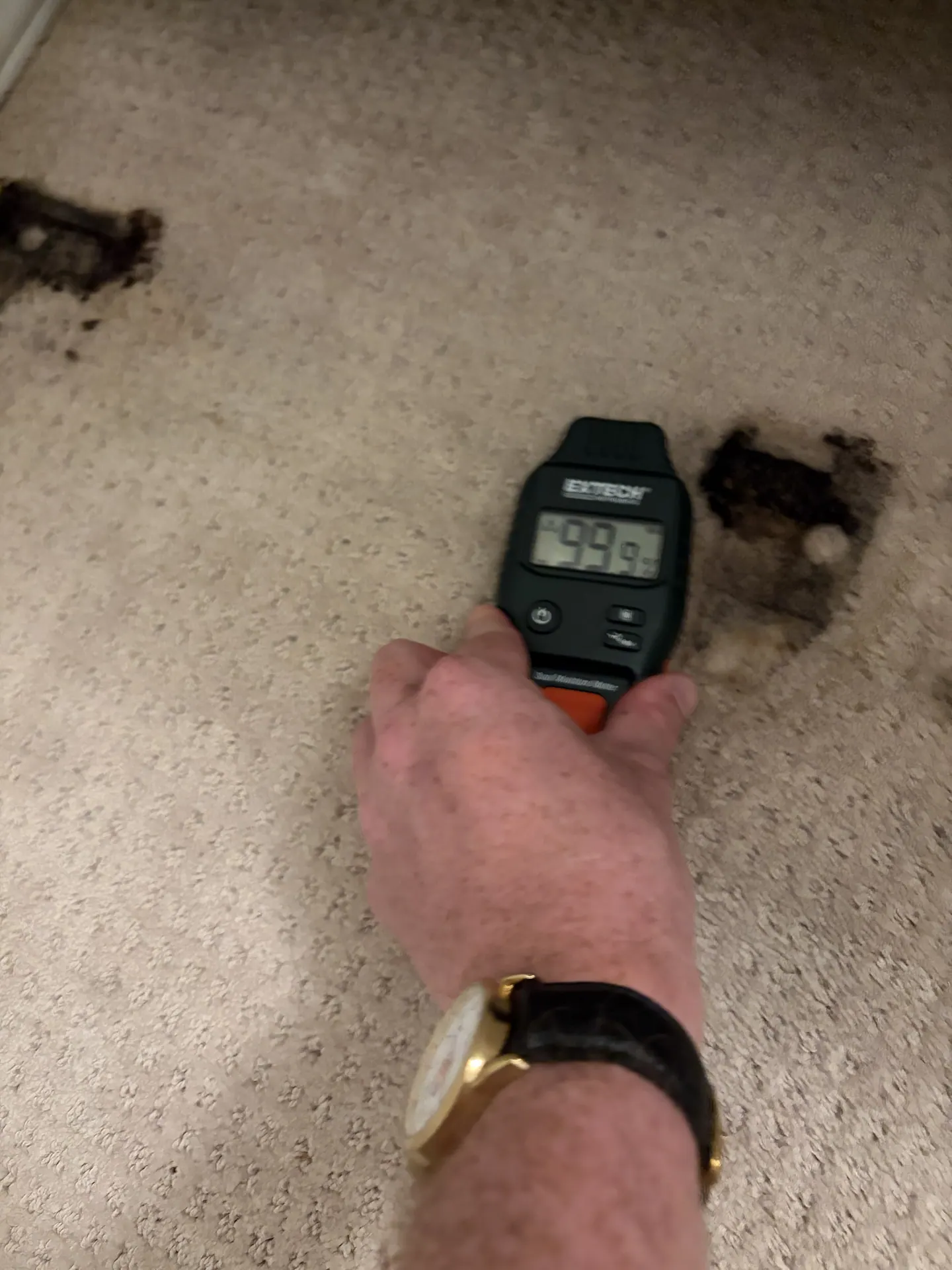
Pin & pinless meters record readings at selected accessible materials
✓
Documented moisture observations identify selected areas for follow-up
✓
Contextual approach -- document moisture conditions for follow-up
✓
documented -- no remediation ties; findings include scope and limitations
Scope ConfirmedWritten Findings
Verified Google Reviews
What Dallas Homeowners Are Saying
★★★★★5.0 on Google
CR
Craig R
★★★★★
These guys were great! I called, and they got us on the schedule within 2 days! I have had mold issues in the past so buying a new home, even though it was a new build, a mold inspection was a must for me. They did a …
Google Review
I
Ian
★★★★★
We had a water damage mold problem and we are so glad that we found Mold Testing Dallas. They did a mold inspection for us after we had a flood and found the mold and made it very clear for our remediation company to …
Google Review
DS
Dinah S.
★★★★★
I would highly recommend Mold Testing Dallas for any air quality testing, mold testing, or asbestos testing in Dallas fort worth.
The team was extremely professional and they were very fairly priced. They when above …
Google Review
RM
Ryan M.
★★★★★
Mold Testing Dallas does a great job with mold inspections. They are highly trustworthy, fairly priced, and really informative throughout the whole process. If you need mold testing in the Plano or Frisco area, I woul…
Google Review
ML
Michael L.
★★★★★
The team at Mold Testing Dallas is highly trustworthy and does things right. I have known the owner for years and he is dependable and honest. If you are ever looking for a Mold Inspection in the Grapevine / Flower Mo…
Google Review
CR
Cody R
★★★★★
I have found this company to be incredibly trustworthy in this space. The mold testing and mold inspection space has been extremely shady to me in the past. This group clearly communicated and operated with high integ…
Water events, condensation, odors, and visible staining can prompt a moisture and humidity evaluation. Mold Testing Dallas uses infrared thermal cameras, moisture meters, and digital hygrometers to document selected building materials and rooms at the time of inspection. Findings are interpreted with the property's history, visible conditions, ventilation, and fungal ecology in mind. Instruments have access and interpretation limitations. Call 940-240-6902 to schedule an evaluation.
What Is Moisture & Humidity Inspection?
A moisture and humidity inspection combines infrared thermal imaging, professional-grade moisture meters, and digital hygrometers to document selected building conditions and identify areas for follow-up.
A moisture and humidity inspection records readings and visual observations from selected areas using thermal imaging, pin-type or pinless moisture meters, and digital hygrometers. Readings are affected by material, instrument, temperature, construction, and timing, so they are interpreted in context rather than against a single pass/fail number. The assessment can help identify areas for additional investigation after weather, plumbing, HVAC, or other moisture events.
Moisture & Humidity Inspection Process: How We Work
1
Thermal Imaging Survey
An infrared camera records temperature variations across accessible walls, ceilings, and floors. Patterns may suggest areas for further investigation, but thermal images require confirmation with material readings and visual context.
2
Moisture Meter Readings
Pin-type and pinless meters record readings from selected drywall, wood framing, subfloor panels, or concrete locations. Results are logged with material and location because readings vary by instrument, construction, and timing.
3
Relative Humidity Mapping
Hygrometers record temperature and relative humidity in selected rooms or accessible areas. Readings are interpreted with ventilation, building use, season, and moisture history; no single reading predicts growth in every property.
4
Plumbing System Check
Accessible supply lines, drain connections, water heater fittings, and under-sink plumbing are inspected for active leaks, evidence of past water events, and condensation buildup that can generate chronic localized moisture.
5
HVAC Condensation Assessment
Texas summers push air conditioning systems to produce heavy condensation. The inspector evaluates condensate drain lines, drip pans, duct junctions, and supply register surrounds to confirm proper drainage and the absence of standing water.
Accessible perimeter areas are reviewed for grading, foundation cracks, drainage, and gutter conditions that may direct water toward the structure. Dallas's expansive clay soil is considered as part of the property context.
Document moisture conditions. Our inspectors use FLIR thermal cameras and dual-mode moisture meters to review selected areas for possible leaks, condensation, and water-intrusion patterns.
Our Moisture & Humidity Inspection Options
Preventive Moisture Assessment
A scoped survey documents moisture conditions in accessible areas and identifies observations that may warrant maintenance or further investigation.
Best for: Maintenance checks, recently purchased homes with an uncertain moisture history, and properties affected by weather, plumbing, HVAC, or humidity concerns.
Post-Storm Inspection
A focused evaluation performed after heavy rain, hail, or flooding events concentrates on common storm-damage entry points: roof penetrations, window and door seals, foundation junctions, and exterior cladding systems.
Best for: Following Dallas's spring thunderstorms, damaging hail, or any severe weather that left standing water against the foundation or caused potential roof compromise.
Pre-Purchase Moisture Evaluation
A scoped moisture review conducted before a home purchase closes, adding selected readings and observations to other property information.
Best for: Buyers seeking documented context before finalizing a purchase, especially where a property has a disclosed history of water intrusion.
HVAC Moisture Audit
A targeted review of your heating and cooling system's condensation management, covering condensate drainage, duct insulation integrity, supply register moisture, and return-air humidity readings.
Best for: Households dealing with window condensation, stale or musty air from supply vents, or water staining around air conditioning components—all frequent complaints during Dallas's hot, humid season.
Benefits of Professional Moisture & Humidity Inspection
Documents Moisture Conditions
Readings and thermal observations may identify areas for maintenance or further investigation; they do not predict future growth or remediation costs.
Low-Impact Review
Infrared cameras and pinless meters can review selected accessible areas without drilling or cutting; proposed methods and access limitations are discussed before work.
Identifies Moisture Conditions
A moisture inspection documents selected readings and observations that may help identify possible water sources for follow-up; instruments cannot establish every source or future condition.
Supports Property Maintenance
Documented moisture observations can inform maintenance discussions and follow-up investigation; they do not predict property value or health outcomes.
May Inform Maintenance
Thermal observations may highlight air leaks or insulation patterns for further review; they do not predict energy savings or utility bills.
Documents Selected Conditions
Annotated thermal imagery, moisture logs, and selected humidity readings form a dated property record. Coverage and documentation requirements vary by policy and carrier. Check with your insurer or adjuster.
Why Choose Mold Testing Dallas for Moisture & Humidity Inspection?
We equip our inspectors with professional-grade FLIR thermal cameras and Protimeter moisture meters—the same instruments relied upon by building science consultants and forensic investigators
Our inspectors consider Dallas-specific moisture factors such as expansive clay soil, seasonal storms, and HVAC condensation
Reports may feature annotated thermal images and moisture maps for selected locations, with readings, context, and limitations rather than a whole-property severity determination
Inspections cover commonly missed areas such as cabinet bases, the wall behind refrigerators, window weep holes, and HVAC platform connections where moisture quietly accumulates
The proposed scope and pricing are discussed before work, and reports may identify follow-up considerations without determining repair urgency or scope
What Affects Moisture & Humidity Inspection Cost in Dallas?
Property Size
Bigger homes demand additional time for wall-to-wall thermal scanning and systematic moisture meter checks across all living areas and mechanical rooms.
Inspection Scope
A broader assessment involves more areas than a targeted investigation of a known trouble spot. Narrower inspections focused on one area may carry a lower cost.
Property Age
Homes with older plumbing, original windows, and aging HVAC equipment present more potential moisture entry points, requiring a more thorough and time-intensive evaluation.
Foundation Type
Pier-and-beam and other foundation types that require more thorough below-floor evaluation add inspection time but are essential to assess because they influence whole-house humidity levels.
Combined Services
Bundling a moisture inspection with air quality or surface mold sampling during the same visit delivers a more complete assessment at a combined rate lower than booking each service on its own.
Our Initial Mold Assessment starts at $600 and includes two samples. the final base price depends on the size of the home and the situation. Additional mold samples are $75 each. Final pricing varies with property size, assessment scope, and required sampling. Call 940-240-6902 to discuss same-week appointments and current availability.
Frequently Asked Questions About Moisture & Humidity Inspection
How much does a moisture inspection cost in Dallas?
The Initial Mold Assessment starts at $600 and includes two samples. the final base price depends on the size of the home and the situation. Final pricing varies with property size, assessment scope, and required sampling. Call 940-240-6902 for a property-specific quote.
Can thermal imaging see mold through walls?
Infrared cameras do not image mold itself; they record temperature differentials that may be associated with moisture patterns. Thermal observations require material readings and visual context and do not prove mold or establish conditions inside a wall.
What humidity level causes mold to grow?
No single humidity or material-moisture cutoff predicts mold growth in every property. Risk depends on duration, material, temperature, ventilation, fungal ecology, visible conditions, and moisture history. Readings should be interpreted in that context.
How do I know if I have hidden water damage?
Musty odors, bubbling paint, warped baseboards, unusual water use, and recurring stains may prompt follow-up. Thermal imaging can record selected temperature patterns, but confirmation requires appropriate material readings, visual review, access, and property history.
Should I get a moisture inspection before buying a home?
A scoped moisture review may add context, particularly where a property has visible conditions, water history, or access questions. Ask your inspector and transaction advisers how it fits with the standard inspection and intended use of the report; no review predicts every future condition.
What contributes to high humidity in Dallas homes?
Possible contributors include HVAC performance, exhaust ventilation, foundation or plumbing moisture, mechanical ventilation, weather, and occupant activities. An assessment can document selected readings and observations; the appropriate response depends on the property's construction, history, and conditions.
How often should I check my home's moisture levels?
There is no universal inspection schedule. Consider water events, visible conditions, odors, building history, ventilation, and intended use of the information. A digital hygrometer can record selected indoor humidity readings, which should be interpreted with the property's conditions rather than a single cutoff.
Can moisture problems be fixed without tearing out walls?
Some conditions may be addressed through grading, HVAC, dehumidification, plumbing, or ventilation work, while others require material investigation or removal. A moisture report can document selected observations but does not determine the complete repair scope.
Helpful Mold Testing Articles
Learn more about moisture & humidity inspection and mold prevention from our expert guides:
Thermal imaging and professional-grade meters can document selected water-intrusion and humidity observations. Book a scoped inspection to discuss access, property history, and appropriate follow-up.