
- Location
- Dallas, Texas
- Property type
- Single-family residential
- Inspection type
- Targeted wall-cavity mold assessment
- Primary concern
- Moisture concern in a third-floor bedroom wall during a real estate transaction
- Inspection
- May 2026
The Situation
A mold assessment was requested during a Dallas real estate transaction after a prior property inspection identified a moisture concern in a third-floor bedroom wall.
A visible vertical line on the wall appeared consistent with a previous repair. That appearance does not establish that a leak occurred.
What Was Inspected
- The assessment included visual inspection, localized moisture screening and two 150-liter wall-cavity spore-trap samples: one behind the visible repair line and one from an unaffected control wall in the same room.
- The findings describe the observed conditions and the tested wall-cavity samples at the time of inspection. No outdoor or ambient-air samples are reported, and the samples do not establish conditions throughout the property.
What We Observed
No visible mold growth, musty odor or active water intrusion was observed in the assessed area.
The third-floor bedroom wall was dry to the touch. Localized moisture readings were slightly higher than readings on surrounding walls but remained within the normal range.
A visible vertical line was consistent with a previous repair; it was not identified as definite evidence of a leak.
Moisture / Building Conditions
The wall was dry at the time of inspection. Localized readings were slightly higher than surrounding walls but remained within the normal range.
No numeric moisture reading is provided. The assessment did not identify active moisture intrusion.
Sampling Performed
- Wall-cavity spore-trap sample, 150 liters — Behind the visible repair line in the third-floor bedroom wall: Area of concern.
- Wall-cavity spore-trap sample, 150 liters — Unaffected control wall in the same room: The laboratory noted a Heavy debris field rating; this may create negative bias and potentially undercount fungal structures.
Wall-Cavity Spore-Trap Results
| Sample | Finding | Reported result | Context |
|---|---|---|---|
| Area of concern, 150 liters | Total fungal | 130 structures/m³ | |
| Area of concern, 150 liters | Cladosporium | 43 structures/m³ | |
| Area of concern, 150 liters | Basidiospores | 21 structures/m³ | |
| Area of concern, 150 liters | Hyphal fragments | 43 structures/m³ | |
| Area of concern, 150 liters | Myxomycetes/Periconia/Smut | 21 structures/m³ | |
| Area of concern, 150 liters | Stachybotrys, Chaetomium, Fusarium, Trichoderma and Ulocladium | Not detected | Applies to the tested area-of-concern sample only. |
| Unaffected control wall, 150 liters | Total fungal | 21 structures/m³ | Heavy debris field rating; potential negative bias may undercount fungal structures. |
| Unaffected control wall, 150 liters | Basidiospores | 21 structures/m³ | Heavy debris field rating; potential negative bias may undercount fungal structures. |
Understanding the Laboratory Rating
The area-of-concern cavity sample measured 130 fungal structures/m³ and contained the groups shown in the results table. The laboratory did not detect Stachybotrys, Chaetomium, Fusarium, Trichoderma or Ulocladium in that tested sample.
The control cavity sample measured 21 fungal structures/m³, consisting of Basidiospores. Its Heavy debris field rating may create negative bias and potentially undercount fungal structures, so it is not a perfect comparison.
The results are limited to these two wall-cavity samples. No outdoor or ambient-air comparison was collected or is represented here, and non-detection in a sample does not establish absence elsewhere in the property.
What the Findings Suggested
The tested wall cavity did not show evidence of elevated or unusual fungal activity. Its reported species profile was composed of common environmental fungi, and no recognized water-damage indicator fungi listed in the report were detected in the tested area-of-concern sample.
The report suggested a past moisture event or repair may have occurred, but no active moisture intrusion was identified during inspection. The visible line was consistent with a previous repair and was not treated as proof of a leak.
The Heavy debris field rating on the control sample may have biased its result downward. Despite that limitation, the area-of-concern sample was interpreted as favorable. These findings apply to the tested cavity and do not guarantee conditions elsewhere in the home.
Not Every Moisture Concern Turns Into a Mold Problem
The prior moisture concern justified further evaluation. The mold assessment did not manufacture a problem where the evidence did not support one: the tested wall cavity showed no evidence of elevated or unusual fungal activity, and no mold-related corrective action was recommended.
Independent assessment can support due diligence with either favorable or concerning findings. A moisture question does not automatically mean mold is present or that remediation is needed; the evidence and the defined inspection scope guide the conclusion.
What Homeowners Can Learn From This Case
A targeted mold assessment may be useful when a home inspector identifies a moisture concern, a previous repair is visible, a wall has unexplained staining or patching, or a buyer wants focused due diligence before closing.
A professional mold assessment can produce a favorable result. Its objective is to determine what the evidence supports, not to automatically recommend remediation.
Sampling describes only the sampled locations and time. A favorable result in a tested wall cavity is not a guarantee that every part of a property is free of mold or moisture concerns.
Questions About This Case
Should I get mold testing if a home inspector finds moisture?
It can be useful when a specific moisture concern warrants further evaluation. In this case, targeted wall-cavity testing was performed during a Dallas real estate transaction.
Can a repaired wall have no hidden mold?
Yes. A prior repair or moisture event does not necessarily mean fungal growth developed. In this case, the tested cavity showed no evidence of unusual fungal activity.
Does every elevated moisture reading mean mold?
No. Moisture readings must be interpreted with visual findings, material condition and laboratory data.
Can mold testing help during an option period?
Yes. Targeted mold assessment can provide additional information when a property inspection identifies a moisture concern.
Related Services
Home Inspection Found a Moisture Concern?
A targeted mold assessment can help determine whether a suspicious wall or moisture history is associated with unusual fungal activity before you move forward with a purchase.
Schedule a Mold InspectionPublished by Mold Testing Dallas.
Related Real Inspection Cases
These are separate inspection reports documenting different moisture and concealed-wall questions; their findings should not be confused with this favorable result.
Hidden Mold Found Inside Wall Cavities in a Dallas Home
A Dallas homeowner requested a limited assessment after concerns about possible concealed mold and prior water-damage conditions. Occupied-room air samples were below the outdoor reference, while two concealed wall cavities had substantially different findings. One cavity showed moisture abnormalities, deteriorated finishes and apparent growth by borescope; a second cavity returned more than 55,000 total fungal structures per cubic meter when re-sampled after its first sample was occluded. An upstairs storage area also showed moisture and apparent growth.
View Case Study →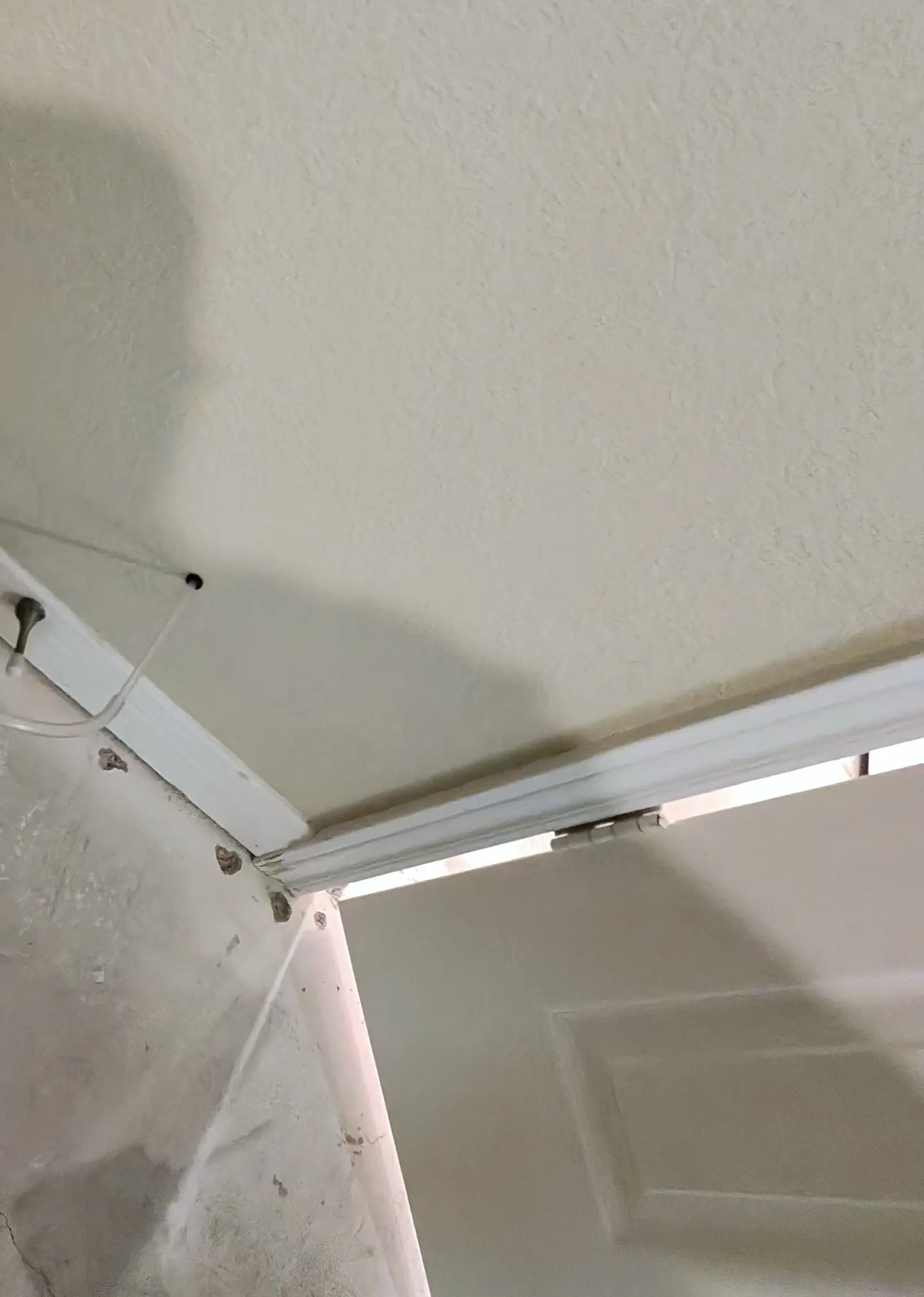
Hidden Mold Concern After an Undetected Water Leak in a Dallas Home
A Dallas homeowner requested an assessment after several past water events, including a master-closet leak that reportedly went undetected for a time and left stored belongings with visible mold. By inspection, the belongings and flooring were gone, the slab was exposed, and no visible mold appeared on accessible master-closet surfaces. A 5-liter air sample from the previously affected corner had the highest fungal finding among four sampled wall cavities. Two other 5-liter cavity samples had no mold detected. The closet wall was not opened, so the condition of concealed materials remained undetermined.
View Case Study →