
- Location
- Dallas, Texas
- Property type
- Single-family residential
- Inspection type
- Limited mold assessment
- Primary concern
- Possible concealed growth at a master-closet wall after a reported undetected water event
- Inspection
- August 2026
- Published
- September 2026
The Situation
The homeowner requested an assessment after several prior water-damage concerns and worry about possible concealed mold. Reported occupant concerns were part of the request, but the assessment did not determine a medical cause.
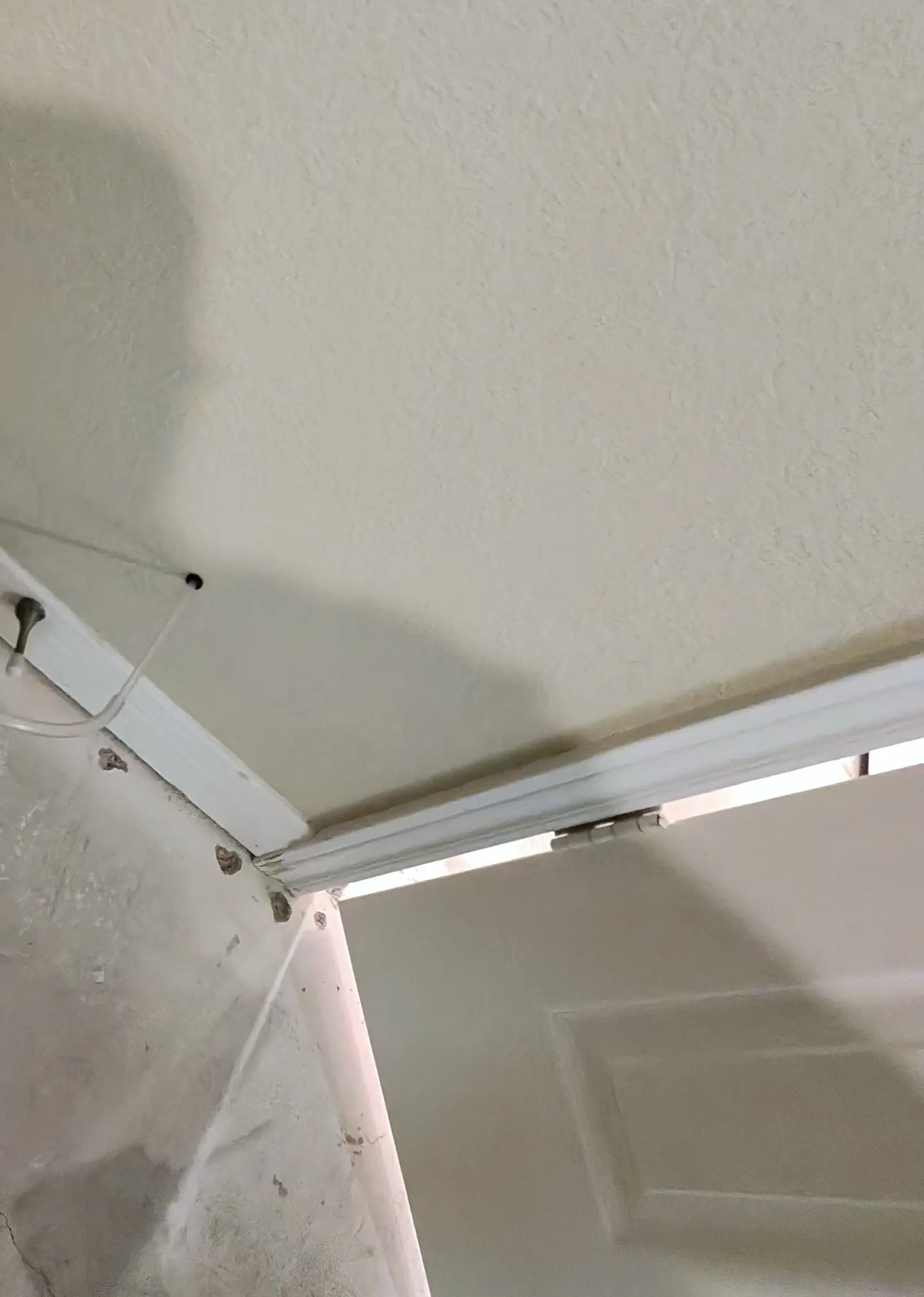
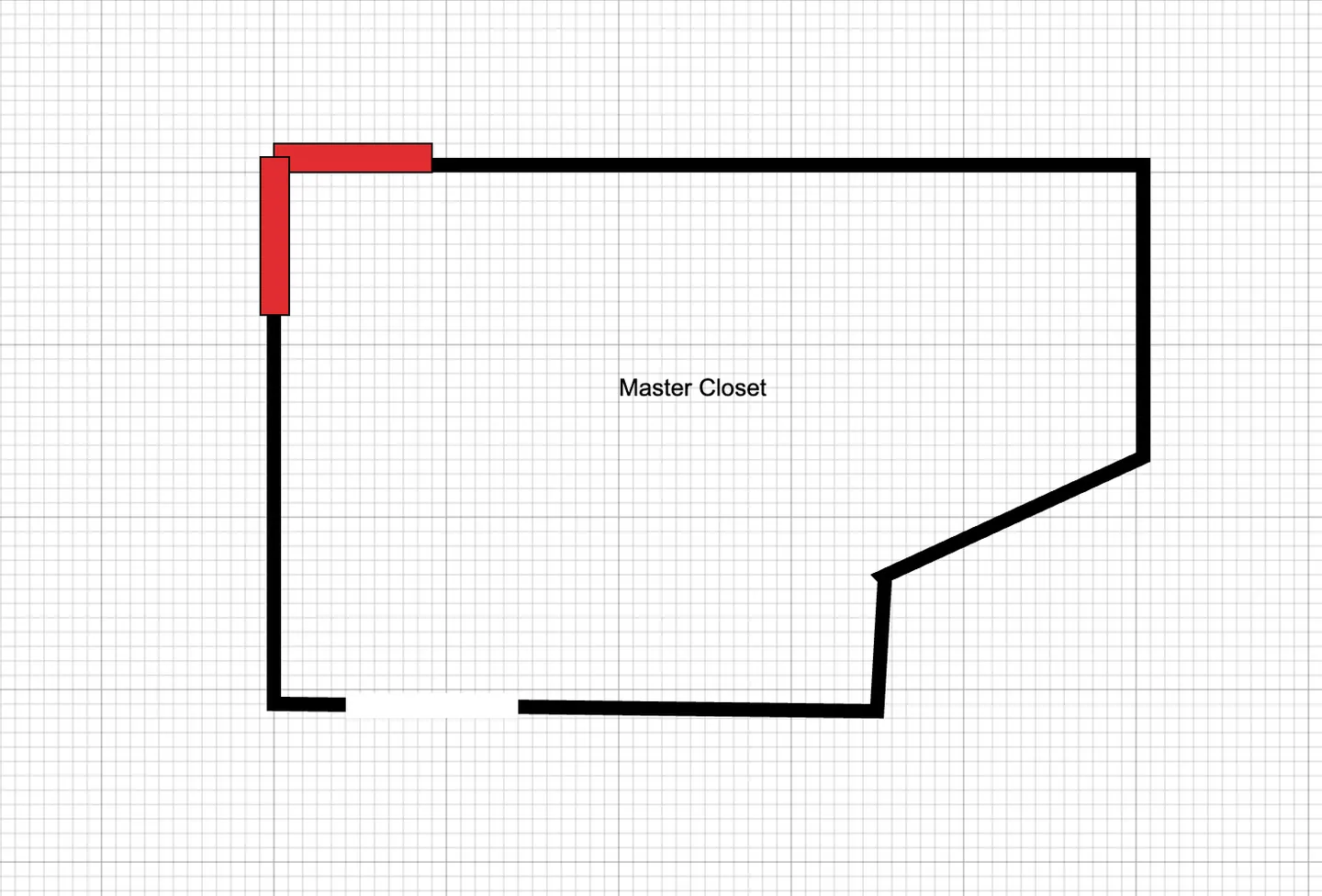
The master closet had the most significant reported history: water had gone unnoticed for a time, and belongings stored there later developed visible mold. Those belongings were no longer present. The flooring had been removed, leaving the concrete slab exposed and residual staining along the slab and wall base in the affected corner.
No visible mold was observed on accessible master-closet painted wall or slab surfaces, and moisture screening did not show an elevated comparative response there at inspection. The concealed wall assembly was not opened.
What Was Inspected
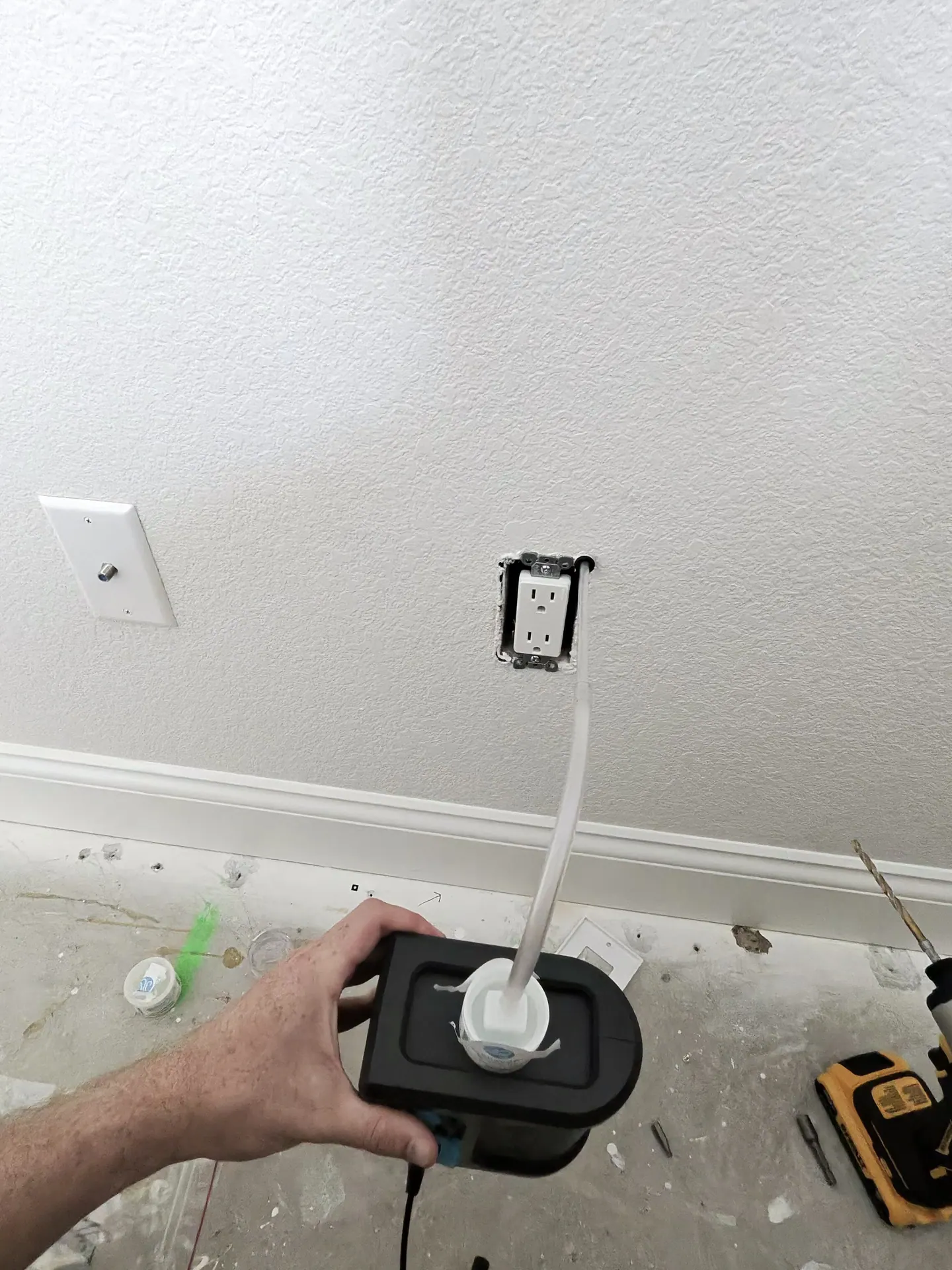
- Four separate wall cavities with prior water-damage histories were sampled at 5 liters each: the master closet, guest bedroom, master-bathroom toilet area, and kitchen window area. The kitchen cavity sample was collected from outside.
- One 75-liter ambient air sample was collected in the master bedroom and a separate 75-liter outdoor reference sample was collected. The master-shower discoloration was surface-swabbed. Moisture screening included the master closet and kitchen window.
- Wall-cavity air screening does not directly show whether concealed materials have growth. The master-closet wall was not opened, so fungal growth inside that assembly could neither be confirmed nor ruled out.
What We Observed
The master closet's accessible surfaces were visually clear of mold. Staining remained where the prior water event had affected the slab and wall base. A dry comparative moisture reading at inspection could not establish conditions during the earlier leak or within the unopened wall.
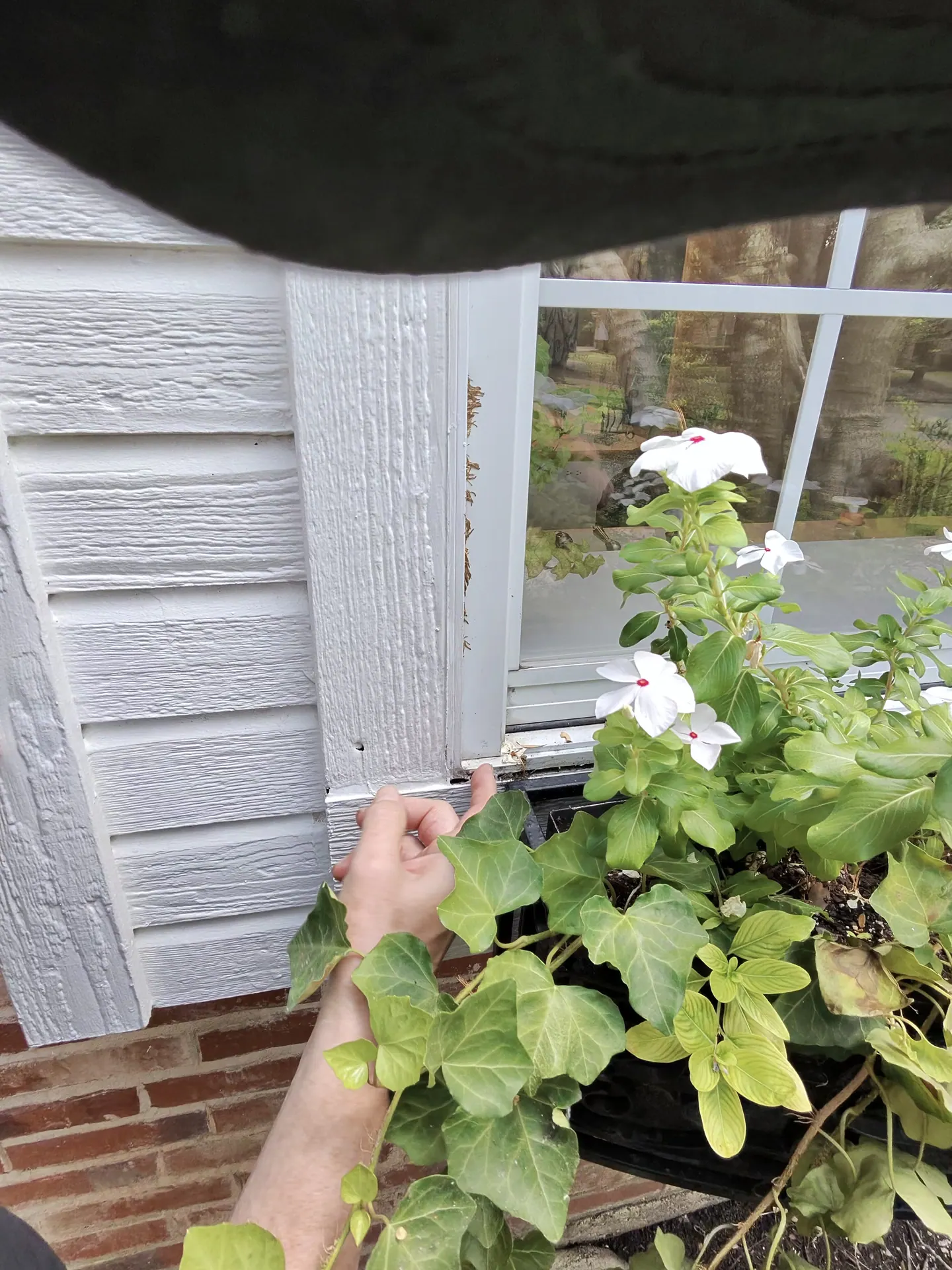
The only clearly elevated comparative moisture response was at the kitchen sink window. The exterior sill and lower jamb trim had weathering, paint deterioration, and open joints that provided a plausible path for water entry.
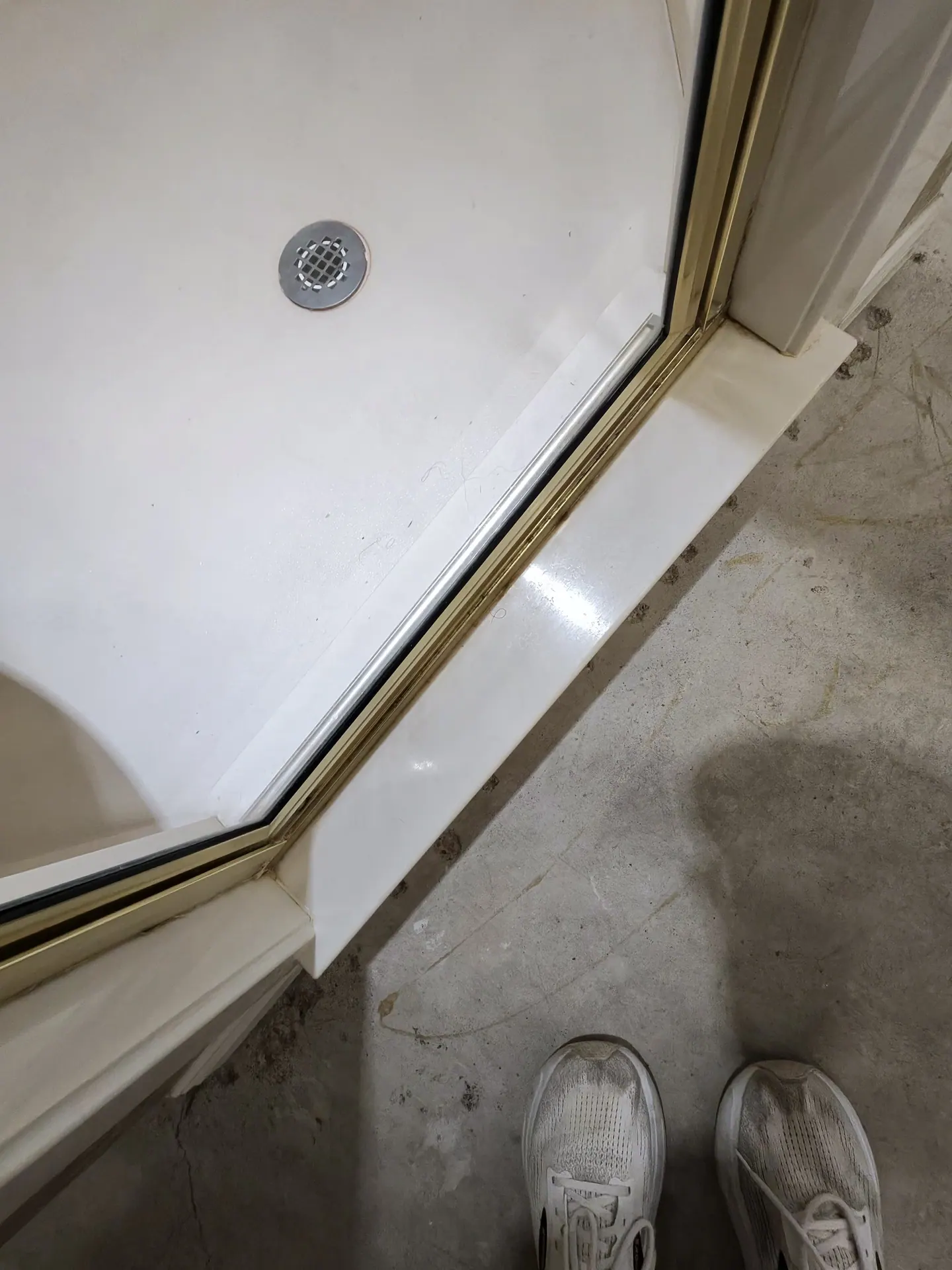
Discoloration beside the master-shower curb was sampled separately; the result did not support a fungal origin for that surface.
How the Wall Cavity Was Screened
Four air samples from wall cavities with prior water-damage histories used a 5-liter collection volume. At that volume the analytical sensitivity was about 640 structures/m³: one raw structure converts to approximately 640/m³, two to approximately 1,300/m³, and three to approximately 1,900/m³.
The outdoor and master-bedroom ambient samples used 75 liters, with a much lower analytical sensitivity of 43/m³. Calculated concentrations from these different volumes should not be compared as though the sampling conditions were identical. Raw structure counts are especially useful for interpreting the 5-liter cavity findings.
Moisture / Building Conditions
No elevated comparative moisture response was measured in the master closet at inspection, despite its reported earlier water-loss history and residual staining. The reading was a snapshot, not a test of concealed material history.
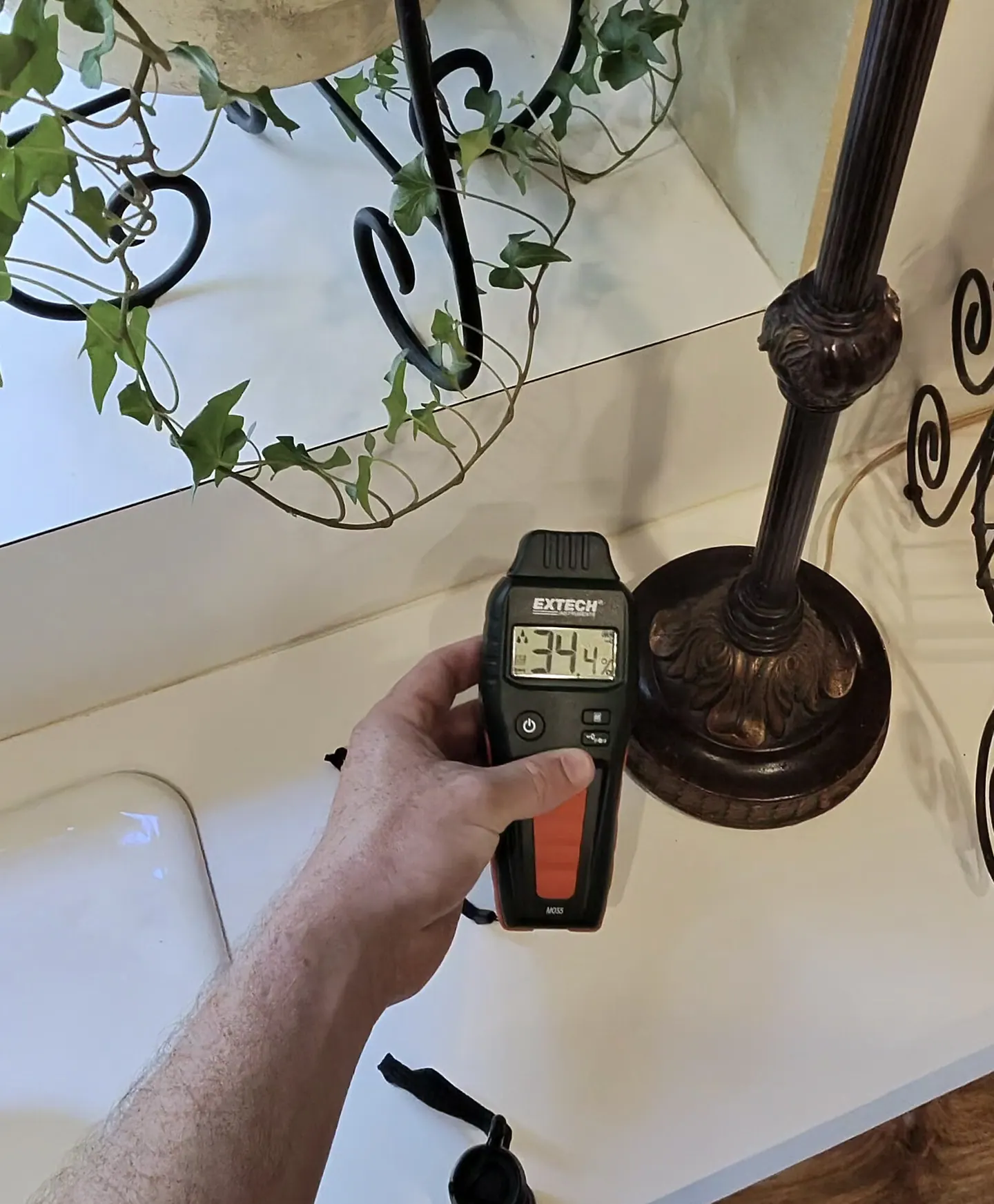
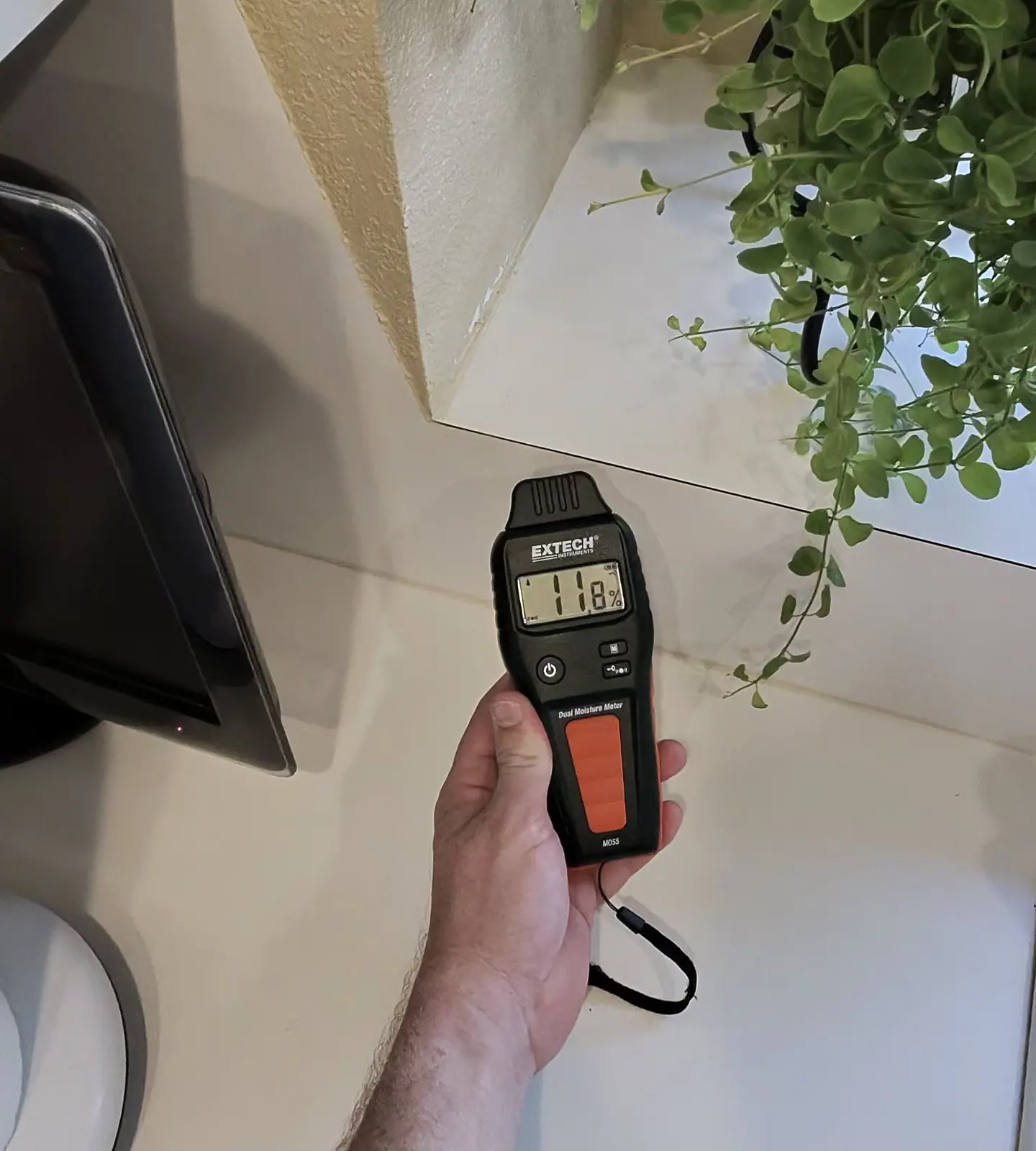
At the kitchen windowsill, the affected side read 34.4 comparative and the opposite side of the same sill read 11.8 comparative. The measurements are relative meter responses, not material moisture percentages.
Sampling Performed
- Wall-cavity air sample, 5 L — Master-closet corner of reported prior water event: Wall not opened to inspect concealed surfaces.
- Wall-cavity air sample, 5 L — Guest bedroom
- Wall-cavity air sample, 5 L — Master-bathroom toilet area
- Wall-cavity air sample, 5 L — Kitchen window area, collected from outside
- Ambient air sample, 75 L — Master bedroom
- Outdoor reference air sample, 75 L — Exterior
- Surface swab — Discolored floor beside the master-shower curb
Laboratory Findings
| Sample | Finding | Reported result | Context |
|---|---|---|---|
| Master-closet cavity, 5 L | Total fungal structures | 4,500 structures/m³ | 7 raw structures; 5 L sensitivity about 640/m³ |
| Master-closet cavity, 5 L | Cladosporium | 1,900 structures/m³ | 3 raw structures |
| Master-closet cavity, 5 L | Aspergillus/Penicillium-like | 1,300 structures/m³ | 2 raw structures |
| Master-closet cavity, 5 L | Basidiospores | 640 structures/m³ | 1 raw structure |
| Master-closet cavity, 5 L | Fusarium | 640 structures/m³ | 1 raw structure |
| Master-closet cavity, 5 L | Stachybotrys, Chaetomium, Ulocladium | Not detected | In the collected cavity sample only |
| Master-closet cavity, 5 L | Debris rating | Moderate | May create negative bias in counts |
| Guest-bedroom cavity, 5 L | Fungal structures | No Mold Detected | Sensitivity less than 640/m³; Moderate debris |
| Master-bathroom toilet-area cavity, 5 L | Fungal structures | No Mold Detected | Sensitivity less than 640/m³; Moderate debris |
| Kitchen-window cavity, 5 L | Total fungal structures | 1,900 structures/m³ | 3 raw structures |
| Kitchen-window cavity, 5 L | Basidiospores | 1,300 structures/m³ | 2 raw structures |
| Kitchen-window cavity, 5 L | Cladosporium | 640 structures/m³ | 1 raw structure |
| Kitchen-window cavity, 5 L | Aspergillus/Penicillium-like, Stachybotrys, Chaetomium | Not detected | In the collected cavity sample only |
| Master-bedroom ambient, 75 L | Spores | None detected | One hyphal fragment was found |
| Master-bedroom ambient, 75 L | Hyphal fragments and total fungal | 43 structures/m³ | One raw hyphal fragment |
| Outdoor reference, 75 L | Total fungal | 210 structures/m³ | 170/m³ spores and 43/m³ hyphal fragments; rounded reported total |
| Outdoor reference, 75 L | Ascospores | 43 structures/m³ | |
| Outdoor reference, 75 L | Curvularia | 43 structures/m³ | |
| Outdoor reference, 75 L | Myxomycetes/Periconia/Smut/Rust | 85 structures/m³ | |
| Master-shower floor surface swab | Fungal structures | No Mold Detected |
Understanding the Laboratory Rating
At 5 liters, a single raw cavity structure corresponds to approximately 640/m³. The ambient and outdoor samples used 75 liters and a sensitivity of 43/m³; comparing calculated concentrations without sample volumes, raw counts, and the low outdoor reference can mislead.
Moderate debris in the cavity samples may bias counts downward. No-detection findings describe only the collected samples; they do not prove that the corresponding walls were mold-free.
What the Master-Closet Cavity Sample Found
The 5-liter sample from the previously water-affected closet corner had seven raw fungal structures, reported as 4,500/m³: three Cladosporium (1,900/m³), two Aspergillus/Penicillium-like (1,300/m³), one Basidiospore (640/m³), and one Fusarium (640/m³). Stachybotrys, Chaetomium, and Ulocladium were not detected in that collected sample.
The laboratory rated the debris Moderate. This may create negative bias and understate counts. Neither that caveat nor the calculated concentration directly establishes what was on the concealed wall materials.
How the Other Wall Cavities Compared
The 5-liter guest-bedroom cavity sample and 5-liter master-bathroom toilet-area cavity sample each returned No Mold Detected, with an analytical sensitivity of less than 640/m³ and Moderate debris. These results show that the same method did not automatically collect detectable fungal structures in every sampled cavity; they do not prove the cavities were free of growth.
The fourth 5-liter cavity sample, taken from outside at the kitchen window, returned three raw structures: two Basidiospores (1,300/m³) and one Cladosporium (640/m³). Its total was 1,900/m³. No Aspergillus/Penicillium-like, Stachybotrys, or Chaetomium was detected in that sample.
What the Room and Outdoor Air Samples Showed
The 75-liter master-bedroom sample contained no detected spores and one hyphal fragment, with a reported total fungal concentration of 43/m³. The 75-liter outdoor sample reported 170 spores/m³ plus 43 hyphal fragments/m³, and a rounded total fungal concentration of 210/m³. Outdoors, ascospores and Curvularia were each 43/m³, and Myxomycetes/Periconia/Smut/Rust was 85/m³.
The bedroom ambient sample did not indicate airborne fungal amplification relative to outdoors at that place and time. It does not establish the absence of mold, predict conditions at other times, or resolve the concealed-closet question. The outdoor total was unusually low for Central Texas in mid-August.
What the Findings Suggested
The closet's combination of past undetected water, reported growth on stored contents, remaining slab and wall-base staining, and a cavity result distinct from two no-detection comparison cavities warranted further evaluation. The 5-liter sample alone did not definitively establish concealed growth, and the wall was not opened.
The kitchen window had a separate moisture issue, but its cavity result was interpreted as more consistent with outdoor-air communication through weathered/open trim than fungal amplification in that wall. The shower-floor discoloration returned No Mold Detected.
Why This Cavity Was Referred for Further Evaluation
The cavity result mattered in context: the homeowner reported a water event that went undetected, belongings in that closet previously had visible growth, the slab and wall base still had staining, and the sampled corner produced the highest cavity finding. Two other cavities tested by the same 5-liter method had no mold detected in their collected samples.
The wall was not opened. Concealed growth could not be confirmed or ruled out, so the master closet was referred for evaluation by a licensed Texas Mold Assessment Consultant, who later prepared a formal protocol and removal scope. Those detailed instructions are not reproduced here.
Discoloration Did Not Test as Mold
A separate discolored surface on the floor beside the master-shower curb was swabbed. The laboratory reported No Mold Detected, so its appearance was not supported by the sample as fungal growth.
A Separate Moisture Problem Was Found at the Kitchen Window
The sink-side windowsill had a 34.4 comparative moisture response versus 11.8 at the opposite side of the same sill. These instrument responses compare locations; they are not exact percentages of water in the material. Weathered exterior sill and jamb trim, paint deterioration, and open joints provided a plausible water-entry path.
The window-area cavity sample was taken from outside. With predominantly outdoor-characteristic spores and visible exterior openings, the report interpreted it as more consistent with cavity-to-exterior air communication than fungal amplification inside that wall. The moisture issue warranted correction but was not interpreted as a mold-remediation condition.
Recommendations
- Follow the licensed Mold Assessment Consultant's master-closet protocol and identify and correct the original moisture source affecting that area. The consultant, not this public case study, prepared the formal removal scope.
- Correct kitchen-window water entry; have the exterior sill, jamb, glazing seals, and flashing evaluated by an appropriate contractor, and confirm the moisture condition with material-appropriate methods if needed.
- Maintain indoor relative humidity below 60%. Stop uncontained disturbance if suspected mold is uncovered elsewhere during work.
- Check applicable asbestos or lead requirements before disturbing older flooring, adhesive, baseboard, or painted materials. Consider HVAC evaluation if occupant concerns persist after the identified building conditions have been addressed.
What Homeowners Can Learn From This Case
A wall may show no visible mold after an old leak yet still merit evaluation because of its moisture history, staining, and concealed construction. In this case, the cavity result raised a question; it did not provide direct proof of growth on the unopened wall materials.
Interpret cavity results using collection volume, analytical sensitivity, raw structure counts, debris rating, comparison cavities, outdoor conditions, and physical history. Moisture screening, surface swabs, and ambient samples answered different questions at this property.
Questions About This Case
Can mold be hidden inside a wall even when there is no visible mold?
It can. No visible mold appeared on accessible master-closet surfaces here, but a prior water event, staining, reported growth on stored belongings, and a distinct cavity sample warranted further evaluation. The wall was not opened, so concealed growth was not confirmed.
Can an old water leak still cause mold problems after the area is dry?
Potentially. A dry reading at inspection does not establish conditions during an older leak. This master closet had a reported undetected water event and earlier visible growth on belongings, even though accessible surfaces were dry and showed no visible mold at inspection.
What is a wall-cavity mold air sample?
A small volume of air is drawn from a concealed wall space to screen for fungal structures. These 5-liter samples had a sensitivity of about 640 structures/m³ per raw structure; results require context and do not directly inspect wall materials.
Why was the master closet cavity result important?
It was the highest of four cavity results and came from the corner with reported past water damage, growth on belongings, and residual staining. Two other cavities tested by the same 5-liter method had no mold detected in their collected samples.
Does a high wall-cavity number automatically mean hidden mold?
No. The master-closet result of 4,500/m³ came from only seven raw structures in a 5-liter sample. Different sampling volumes, debris, and the unusually low outdoor reference make a simple ratio misleading. Concealed materials were not directly observed.
Can a wet window cavity have outdoor mold spores without hidden mold growth?
Yes. The kitchen-window cavity sample had Basidiospores and Cladosporium and was interpreted as more consistent with outdoor-air communication through deteriorated trim than growth inside the cavity. A separate window moisture issue still needed correction.
Does discoloration always mean mold?
No. A swab from the discolored floor beside this home's master-shower curb returned No Mold Detected.
Related Services
Had a Past Leak but Can't See Any Mold?
A repaired or dried area can still have concealed conditions that are not visible from the room. A mold assessment can help evaluate moisture history, accessible surfaces and concealed wall spaces where appropriate.
Schedule a Mold InspectionInspection performed by Ethan Wright, TDLR Licensed Mold Assessment Technician (MAT #1589).
Related Real Inspection Cases
Compare this unopened master-closet wall with a plumbing-leak case where exposed wall materials were directly sampled, a bathroom-vanity case with growth on an accessible seam, and water-damage cases involving different moisture sources.
Mold Found Inside a Wall After a Plumbing Leak in Farmers Branch
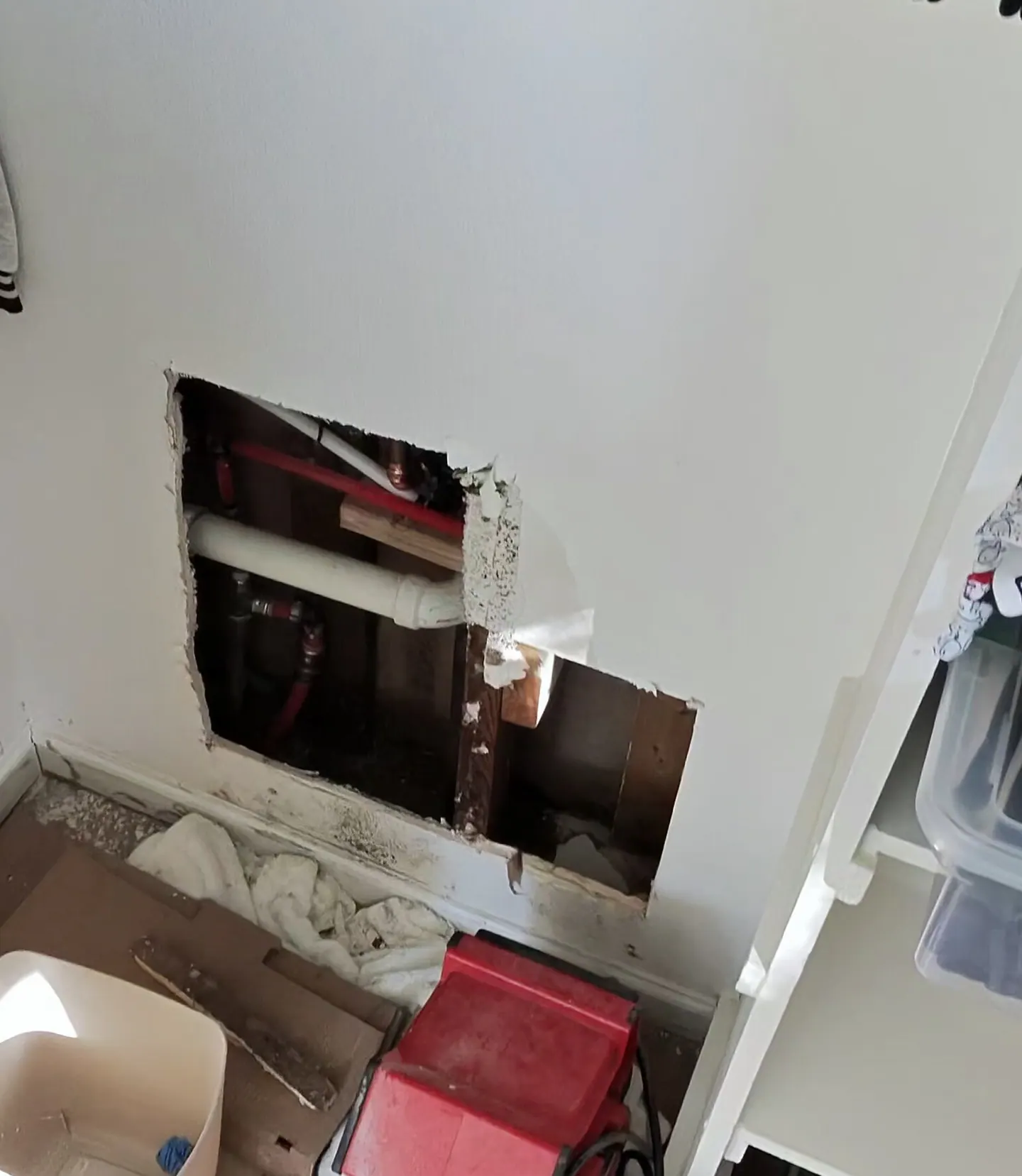
A Farmers Branch homeowner requested a limited mold assessment after a reported plumbing leak affected a wall shared by a guest bathroom and two closets. The leak had reportedly been repaired, but existing repair openings exposed stained wallboard and framing. A swab through the guest bedroom closet opening supported fungal growth on sampled material. Separate ceiling and former exterior-wall concerns had different, more limited findings.
View Case Study →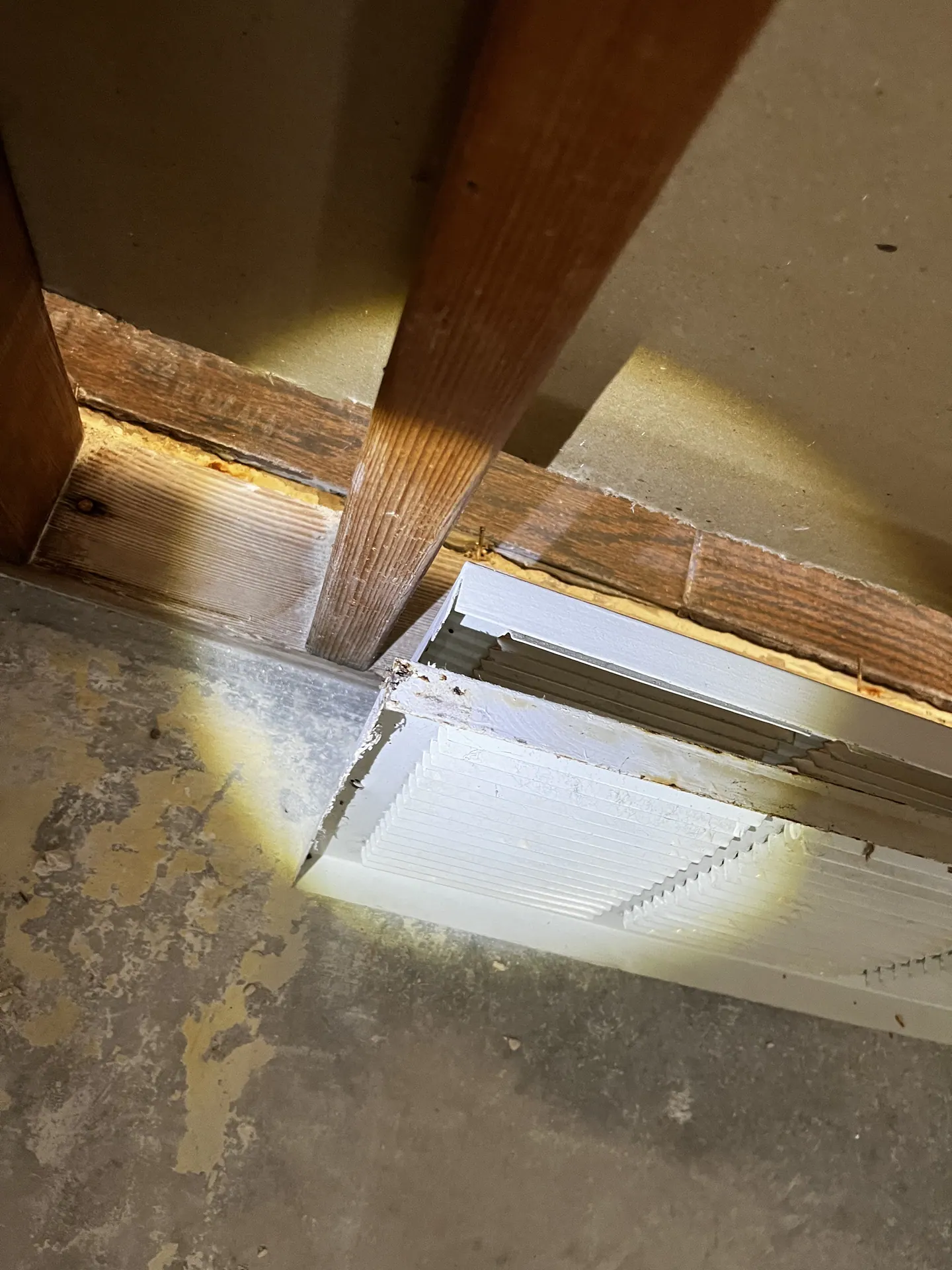
Mold Found After an AC Condensate Drain Overflow in a Fort Worth Home
A reported HVAC condensate-drain backup flooded the HVAC closet and adjoining rooms of a Fort Worth attached duplex residence while the homeowner was away. A restoration contractor had already made flood cuts and removed portions of flooring before the mold assessment. Six surface samples documented different findings across the affected areas: Heavy Stachybotrys at the HVAC-closet concrete-floor surface, Heavy Chaetomium at a water-affected bedroom wall, and Heavy Cladosporium with Heavy hyphal fragments on a bedroom supply register. No air samples were collected.
View Case Study →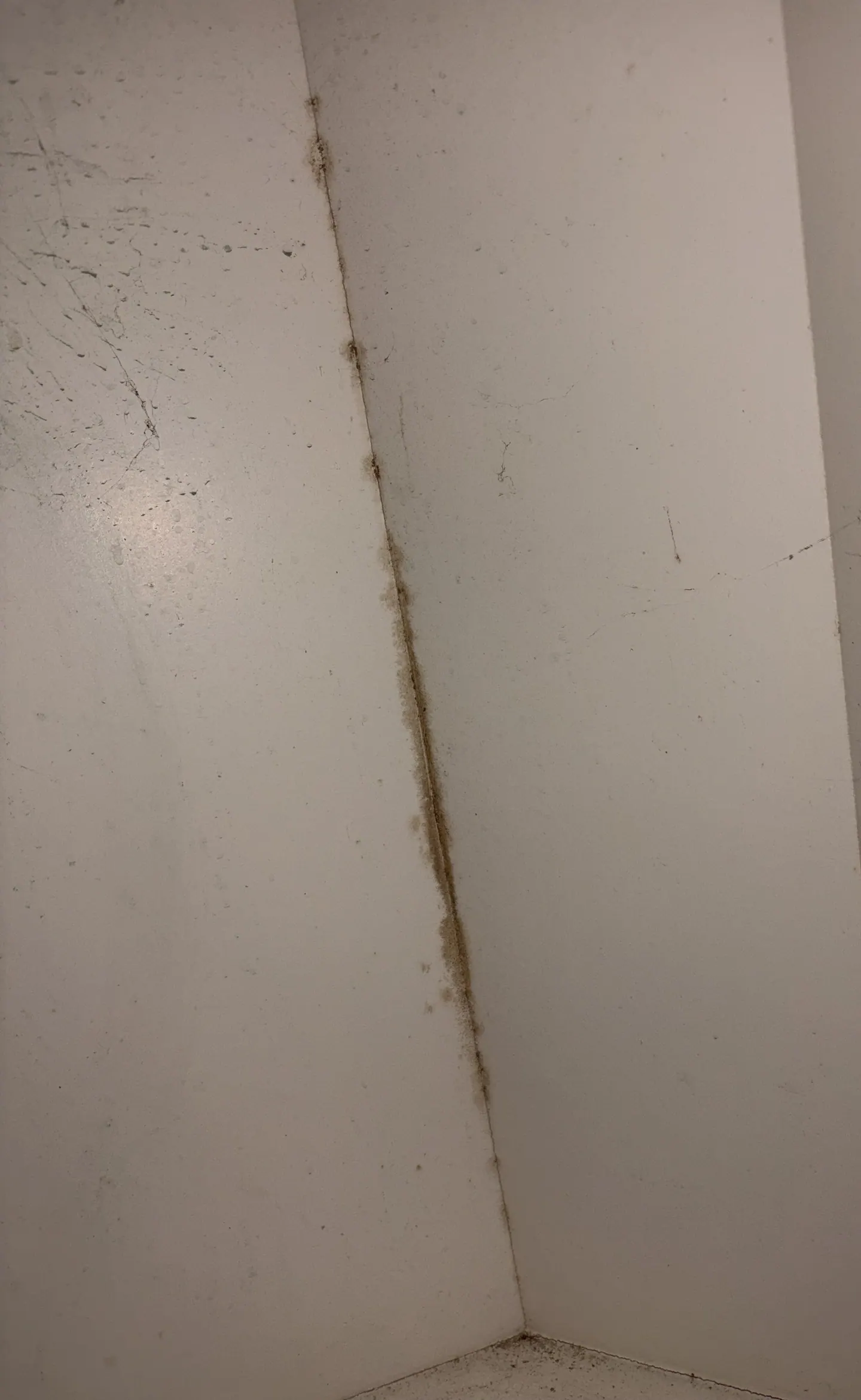
Mold Found Inside a Bathroom Vanity After a Persistent Musty Odor
A homeowner reported persistent musty odors in three adjoining or vertically stacked bathrooms. In Bathroom #1, an accessible rear vanity seam showed discoloration and its surface swab supported fungal growth. Its air sample contained more than 8,000 Aspergillus/Penicillium-like spores/m³, unlike the other two bathrooms tested. The specific moisture source was not confirmed.
View Case Study →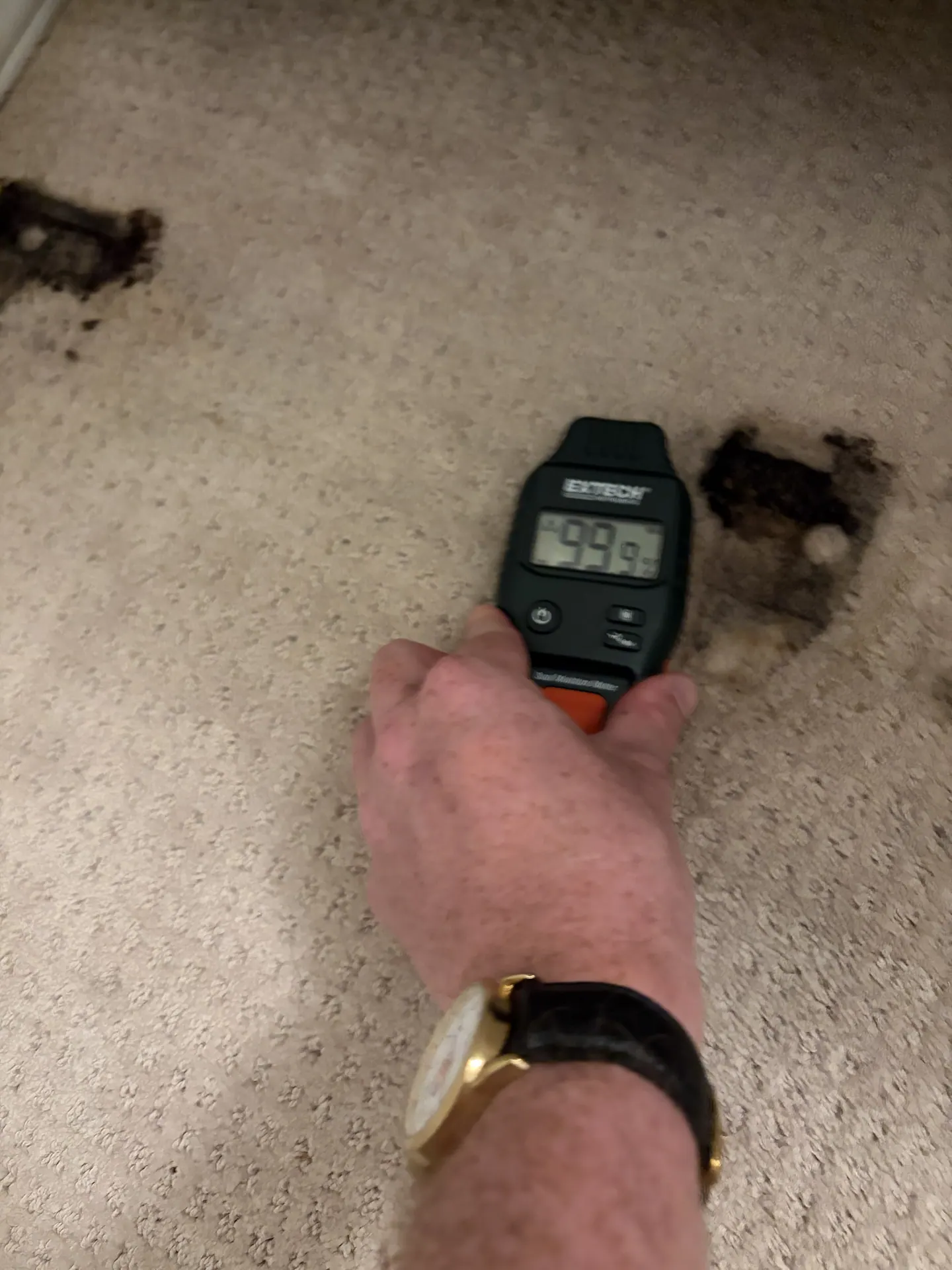
Mold and Water Intrusion From Landscape Irrigation in a Dallas Bedroom
A Dallas homeowner noticed visible growth on a guest-bedroom nightstand foot. A limited assessment found two wet carpet and lower-wall zones along the exterior wall, aligned horizontally with two exterior areas showing algae-like growth. A swab of one stained wet carpet area supported fungal growth, including Heavy Chaetomium and Heavy hyphal fragments. Landscape irrigation was identified as the probable recurring moisture source; the precise route of water entry was not confirmed.
View Case Study →