
- Location
- Dallas, Texas
- Property type
- Single-family residential
- Inspection type
- Limited mold assessment
- Primary concern
- Persistent musty odors in three bathrooms, with discoloration inside one sink vanity
- Inspection
- September 2026
- Published
- September 2026
The Situation
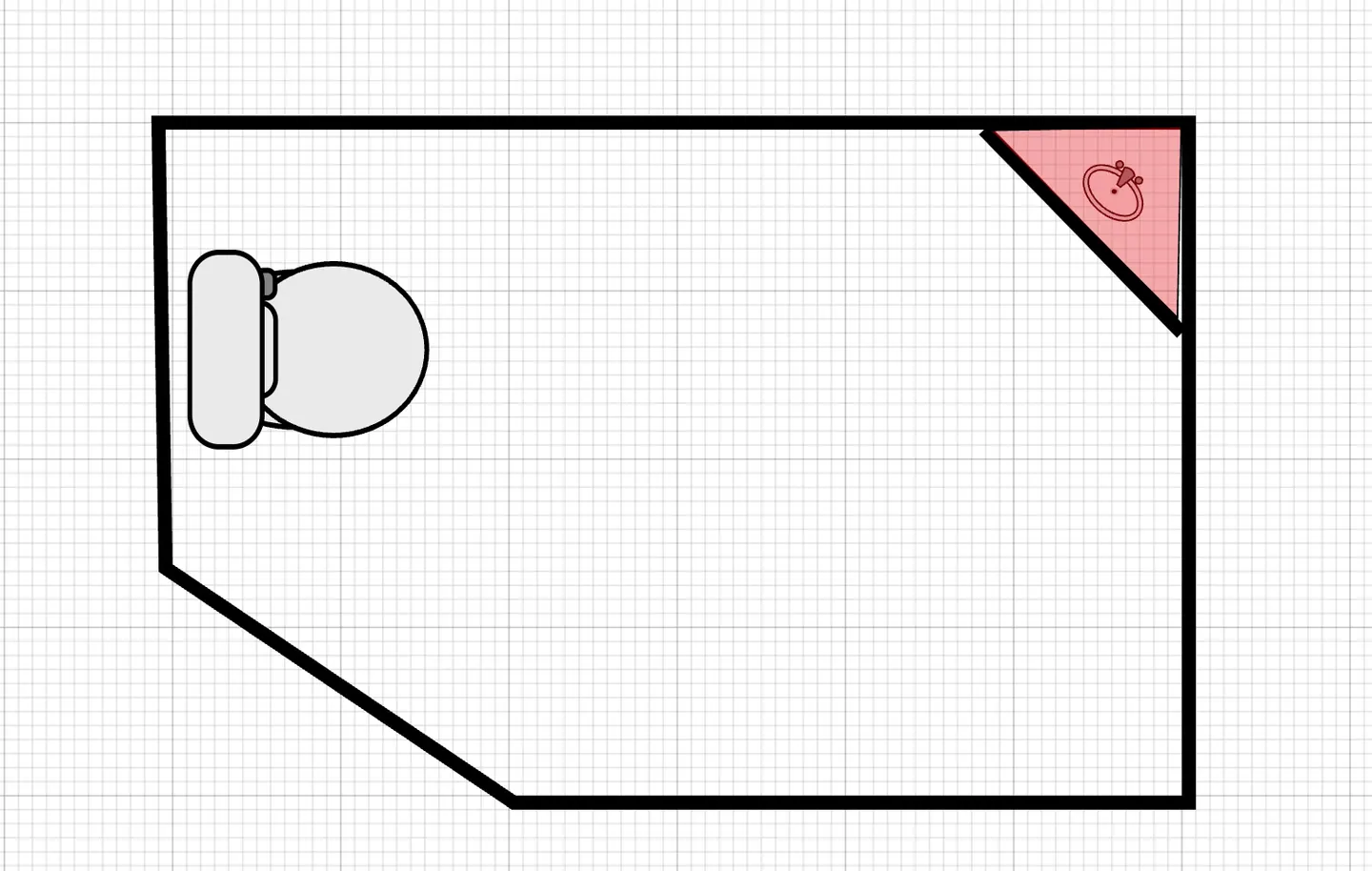
The homeowner reported a persistent musty odor in Bathroom #1 on the first floor, adjacent Bathroom #2 sharing a wall, and an upstairs bathroom directly above them. The limited assessment evaluated accessible surfaces and conditions conducive to fungal growth.
Methods included non-invasive visual inspection, comparative moisture screening, interior and exterior temperature and humidity measurements, three indoor air samples, one outdoor reference air sample, and one surface swab.
What Was Inspected
- Accessible surfaces in all three bathrooms were examined. No building materials were removed, cabinet components disassembled, plumbing opened, or wall cavities opened.
- Concealed sides of cabinets, shared walls, and other inaccessible assemblies were not evaluated.
What We Observed
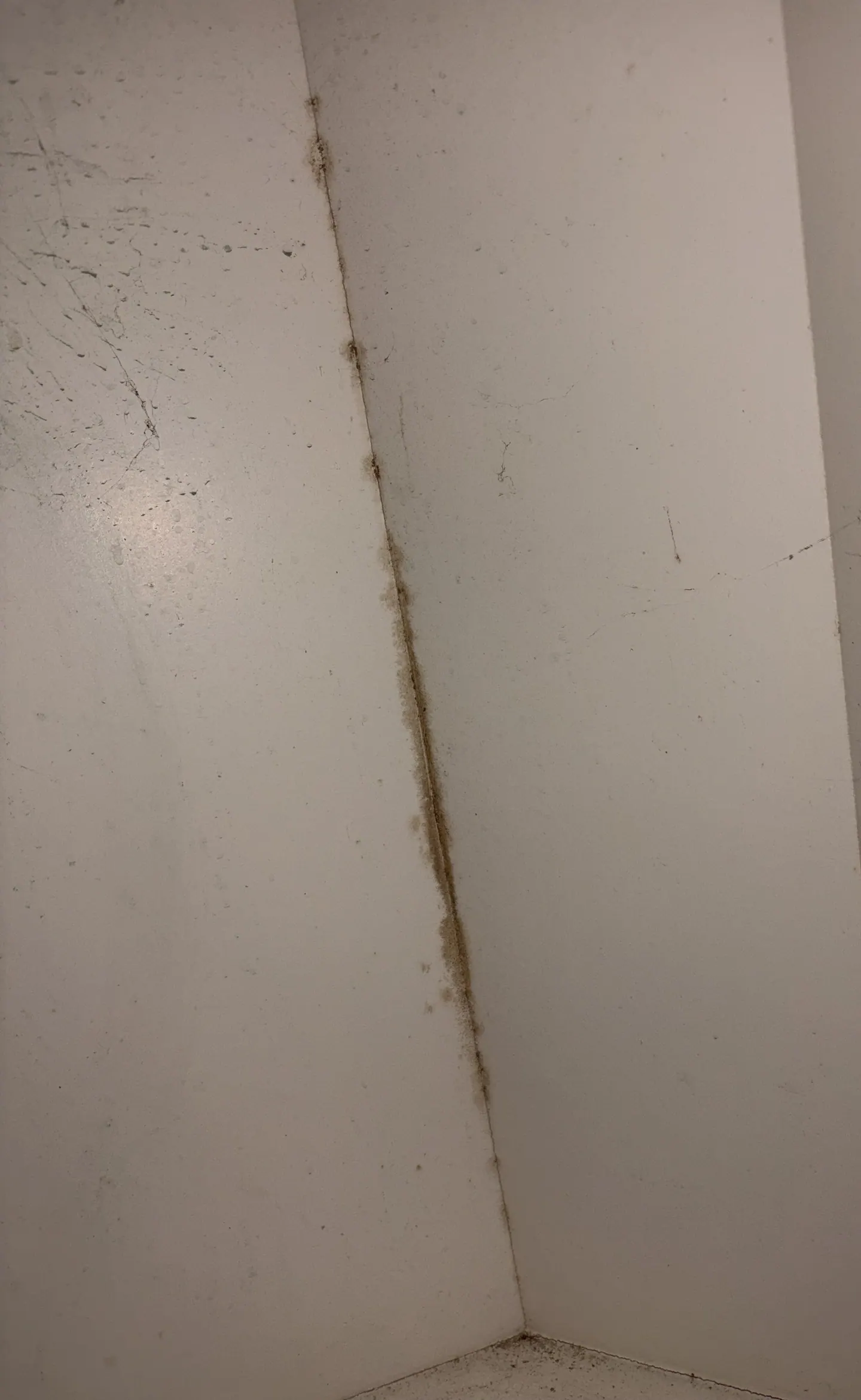
A musty odor was noted. In Bathroom #1, a vertical band of dark discoloration was visible inside the sink vanity at the rear corner where its back panel met the side panel. A surface swab was collected from that accessible seam.
The neighboring Bathroom #2 and the bathroom directly above did not have visible growth, water staining, or damaged finishes on accessible surfaces during the inspection. This does not establish that their concealed assemblies were unaffected.
What Was Found Inside the Bathroom Vanity?
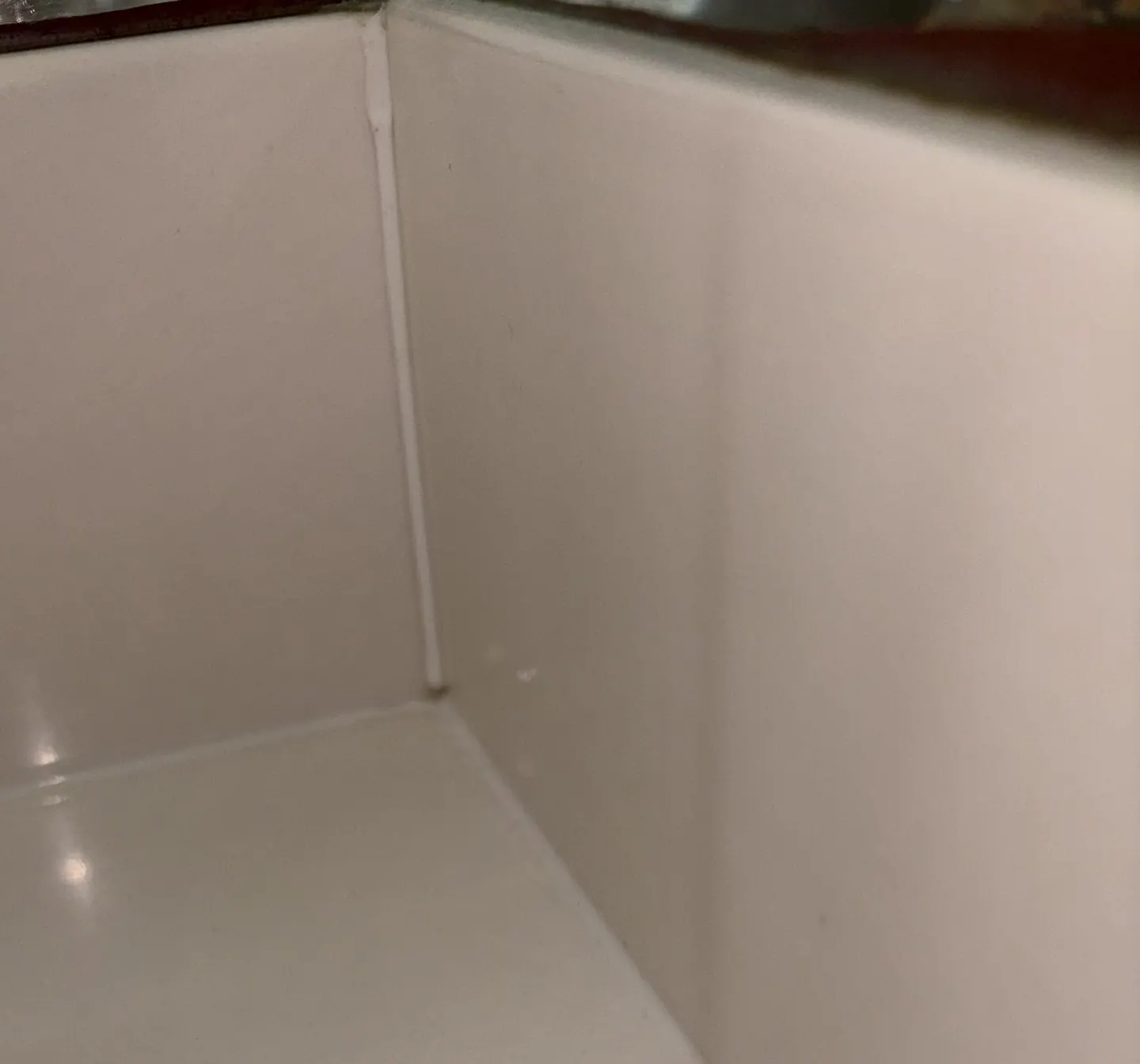
Dark brown-to-black discoloration followed the rear interior corner seam of the painted or laminated particleboard vanity in Bathroom #1. It extended down the seam, onto the cabinet deck and nearby interior surfaces, and beneath parts of the countertop overhang. The rear corner joint was separated and unsealed.
A swab of the discolored accessible seam supported fungal growth there. Neither the concealed side of the cabinet nor the adjacent wall cavity was opened; their condition remained undetermined.
Moisture Screening Found an Anomaly at the Vanity
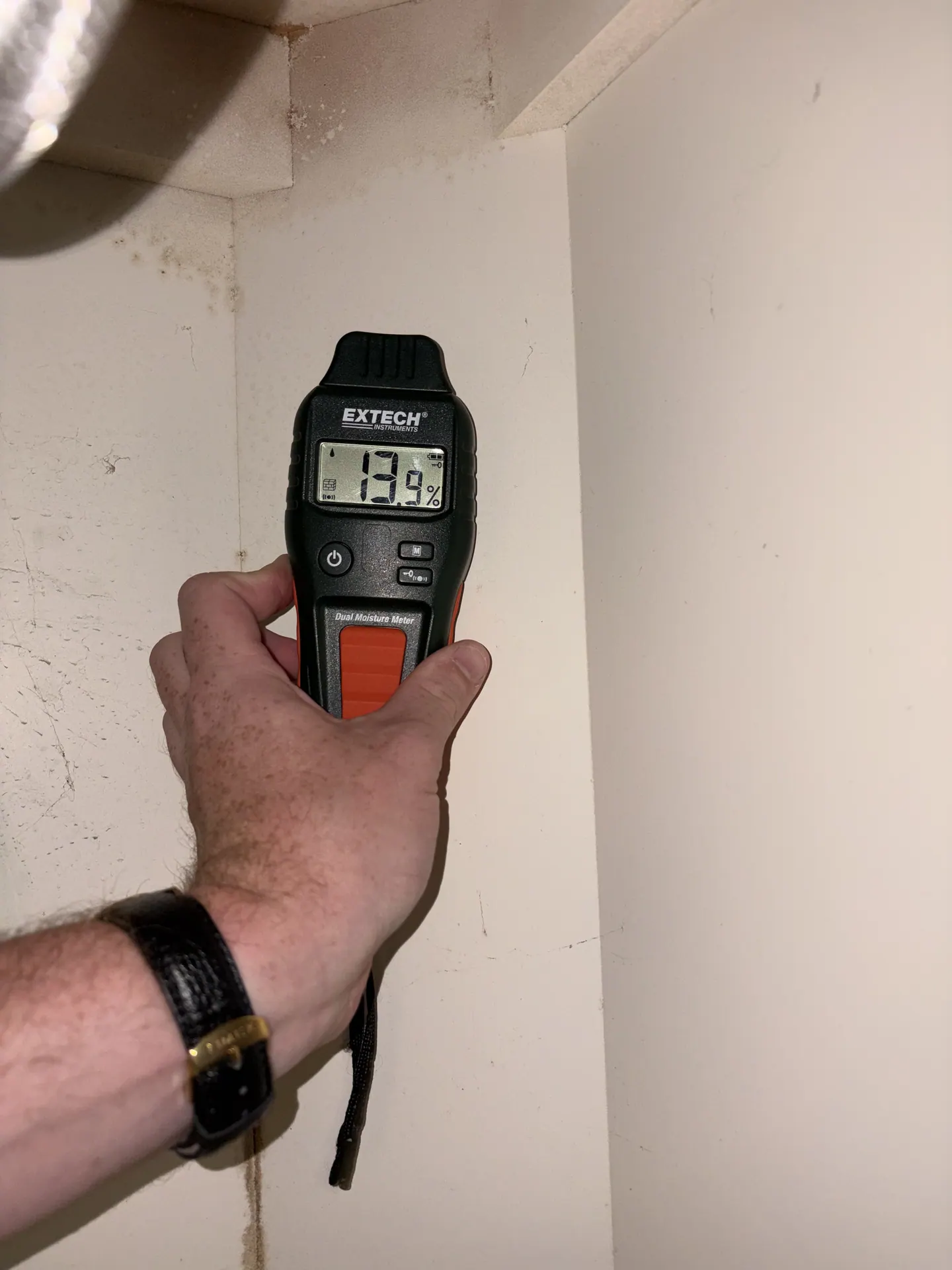
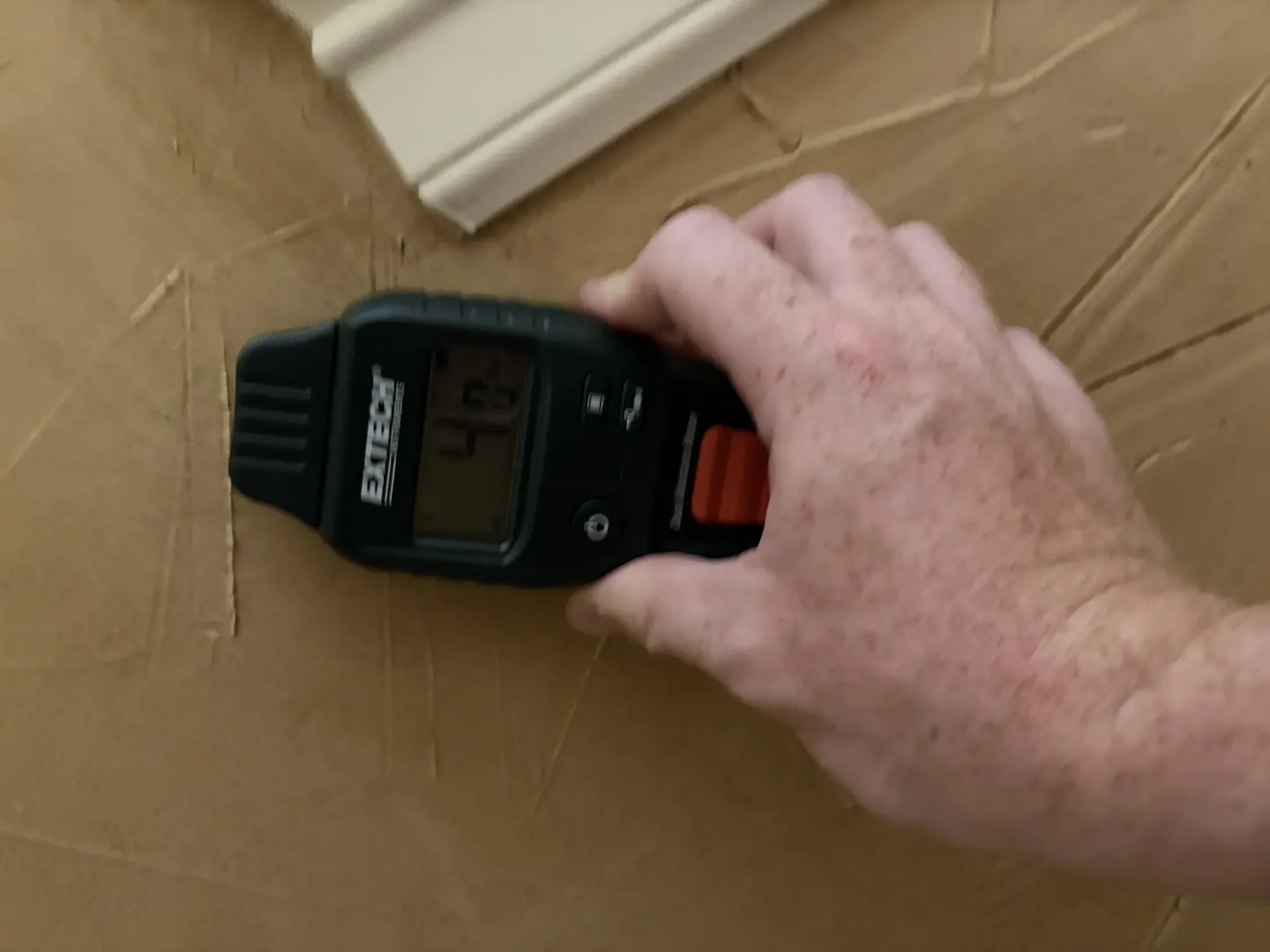
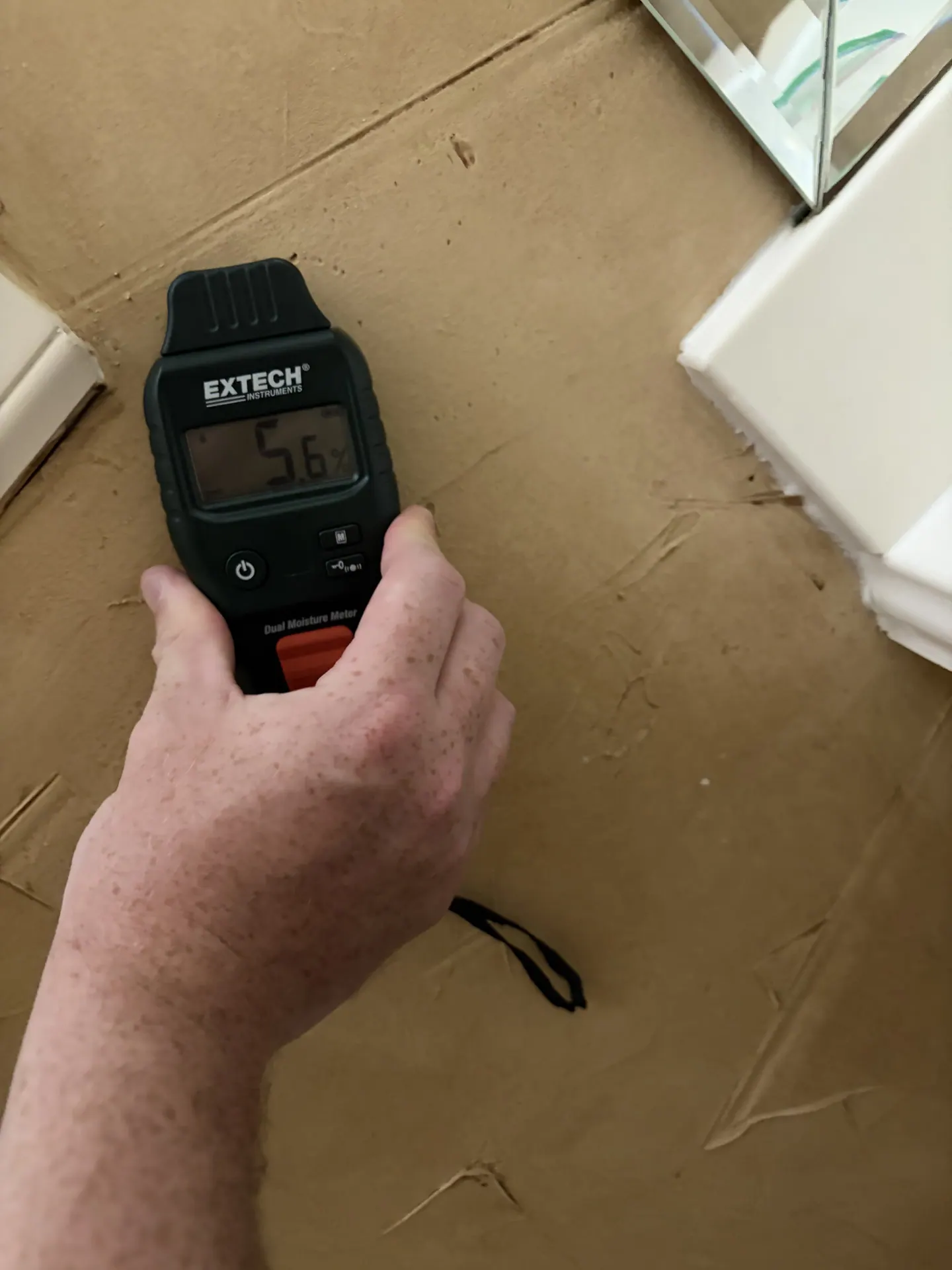
An Extech MO55 was used in non-penetrating pinless mode. The Bathroom #1 vanity back panel beside the discolored seam returned the highest comparative response, 13.9. Bathroom #1 wall references returned 4.0 and 5.6; upstairs bathroom reference locations returned 5.8, 6.1, and 7.3.
The 13.9 response was approximately three times some same-floor reference readings. It was consistent with a localized moisture anomaly, but these are comparative readings, not moisture-content percentages. They did not establish the actual moisture content or exactly where moisture was within the cabinet or wall.
Moisture / Building Conditions
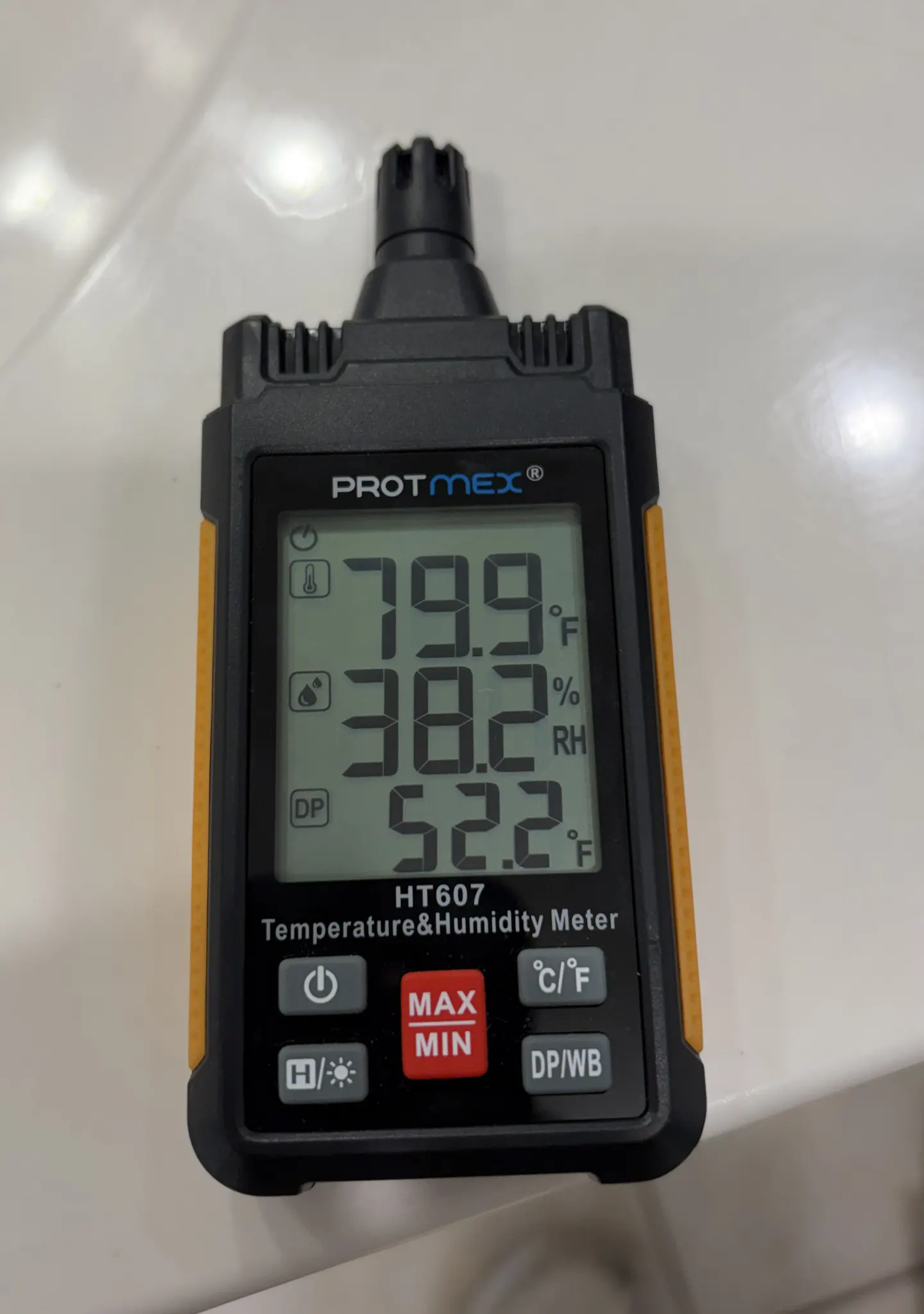
At the time of inspection, indoor air measured 79.9°F, 38.2% relative humidity, and a 52.2°F dew point. Outdoors, it measured 79.8°F, 66.6% relative humidity, and a 67.7°F dew point.
The indoor relative humidity reading was well below 60% at that time. The assessment did not identify whole-room ambient humidity as the apparent driver of the Bathroom #1 condition; a single reading does not rule out different conditions at other times.
Sampling Performed
- Surface swab, direct microscopic examination — Discolored rear interior corner seam of the Bathroom #1 vanity
- Air sample — Bathroom #1: Compared with the outdoor reference and two other indoor bathroom samples.
- Air sample — Adjoining Bathroom #2
- Air sample — Upstairs bathroom
- Outdoor reference air sample — Exterior
Laboratory Findings
| Sample | Finding | Reported result | Context |
|---|---|---|---|
| Bathroom #1 vanity seam swab | Aspergillus/Penicillium-like structures | Heavy | |
| Bathroom #1 vanity seam swab | Hyphal fragments | Heavy | |
| Bathroom #1 vanity seam swab | Ascospores | Minor | |
| Bathroom #1 vanity seam swab | Myxomycetes/Periconia/Smut/Rust group | Minor | |
| Outdoor reference air | Total fungal spores | 1,200 spores/m³ | |
| Outdoor reference air | Aspergillus/Penicillium-like | 85 spores/m³ | |
| Outdoor reference air | Cladosporium | 470 spores/m³ | |
| Outdoor reference air | Basidiospores | 430 spores/m³ | |
| Bathroom #1 air | Total fungal spores | >8,200 spores/m³ | Laboratory stopping rule reached |
| Bathroom #1 air | Aspergillus/Penicillium-like | >8,000 spores/m³ | Approximately 97% of this air sample; stopping rule reached |
| Bathroom #2 air | Total fungal spores | 210 spores/m³ | |
| Bathroom #2 air | Aspergillus/Penicillium-like | 130 spores/m³ | |
| Bathroom #2 air | Hyphal fragments | One detected | |
| Upstairs bathroom air | Total fungal spores | 85 spores/m³ | |
| Upstairs bathroom air | Cladosporium | 43 spores/m³ | |
| Upstairs bathroom air | Curvularia | 43 spores/m³ | |
| Upstairs bathroom air | Aspergillus/Penicillium-like | Not detected |
Bathroom Air Testing Showed a Large Aspergillus/Penicillium-like Amplification
The Bathroom #1 air sample contained more than 8,200 total spores/m³, approximately seven times the outdoor total of 1,200 spores/m³. More than 8,000 spores/m³ were Aspergillus/Penicillium-like, approximately 97% of that bathroom sample and more than 90 times the outdoor concentration of 85 spores/m³ for that group.
The laboratory reported the Bathroom #1 results as greater-than values because its stopping rule was reached. The true concentrations may have been higher; the assessment did not establish exact counts above those reported limits.
The Air and Surface Results Pointed to the Same Fungal Group
Aspergillus/Penicillium-like was prominent on the sampled vanity seam and dominated the Bathroom #1 air sample. The assessment interpreted the combination as consistent with the cabinet growth acting as a source of airborne amplification at that location.
The accessible seam was not proven to be the only source. A larger or additional concealed source behind the cabinet or within the adjoining wall could not be ruled out.
What Did the Other Bathrooms Show?
Bathroom #2 shared a wall with Bathroom #1. No growth, staining, finish damage, or elevated comparative moisture response was observed on accessible surfaces. Its air sample contained 210 total spores/m³ and 130 Aspergillus/Penicillium-like spores/m³, compared with 85 spores/m³ of that group outdoors; one hyphal fragment was detected. The report did not identify a separate condition on accessible surfaces, but concealed involvement of the shared wall remained possible.
The upstairs bathroom was directly above the first-floor bathrooms. Its reference meter responses were 5.8, 6.1, and 7.3. Accessible surfaces showed no visible growth, staining, or finish damage. Its air sample contained 85 total spores/m³, with 43 Cladosporium and 43 Curvularia spores/m³ and no Aspergillus/Penicillium-like spores detected. The reported upstairs musty odor was not explained by a condition identified on accessible surfaces.
What the Findings Suggested
The combination of the discolored vanity seam and Heavy Aspergillus/Penicillium-like structures and hyphal fragments in its surface swab supported fungal growth on the sampled, accessible cabinet surface.
Bathroom #1 air testing showed strong Aspergillus/Penicillium-like amplification relative to the outdoor reference, while the two other indoor bathrooms did not show the same pattern. The assessment did not determine whether additional growth existed behind the cabinet or shared wall.
What Was the Moisture Source?
The exact moisture source was not confirmed. Items identified for professional evaluation included the separated cabinet joint, sink supply and drain connections, the shared wall, and plumbing serving the vertically stacked bathrooms.
The upstairs bathroom's location alone did not establish an upstairs plumbing leak. Its assessed accessible surfaces did not show an elevated moisture response or the same Aspergillus/Penicillium-like air-sample amplification. Nor was the unsealed cabinet joint proven to be the source.
Recommendations
- Have the source of moisture investigated and corrected. Professional evaluation should consider the vanity corner joint, sink supply and drain connections, the shared wall, and plumbing serving the vertically stacked bathrooms; none was confirmed as the cause during this assessment.
- Have qualified professionals address the affected Bathroom #1 vanity and evaluate potentially concealed materials behind it as indicated by findings during corrective work.
- A separate licensed Texas Mold Assessment Consultant was engaged to prepare the formal remediation protocol. This public case study summarizes assessment findings and recommendations, not the protocol, its work scope, or its clearance criteria.
What Homeowners Can Learn From This Case
A bathroom may have a persistent musty odor without widespread visible mold. Here, confirmed growth was concentrated at a small accessible seam inside a vanity, while its bathroom air sample showed a much larger Aspergillus/Penicillium-like signal. Odor or visible area alone cannot identify the full extent of a condition.
Combining accessible visual inspection, comparative moisture screening, surface sampling, indoor and outdoor air sampling, and evaluation of nearby rooms can help distinguish where findings do and do not align. Despite their proximity, the three bathrooms in this assessment had different results; no other home's condition can be inferred from them.
Questions About This Case
Can mold grow behind a bathroom vanity?
Yes. Moisture from plumbing, water intrusion, condensation, or other sources may affect cabinetry and concealed areas. In this case, fungal growth was confirmed on an accessible rear interior seam of a bathroom vanity; the concealed side was not opened.
Can mold under a bathroom sink cause a musty smell?
A musty odor can be associated with fungal growth, but odor alone cannot determine its location or cause. Here, the homeowner reported an odor and testing confirmed growth inside one vanity cabinet.
Can a small area of mold cause high air-sample results?
Visible size alone does not reliably predict airborne results. In this case, a localized area of accessible cabinet growth accompanied more than 8,000 Aspergillus/Penicillium-like spores/m³ in Bathroom #1 air, while an additional concealed source could not be ruled out.
What does Aspergillus/Penicillium-like mean on a mold test?
Under microscopic spore-trap analysis, Aspergillus and Penicillium spores often cannot be reliably distinguished from one another, so they are reported together as Aspergillus/Penicillium-like. This is not species-level identification.
Does a musty smell mean mold is behind the wall?
Not necessarily. Odor can justify investigation but cannot locate a source. Here, growth was confirmed inside a vanity while concealed wall conditions remained undetermined.
Why is an outdoor mold sample collected?
An outdoor reference puts indoor spore types and airborne concentrations in context. Bathroom #1's Aspergillus/Penicillium-like result was substantially higher than the outdoor reference in this assessment.
Related Services
Musty Bathroom but Can't Find the Source?
A persistent musty odor, staining inside cabinetry, or unexplained moisture can sometimes indicate a condition that is not obvious from the room itself. A mold assessment can help document visible conditions, moisture patterns, and sampling results where appropriate.
Schedule a Mold InspectionInspection performed by Ethan Wright, TDLR Licensed Mold Assessment Technician (MAT #1589).
Related Real Inspection Cases
Compare a separate bathroom-area case with growth found through a shared-wall opening after a reported plumbing-leak repair, and a Dallas bedroom case associated with probable exterior irrigation wetting.
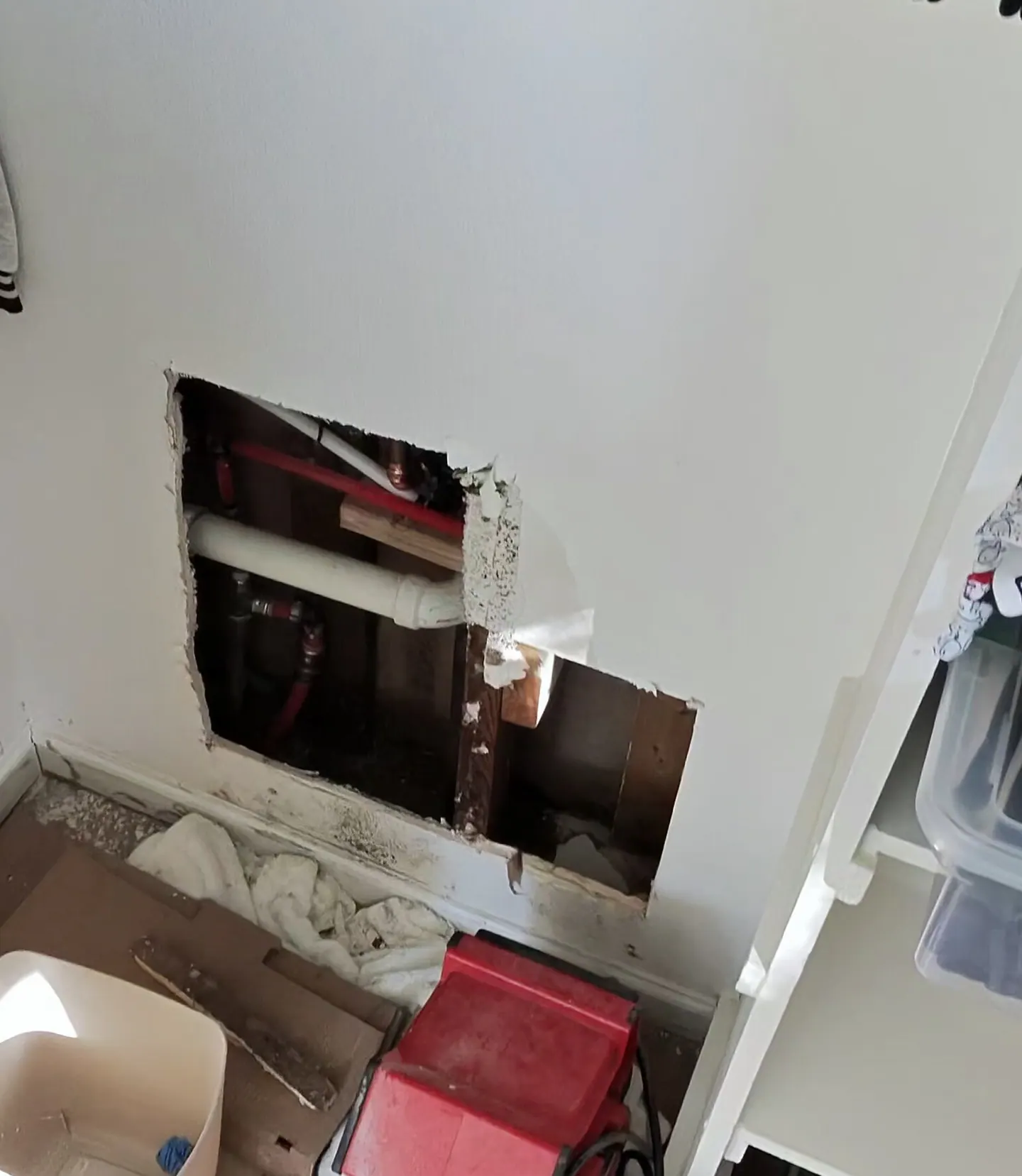
Mold Found Inside a Wall After a Plumbing Leak in Farmers Branch
A Farmers Branch homeowner requested a limited mold assessment after a reported plumbing leak affected a wall shared by a guest bathroom and two closets. The leak had reportedly been repaired, but existing repair openings exposed stained wallboard and framing. A swab through the guest bedroom closet opening supported fungal growth on sampled material. Separate ceiling and former exterior-wall concerns had different, more limited findings.
View Case Study →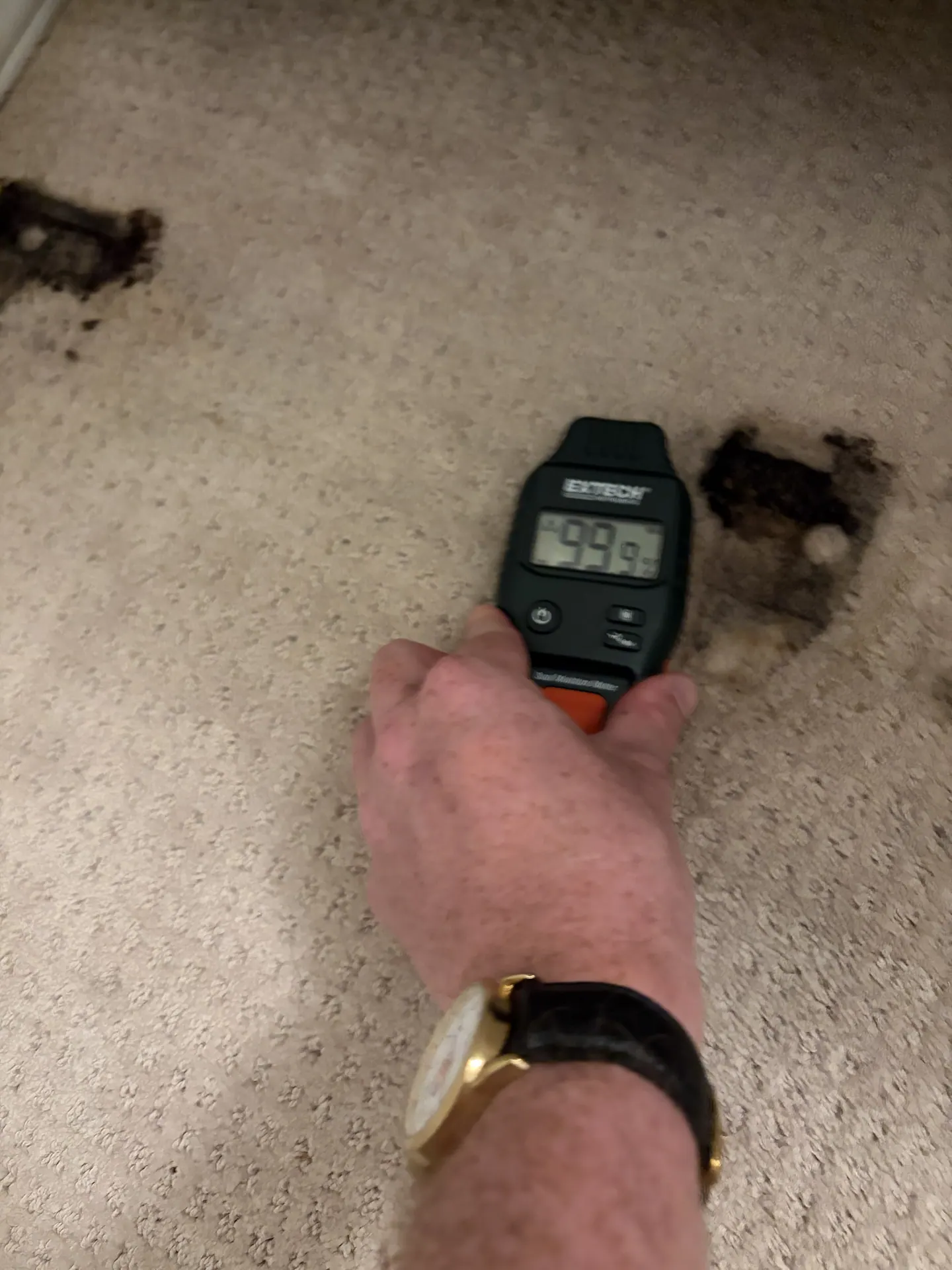
Mold and Water Intrusion From Landscape Irrigation in a Dallas Bedroom
A Dallas homeowner noticed visible growth on a guest-bedroom nightstand foot. A limited assessment found two wet carpet and lower-wall zones along the exterior wall, aligned horizontally with two exterior areas showing algae-like growth. A swab of one stained wet carpet area supported fungal growth, including Heavy Chaetomium and Heavy hyphal fragments. Landscape irrigation was identified as the probable recurring moisture source; the precise route of water entry was not confirmed.
View Case Study →