
- Location
- Farmers Branch, Texas
- Property type
- Single-family residential
- Inspection type
- Limited mold assessment
- Primary concern
- Suspected growth inside a shared wall after a reportedly repaired plumbing leak
- Inspection
- September 2026
- Published
- September 2026
The Situation
A plumbing leak had affected a continuous wall assembly shared by the guest bathroom, guest bedroom closet, and hallway closet. The homeowner reported that a plumbing contractor repaired the leak before the mold assessment.
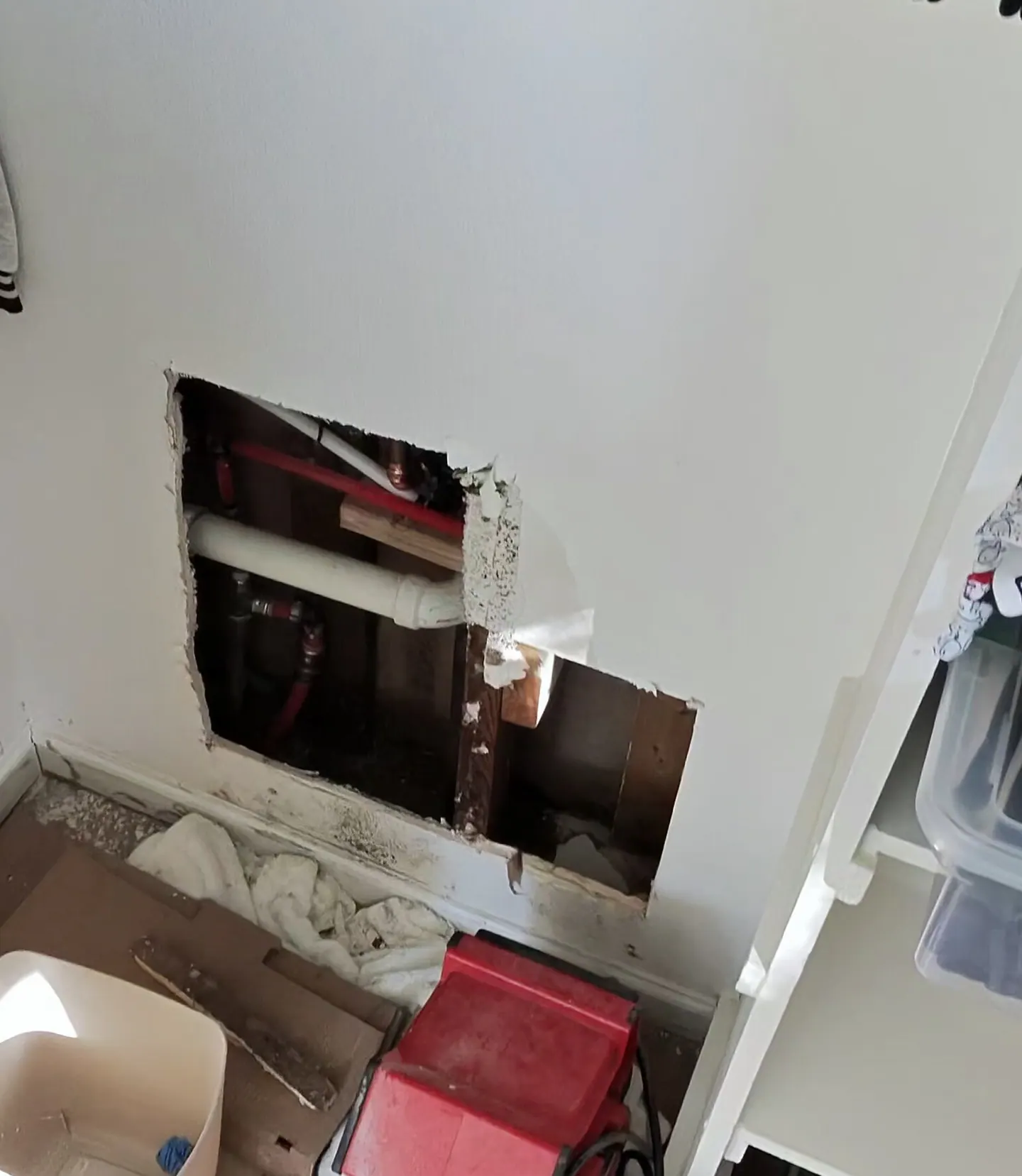
Others had already made lower-wall openings in the two closets during plumbing work. These existing openings allowed examination of exposed materials and collection of a targeted swab. Other reported concerns were a previously repaired bedroom/office ceiling leak and paint spalling at a former exterior brick wall elsewhere in the home.
What Was Inspected
- The assessor inspected exposed framing, the back and cut edges of wallboard, and the floor line through existing openings in the guest bedroom and hallway closets. No new opening was cut or enlarged, and the assessor did not remove wallboard or demolish materials.
- The guest-bathroom vanity and a historic ceiling stain were inspected separately. A former exterior brick wall and its opposite drywall face received comparative moisture screening but were not opened or sampled for mold.
- Two surface swabs were collected. No air samples were collected, so the assessment did not measure airborne fungal concentrations.
What We Observed
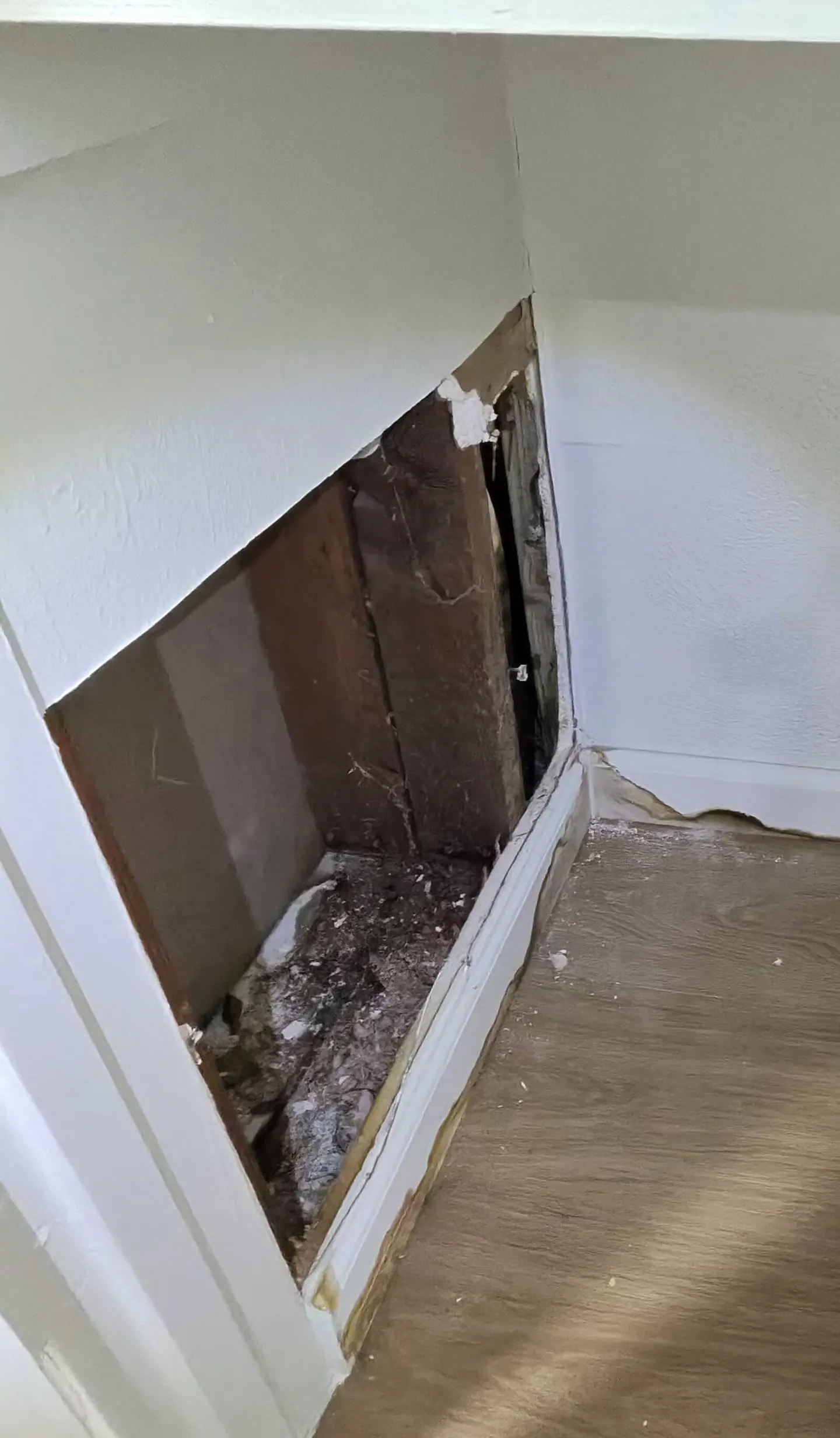
Through the already-open guest-bedroom closet wall, the assessor observed dark staining on exposed framing, wallboard backing and cut edges, and near the floor line. A swab of the stained wallboard and framing was collected through that opening.
Another pre-existing opening in the hallway closet showed comparable staining in the continuous leak-affected assembly. On the guest-bathroom side, dark spotting was visible on the rear wall of the vanity beneath one sink. Neither the hallway-closet opening nor the vanity was separately sampled.
What Was Found Inside the Wall?
Plumbing-repair openings already exposed portions of the shared wall. At the guest-bedroom closet opening, dark staining was observed on accessible framing, the back and cut edges of wallboard, and along the floor line. The inspector did not cut into or enlarge the wall.
The swab collected from stained wallboard and framing at this opening contained Heavy Chaetomium, Heavy Aspergillus/Penicillium-like structures, and Heavy hyphal fragments. Together with the leak history and visible staining, the report interpreted the sample as consistent with fungal growth on the sampled material rather than settled spores alone. The result does not map every concealed surface in the assembly.
What Did the Hallway Closet Show?
A second opening in the same continuous wall showed dark staining on exposed framing and wallboard backing, damage or separation near the floor line, and debris from prior repair activity. It was not separately sampled. The report considered these visible findings alongside the confirmed guest-bedroom closet sample without assigning the hallway its own lab result.
What About the Guest-Bathroom Vanity?
The guest bathroom faced the other side of the affected wall. Dark spotting was observed on the back wall inside the vanity beneath one sink, but no vanity sample was collected. The spotting is a visual observation, not a separate laboratory confirmation; the vanity was not identified as the leak source.
Moisture / Building Conditions
The ceiling-leak area's 0.8 and the separate former exterior-wall readings were comparative screening responses, not measured moisture-content percentages. The Extech meter was used in pin and/or pinless mode depending on the material and location.
Screening differences help identify areas for further evaluation, but these readings alone do not determine the exact moisture content, its precise location within an assembly, or whether fungal growth is present.
Sampling Performed
- Surface swab — Stained wallboard and framing through the existing guest-bedroom closet wall opening
- Surface swab — Bedroom/office ceiling surface at the historic leak stain
Laboratory Findings
| Sample | Finding | Reported result | Context |
|---|---|---|---|
| Guest-bedroom closet wall-opening swab | Chaetomium | Heavy | |
| Guest-bedroom closet wall-opening swab | Aspergillus/Penicillium-like structures | Heavy | |
| Guest-bedroom closet wall-opening swab | Hyphal fragments | Heavy | |
| Guest-bedroom closet wall-opening swab | Curvularia | Minor | |
| Guest-bedroom closet wall-opening swab | Alternaria | Minor | |
| Guest-bedroom closet wall-opening swab | Cladosporium | Minor | |
| Guest-bedroom closet wall-opening swab | Ascospores, non-specified | Minor | |
| Guest-bedroom closet wall-opening swab | Non-specified fungal spore | Minor | |
| Bedroom/office historic ceiling-stain swab | Chaetomium | Minor | |
| Bedroom/office historic ceiling-stain swab | Hyphal fragments | Not identified | No other fungal structures identified |
Why Was Chaetomium Notable?
The leak-affected wall sample returned Heavy Chaetomium. The laboratory describes this fungal group as associated with wet cellulose-containing materials, including the paper on gypsum wallboard. This finding does not establish how long the leak existed, identify a health risk, or prove structural damage.
A Previous Ceiling Leak Did Not Show the Same Pattern
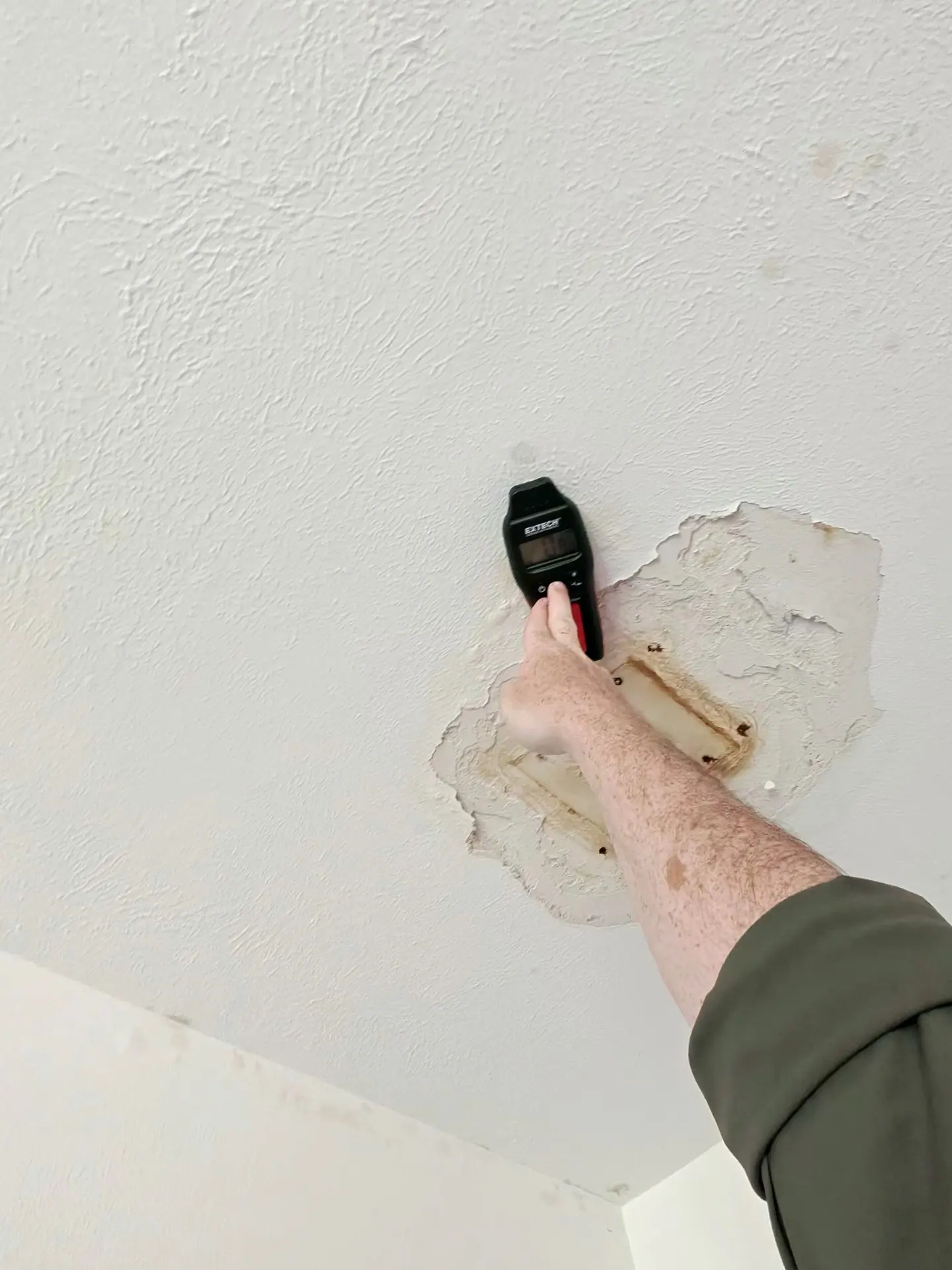
A bedroom/office ceiling seam and fastener line showed an older stain with blistered and peeling paint. The homeowner reported that this separate leak had also been repaired. At assessment the accessible material was dry to the touch, its comparative moisture response was 0.8, and no visible mold growth was observed.
A surface swab from the stain contained Minor Chaetomium only; no hyphal fragments or other fungal structures were identified. The report did not interpret this limited result as independently establishing active fungal growth on the accessible ceiling surface. The concealed ceiling cavity was not opened.
No Air Samples Were Collected
This limited assessment used surface swabs only. Airborne fungal concentrations, air quality across the home, and occupant exposure were not measured or determined.
What the Findings Suggested
The inspection report interpreted the stained material reached through the existing guest-bedroom closet opening as supporting fungal growth on that sampled wallboard and framing, based on the documented leak, visible conditions, and Heavy fungal structures and fragments.
By contrast, the historic ceiling stain's limited result did not independently establish active growth on its dry accessible surface. Neither sample describes concealed surfaces that were not inspected, and no airborne results are available.
An Unrelated Moisture Anomaly Was Found in Another Wall
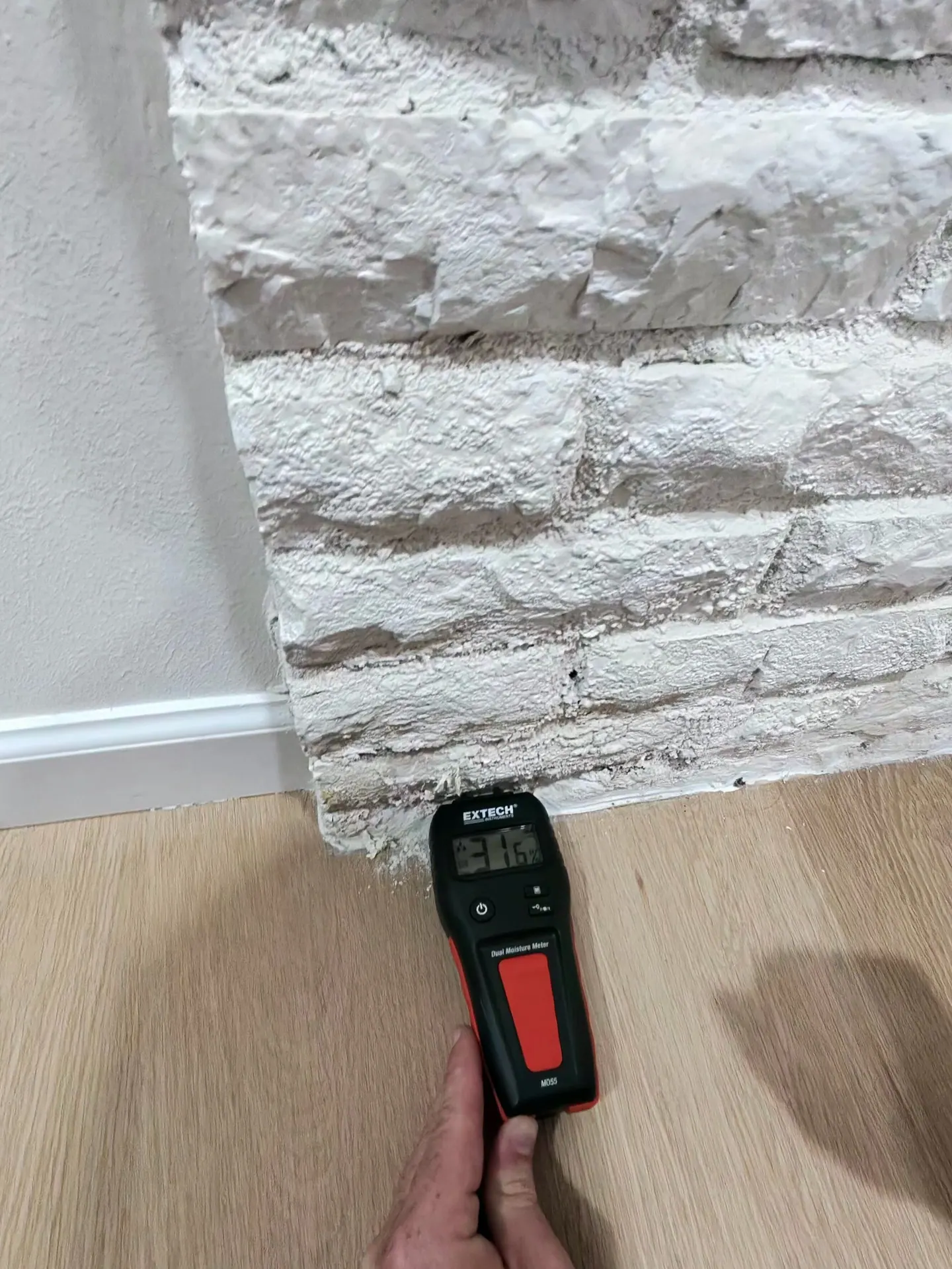
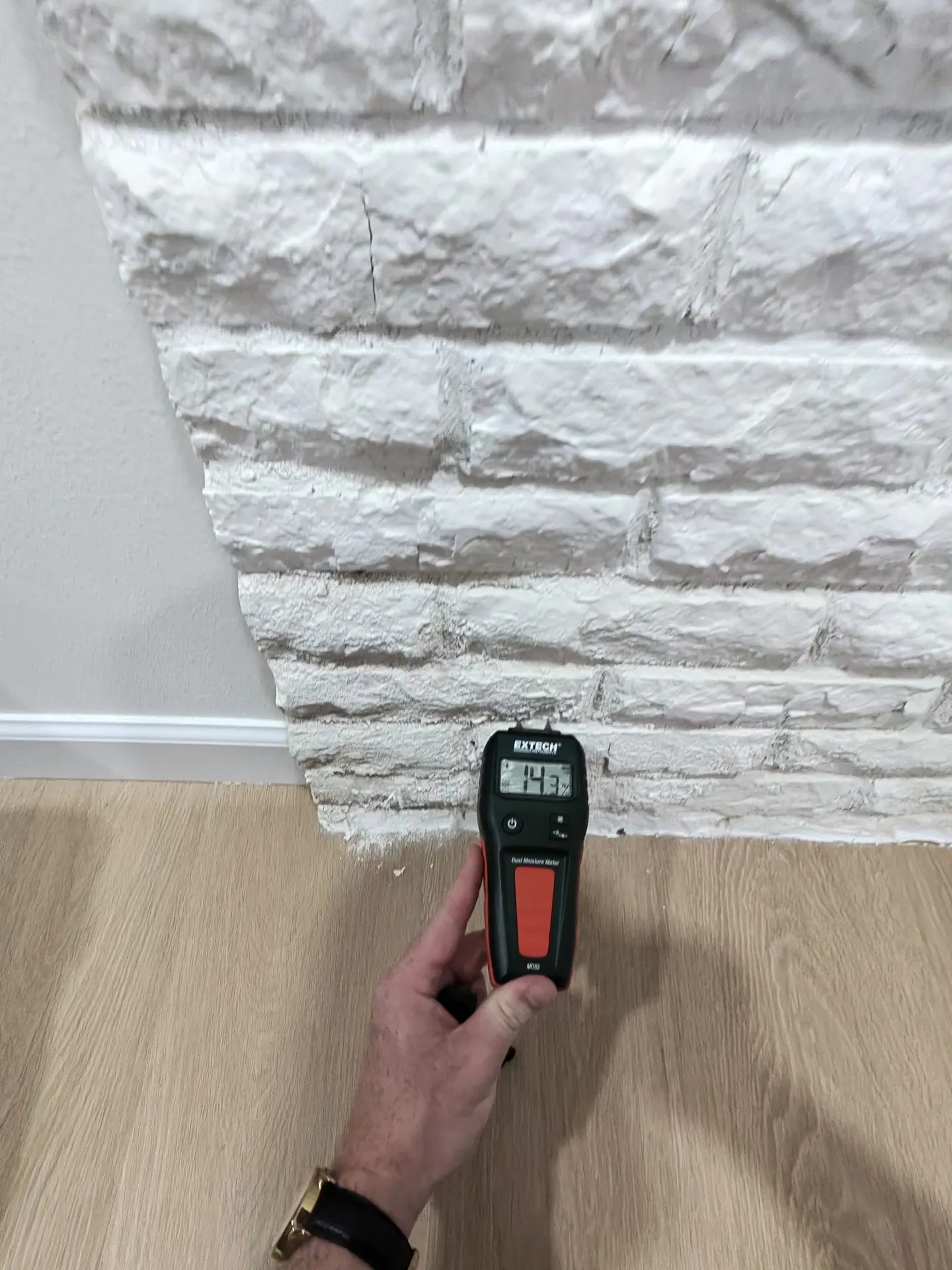
In the living-room/office, a painted brick wall reportedly became an interior wall after a room addition. Paint flaking and spalling were observed near its lower corner, but no visible mold growth was observed and no mold sample was collected there.
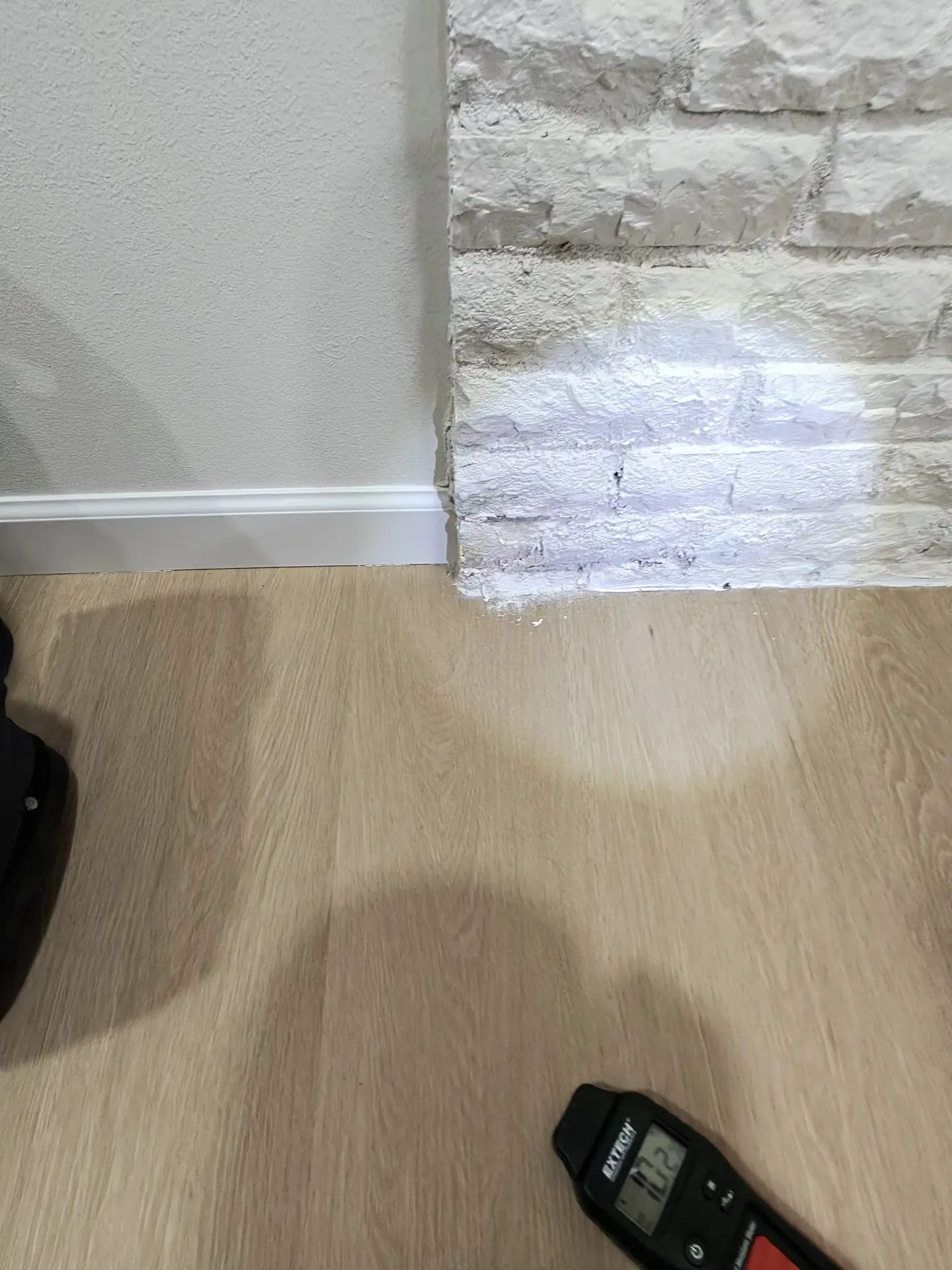
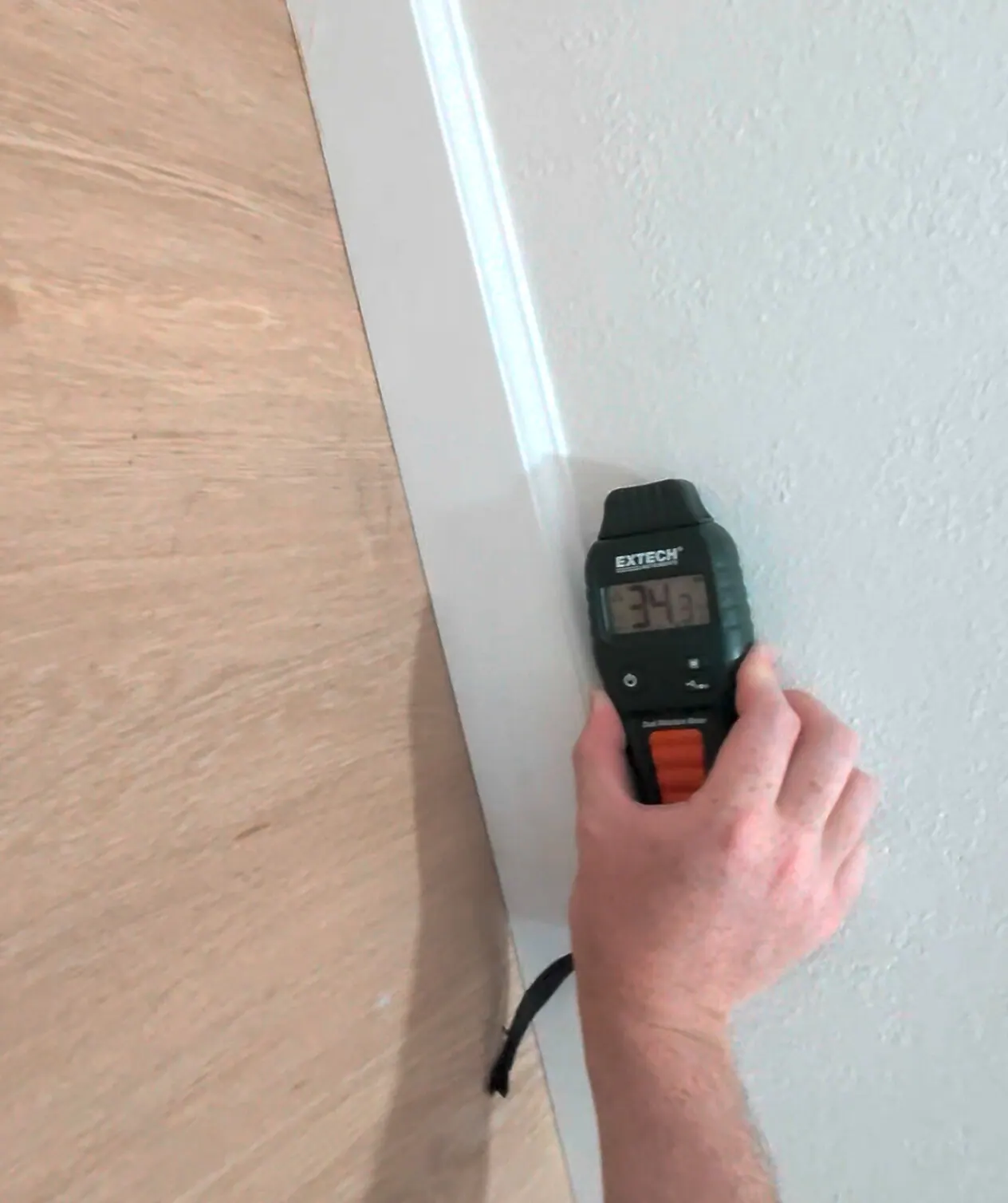
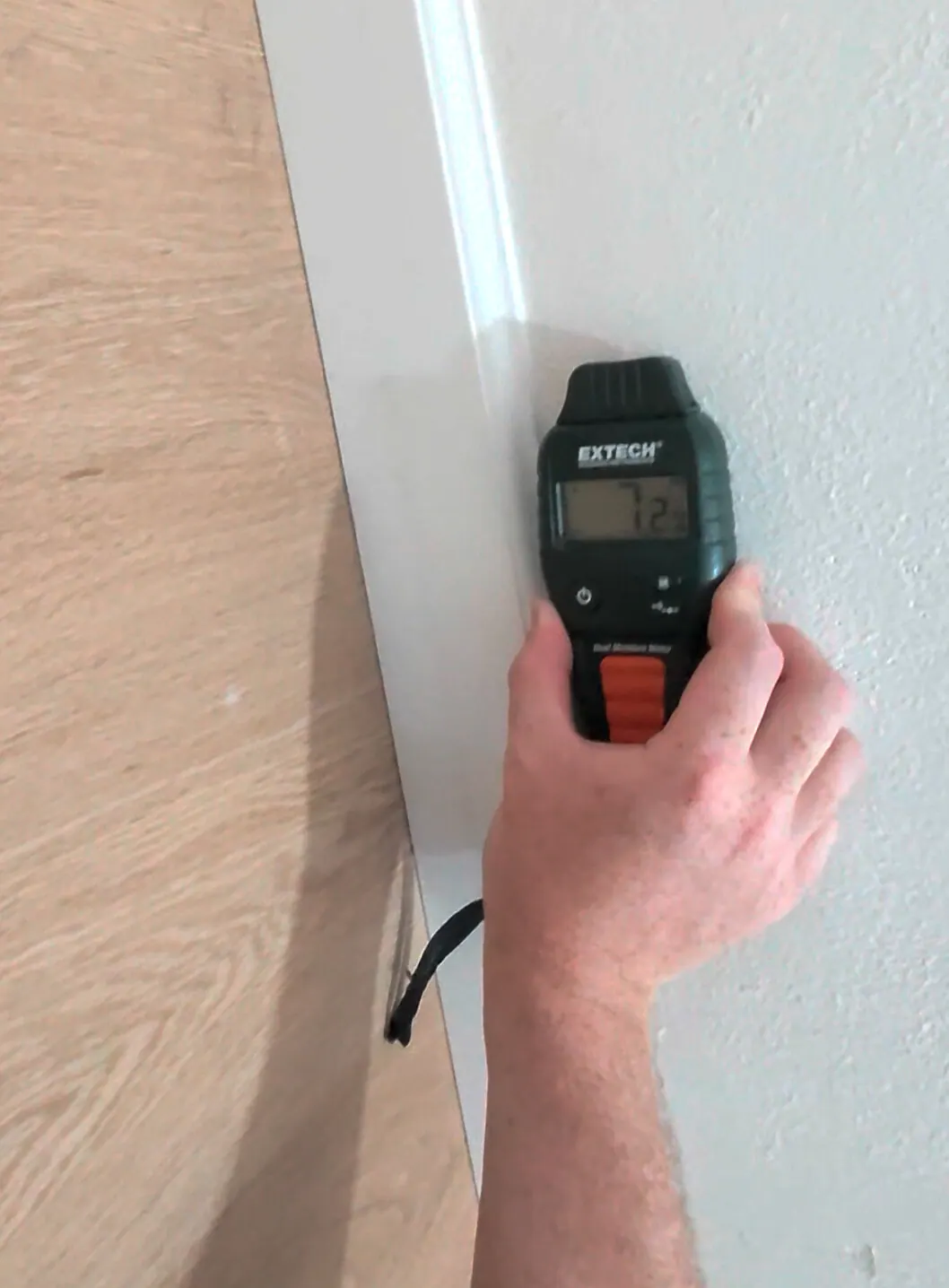
Comparative meter responses were 31.6 at affected mortar/grout, 14.3 at reference mortar/grout elsewhere on the wall, and 11.2 on a brick face. On the opposite drywall face of the assembly, the affected floor-line area returned 34.3 compared with 7.2 on unaffected drywall of the same material type. These comparative values are not moisture-content percentages and do not establish where moisture lies inside the wall.
No plumbing supply or drain lines were identified within this wall. The moisture source was not established, and the wall was not opened. Concealed moisture or growth could not be ruled out; equally, the elevated readings did not confirm mold at this unsampled wall.
Affected Area vs. Reference Area
The following two images compare the 34.3 affected floor-line drywall response with the 7.2 reference response on unaffected drywall of the same material type, on the reverse side of the former exterior brick wall. Neither is a moisture-content percentage or a mold-test result.
Recommendations
- The leak had reportedly already been repaired. The separately prepared protocol from a licensed Mold Assessment Consultant addressed affected materials in the guest bathroom, guest-bedroom closet, and hallway closet and included controlled removal and other professional procedures.
- The former exterior-wall moisture anomaly merits separate professional evaluation to determine its source and any conditions within the assembly; no mold finding was established at that unsampled wall.
- This case study reports assessment findings and general follow-up context only. It is not the licensed consultant's remediation protocol or a set of do-it-yourself removal instructions.
What Homeowners Can Learn From This Case
Repairing a plumbing leak does not by itself determine whether previously wetted materials supported fungal growth. Here, existing repair openings exposed stained material, and targeted surface sampling confirmed growth at the sampled closet-wall location after the reported repair.
An assessment after a leak may combine examination of already-accessible wallboard backing and framing, moisture screening, targeted swabs, and evaluation of rooms sharing a wall. Different past leaks can yield different findings: this property's separate, dry ceiling stain did not show the same pattern as the sampled plumbing-leak wall. Not every past leak implies the same corrective work.
Questions About This Case
Can mold remain after a plumbing leak is repaired?
Yes. Repairing a leak does not establish the condition of previously wet materials. Here, the leak had reportedly been repaired, yet fungal growth was supported by a swab from exposed wallboard and framing in the shared wall.
How do you check for mold inside a wall after a leak?
Assessment may include inspection through existing openings, moisture screening, examination of accessible framing and wallboard, and targeted surface sampling when appropriate. Existing plumbing-repair openings provided access in this case; the assessor did not create new ones.
Does dark staining inside a wall always mean mold?
No. Appearance alone cannot identify fungal growth. At the sampled closet-wall location in this case, the staining was accompanied by lab findings consistent with growth on the sampled material.
What does Chaetomium in drywall mean?
Chaetomium is a fungal group associated with wet cellulose-containing materials such as gypsum wallboard paper. This water-affected wall sample contained Heavy Chaetomium, which is not a health-risk rating or proof of how long the leak lasted.
Can a repaired leak still need mold remediation?
Potentially. The condition of affected materials, extent, moisture, and applicable requirements matter. Here, growth was supported on sampled wall material after the leak had reportedly been repaired, and a licensed consultant separately prepared a formal remediation protocol.
Does a small mold finding after an old leak always mean active mold?
No. A separate, dry ceiling stain in this assessment returned only Minor Chaetomium with no hyphal fragments or other fungal structures. The report did not interpret that accessible ceiling surface as showing active fungal growth.
Can a moisture meter tell exactly how wet a wall is?
Comparative screening can identify differences between affected and reference locations but may not establish exact moisture content or precisely locate moisture within a wall assembly. The drywall readings of 34.3 and 7.2 here were comparative, not percentages.
Related Services
Had a Plumbing Leak and Concerned About Mold?
Even after a leak is repaired, previously wet drywall, framing, cabinetry, or concealed wall materials may warrant evaluation if staining, odor, or other concerns remain.
Schedule a Mold InspectionInspection performed by Ethan Wright, TDLR Licensed Mold Assessment Technician (MAT #1589).
Related Real Inspection Cases
Compare these inspections of water-affected materials: a Dallas bedroom case involved probable exterior irrigation wetting, while a separate bathroom-area case confirmed growth on an accessible vanity seam.
Mold and Water Intrusion From Landscape Irrigation in a Dallas Bedroom
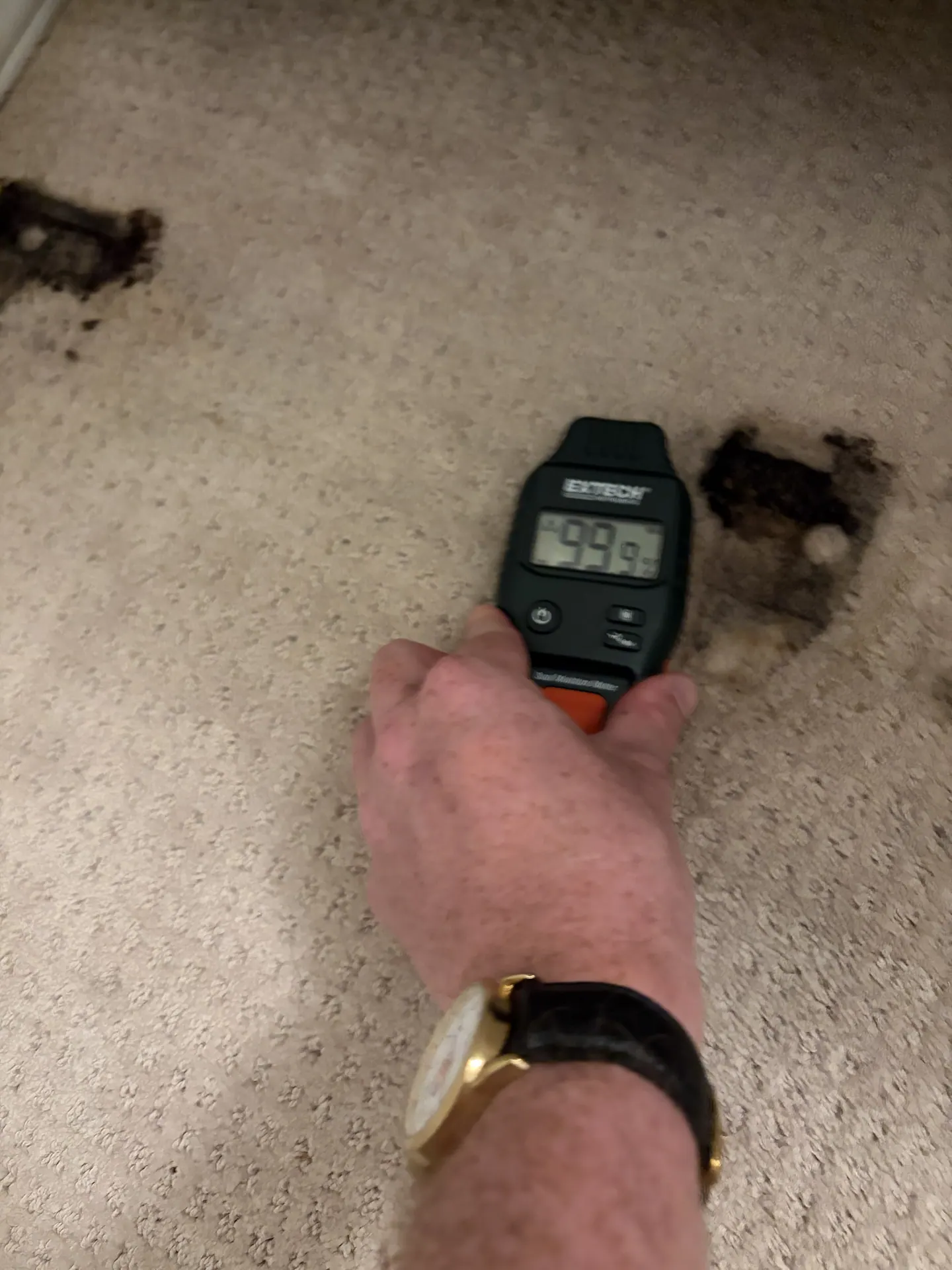
A Dallas homeowner noticed visible growth on a guest-bedroom nightstand foot. A limited assessment found two wet carpet and lower-wall zones along the exterior wall, aligned horizontally with two exterior areas showing algae-like growth. A swab of one stained wet carpet area supported fungal growth, including Heavy Chaetomium and Heavy hyphal fragments. Landscape irrigation was identified as the probable recurring moisture source; the precise route of water entry was not confirmed.
View Case Study →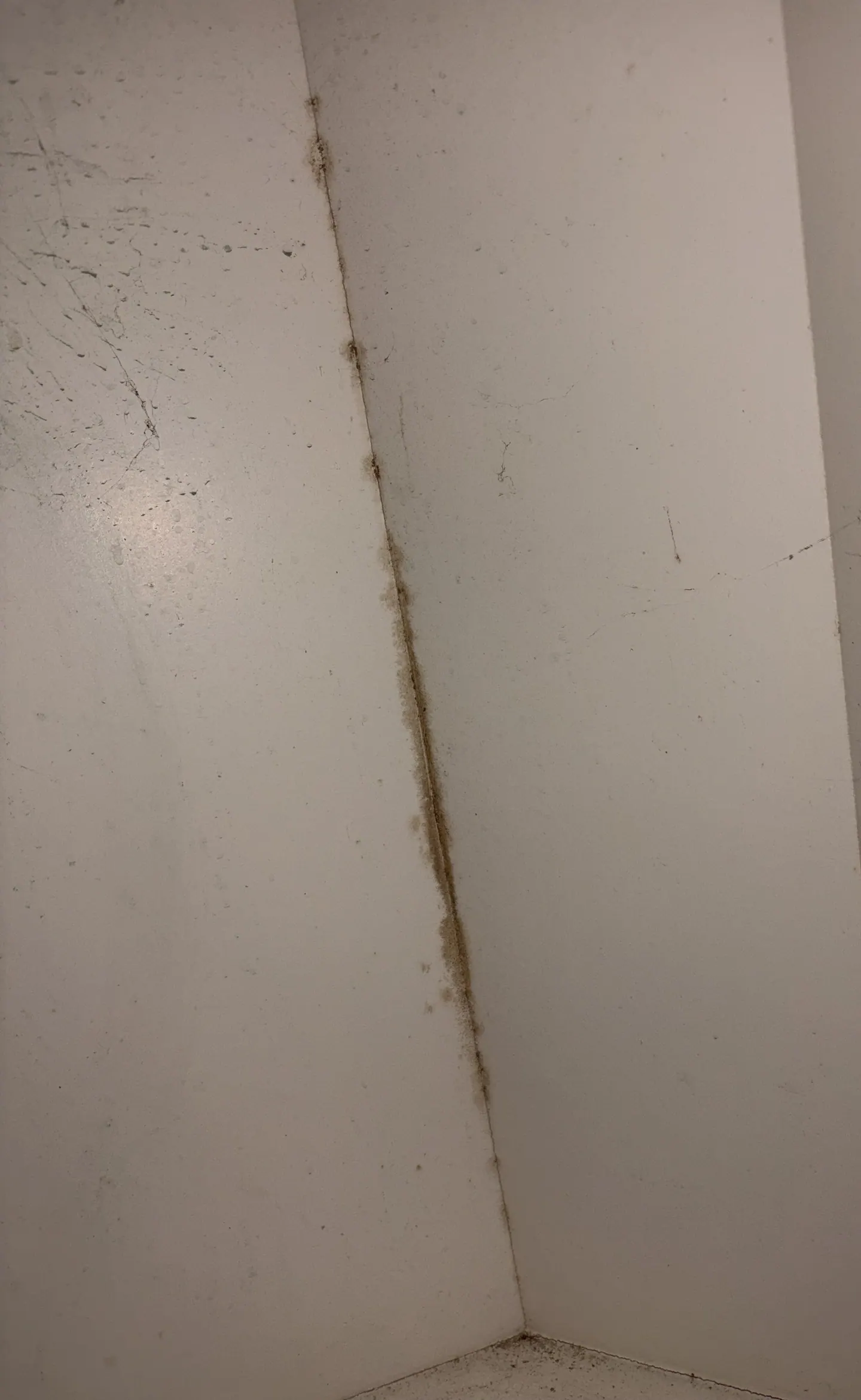
Mold Found Inside a Bathroom Vanity After a Persistent Musty Odor
A homeowner reported persistent musty odors in three adjoining or vertically stacked bathrooms. In Bathroom #1, an accessible rear vanity seam showed discoloration and its surface swab supported fungal growth. Its air sample contained more than 8,000 Aspergillus/Penicillium-like spores/m³, unlike the other two bathrooms tested. The specific moisture source was not confirmed.
View Case Study →