
- Location
- Dallas, Texas
- Property type
- Residential townhome; multi-level; tenant-occupied
- Inspection type
- Limited mold assessment
- Primary concern
- Active HVAC-associated water dripping from a bathroom ceiling supply register
- Inspection
- October 2026
The Situation
The property owner requested a mold assessment after tenants asked that concerns involving two bathrooms be evaluated.
The owner reported that HVAC-related water leakage had previously occurred in the same general area of the top-floor bathroom and that an HVAC contractor had made multiple repair attempts. The owner and occupants also reported concern about humidity in both bathrooms and that water from the leak had discharged onto the top-floor bathroom floor.
The prior leak and repair history and the reported floor discharge were not independently verified by the assessor.
What Was Inspected
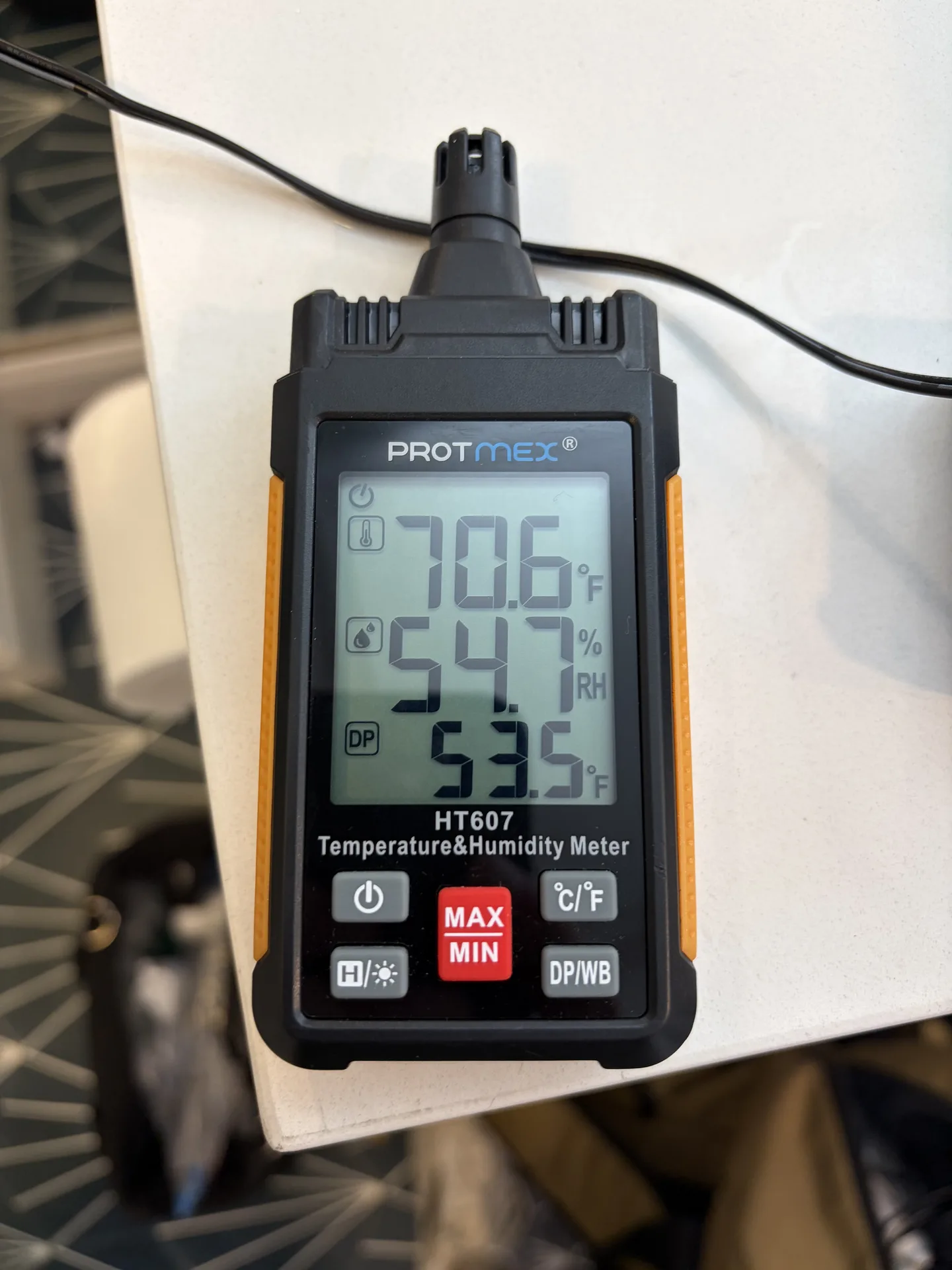
- The assessment was limited to the top-floor and second-floor bathrooms. It included visual inspection, comparative moisture screening, temperature and relative-humidity measurements, two indoor spore-trap air samples and one outdoor reference air sample.
- No building materials were removed and no wall or ceiling cavities were opened. HVAC equipment was not mechanically evaluated; supply-air temperature was not measured.
What We Observed
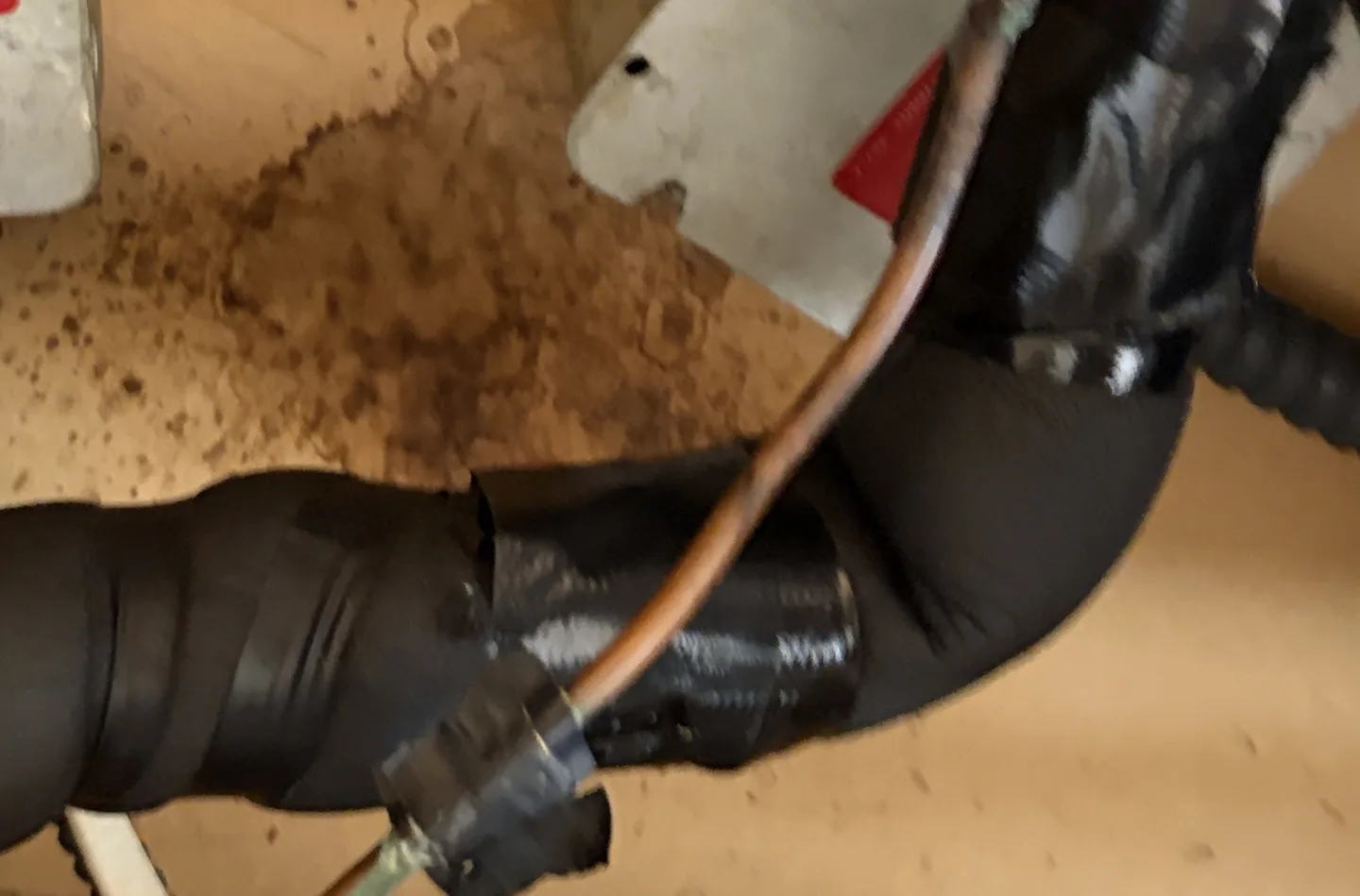
The air handler serving the top-floor bathroom was installed in the ceiling directly above the sinks. A ceiling supply register fed by the air handler was immediately next to the access panel.
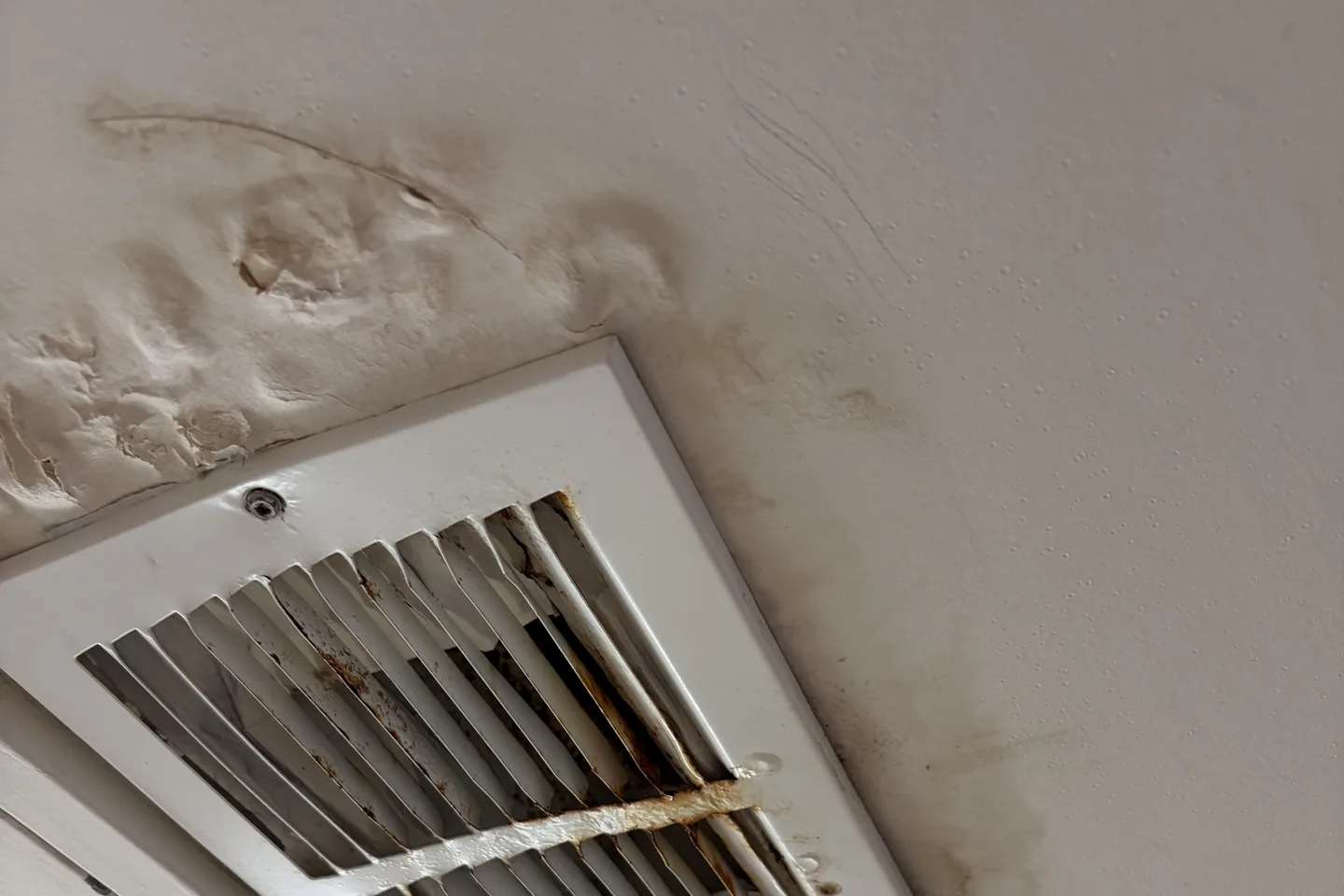
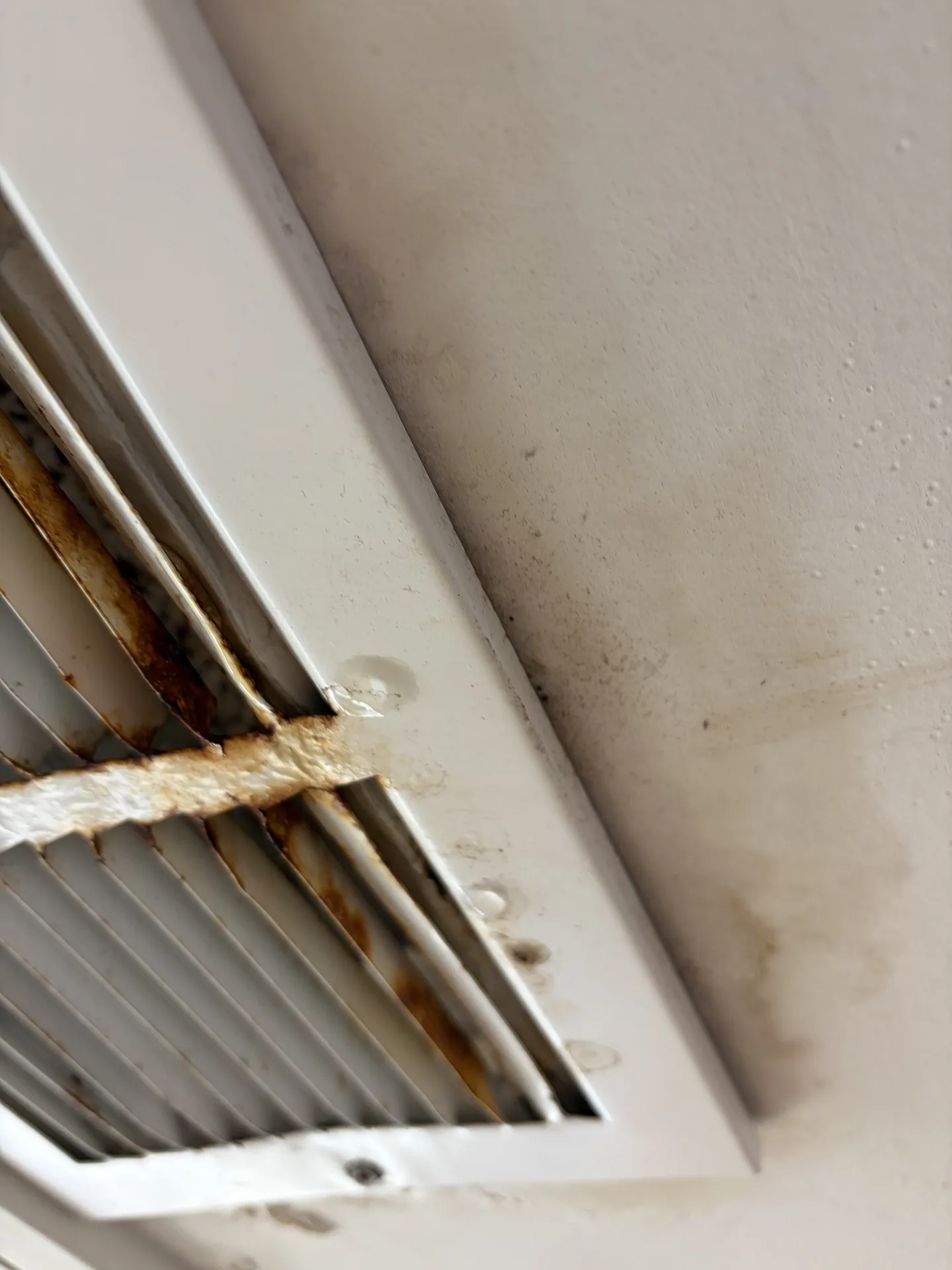
During the assessment, water was slowly and actively dripping from the register grill. The louvers had rust-colored corrosion and a visible mineral-deposit line.
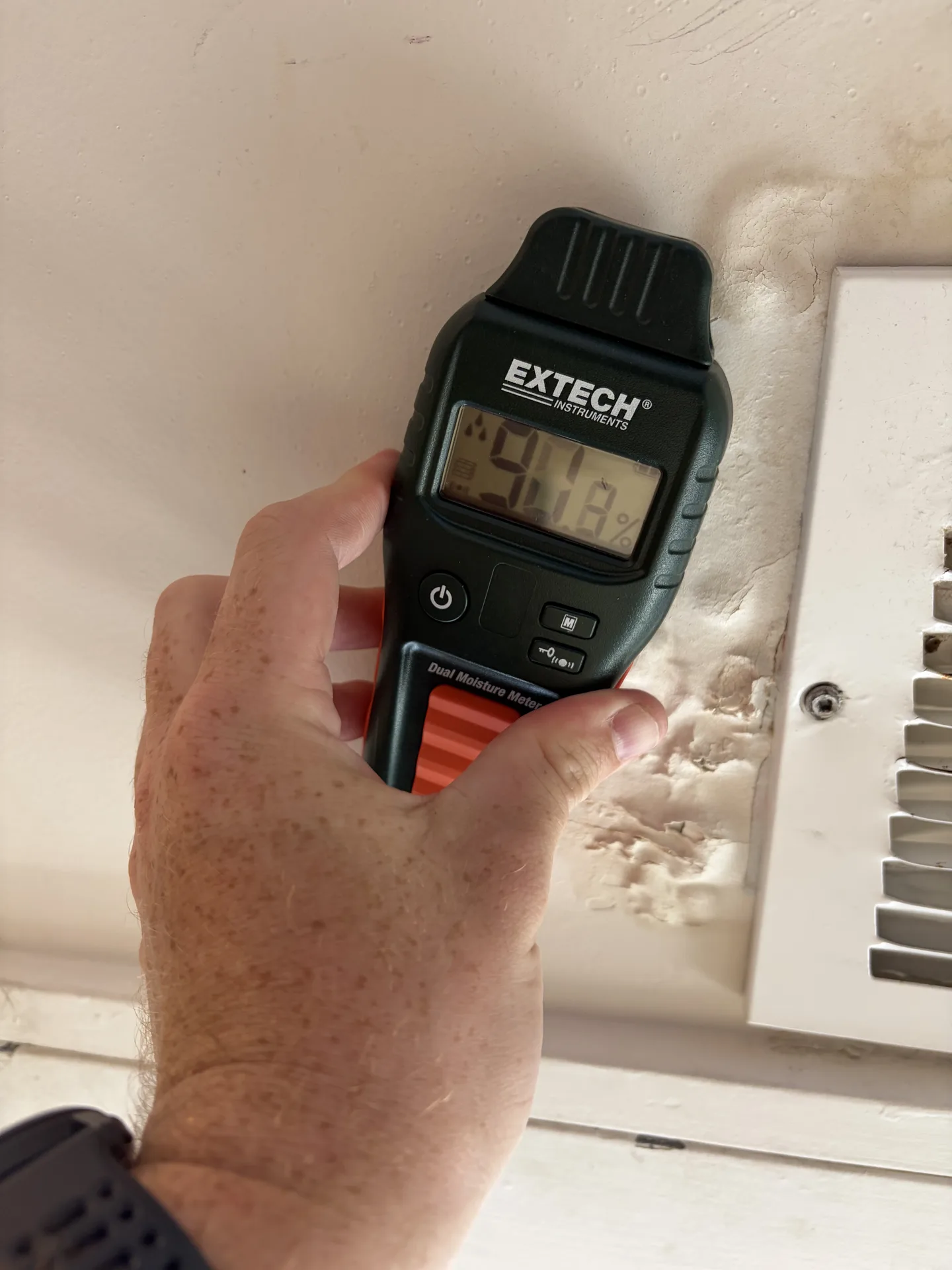
Ceiling drywall around the register was visibly wet and brown-stained; paint and texture were blistered and bubbling. The assessor concluded that the observed dripping was not consistent with simple surface condensation on the register grill.
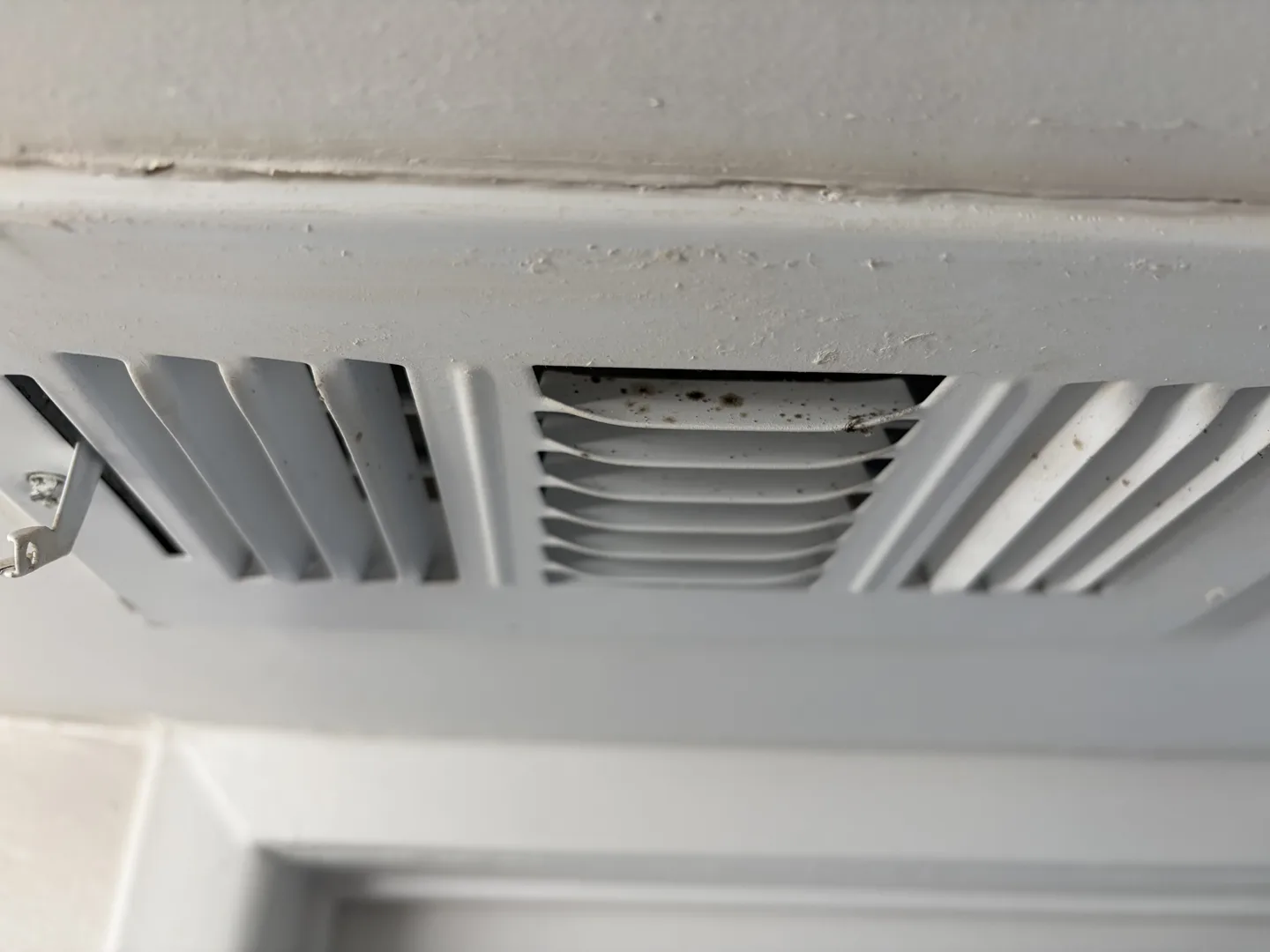
No visible mold growth was observed on accessible bathroom surfaces. Dark spotting and discoloration on the second-floor bathroom supply-register louvers were not sampled, so their composition was not determined.
Water Was Actively Dripping From the Supply Register
In the top-floor bathroom, the ceiling-mounted air handler was located directly above the sinks; a supply register served by the air handler was immediately beside its access panel.
Water slowly and actively dripped from the register grill. Rust-colored corrosion and a mineral-deposit line were visible on the louvers, and surrounding drywall was wet, brown-stained, blistered and bubbling.
The assessor concluded that the observed dripping was not consistent with simple surface condensation on the register grill.
What the Comparative Moisture Readings Show
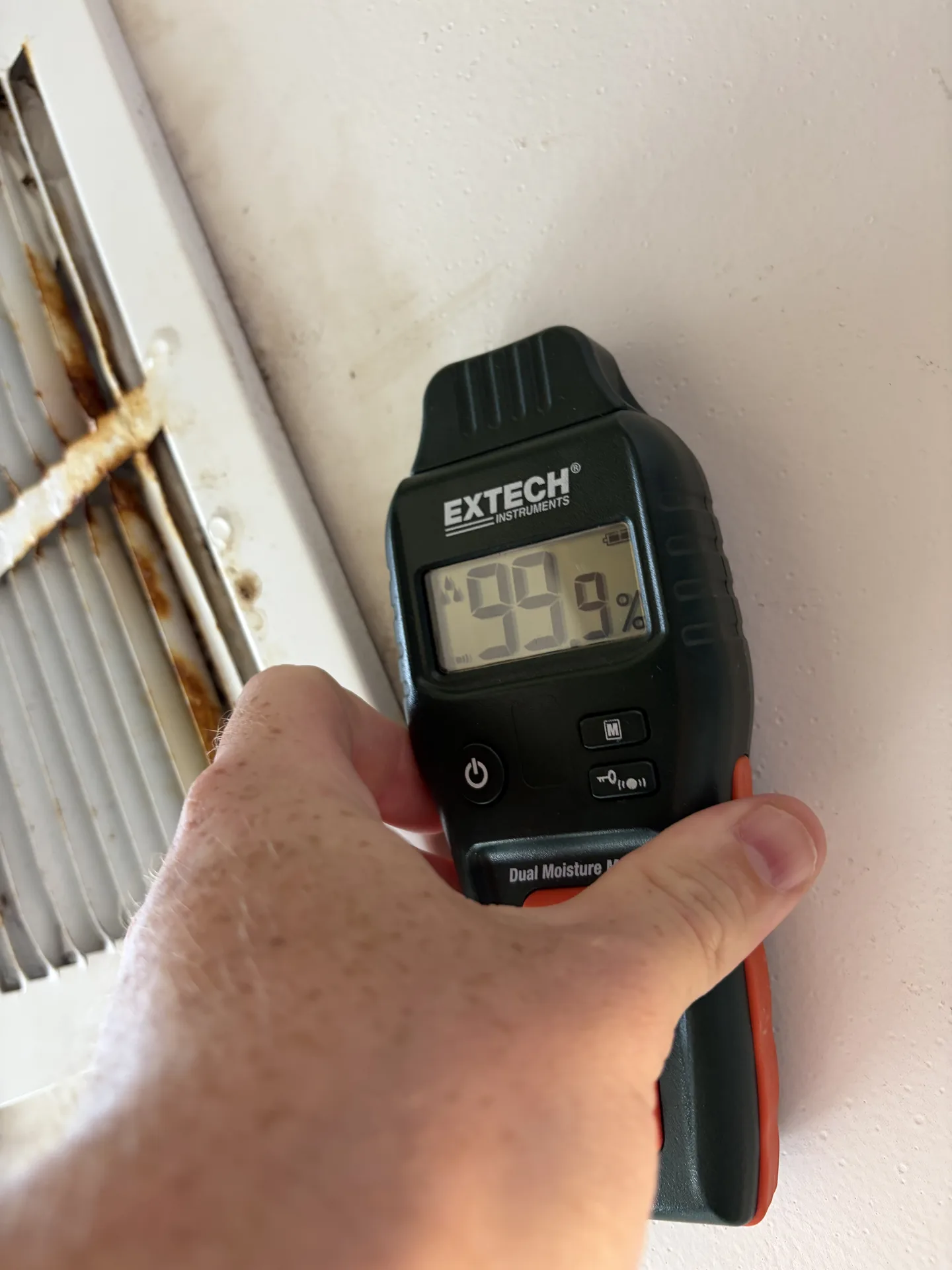
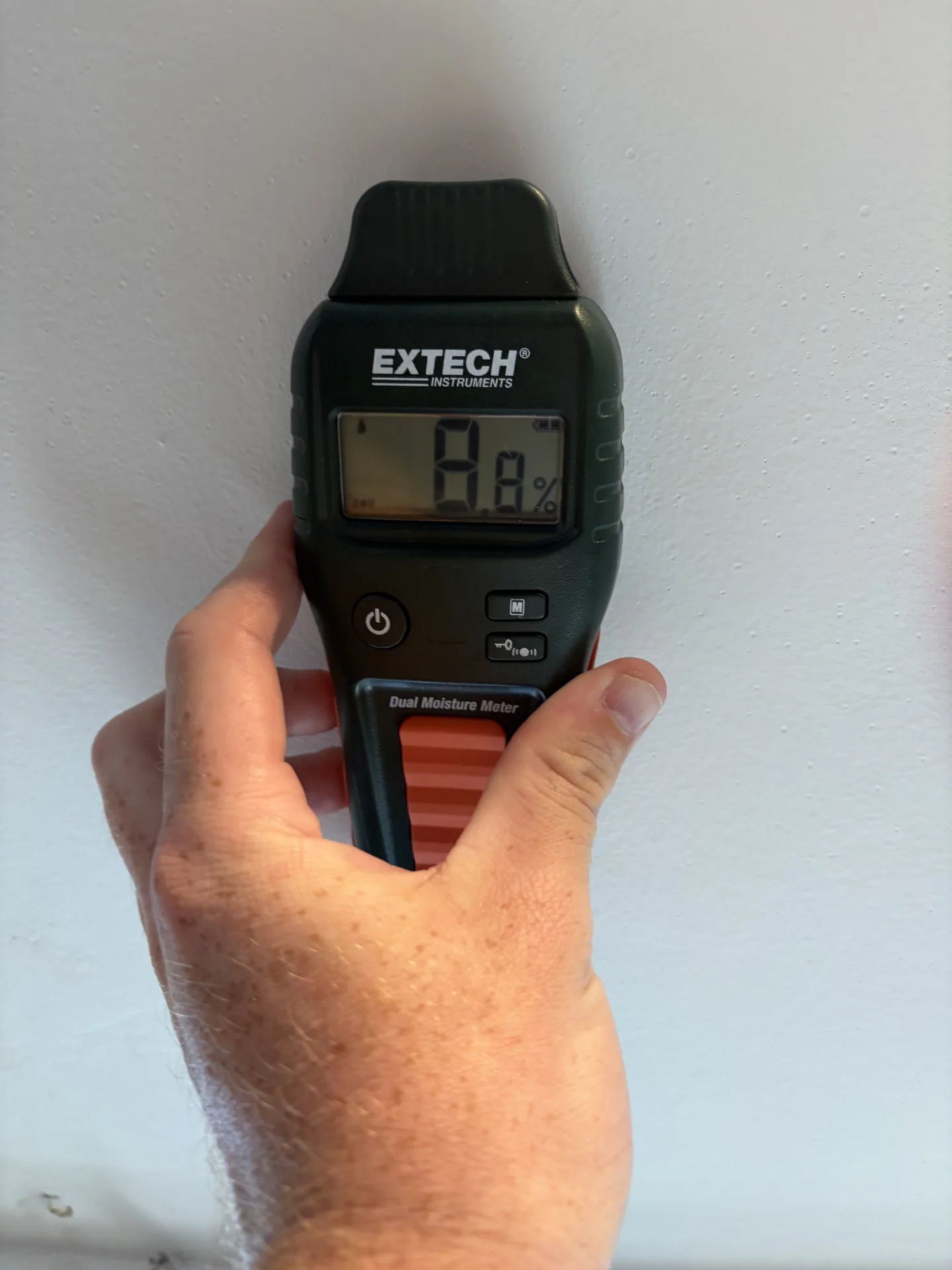
Using comparative, pinless moisture screening, the ceiling area next to the supply register measured 99.9, the opposite side measured 90.8, and a reference area on the same ceiling away from the register measured 8.8.
These are comparative meter responses, not exact moisture-content percentages. The reference area was not independently verified as dry; the readings document a substantially higher response around the register than at the reference point.
What Was Causing the Water?
The report concluded that the observed condition suggested the previously reported HVAC-related water intrusion remained unresolved. The inspection documented an active HVAC-associated water intrusion, but the specific mechanical failure was outside the scope of the mold assessment.
HVAC equipment was not mechanically evaluated, and the specific mechanical cause was not determined. The reported repair history was not independently verified.
A Second Bathroom Had Elevated Humidity
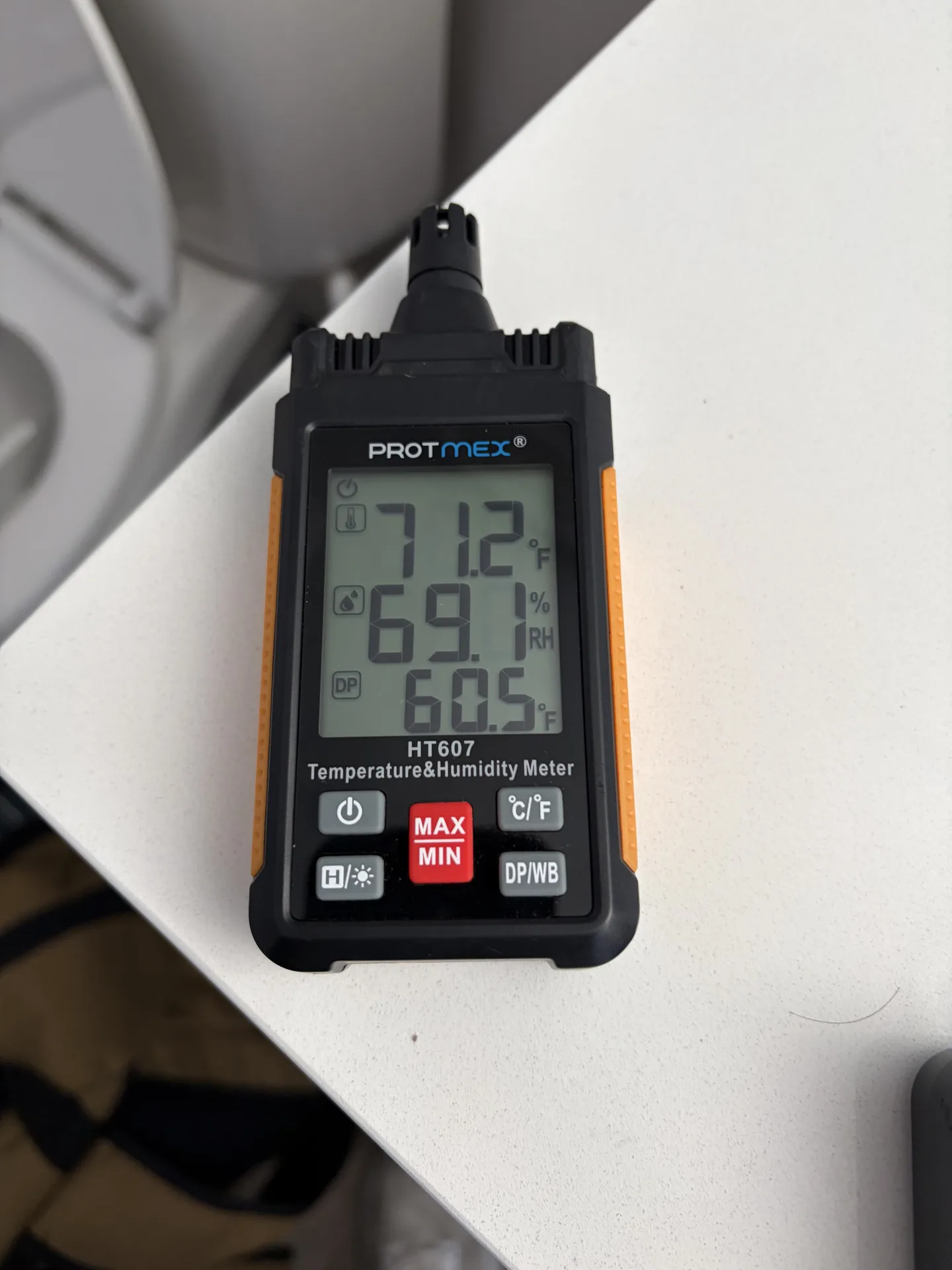
The second-floor bathroom measured 71.2°F, 69.1% relative humidity and a 60.5°F dew point. Relative humidity was above the commonly recommended indoor maximum of 60% at the time of inspection.
The shower did not appear to have been used shortly before the inspection. Air from the supply register did not seem noticeably cool, but supply-air temperature was not measured; the observation alone does not establish that the HVAC system was malfunctioning.
The Indoor Bathroom Dew Points Exceeded the Outdoor Reference
The measured dew points were 53.5°F in the top-floor bathroom and 60.5°F in the second-floor bathroom. The outdoor dew point reported for Dallas Love Field at approximately the same time was 48°F.
The indoor dew points were higher than that outdoor reference. The source or sources contributing to indoor bathroom moisture conditions were not determined during this limited assessment.
A Second-Floor Supply Register Had Unidentified Spotting
Dark spotting and discoloration were observed on the second-floor bathroom supply-register louvers. No surface sample was collected, so the material's composition was not determined. It is not reported as confirmed mold.
Active Water Damage Was Present Without Visible Mold
No visible mold growth was observed on accessible surfaces in either bathroom, but ceiling drywall around the top-floor register was actively wet. Water damage and visible mold growth are different observations; wet building material can require prompt corrective action before visible fungal growth develops.
The accessible visual findings do not establish that concealed materials were free of fungal growth.
Moisture / Building Conditions
The Extech meter was used for comparative, pinless screening. Readings were 99.9 next to the register, 90.8 on the opposite side and 8.8 at a reference area away from the register on the same ceiling.
The responses around the register were much higher than the reference area and were consistent with a significant localized moisture anomaly in the ceiling. The reference area was not independently verified as dry. None of the meter responses is an exact moisture-content percentage.
Top-floor bathroom conditions shown in the inspection photograph: 70.6°F, 54.7% relative humidity and a 53.5°F dew point.
Second-floor bathroom conditions: 71.2°F, 69.1% relative humidity and a 60.5°F dew point.
The outdoor dew point reported by Dallas Love Field at approximately the same time was 48°F. These are point-in-time measurements, not findings about conditions at other times.
Sampling Performed
- Indoor spore-trap air sample — Top-floor bathroom: One of two indoor samples collected during the limited assessment.
- Indoor spore-trap air sample — Second-floor bathroom: One of two indoor samples collected during the limited assessment.
- Outdoor reference air sample — Outdoor reference: One reference sample for comparison with the two indoor bathroom samples.
Air Sample Comparison
| Sample | Finding | Reported result | Context |
|---|---|---|---|
| Outdoor reference | Total fungal structures | >9,700 structures/m³ | |
| Outdoor reference | Cladosporium | >5,500 structures/m³ | |
| Outdoor reference | Basidiospores | 1,700 structures/m³ | |
| Top-floor bathroom | Total fungal structures | 43 structures/m³ | |
| Top-floor bathroom | Myxomycetes/Periconia/Smut/Rust | 43 structures/m³ | |
| Second-floor bathroom | Total fungal structures | 260 structures/m³ | |
| Second-floor bathroom | Alternaria | 85 structures/m³ | |
| Second-floor bathroom | Basidiospores | 85 structures/m³ | |
| Second-floor bathroom | Cladosporium | 43 structures/m³ | |
| Second-floor bathroom | Curvularia | 43 structures/m³ |
Fungal Types Not Detected in Any Air Sample
| Sample | Finding | Reported result | Context |
|---|---|---|---|
| Outdoor reference | Aspergillus/Penicillium-like spores | Not detected | |
| Outdoor reference | Stachybotrys | Not detected | |
| Outdoor reference | Chaetomium | Not detected | |
| Top-floor bathroom | Aspergillus/Penicillium-like spores | Not detected | |
| Top-floor bathroom | Stachybotrys | Not detected | |
| Top-floor bathroom | Chaetomium | Not detected | |
| Second-floor bathroom | Aspergillus/Penicillium-like spores | Not detected | |
| Second-floor bathroom | Stachybotrys | Not detected | |
| Second-floor bathroom | Chaetomium | Not detected |
The Air Samples Were Low Even Though the Ceiling Was Actively Wet
The top-floor bathroom air sample measured 43 structures/m³ and the second-floor bathroom measured 260 structures/m³. The outdoor reference exceeded 9,700 structures/m³.
At the sampled locations and time, neither indoor sample showed airborne fungal amplification relative to the outdoor reference. Aspergillus/Penicillium-like spores, Stachybotrys and Chaetomium were not detected in any of the three samples.
These air results do not contradict the separately documented dripping and wet ceiling. Air sampling measures airborne fungal structures at a sampling time and location; it does not establish the condition of concealed surfaces.
What the Findings Suggested
Indoor bathroom air samples did not show elevated airborne fungal concentrations relative to the outdoor reference at the sampled locations and time. Aspergillus/Penicillium-like spores, Stachybotrys and Chaetomium were not detected in any of the three samples.
Separately, water was actively dripping from the top-floor bathroom supply register, and the surrounding ceiling drywall was wet, stained, blistered and bubbling. No visible mold growth was observed on accessible surfaces in either bathroom.
Because concealed building materials and the ceiling cavity were not opened or evaluated, the air results and accessible observations do not rule out concealed fungal growth.
No Mold-Remediation Protocol Was Issued
No mold-remediation protocol was issued based on the accessible findings. The primary priorities were stopping the active water intrusion, evaluating wet ceiling materials, addressing elevated bathroom humidity and reassessing if suspected concealed fungal growth is found during repairs.
The wet ceiling and dripping HVAC-associated water did not, on their own, establish visible mold or a need for mold remediation.
Recommendations
- Have a licensed HVAC contractor locate and correct the source of water dripping from the top-floor bathroom supply register.
- Have condensate drainage and the corroded supply register evaluated as part of the HVAC investigation.
- Confirm that the HVAC repair is effective after completion.
- Have a qualified contractor evaluate the wet, stained and blistered ceiling drywall after the source is corrected.
- Evaluate any insulation in the affected ceiling area.
- Determine whether affected materials can be dried and retained or require removal and replacement based on their condition and the extent of wetting.
- Confirm normal moisture conditions before refinishing or closing the ceiling.
- If suspected fungal growth is exposed during repairs, pause mold-related disturbance and have it evaluated by an appropriately licensed Mold Assessment Consultant.
- Investigate the elevated humidity in the second-floor bathroom if it remains above 60%.
- Evaluate the second-floor bathroom supply register and clean or replace it as appropriate.
- If regulated remediation later becomes necessary, obtain independent post-remediation assessment and clearance.
- Check asbestos, lead-based paint and other hazardous-material requirements before disturbing ceiling texture, drywall or painted materials, as applicable.
What Homeowners Can Learn From This Case
An HVAC water leak can cause significant building-moisture damage even when air sampling does not show elevated fungal concentrations. At this property, comparative screening and visible wetting documented an active ceiling moisture condition while indoor air samples remained below the outdoor reference.
Air sampling and moisture assessment answer different questions. Air sampling measures airborne fungal structures at a particular time and location; visual inspection and comparative moisture screening document accessible surface and moisture conditions.
Useful investigation may include documenting active dripping, screening around the affected ceiling, looking for staining and blistered finishes, noting register corrosion or mineral deposits, measuring bathroom humidity, using air sampling when appropriate, and evaluating concealed materials if repairs expose them.
Here, accessible bathroom surfaces had no visible mold and neither indoor air sample showed amplification relative to the outdoor reference. Concealed materials were not evaluated, and the second-floor register spotting was not sampled.
Questions About This Case
Why is water dripping from my AC vent?
Water dripping from a supply register can result from several HVAC-related problems, including condensate-management or mechanical issues. In this case, active dripping was documented, but the specific HVAC failure was not determined during the mold assessment.
Can an AC leak cause mold in the ceiling?
Yes. Repeated or prolonged wetting of porous ceiling materials can create conditions that support fungal growth. In this case, the ceiling drywall was actively wet, but no visible mold was observed on accessible surfaces and the concealed cavity was not opened.
Can a mold air test be normal even when the ceiling is wet?
Yes. Air sampling measures airborne fungal structures at a particular time and location. In this case, indoor air results were well below outdoors even though active water intrusion and saturated ceiling materials were documented.
Does low mold in the air mean there is no mold behind the ceiling?
No. Concealed materials were not opened or evaluated, so hidden fungal growth could not be confirmed or ruled out.
Is 99.9 on a moisture meter the same as 99.9% moisture?
No. The meter was used in comparative pinless mode. A reading of 99.9 represented the meter's comparative response, not an exact moisture percentage.
Is 69% humidity too high for a bathroom?
Sustained indoor relative humidity above 60% can create conditions favorable to fungal growth. In this case, the second-floor bathroom measured 69.1% RH at the time of inspection.
Was mold found in these bathrooms?
No visible mold growth was observed on accessible surfaces, and the indoor air samples did not show elevated fungal concentrations relative to outdoors. Concealed materials were not evaluated.
Should mold remediation start before an active HVAC leak is fixed?
The moisture source should be corrected promptly. In this case, no mold-remediation protocol was issued based on accessible findings; the priority was correcting the water intrusion and evaluating the wet ceiling materials.
Related Services
Water Dripping From an AC Vent in Dallas?
An HVAC leak can saturate ceiling materials before visible mold appears. Mold Testing Dallas can document moisture conditions, evaluate accessible surfaces, and use mold sampling when appropriate.
Schedule a Mold InspectionInspection performed by Ethan Wright, TDLR Licensed Mold Assessment Technician (MAT #1589).
Related Real Inspection Cases
Unlike assessments that confirmed fungal growth on HVAC components or water-affected materials, this inspection documented active water intrusion but no elevated indoor air results and no visible mold on accessible bathroom surfaces. Concealed materials were not evaluated, so their condition remains unknown.
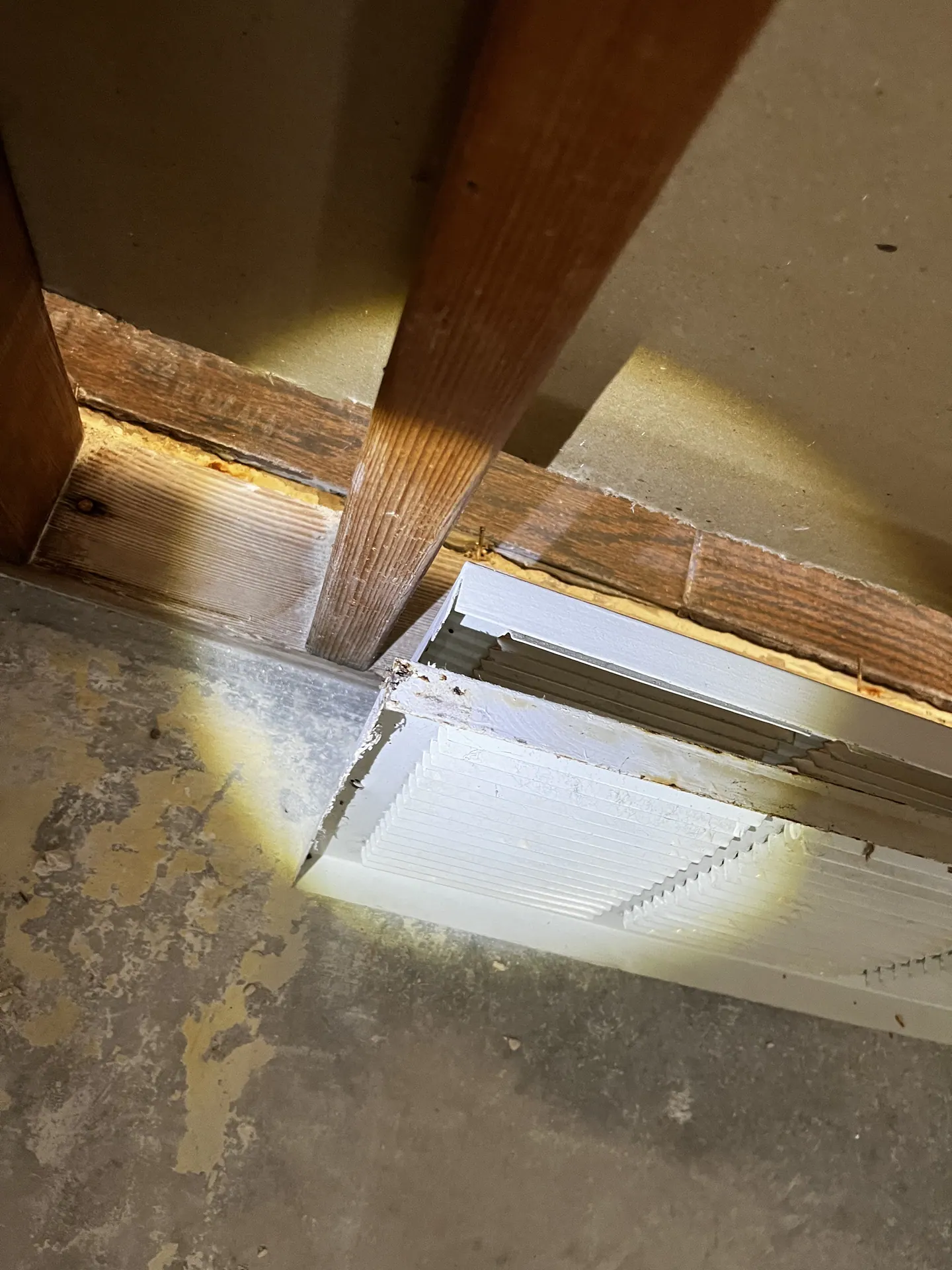
Mold Found After an AC Condensate Drain Overflow in a Fort Worth Home
A reported HVAC condensate-drain backup flooded the HVAC closet and adjoining rooms of a Fort Worth attached duplex residence while the homeowner was away. A restoration contractor had already made flood cuts and removed portions of flooring before the mold assessment. Six surface samples documented different findings across the affected areas: Heavy Stachybotrys at the HVAC-closet concrete-floor surface, Heavy Chaetomium at a water-affected bedroom wall, and Heavy Cladosporium with Heavy hyphal fragments on a bedroom supply register. No air samples were collected.
View Case Study →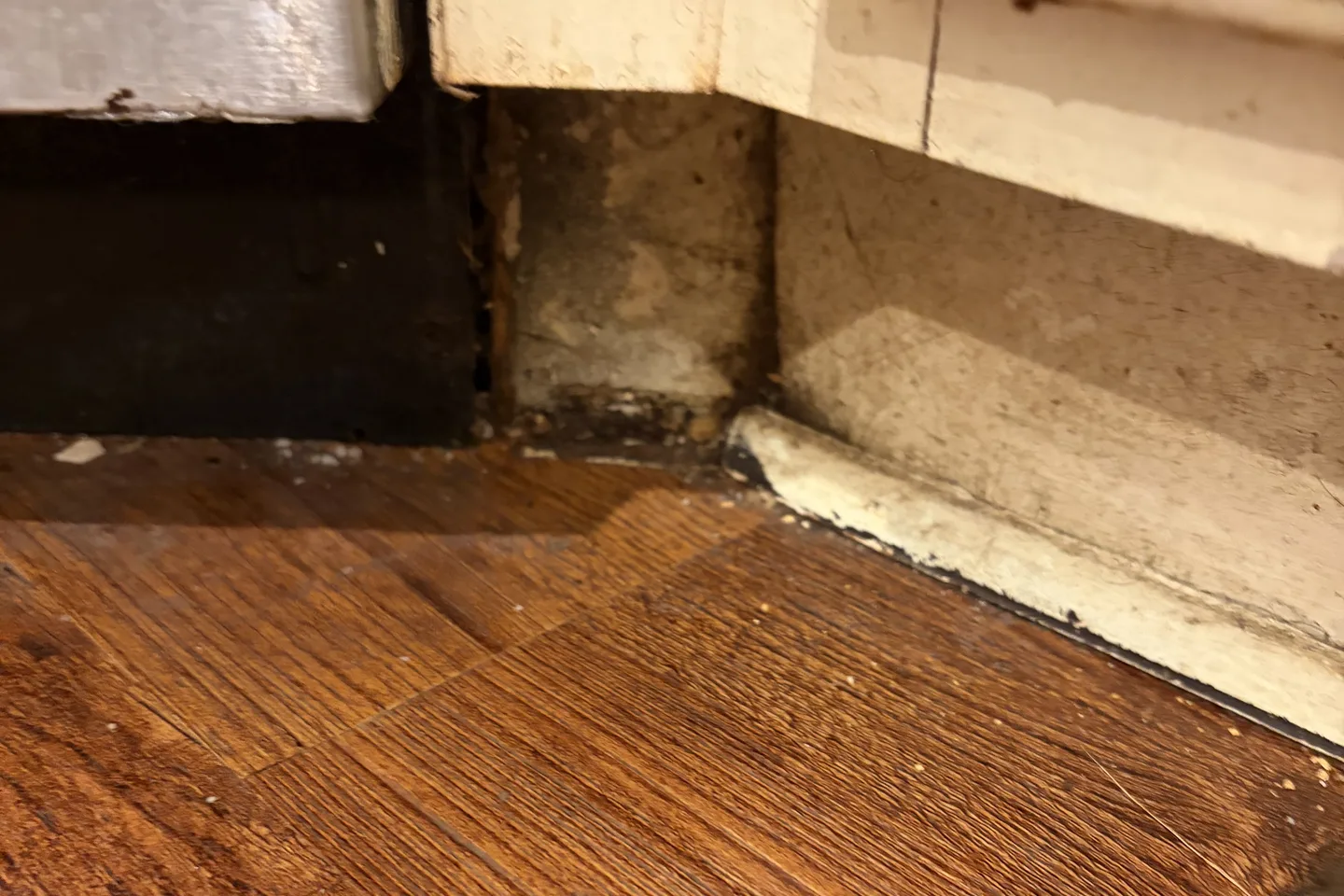
Mold Found Behind a Kitchen Toe-Kick From a Dishwasher Leak
A Frisco homeowner requested a limited mold assessment because of a musty odor near the kitchen sink. No visible mold growth was observed on accessible surfaces inside the stained sink base cabinet. Immediately to the left of the sink, beside the dishwasher, a detached and deteriorated toe-kick was very wet and visibly discolored. An active dishwasher leak was observed, and a surface swab confirmed fungal growth on the toe-kick, including Heavy Aspergillus/Penicillium-like structures and Moderate Cladosporium. Concealed areas behind and beneath the dishwasher, beneath cabinetry and at the subfloor were not opened or evaluated.
View Case Study →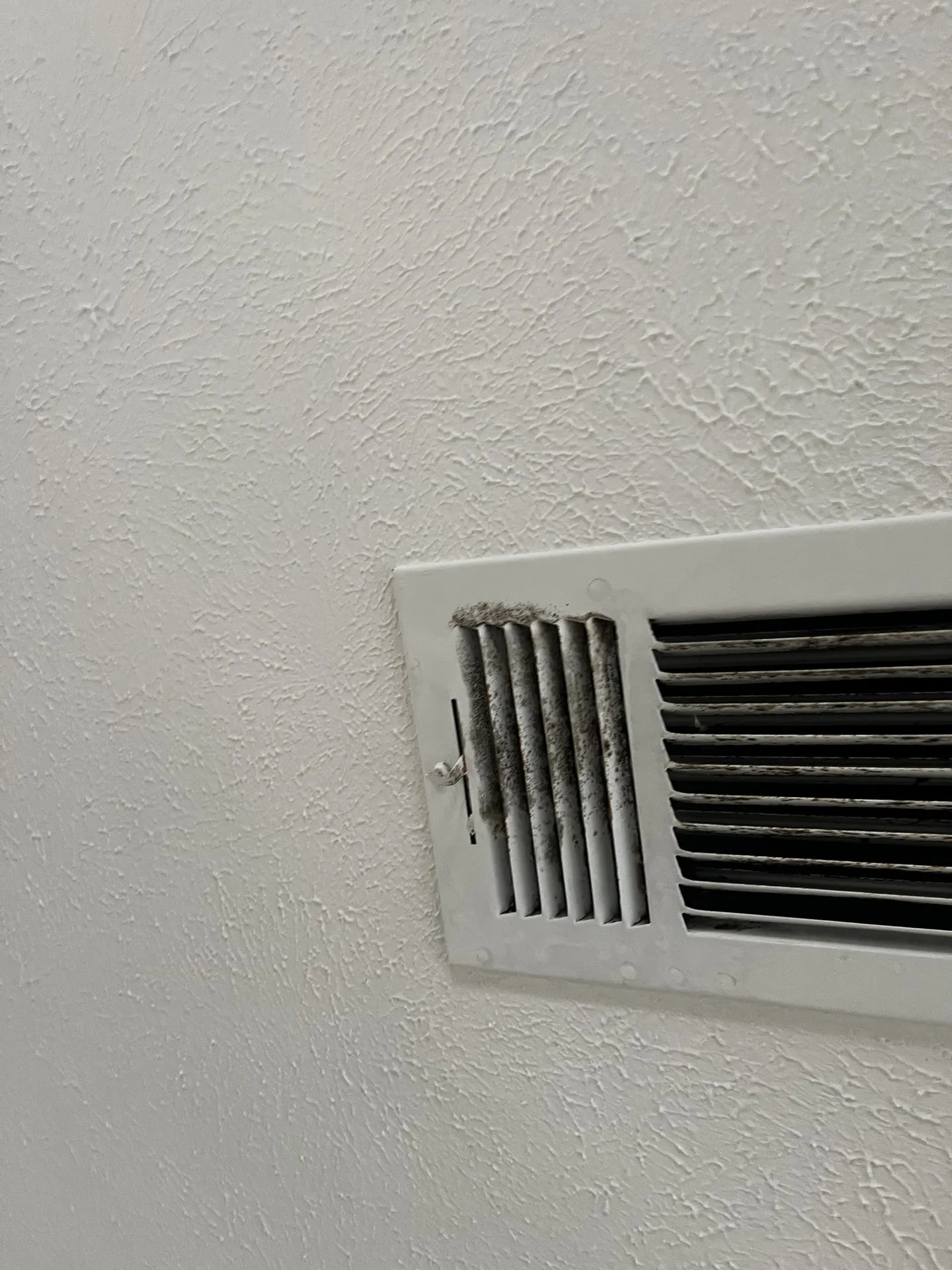
Mold Found Inside One HVAC Duct Branch in a Dallas Home
A Dallas homeowner requested an independent assessment after an HVAC contractor saw material inside supply ductwork that might have been microbial growth or dirt. Two playroom supply grills and accessible interior surfaces behind them showed visible growth. Both grills shared one duct branch with damaged jacket and insulation; the accessible air handler and other inspected runs showed no comparable growth. A swab from the left playroom grill returned Heavy Cladosporium, while the playroom air sample did not show amplification relative to an outdoor comparison at the sampled time.
View Case Study →Mold Found Below a Leaking Mini-Split
A commercial client in Waco, Texas requested a limited mold assessment after an employee raised concern about possible mold in a work area. The assessment focused on two rooms. In the Front Room, a wall-mounted mini-split was actively dripping, with evidence of water traveling down the wall to the floor line. Surface testing confirmed fungal growth behind the flexible cove base below the mini-split. Air samples from both rooms were below the outdoor reference and did not indicate airborne fungal amplification at the sampled locations and time.
View Case Study →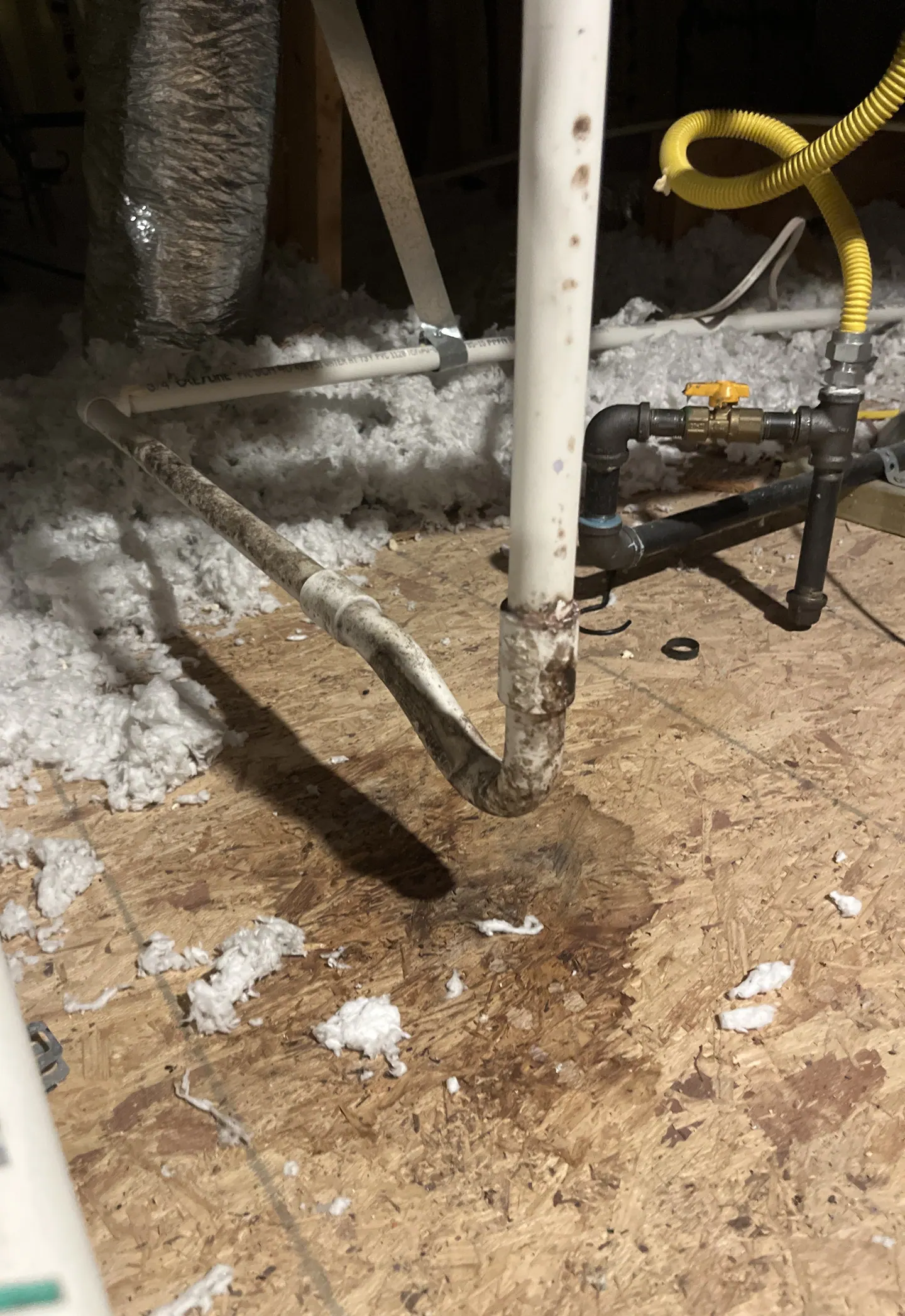
Mold on an AC Condensate Drain Line in a Dallas Attic
A Dallas homeowner requested an independent assessment after an HVAC technician noticed suspected growth on attic condensate piping. A surface swab supported fungal growth on the pipe exterior; no visible mold growth was observed inside accessible portions of the air handler or connected ductwork.
View Case Study →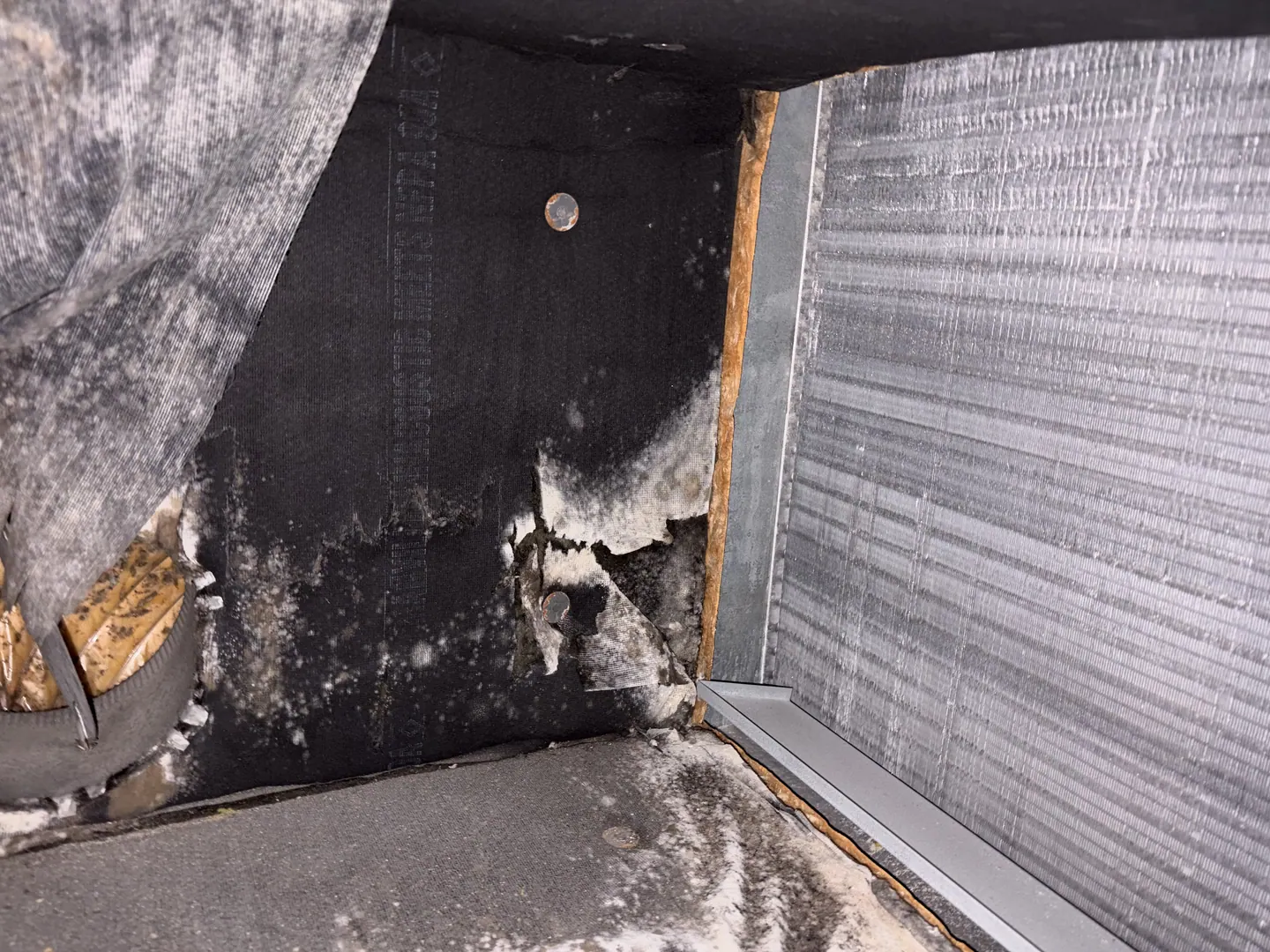
Mold Found Inside an HVAC Supply Plenum in a Dallas Home
A Dallas homeowner requested an independent assessment after an HVAC professional reported suspected growth inside an attic supply plenum. Accessible fiberglass duct-board liner showed extensive surface colonization. Surface swabs supported fungal growth inside the plenum and on a downstream living-room supply grill. No air samples were collected.
View Case Study →