
- Location
- Frisco, Texas
- Property type
- Single-family residential
- Inspection type
- Limited mold assessment
- Primary concern
- Musty odor near the kitchen sink and wet cabinetry beside the dishwasher
- Inspection
- October 2026
The Situation
The homeowner reported a musty odor near the kitchen sink. According to the homeowner, a mold-remediation company had previously evaluated the area, reported that it did not observe visible mold, and recommended evaluation by a licensed mold-assessment company.
The limited assessment focused on the sink base cabinet, adjacent cabinetry and toe-kick area immediately beside the dishwasher. No other areas of the home were inspected.
What Was Inspected
- The assessment included visual inspection, comparative moisture screening, interior temperature and humidity measurement, and one surface swab sample.
- No cabinetry, building materials, trim or appliances were removed or moved by the assessor. The sampled toe-kick was already detached and deteriorated before the inspection.
- The cavity behind the dishwasher, space beneath the dishwasher, space beneath cabinets, subfloor and concealed wall cavities were not opened or evaluated.
- The Extech meter was used in non-penetrating pinless mode. These were comparative screening readings, not exact measurements of material moisture content.
What We Observed
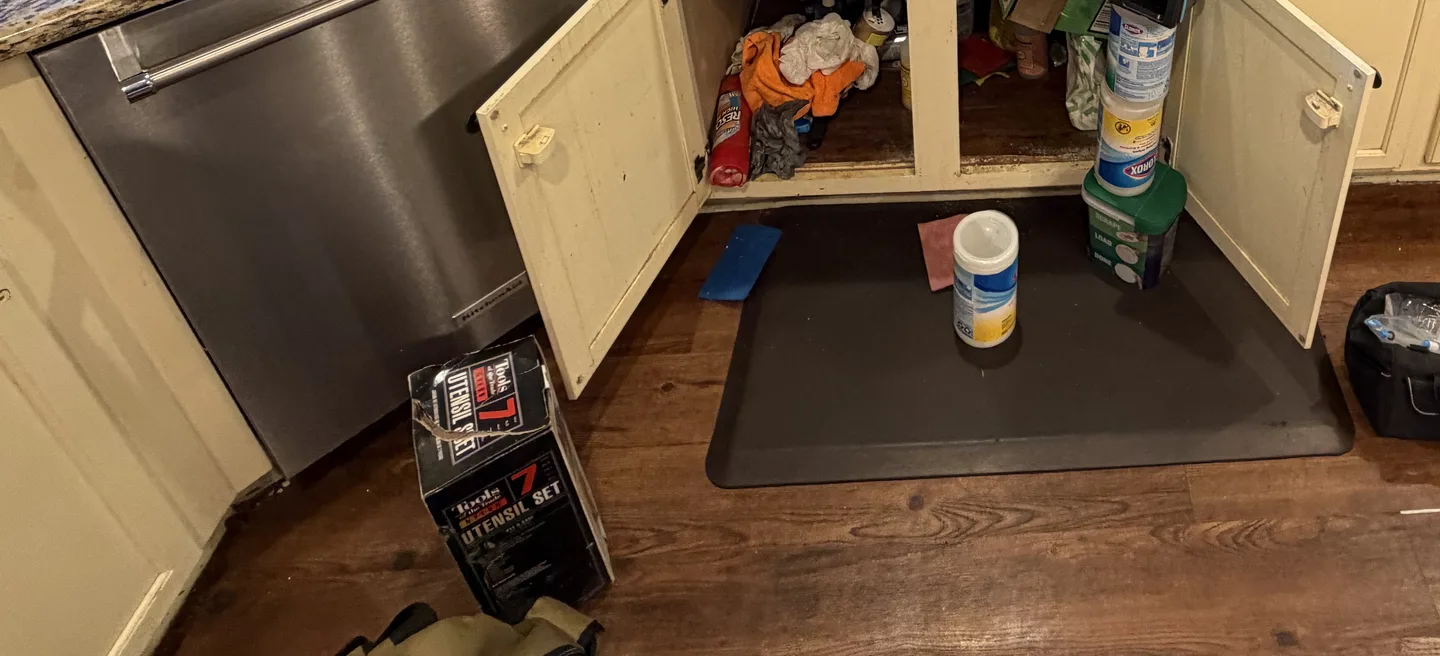
Inside the sink base cabinet, the floor showed staining and wear consistent with previous limited water exposure. No visible mold growth was observed on accessible surfaces inside that cabinet.
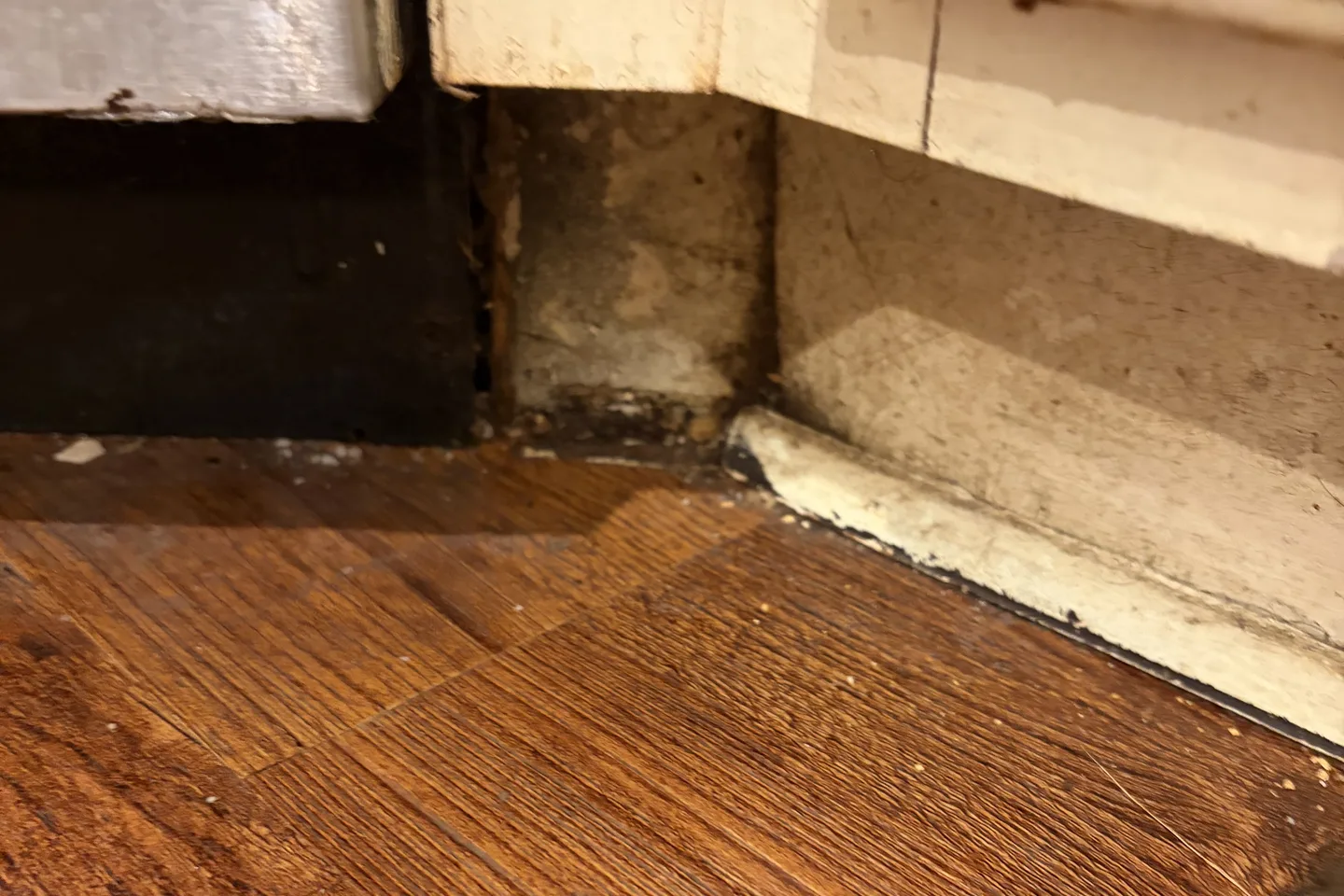
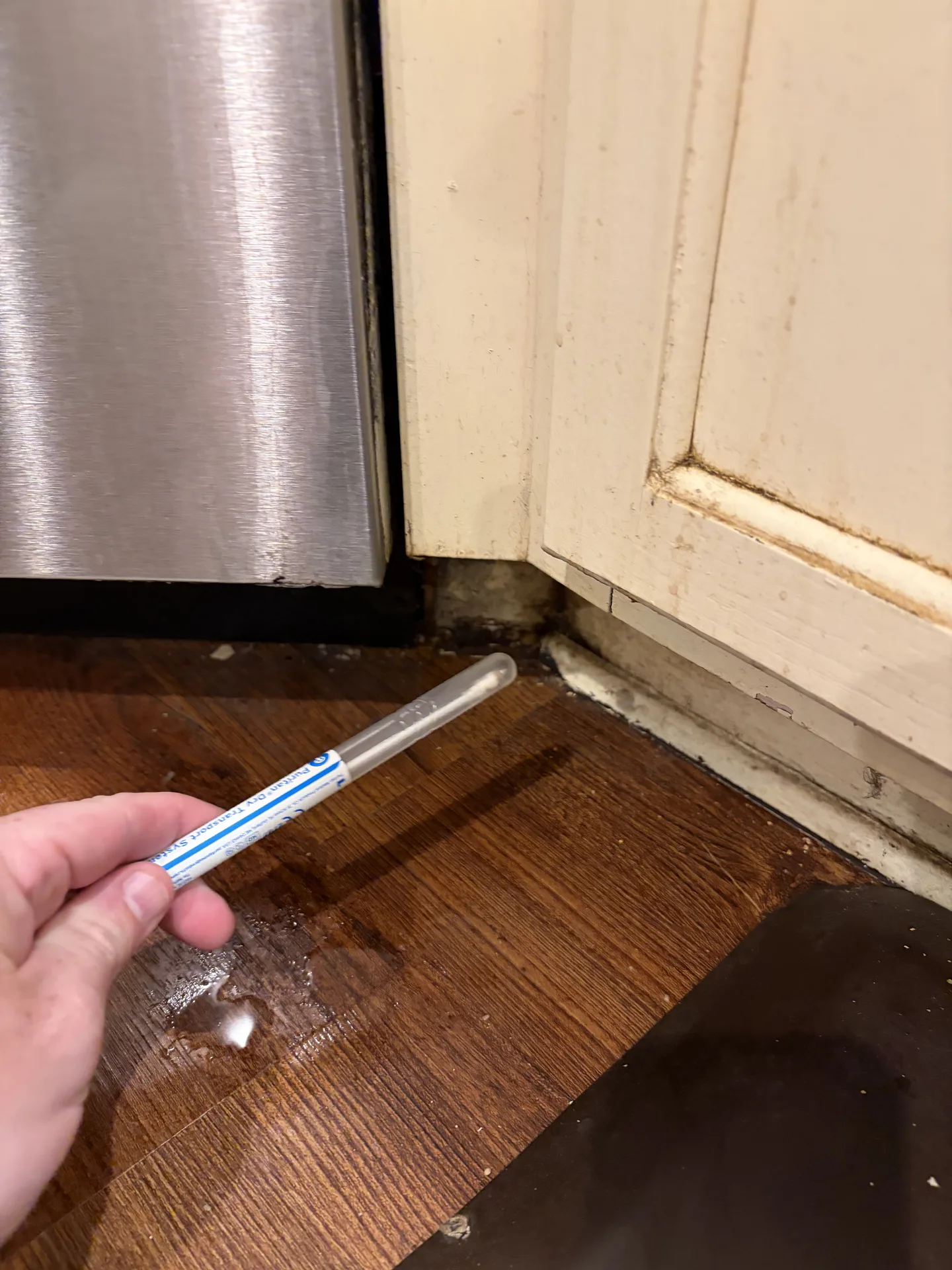
Immediately to the left of the sink, adjacent to the dishwasher, the toe-kick was very wet, already detached and deteriorated, and visibly discolored. Water was visible on the adjacent floor.
An active leak associated with the dishwasher was observed. A surface swab was collected from the visible discoloration on the toe-kick.
The Sink Cabinet Showed Old Water Exposure, but No Visible Mold
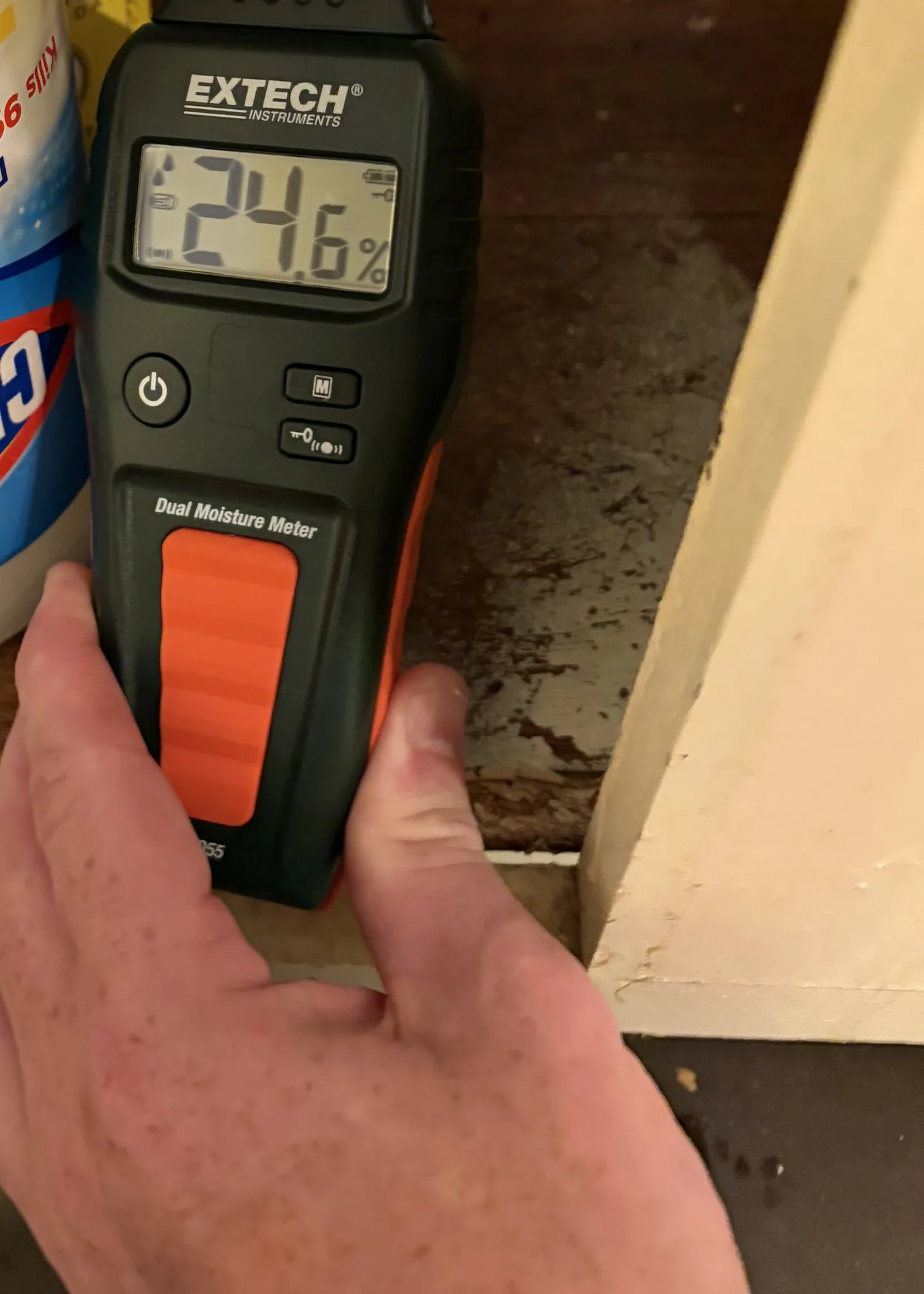
The sink base cabinet floor showed staining, wear and signs consistent with previous limited water exposure. It produced a comparative moisture response of 24.6.
No visible mold growth was observed on accessible surfaces inside the sink base cabinet. Concealed areas were not opened, so the accessible observations do not establish that the cabinet or adjacent concealed materials were free of mold.
The Active Problem Was Beside the Dishwasher
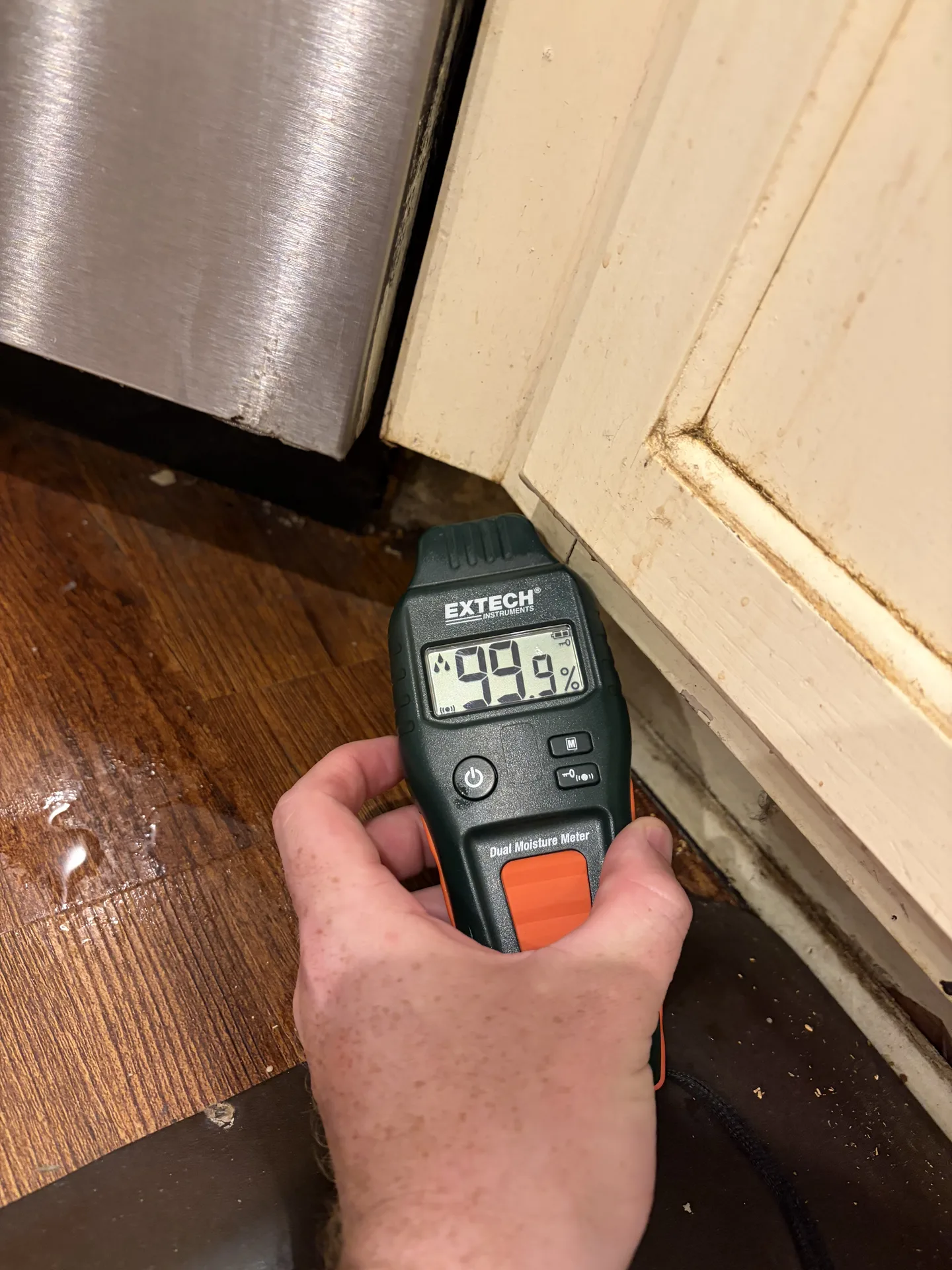
The cabinet toe-kick immediately to the left of the sink and adjacent to the dishwasher was very wet, detached and deteriorated, and visibly discolored. Water was visible on the adjacent floor.
The toe-kick produced a comparative moisture response of 99.9, the maximum value displayed by the meter. The assessor observed an active leak associated with the dishwasher and collected a surface swab from the visible discoloration.
What the Comparative Moisture Readings Mean
The Extech meter was used in non-penetrating pinless mode. The 24.6 response inside the sink base cabinet and 99.9 response at the toe-kick were comparative screening values. The meter's displayed percent symbol should not be read as an exact material moisture-content measurement in this assessment.
These readings help compare wetter and drier areas but do not establish exact moisture content or the precise depth or location of moisture within the assembly. No independently verified dry reference area was established; the sink-cabinet floor reading was the comparison point.
Moisture / Building Conditions
Sink base cabinet floor: comparative moisture response of 24.6.
Affected toe-kick beside the dishwasher: comparative moisture response of 99.9, the meter's maximum displayed comparative value.
The Extech meter was used in non-penetrating pinless mode. Neither reading is an exact moisture-content percentage; no independently verified dry reference area was established.
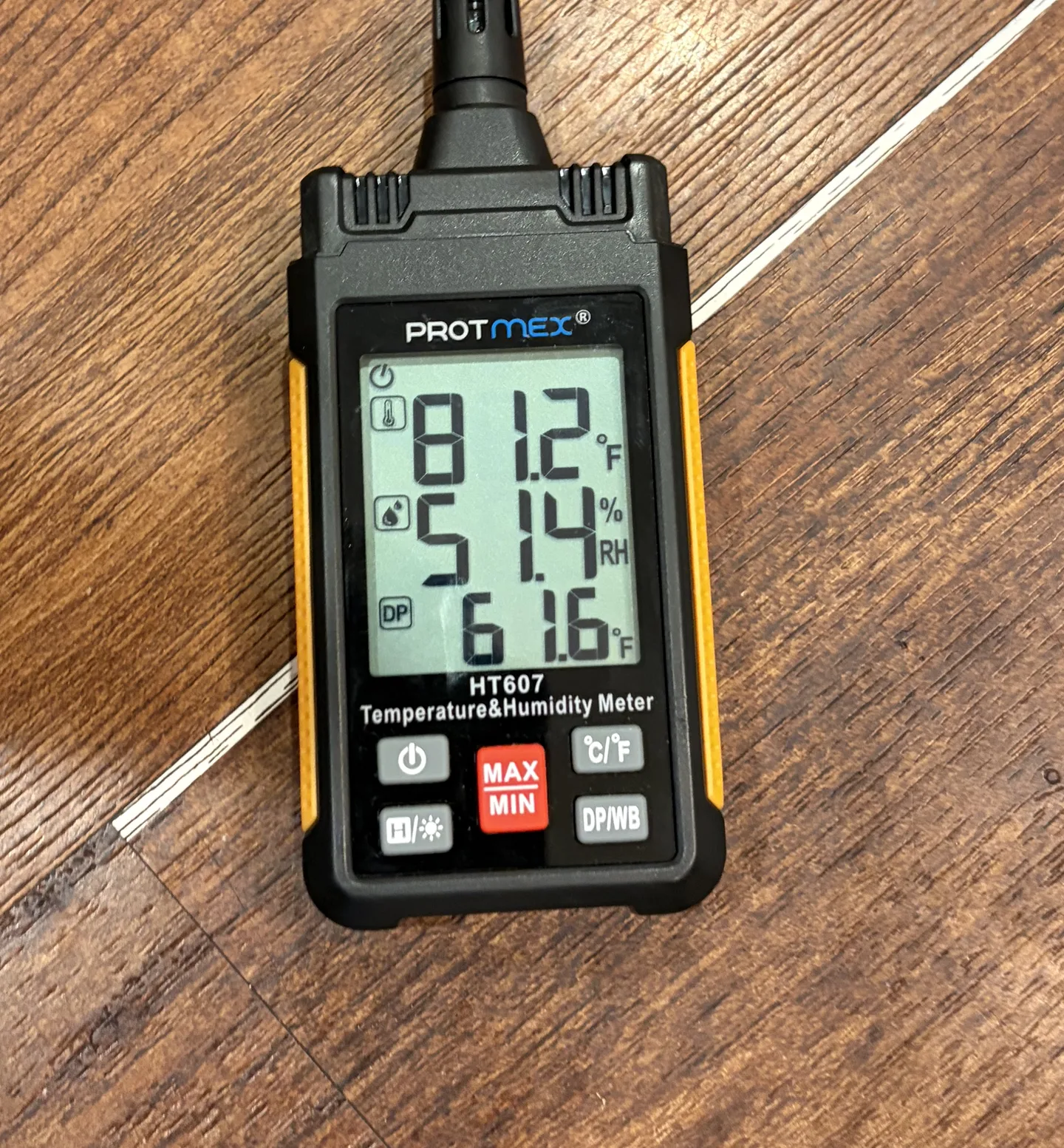
Kitchen conditions were 81.2°F, 51.4% relative humidity and a 61.6°F dew point.
Relative humidity was below 60% at inspection. The observed wet condition was localized around an active appliance leak rather than evidence of a whole-room high-humidity condition; this snapshot does not establish humidity at other times.
Sampling Performed
- Surface swab / direct microscopic examination — Kitchen cabinet toe-kick left of the sink, adjacent to the dishwasher: One swab from visible discoloration on the already detached and deteriorated toe-kick; the sampled surface result does not determine concealed extent.
Laboratory Findings
| Finding | Reported result | Context |
|---|---|---|
| Aspergillus/Penicillium-like structures | Heavy | |
| Cladosporium | Moderate | |
| Botrytis | Minor | |
| Chaetomium | Minor | |
| Fusarium | Minor | |
| Myxomycetes/Periconia/Smut/Rust | Minor | |
| Basidiospores | Minor | |
| Non-specified spore | Minor | |
| Hyphal fragments | Minor | |
| Stachybotrys | Not reported | Applies to this sampled toe-kick material, not unsampled or concealed areas. |
Understanding the Laboratory Rating
The laboratory's ratings were Minor: 1 or fewer structures per field of view; Moderate: more than 1 and up to 3 structures per field of view; Heavy: more than 3 structures per field of view.
Heavy Aspergillus/Penicillium-like structures, together with visible discoloration, very wet material, deterioration and the active leak, confirmed fungal growth on the sampled toe-kick surface.
These are surface-sample ratings, not airborne concentrations or measures of health risk. The Heavy rating does not establish whole-kitchen contamination or that the entire house was unsafe.
Stachybotrys Was Not Reported
Stachybotrys was not reported in the sampled toe-kick material. The dominant finding was Heavy Aspergillus/Penicillium-like structures, with Moderate Cladosporium and the other listed findings at Minor ratings.
These laboratory findings apply to the sampled surface and do not establish a health risk, exposure level or whole-kitchen condition.
What the Findings Suggested
The strongest evidence of an active condition was at the dishwasher-adjacent toe-kick. No visible mold was observed on accessible sink-cabinet surfaces, while the wet, discolored toe-kick had laboratory-confirmed fungal growth.
The active dishwasher leak was the apparent local moisture source, and the fungal growth and wet condition were a likely contributor to the reported musty odor.
The full extent remained undetermined because the dishwasher, cabinets and concealed assemblies were not opened or moved during the assessment.
What Caused the Moisture?
The active dishwasher leak was the apparent moisture source at the sampled toe-kick. This conclusion applies to the inspected location.
The assessment did not establish the exact dishwasher failure or the full extent of concealed affected materials. The confirmed fungal growth and wet condition at the toe-kick were considered a likely contributor to the musty odor reported by the homeowner, not a definitively proven cause of all odor.
The Source Was Next to the Sink, Not Inside the Sink Cabinet
The reported odor was near the kitchen sink, but the strongest evidence of an active condition was at the toe-kick immediately adjacent to the dishwasher, not inside the sink cabinet itself.
This case illustrates why the exact moisture pathway and neighboring fixtures matter when investigating a musty kitchen odor. Adjacent accessible surfaces can have different findings.
Mold Assessment Consultant Handoff
Corrective action was warranted. Mold Testing Dallas operated under a Mold Assessment Technician license for this assessment; a licensed Mold Assessment Consultant was to prepare the formal mold-remediation protocol.
The assessment data were referred to a licensed Mold Assessment Consultant to determine the appropriate remediation scope. This public case study is not DIY remediation guidance and does not state that the protocol or remediation was completed.
Recommendations
- Have the dishwasher leak repaired promptly by a qualified appliance or plumbing professional.
- Stop further water entry at the toe-kick area.
- Have the affected area addressed by a licensed Texas mold-remediation contractor under the Mold Assessment Consultant's protocol.
- Until the protocol is issued, avoid aggressive cleaning, removal or disturbance of affected toe-kick and cabinet materials.
- If additional suspected mold is exposed during leak repair, stop uncontained disturbance and obtain professional guidance.
- If the project becomes a TDLR-regulated remediation project, have post-remediation assessment and clearance conducted by an independent licensed Mold Assessment Consultant. This is not a clearance service offered by Mold Testing Dallas.
- Maintain indoor relative humidity below 60%.
- Determine whether asbestos, lead-based paint or other hazardous-material requirements apply before disturbing cabinetry, flooring, adhesive or painted materials.
What Homeowners Can Learn From This Case
An appliance leak can create highly localized fungal growth behind or below cabinetry even when adjacent accessible surfaces appear relatively normal. Here, the sink cabinet had old water staining but no visible mold on accessible surfaces; the adjacent dishwasher toe-kick was actively wet and its surface swab confirmed fungal growth.
Evaluation of a musty kitchen area may include sink cabinetry, dishwasher-adjacent trim, comparative moisture screening, observation behind already-loose trim, active appliance leaks and targeted surface sampling.
Wet materials extending behind cabinetry can raise a concealed-condition question, but the accessible findings alone do not confirm growth in unopened spaces. Avoid disturbing affected materials and obtain professional guidance.
Questions About This Case
Can a dishwasher leak cause mold behind kitchen cabinets?
Yes. A dishwasher leak can wet cabinet toe-kicks, flooring and concealed spaces next to the appliance. In this case, fungal growth was confirmed on a very wet cabinet toe-kick immediately beside an actively leaking dishwasher.
Can mold grow behind a kitchen toe-kick?
Yes. Toe-kick areas can conceal moisture because they are close to the floor and may be difficult to see without loose or removed trim. In this case, suspected growth was visible because the toe-kick was already detached and deteriorated.
Can there be mold near a dishwasher even if the sink cabinet looks clean?
Yes. In this case, no visible mold was observed inside the accessible sink cabinet, while fungal growth was confirmed at the adjacent toe-kick beside the dishwasher.
What mold was found beside the dishwasher?
The surface sample returned Heavy Aspergillus/Penicillium-like structures and Moderate Cladosporium, with several other fungal types present at Minor ratings.
Was Stachybotrys found?
No Stachybotrys was reported in the sampled toe-kick material.
Does a 99.9 moisture-meter reading mean the material is 99.9% water?
No. The meter was used in comparative pinless mode, and 99.9 was the maximum displayed comparative response. It should not be interpreted as exact moisture content.
Can a leaking dishwasher cause a musty smell?
A persistent appliance leak can create wet materials that support fungal growth and contribute to a musty odor. In this case, the confirmed fungal growth and wet toe-kick were considered a likely contributor to the reported odor.
Does confirmed mold at the toe-kick mean there is mold behind the dishwasher?
Not necessarily. The cavity behind and beneath the dishwasher was not opened or evaluated, so concealed fungal growth could not be confirmed or ruled out.
Related Services
Musty Smell Near Your Kitchen Sink or Dishwasher?
A sink, dishwasher, supply line, or drain leak can wet hidden cabinet and flooring materials before the source is obvious. Mold Testing Dallas can document the moisture pattern and determine whether fungal growth is present in accessible areas.
Schedule a Mold InspectionInspection performed by Ethan Wright, TDLR Licensed Mold Assessment Technician (MAT #1589).
Related Real Inspection Cases
In another water-damage case, mold developed inside a wall after a plumbing leak; here, the confirmed growth was localized to cabinetry beside an actively leaking dishwasher. These separate reports document different moisture pathways and do not establish the concealed extent of this Frisco kitchen condition.
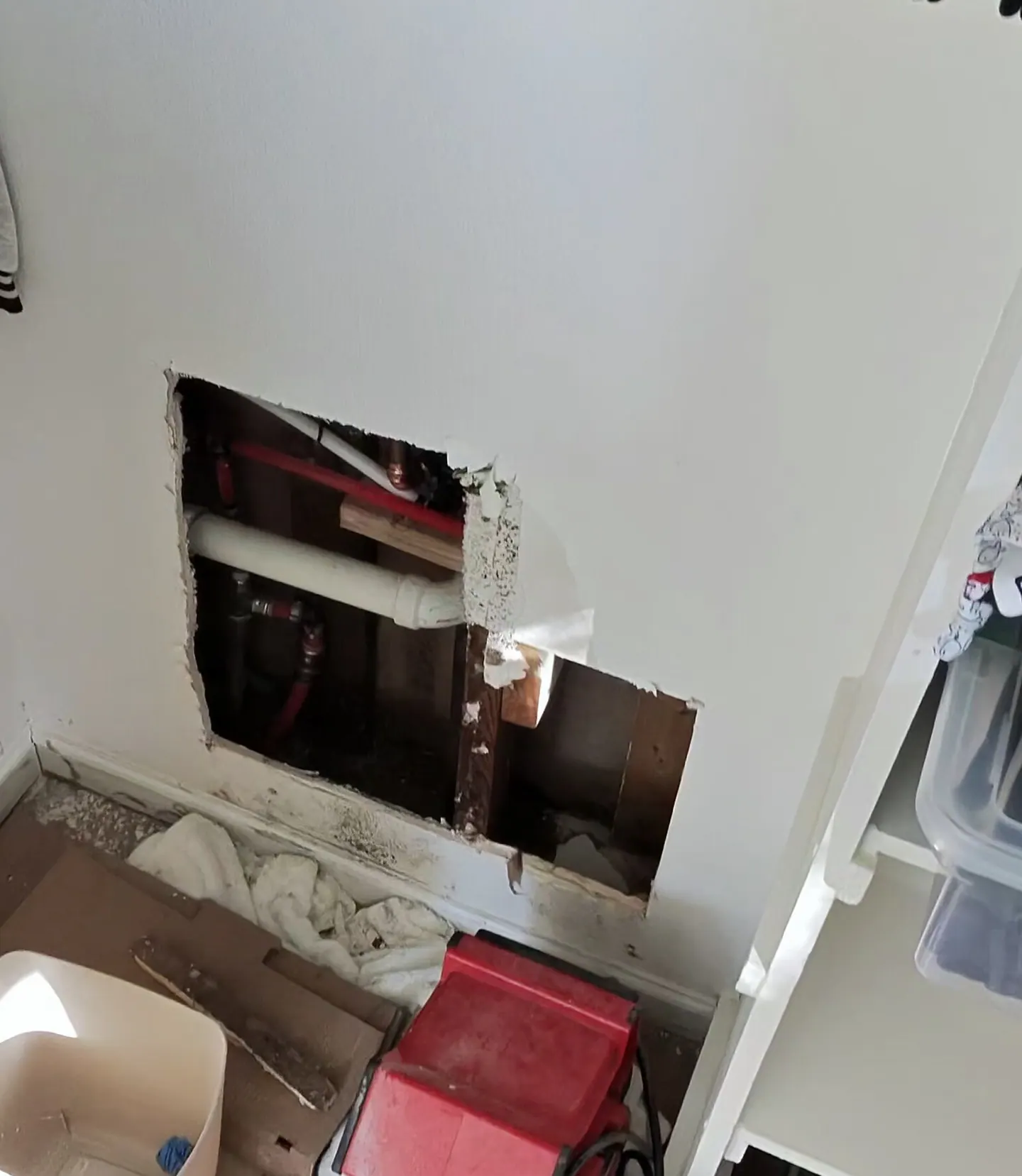
Mold Found Inside a Wall After a Plumbing Leak in Farmers Branch
A Farmers Branch homeowner requested a limited mold assessment after a reported plumbing leak affected a wall shared by a guest bathroom and two closets. The leak had reportedly been repaired, but existing repair openings exposed stained wallboard and framing. A swab through the guest bedroom closet opening supported fungal growth on sampled material. Separate ceiling and former exterior-wall concerns had different, more limited findings.
View Case Study →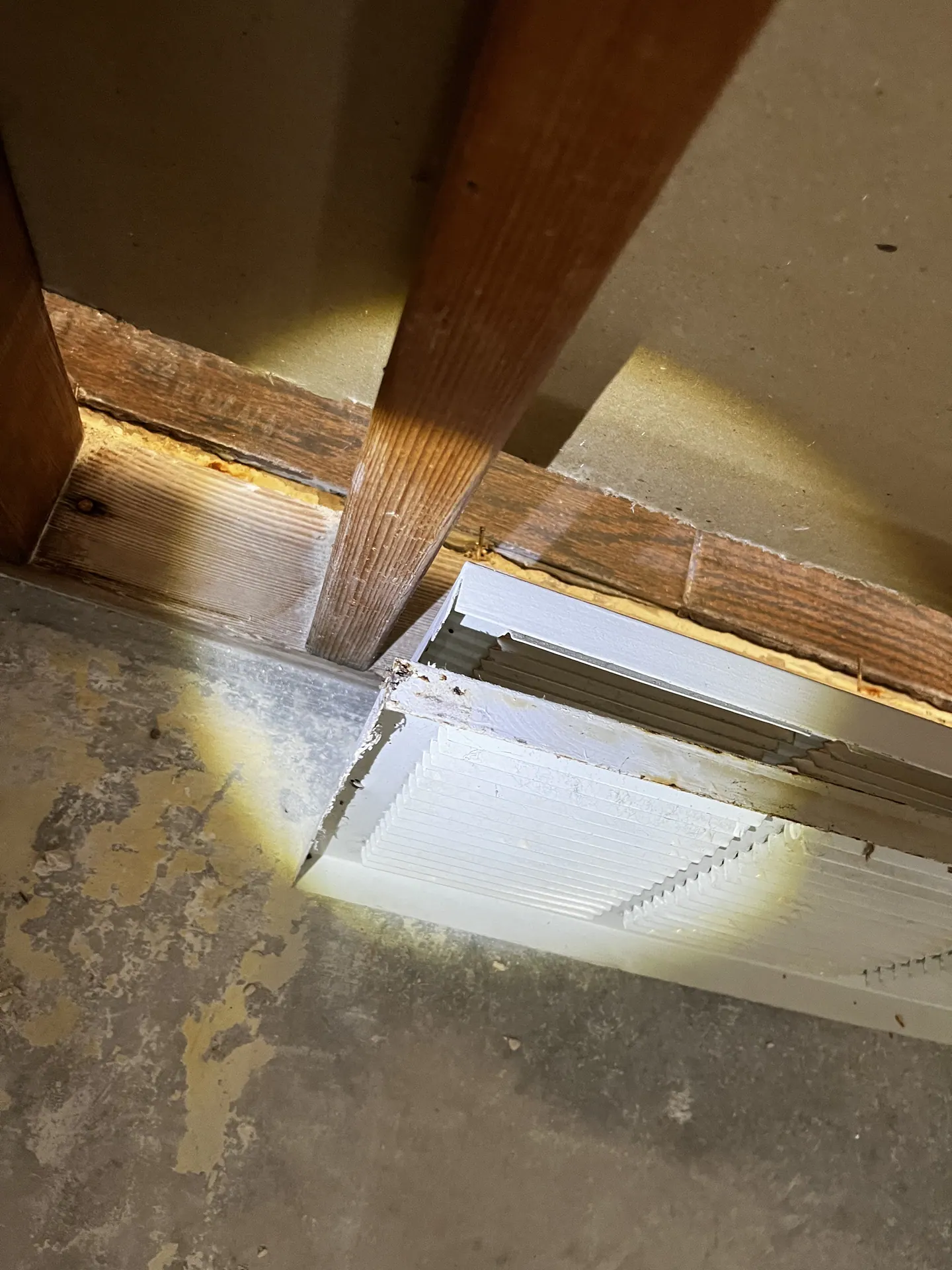
Mold Found After an AC Condensate Drain Overflow in a Fort Worth Home
A reported HVAC condensate-drain backup flooded the HVAC closet and adjoining rooms of a Fort Worth attached duplex residence while the homeowner was away. A restoration contractor had already made flood cuts and removed portions of flooring before the mold assessment. Six surface samples documented different findings across the affected areas: Heavy Stachybotrys at the HVAC-closet concrete-floor surface, Heavy Chaetomium at a water-affected bedroom wall, and Heavy Cladosporium with Heavy hyphal fragments on a bedroom supply register. No air samples were collected.
View Case Study →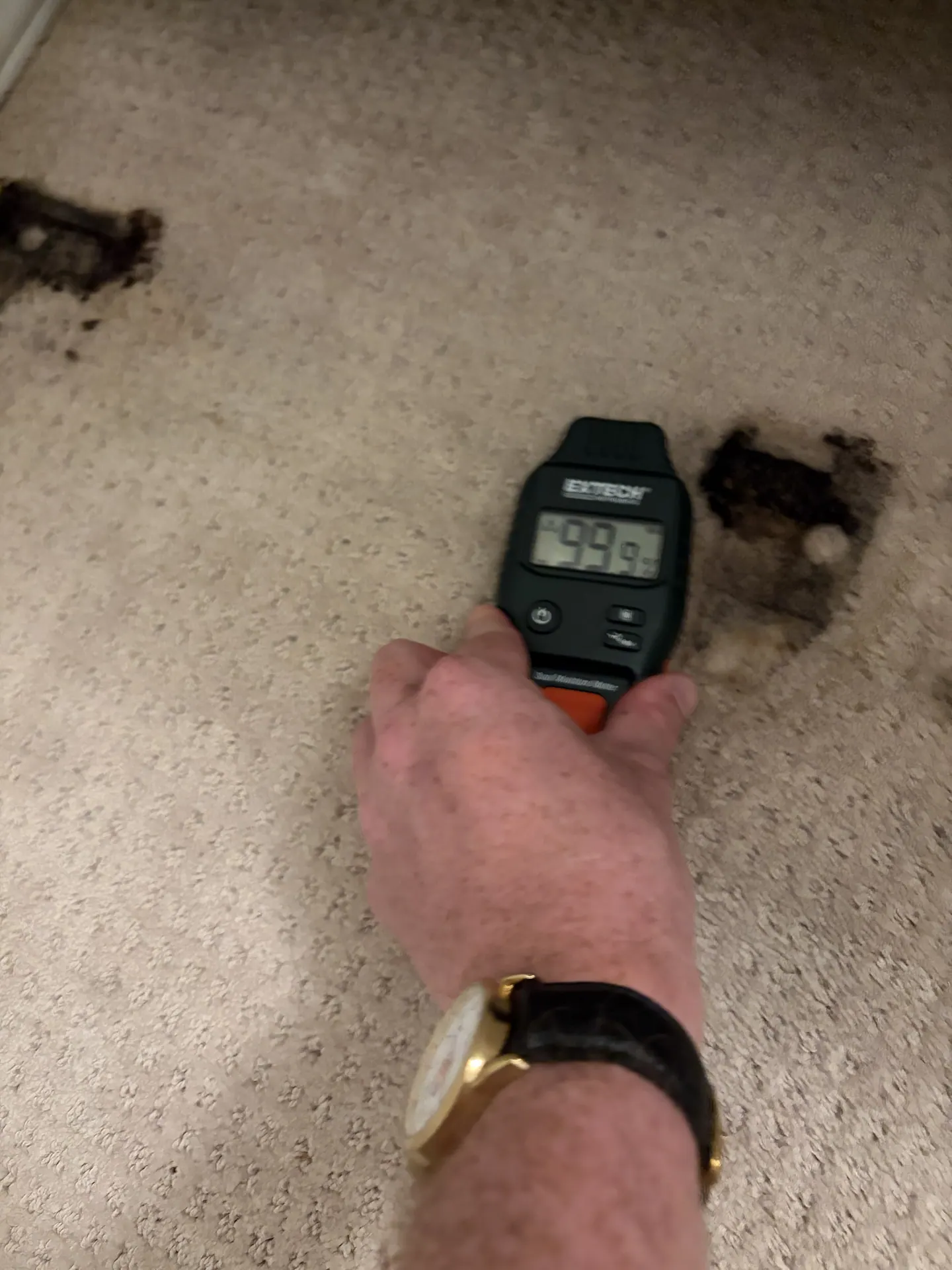
Mold and Water Intrusion From Landscape Irrigation in a Dallas Bedroom
A Dallas homeowner noticed visible growth on a guest-bedroom nightstand foot. A limited assessment found two wet carpet and lower-wall zones along the exterior wall, aligned horizontally with two exterior areas showing algae-like growth. A swab of one stained wet carpet area supported fungal growth, including Heavy Chaetomium and Heavy hyphal fragments. Landscape irrigation was identified as the probable recurring moisture source; the precise route of water entry was not confirmed.
View Case Study →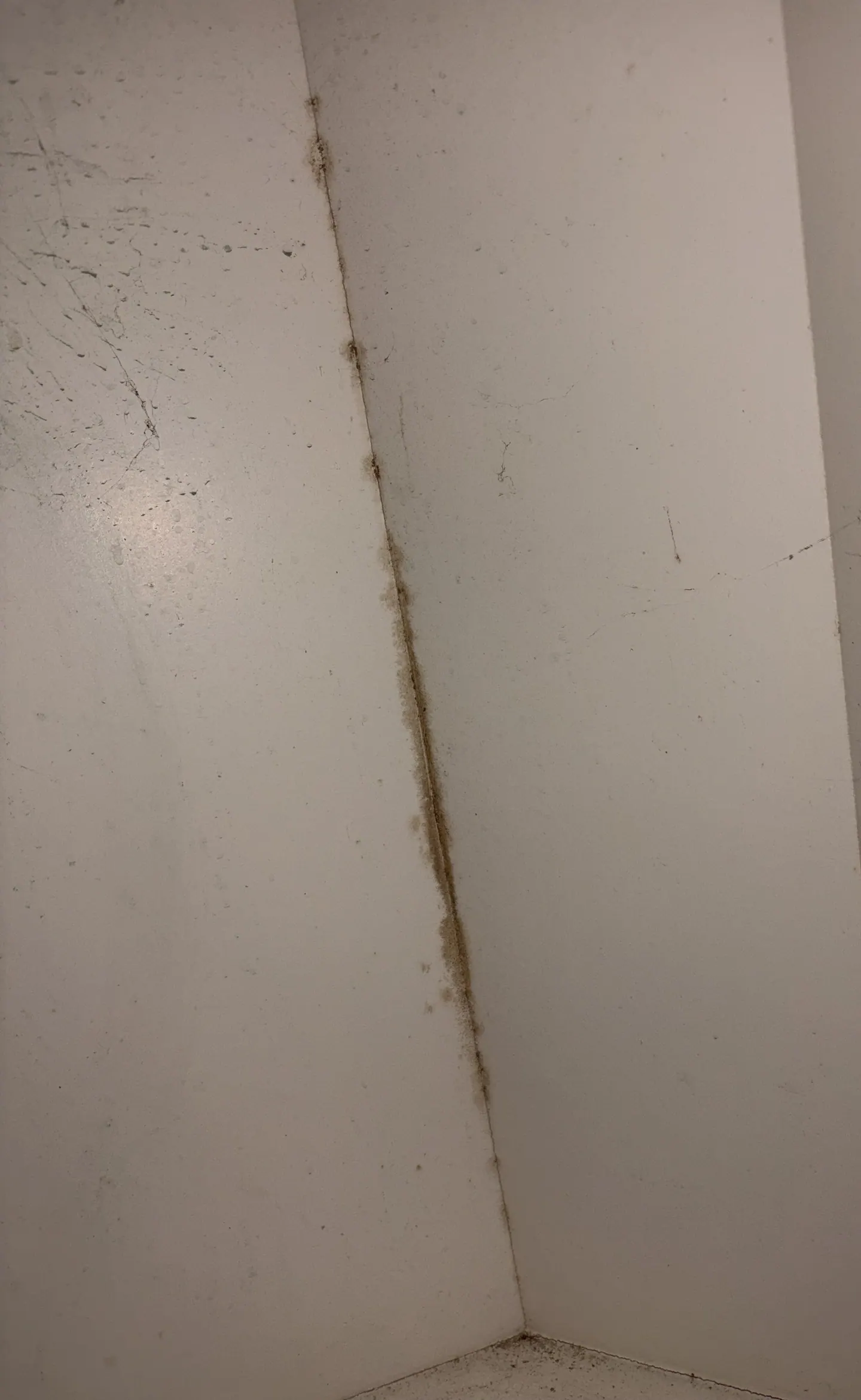
Mold Found Inside a Bathroom Vanity After a Persistent Musty Odor
A homeowner reported persistent musty odors in three adjoining or vertically stacked bathrooms. In Bathroom #1, an accessible rear vanity seam showed discoloration and its surface swab supported fungal growth. Its air sample contained more than 8,000 Aspergillus/Penicillium-like spores/m³, unlike the other two bathrooms tested. The specific moisture source was not confirmed.
View Case Study →Mold Found Below a Leaking Mini-Split
A commercial client in Waco, Texas requested a limited mold assessment after an employee raised concern about possible mold in a work area. The assessment focused on two rooms. In the Front Room, a wall-mounted mini-split was actively dripping, with evidence of water traveling down the wall to the floor line. Surface testing confirmed fungal growth behind the flexible cove base below the mini-split. Air samples from both rooms were below the outdoor reference and did not indicate airborne fungal amplification at the sampled locations and time.
View Case Study →Highly Elevated Mold Spores After Flooring Removal in a Frisco Home
A Frisco homeowner requested an assessment after a contractor discovered an older flooring layer beneath a newer flooring system during planned replacement. The contractor had removed the flooring and underlayment the day before inspection, so those materials were no longer available to evaluate. No visible growth, musty odor or active leak was found, and readings on the exposed slab were not elevated. Nevertheless, the front-room air sample returned >33,000/m³ Aspergillus/Penicillium-like spores and >34,000/m³ total fungal structures. The airborne findings were consistent with a recently disturbed source, not direct confirmation of mold on the discarded materials.
View Case Study →