
- Location
- Frisco, Texas
- Property type
- Residential home
- Inspection type
- Limited mold assessment
- Primary concern
- Possible hidden mold following discovery and removal of an older flooring layer
- Inspection
- May 2026
The Situation
During planned flooring replacement in a Frisco home, a contractor discovered an older flooring layer beneath a newer flooring system. The homeowner became concerned about possible hidden mold.
Before the assessor arrived, the contractor had removed all flooring in the affected areas and disposed of the original flooring and underlayment. The removal occurred the day before the inspection.
The assessment evaluated the exposed conditions, screened moisture at the front-room area where bubbling had previously been reported, and compared an indoor air sample with an outdoor control.
What Was Inspected
- Exposed concrete slab and accessible baseboards and lower walls were evaluated after the flooring had already been removed.
- The underside of the removed flooring, removed underlayment and associated finish layers were no longer available for direct inspection or confirmation.
- Front-room slab readings were on the instrument's relative scale, not concrete moisture-content percentages.
- One front-room indoor air sample and an outdoor control describe airborne conditions at the sampled locations and time. They do not identify the exact discarded material responsible.
What We Observed
The exposed concrete slab had residual adhesive patterns but no visible microbial growth. There was no observed staining or distortion of the baseboards or lower walls, no musty odor, and no active leak identified.
The front-room area where bubbling had previously been reported had relative-scale moisture readings interpreted by the report as within the range expected for dry concrete at the time of inspection.
Moisture / Building Conditions
At the front-room area where bubbling had previously been reported, the instrument's relative-scale readings were 9.5, 14.3, 7.4 and 15.4.
The report interpreted these readings as within the range expected for dry concrete at the time of inspection. They are not exact percentages of concrete moisture content.
Indoor relative humidity measured 55.3%, below the recommended 60% level at the time of inspection. No active water source was identified.
Sampling Performed
- Indoor air sample — Front room: Collected after the flooring had been removed the day before the assessment.
- Outdoor control air sample — Outdoors: Reference for comparison with the indoor air result.
Indoor Air and Outdoor Control Results
| Sample | Finding | Reported result | Context |
|---|---|---|---|
| Indoor — front room | Aspergillus/Penicillium-like | >33,000 spores/m³ | Laboratory reporting limit reached; actual concentration could have been higher. |
| Indoor — front room | Total fungal | >34,000 structures/m³ | Greater-than qualifier retained; not an exact total. |
| Outdoor control | Aspergillus/Penicillium-like | 550 spores/m³ | |
| Outdoor control | Total fungal | 6,400 structures/m³ |
Understanding the Laboratory Rating
The indoor Aspergillus/Penicillium-like concentration was approximately sixty times the outdoor control based on the reported minimum. Because the laboratory reporting limit was reached, the true indoor concentration could have been higher.
Neither Stachybotrys nor Chaetomium was detected in either air sample. The reported fungal group does not identify individual Aspergillus or Penicillium species.
What the Findings Suggested
The report associated the airborne elevation with recent disturbance and removal of flooring materials within the building envelope. The lack of visible growth on the exposed slab did not negate the documented airborne elevation.
The removed flooring and underlayment were unavailable for direct examination. The airborne findings were consistent with a recently disturbed source, but did not prove that a particular discarded flooring layer contained mold.
Demolition Can Change Air-Sampling Results
Removing or disturbing previously covered materials can release accumulated fungal particles into indoor air. The visible source may already be gone, exposed surfaces may look clean, and moisture readings may be normal while airborne fungal concentrations remain elevated temporarily.
This report did not establish how long an elevation would persist. In this case, the air results were associated with recent flooring disturbance and removal, but the exact discarded material responsible was not identified by direct sampling.
Recommendations
- Maintain indoor relative humidity below 60%.
- Investigate future moisture sources if identified and address any later-discovered intrusion promptly.
- Follow the procedures for further action in the licensed Mold Assessment Consultant document; detailed remediation instructions are not reproduced in this public case study.
- After corrective work, obtain independent post-corrective-action clearance testing through an independent licensed Mold Assessment Consultant. This is a professional recommendation after corrective work, not a clearance service offered by Mold Testing Dallas.
What Homeowners Can Learn From This Case
A clean-looking exposed slab and normal moisture readings do not necessarily characterize airborne conditions after demolition. Flooring removal can change what is observable and what an air sample records.
Keep the assessment's timing and access limits in view. Here, the contractor's work had already occurred and the original materials had been discarded, so direct confirmation of their prior condition was not possible.
Interpret visual findings, moisture screening and laboratory air results together. This assessment documented a strong airborne elevation without claiming a confirmed mold finding on the removed flooring.
Questions About This Case
Can mold air levels be high after flooring is removed?
Yes. Disturbing flooring and underlayment can release fungal particles that were previously trapped or settled. In this case, the indoor Aspergillus/Penicillium-like concentration exceeded 33,000/m³ the day after flooring removal.
Can there be high mold spores with no visible mold?
Yes. In this case, the visible flooring materials had already been removed, exposed surfaces looked clean, but the indoor air sample was strongly elevated.
Does high Aspergillus/Penicillium-like prove the old flooring had mold?
No. The removed flooring was no longer available for direct inspection or sampling. The airborne findings were consistent with a recently disturbed source but did not identify the exact removed material responsible.
Why is the > symbol important in mold lab results?
It indicates the laboratory reached a counting or reporting limit, so the true concentration may be higher than the value shown.
Related Services
Found Unexpected Flooring or Water Damage During Renovation?
If flooring or other materials are removed and there is concern about hidden mold, an independent assessment can document current moisture conditions and airborne fungal levels before reconstruction continues.
Schedule a Mold InspectionPublished by Mold Testing Dallas.
Related Real Inspection Cases
These separate reports illustrate why visual observations, moisture history, room-air samples and wall-cavity samples must be interpreted within each assessment's own scope. The Dallas hidden-wall case documented concealed growth despite lower ambient-air results, while the Dallas home-purchase case had a favorable tested-cavity result. Neither conclusion should be transferred to this Frisco flooring-removal assessment.
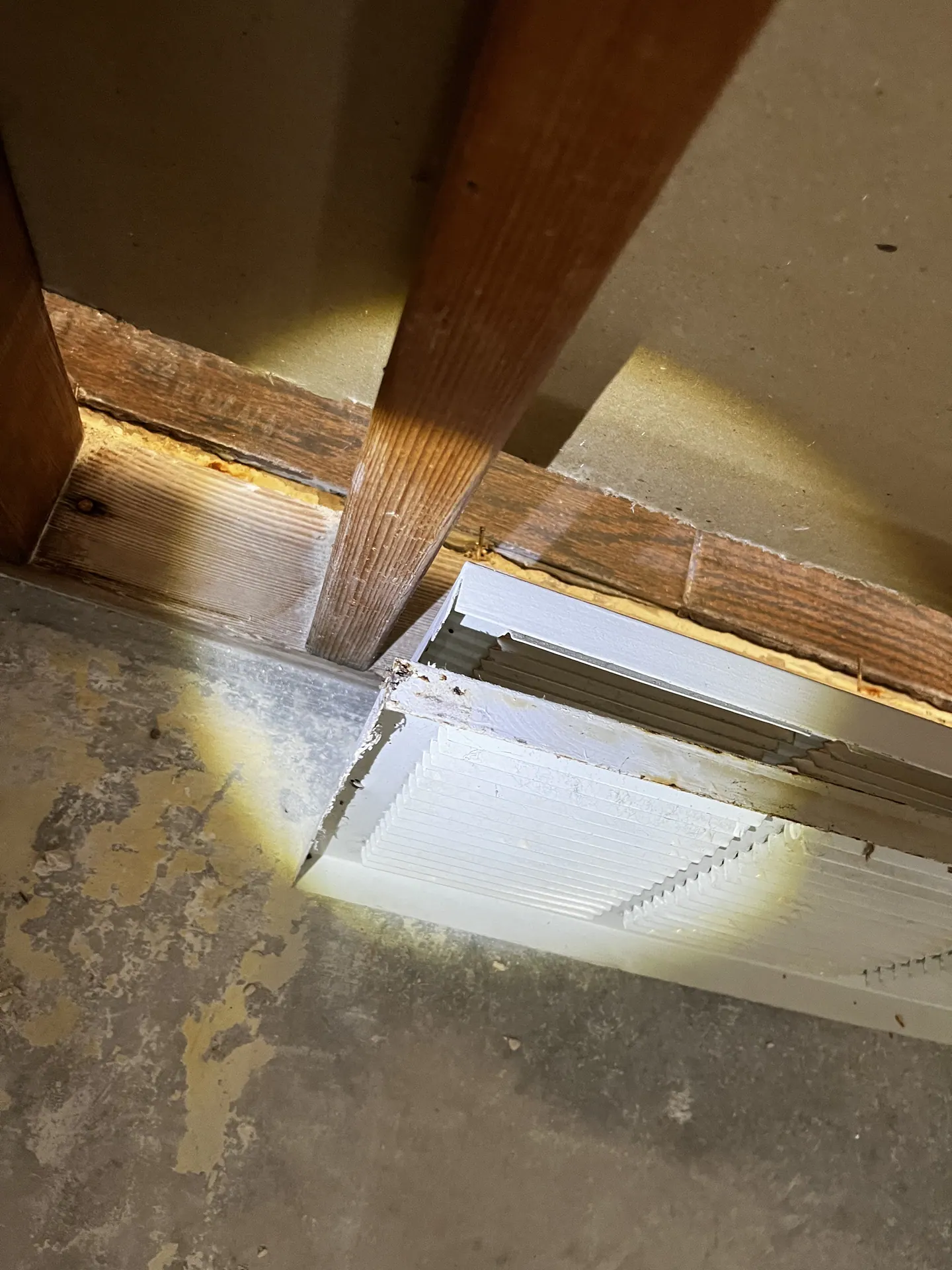
Mold Found After an AC Condensate Drain Overflow in a Fort Worth Home
A reported HVAC condensate-drain backup flooded the HVAC closet and adjoining rooms of a Fort Worth attached duplex residence while the homeowner was away. A restoration contractor had already made flood cuts and removed portions of flooring before the mold assessment. Six surface samples documented different findings across the affected areas: Heavy Stachybotrys at the HVAC-closet concrete-floor surface, Heavy Chaetomium at a water-affected bedroom wall, and Heavy Cladosporium with Heavy hyphal fragments on a bedroom supply register. No air samples were collected.
View Case Study →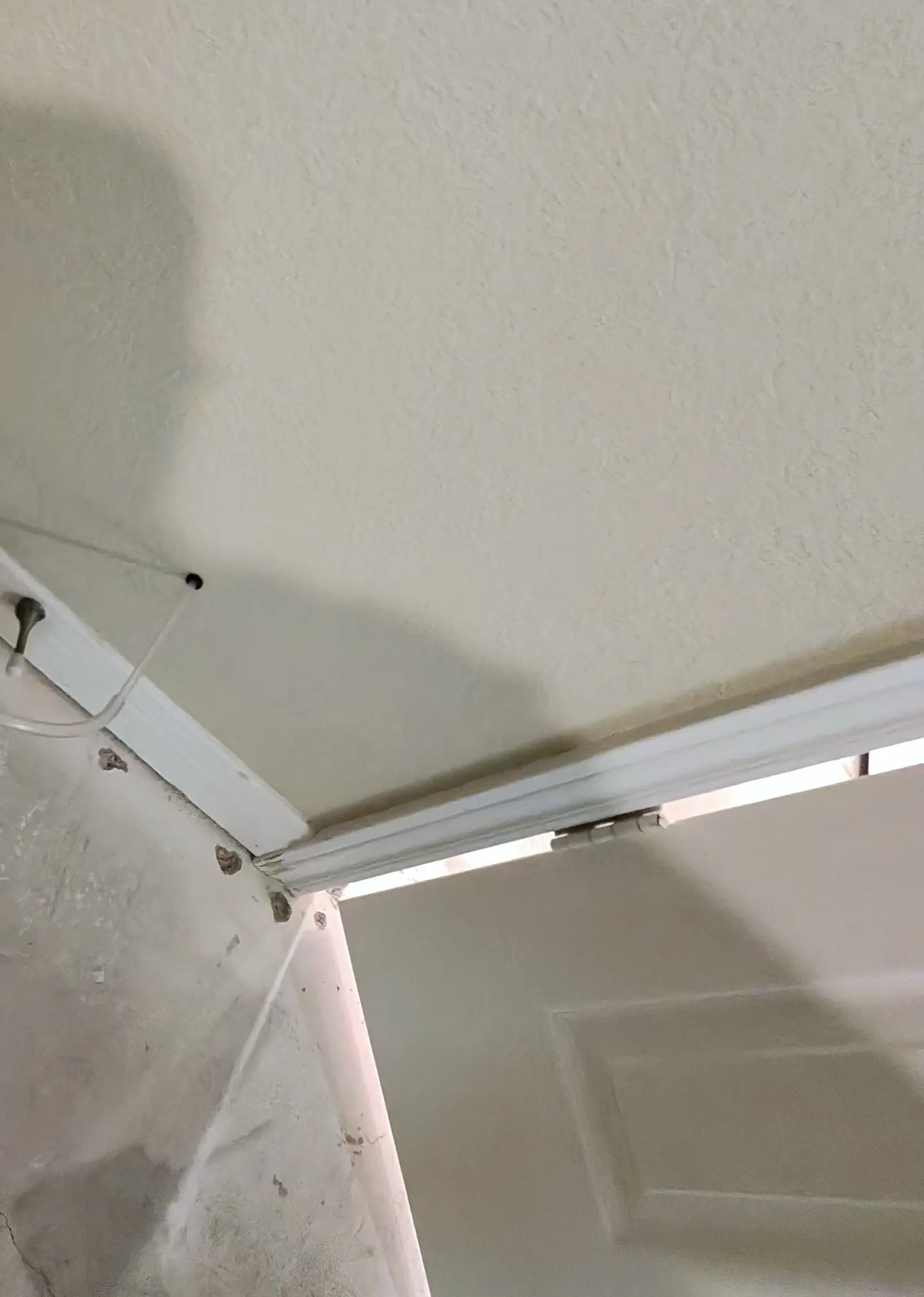
Hidden Mold Concern After an Undetected Water Leak in a Dallas Home
A Dallas homeowner requested an assessment after several past water events, including a master-closet leak that reportedly went undetected for a time and left stored belongings with visible mold. By inspection, the belongings and flooring were gone, the slab was exposed, and no visible mold appeared on accessible master-closet surfaces. A 5-liter air sample from the previously affected corner had the highest fungal finding among four sampled wall cavities. Two other 5-liter cavity samples had no mold detected. The closet wall was not opened, so the condition of concealed materials remained undetermined.
View Case Study →Hidden Mold Found Inside Wall Cavities in a Dallas Home
A Dallas homeowner requested a limited assessment after concerns about possible concealed mold and prior water-damage conditions. Occupied-room air samples were below the outdoor reference, while two concealed wall cavities had substantially different findings. One cavity showed moisture abnormalities, deteriorated finishes and apparent growth by borescope; a second cavity returned more than 55,000 total fungal structures per cubic meter when re-sampled after its first sample was occluded. An upstairs storage area also showed moisture and apparent growth.
View Case Study →Wall-Cavity Mold Testing During a Dallas Real Estate Transaction
A mold assessment was requested during a Dallas real estate transaction after a prior property inspection identified a moisture concern in a third-floor bedroom wall. The wall was dry, and two targeted wall-cavity samples found no evidence of elevated or unusual fungal activity in the tested wall cavity.
View Case Study →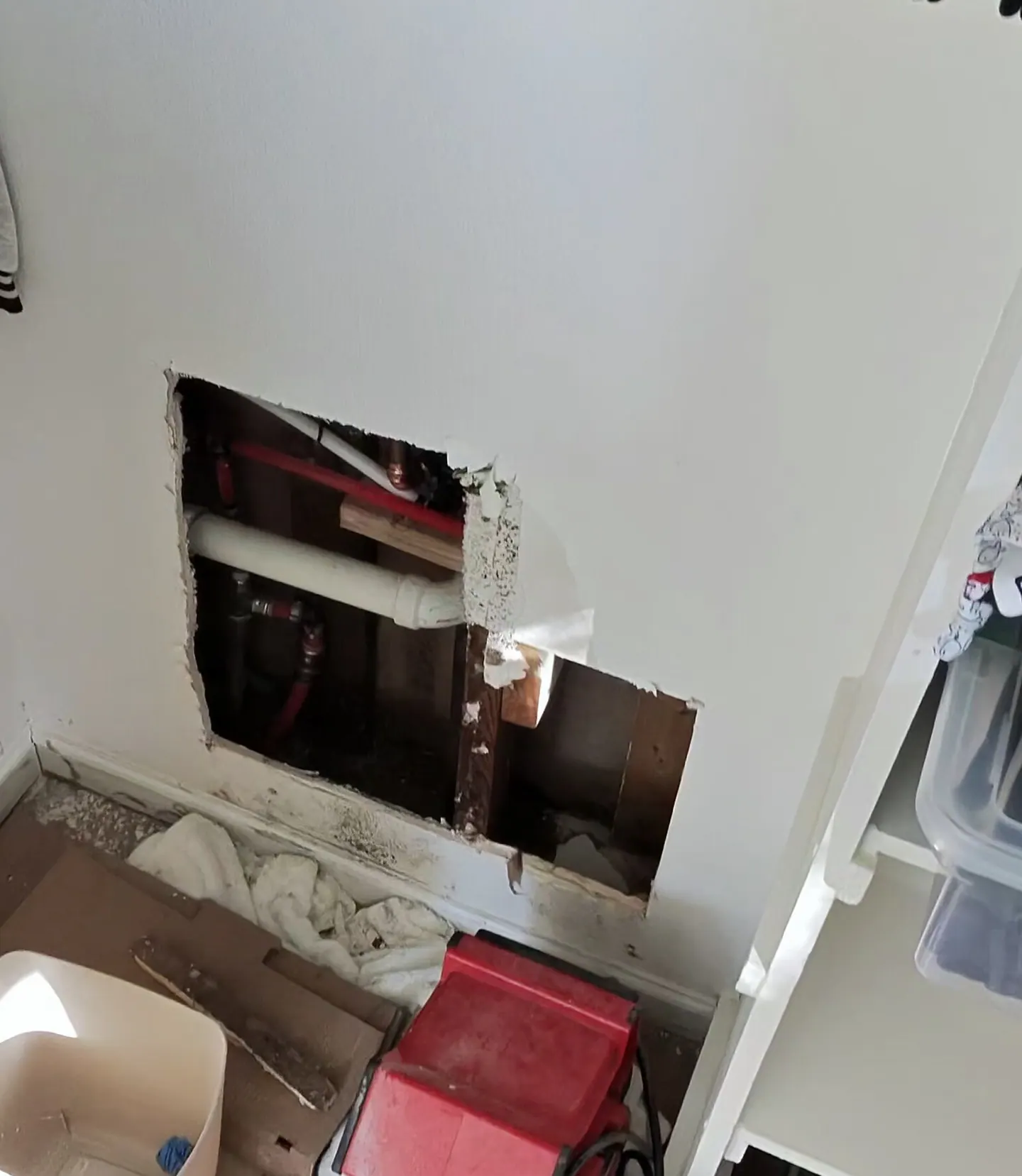
Mold Found Inside a Wall After a Plumbing Leak in Farmers Branch
A Farmers Branch homeowner requested a limited mold assessment after a reported plumbing leak affected a wall shared by a guest bathroom and two closets. The leak had reportedly been repaired, but existing repair openings exposed stained wallboard and framing. A swab through the guest bedroom closet opening supported fungal growth on sampled material. Separate ceiling and former exterior-wall concerns had different, more limited findings.
View Case Study →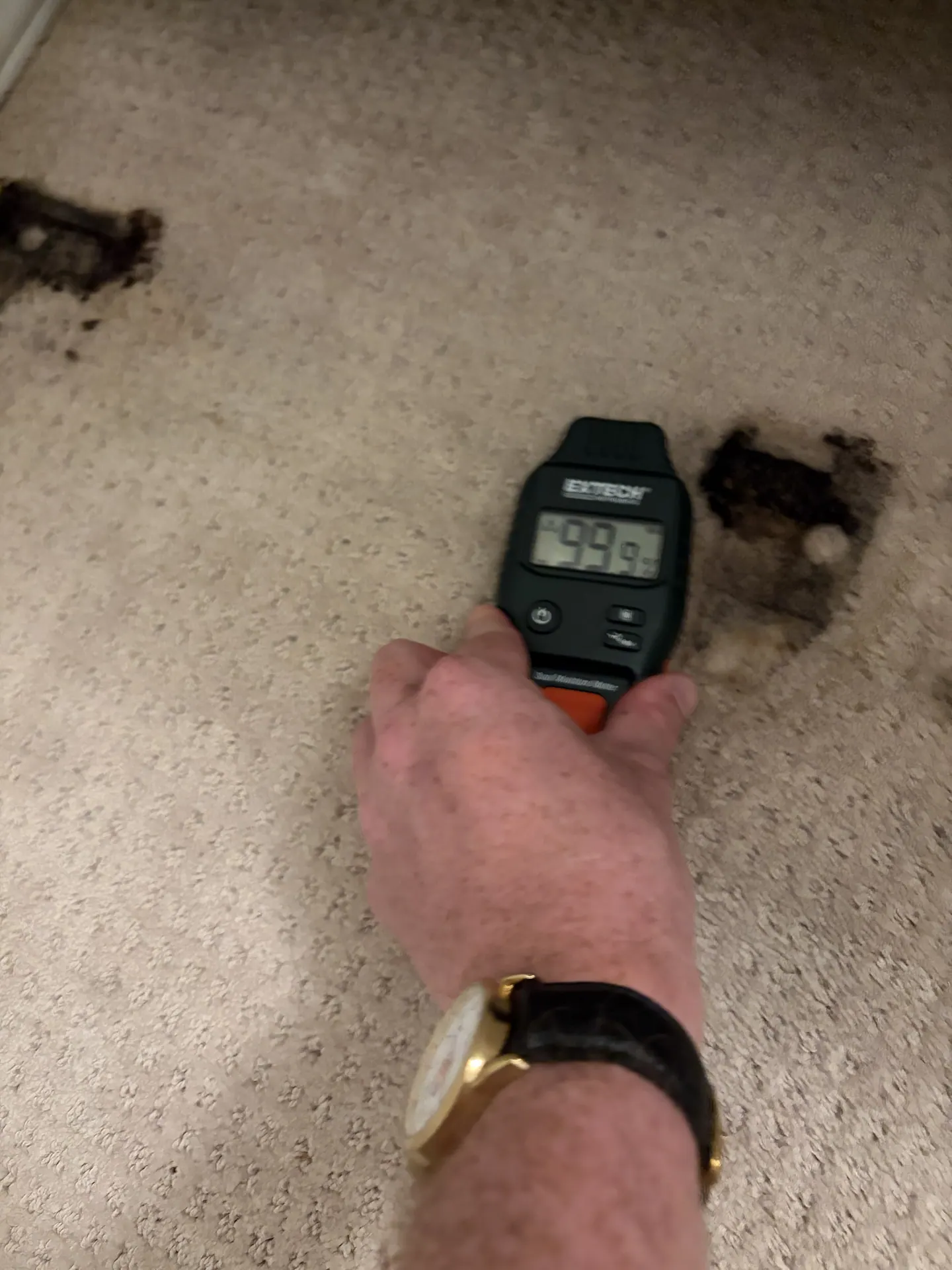
Mold and Water Intrusion From Landscape Irrigation in a Dallas Bedroom
A Dallas homeowner noticed visible growth on a guest-bedroom nightstand foot. A limited assessment found two wet carpet and lower-wall zones along the exterior wall, aligned horizontally with two exterior areas showing algae-like growth. A swab of one stained wet carpet area supported fungal growth, including Heavy Chaetomium and Heavy hyphal fragments. Landscape irrigation was identified as the probable recurring moisture source; the precise route of water entry was not confirmed.
View Case Study →