
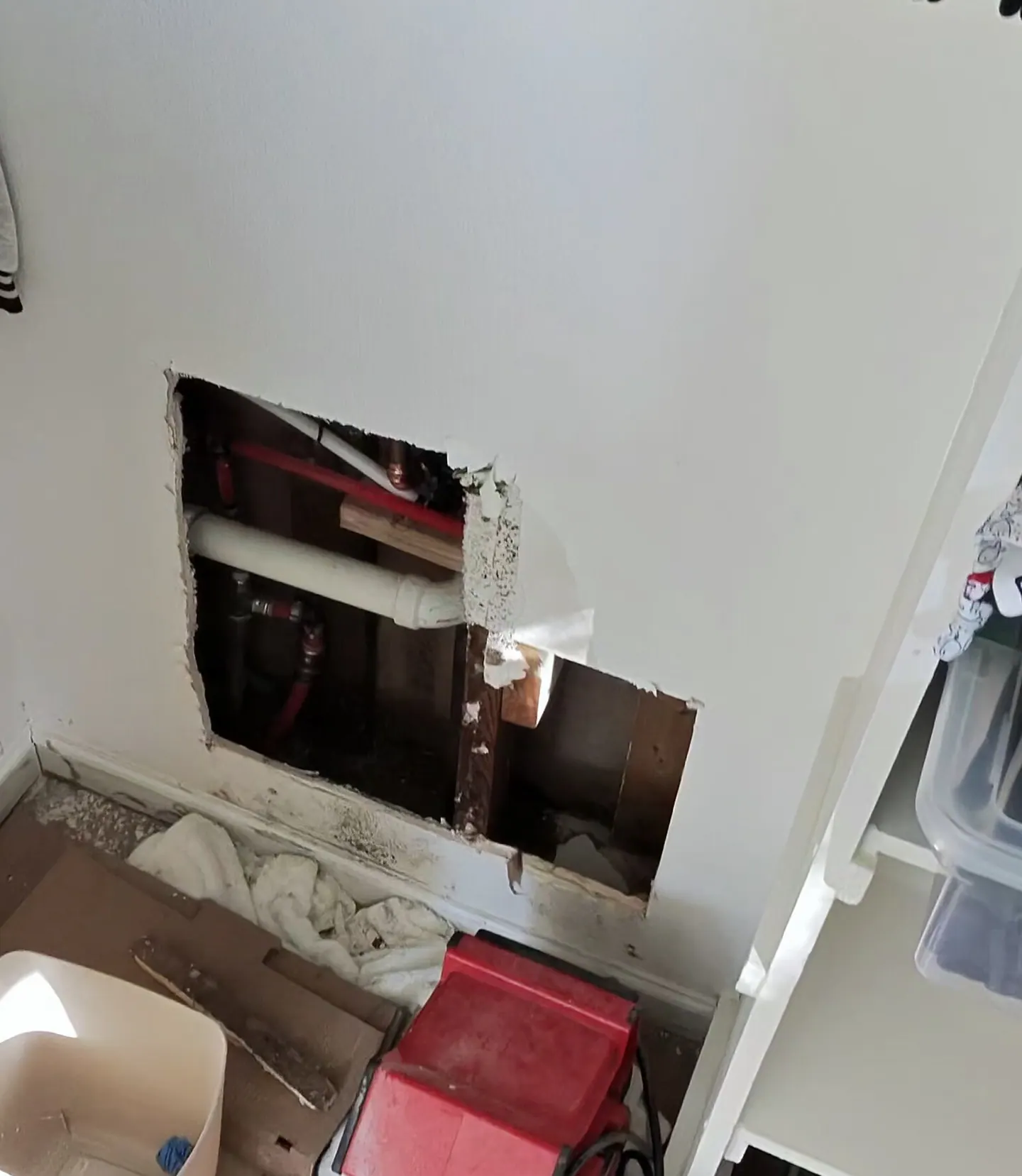
Mold Found Inside a Wall After a Plumbing Leak in Farmers Branch
A Farmers Branch homeowner requested a limited mold assessment after a reported plumbing leak affected a wall shared by a guest bathroom and two closets. The leak had reportedly been repaired, but existing repair openings exposed stained wallboard and framing. A swab through the guest bedroom closet opening supported fungal growth on sampled material. Separate ceiling and former exterior-wall concerns had different, more limited findings.
View Case Study →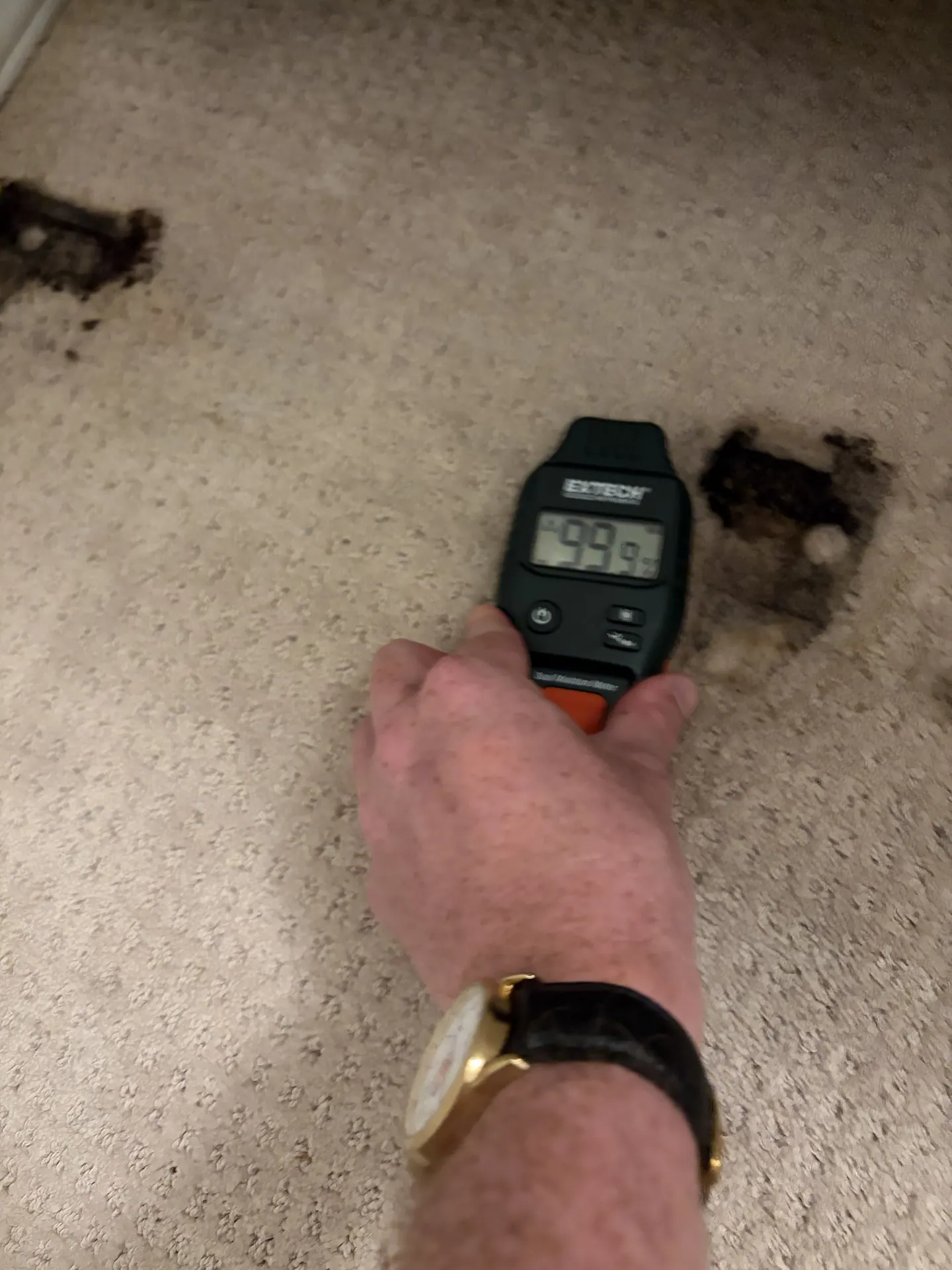
Mold and Water Intrusion From Landscape Irrigation in a Dallas Bedroom
A Dallas homeowner noticed visible growth on a guest-bedroom nightstand foot. A limited assessment found two wet carpet and lower-wall zones along the exterior wall, aligned horizontally with two exterior areas showing algae-like growth. A swab of one stained wet carpet area supported fungal growth, including Heavy Chaetomium and Heavy hyphal fragments. Landscape irrigation was identified as the probable recurring moisture source; the precise route of water entry was not confirmed.
View Case Study →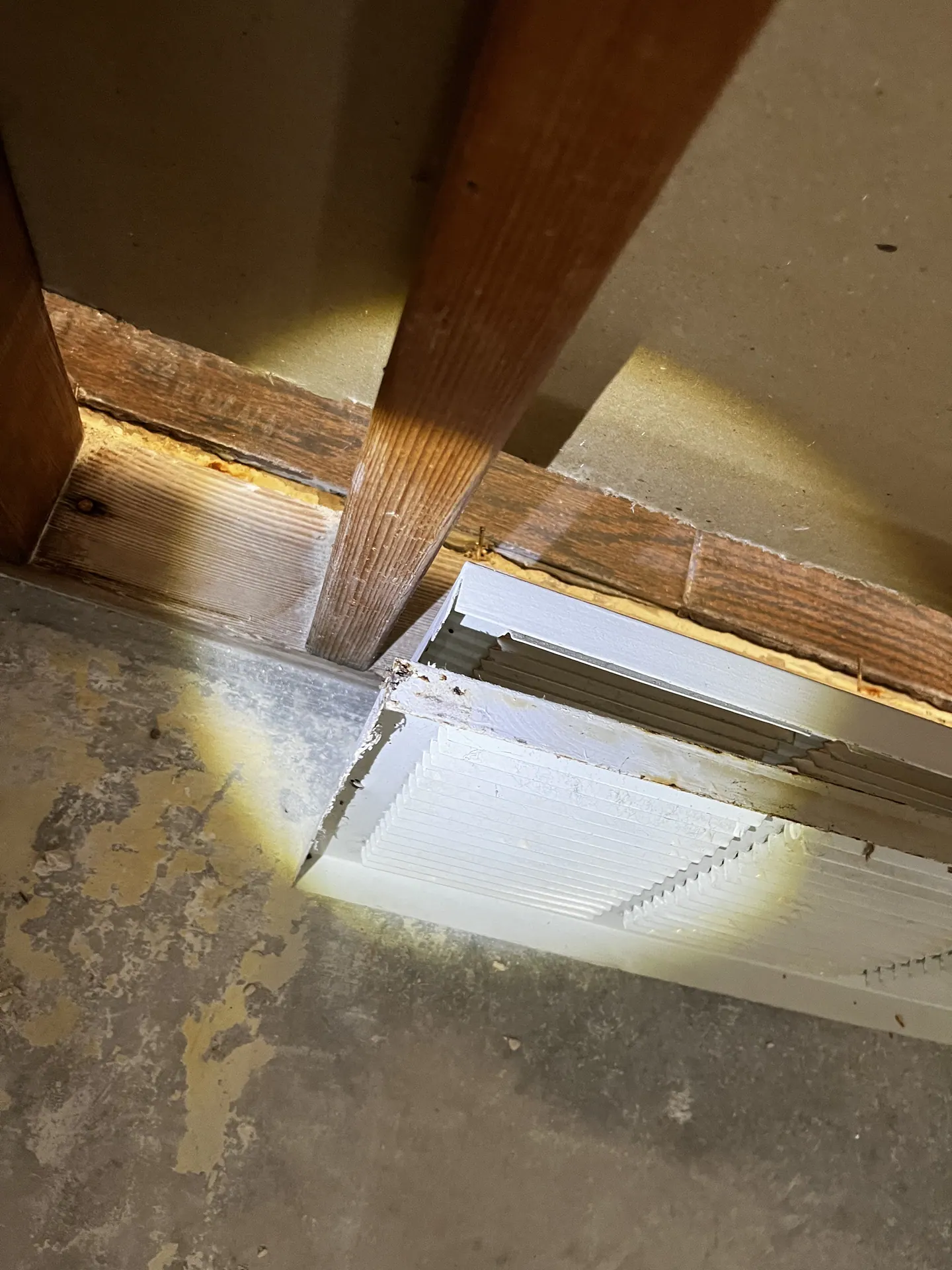
Mold Found After an AC Condensate Drain Overflow in a Fort Worth Home
A reported HVAC condensate-drain backup flooded the HVAC closet and adjoining rooms of a Fort Worth attached duplex residence while the homeowner was away. A restoration contractor had already made flood cuts and removed portions of flooring before the mold assessment. Six surface samples documented different findings across the affected areas: Heavy Stachybotrys at the HVAC-closet concrete-floor surface, Heavy Chaetomium at a water-affected bedroom wall, and Heavy Cladosporium with Heavy hyphal fragments on a bedroom supply register. No air samples were collected.
View Case Study →Highly Elevated Mold Spores After Flooring Removal in a Frisco Home
A Frisco homeowner requested an assessment after a contractor discovered an older flooring layer beneath a newer flooring system during planned replacement. The contractor had removed the flooring and underlayment the day before inspection, so those materials were no longer available to evaluate. No visible growth, musty odor or active leak was found, and readings on the exposed slab were not elevated. Nevertheless, the front-room air sample returned >33,000/m³ Aspergillus/Penicillium-like spores and >34,000/m³ total fungal structures. The airborne findings were consistent with a recently disturbed source, not direct confirmation of mold on the discarded materials.
View Case Study →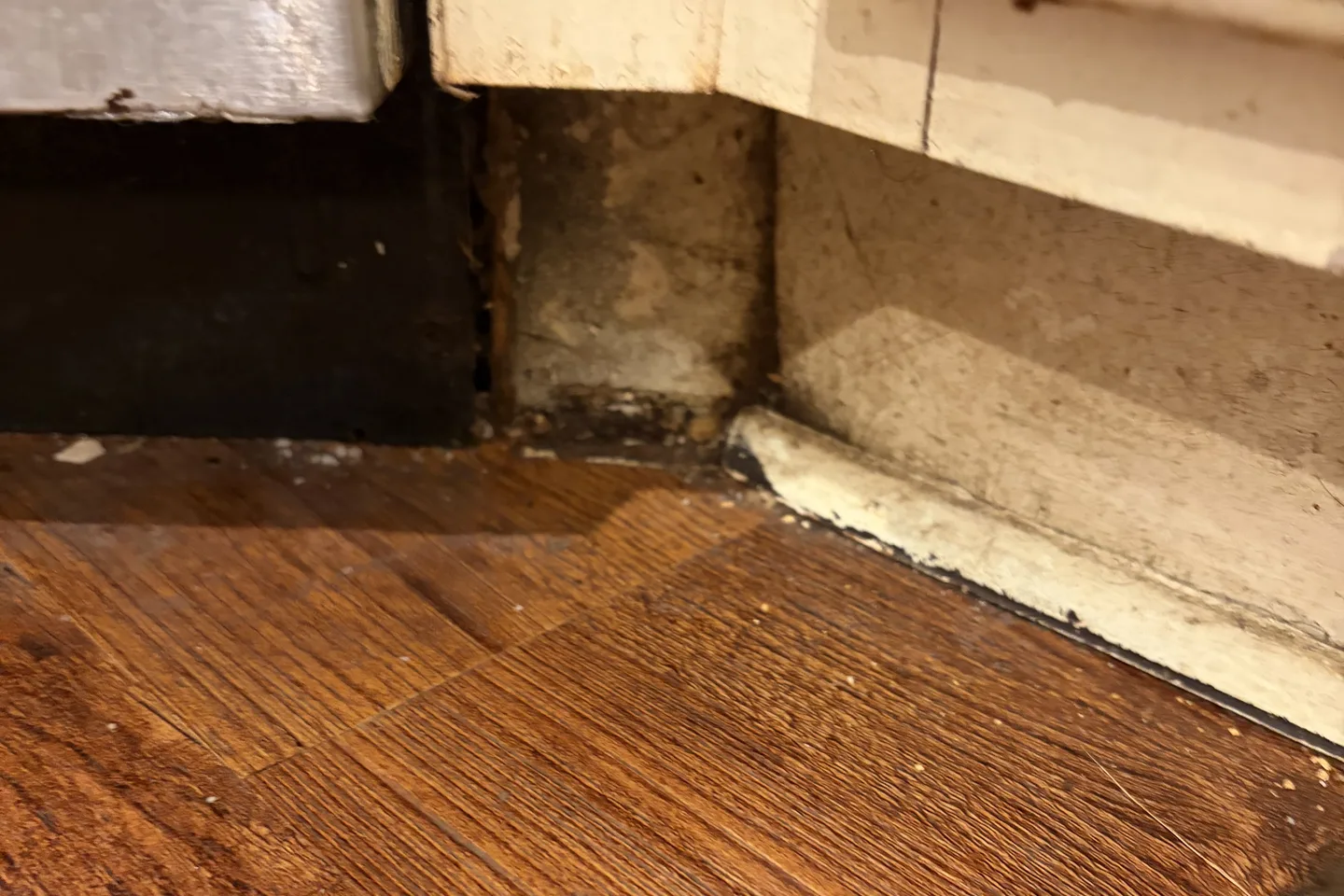
Mold Found Behind a Kitchen Toe-Kick From a Dishwasher Leak
A Frisco homeowner requested a limited mold assessment because of a musty odor near the kitchen sink. No visible mold growth was observed on accessible surfaces inside the stained sink base cabinet. Immediately to the left of the sink, beside the dishwasher, a detached and deteriorated toe-kick was very wet and visibly discolored. An active dishwasher leak was observed, and a surface swab confirmed fungal growth on the toe-kick, including Heavy Aspergillus/Penicillium-like structures and Moderate Cladosporium. Concealed areas behind and beneath the dishwasher, beneath cabinetry and at the subfloor were not opened or evaluated.
View Case Study →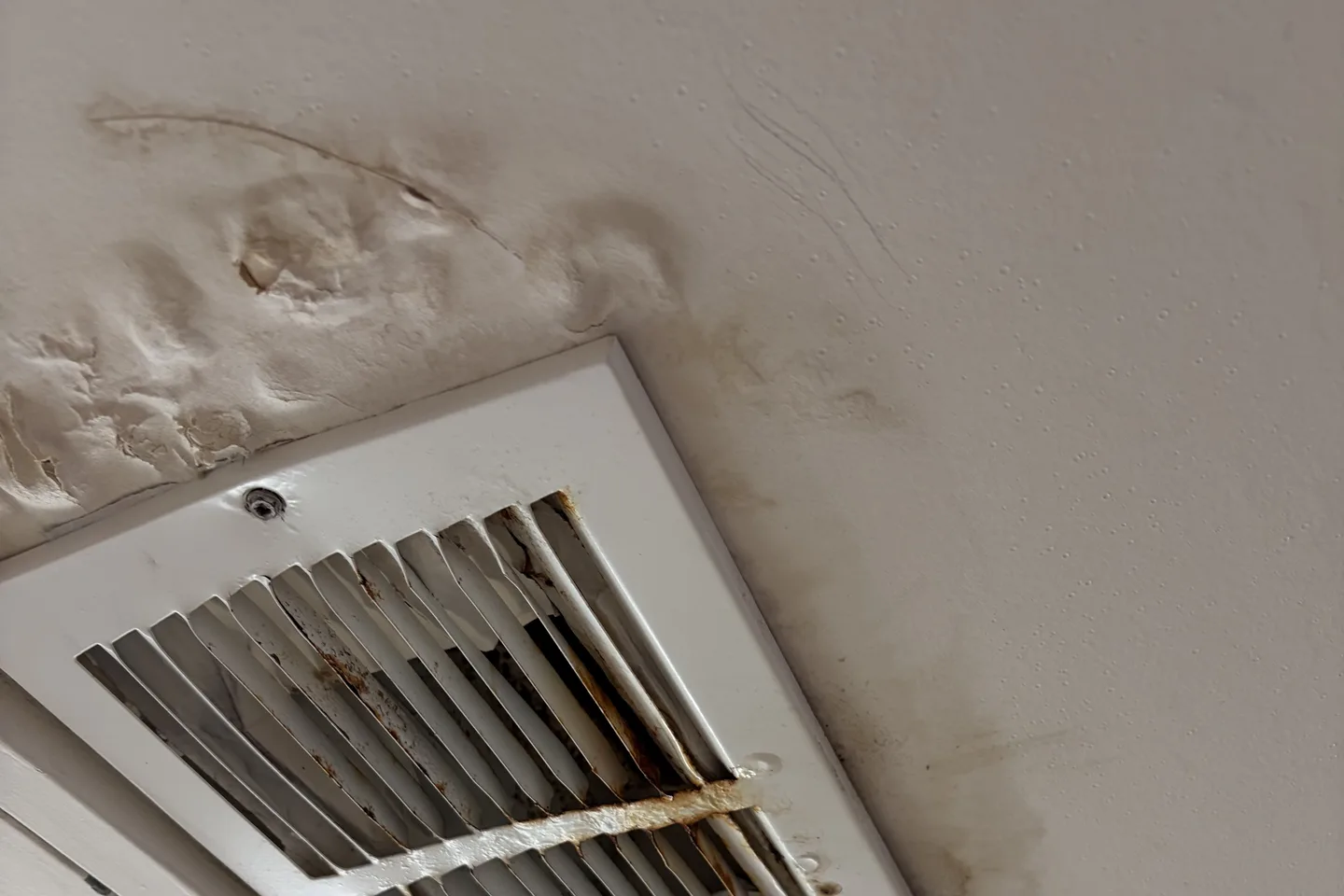
Active HVAC Leak and Wet Ceiling in a Dallas Bathroom
A Dallas property owner requested a limited mold assessment after tenants raised concerns about two bathrooms. The top-floor bathroom had a reported history of HVAC-related water leakage and prior repair attempts. During the assessment, water was actively dripping from a ceiling supply register beside the ceiling-mounted air handler, and surrounding drywall was wet, stained, blistered and bubbling. Comparative moisture responses were much higher by the register than at a same-ceiling reference area. No visible mold was observed on accessible bathroom surfaces, and indoor air samples were below the outdoor reference. The ceiling cavity and concealed materials were not opened.
View Case Study →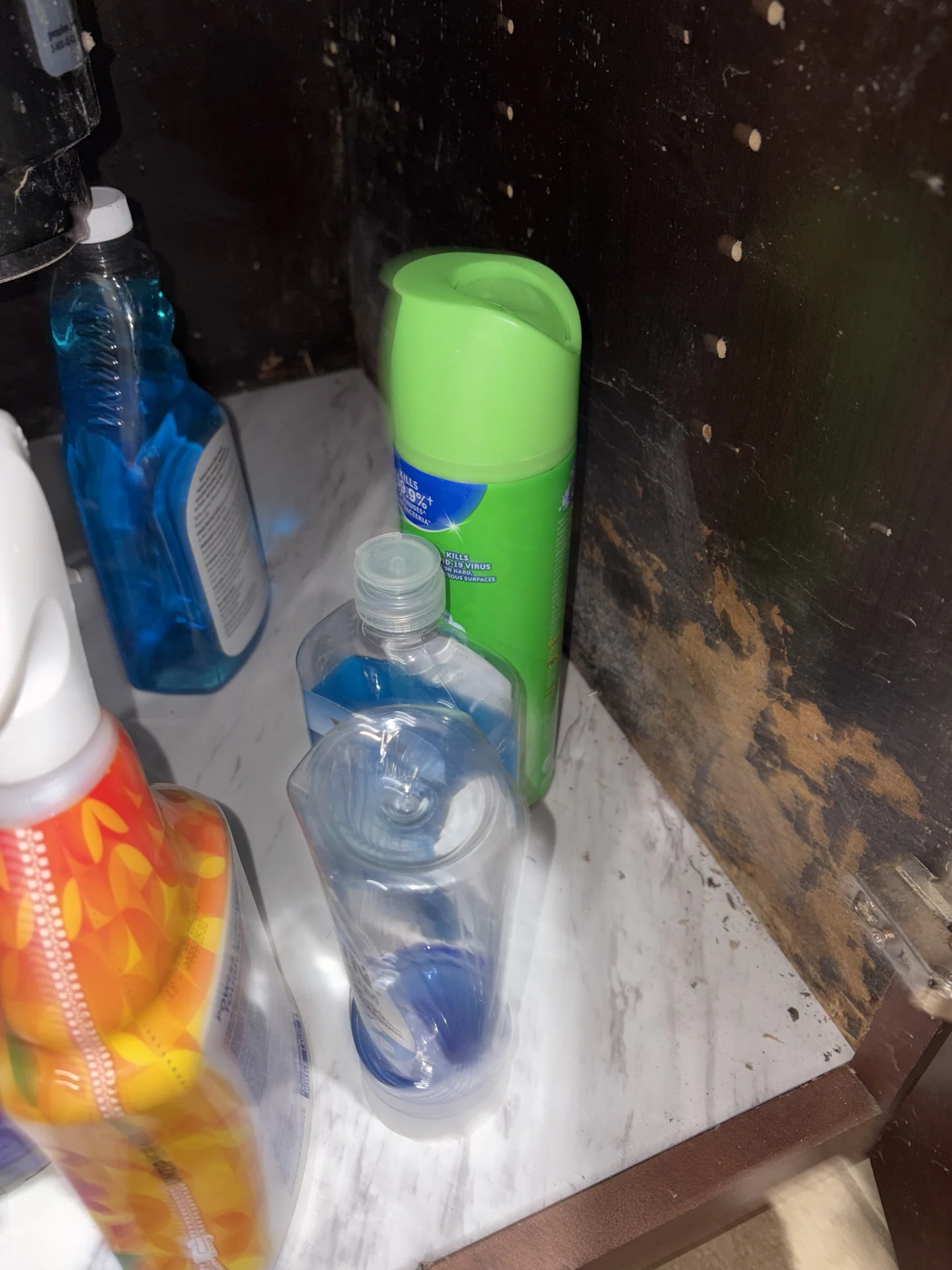
Mold Found Inside a Kitchen Island After a Dishwasher Supply-Line Leak
A McKinney tenant requested a limited assessment after a reported dishwasher supply-line leak inside the kitchen island near the sink. The tenant reported visible mold beneath the sink, inside the sink-base cabinet and in the adjacent pull-out drawer area, and said cleaning had already been performed by others. Discoloration and finish deterioration remained, and moisture screening indicated that cabinet materials were still wet. A rear-panel swab returned Moderate Chaetomium and Moderate Aspergillus/Penicillium-like. A sample collected inside the open sink cabinet contained >4,700 Aspergillus/Penicillium-like spores/m³ and >5,000 total fungal structures/m³. The combined findings supported fungal amplification within the sink-base cabinet area and a recommendation for professional remediation—not a whole-home air conclusion.
View Case Study →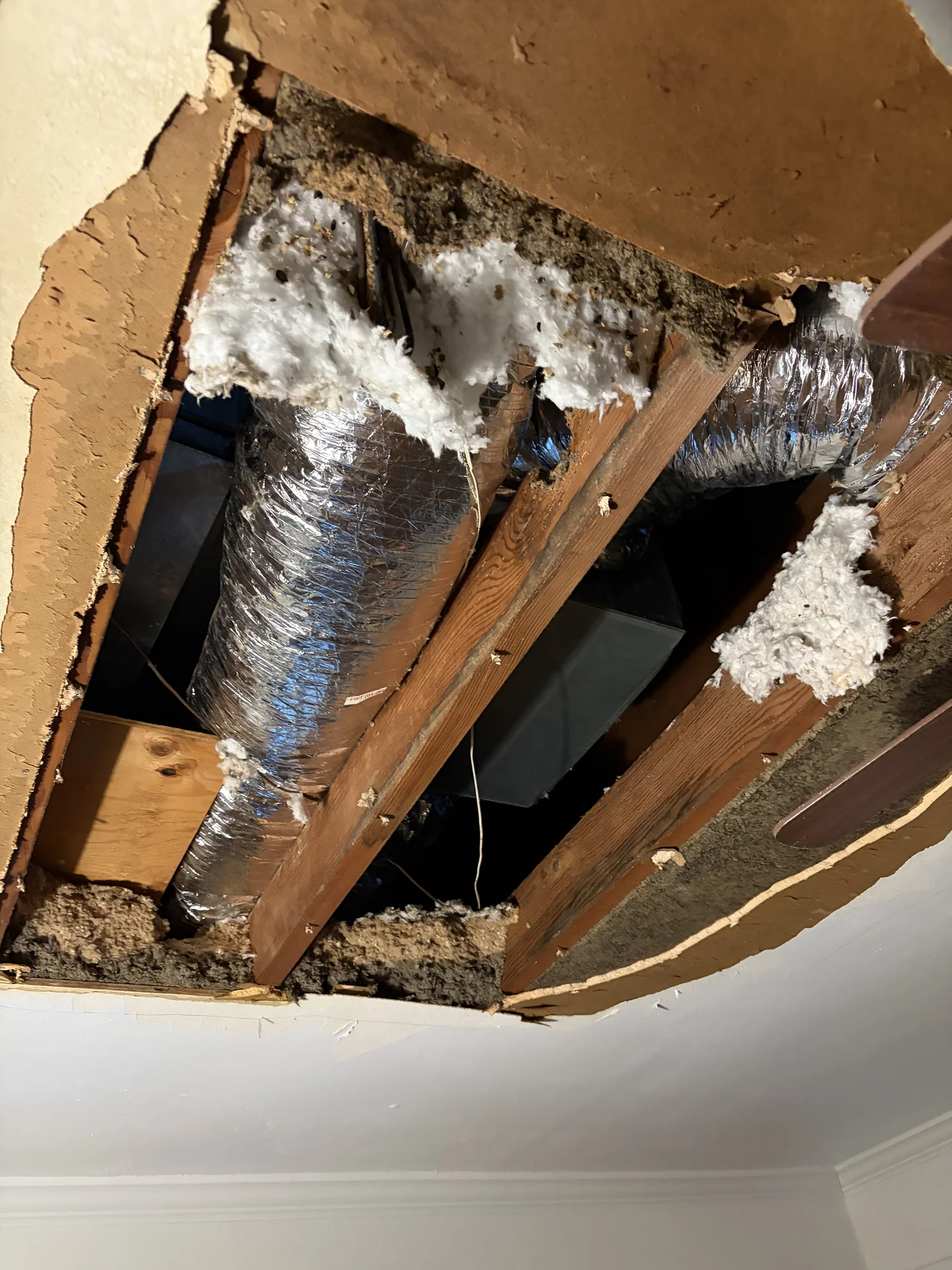
Mold Assessment After an HVAC Condensate Leak and Living-Room Ceiling Collapse
A Fort Worth rental-property owner requested a limited assessment after a reported HVAC condensate drain-line backup at the attic air handler caused living-room ceiling drywall to fall through. The owner reported a prior repair, which was not evaluated. Comparative moisture responses were elevated around the opening, but no visible mold was observed on accessible ceiling or attic surfaces. A swab returned three Minor findings that did not independently establish active growth. Indoor total fungal concentration was below outdoors, with modestly higher Aspergillus/Penicillium-like indoors. Active fungal growth was not confirmed; water-affected materials required prompt evaluation, and concealed conditions remained undetermined.
View Case Study →