
- Location
- Fort Worth, Texas
- Property type
- Residential rental house
- Inspection type
- Limited visual, moisture and sampling assessment
- Primary concern
- Water-damaged living-room ceiling following a reported HVAC condensate drain-line backup
- Inspection
- October 2026
The Situation
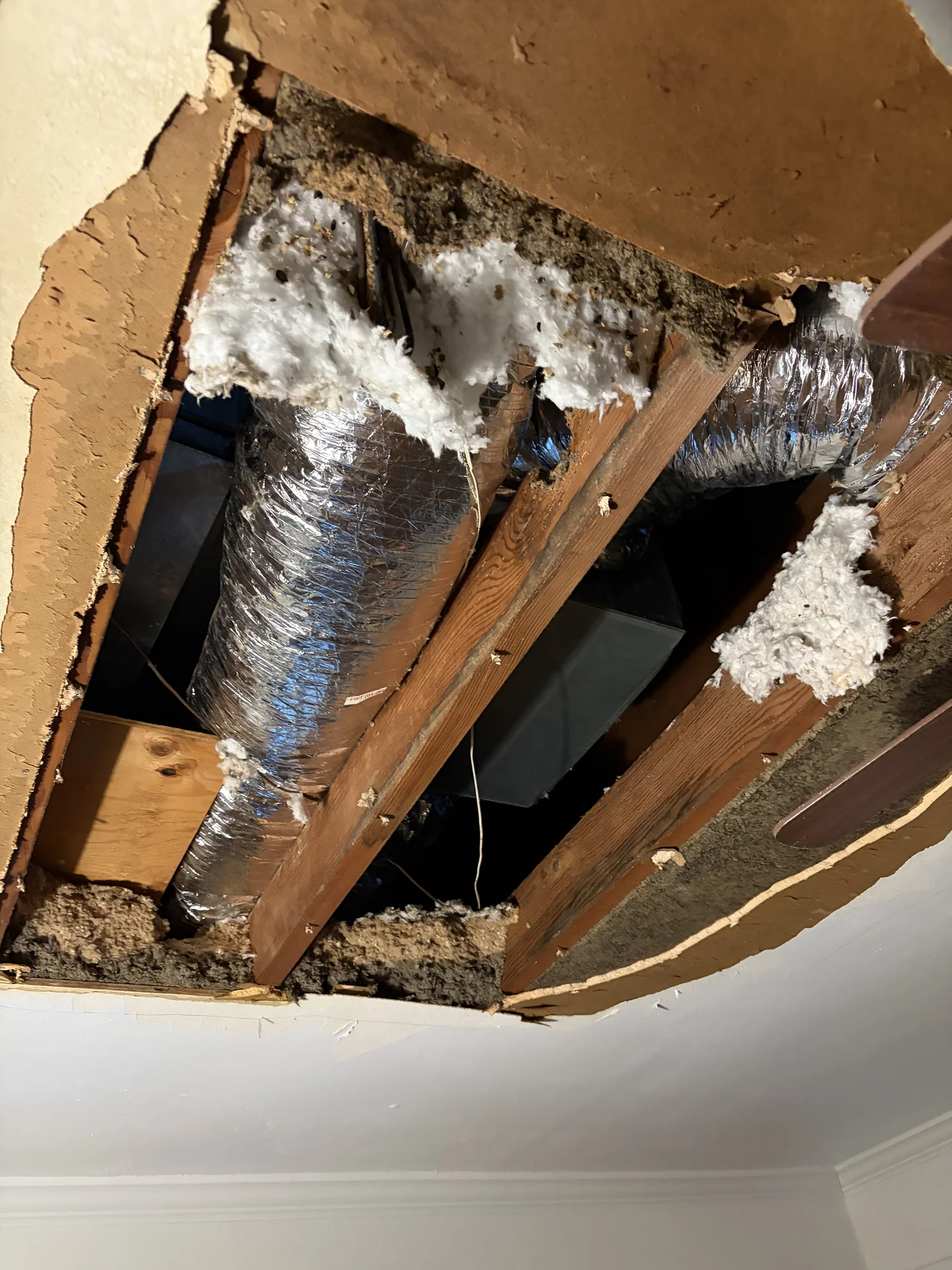
The property owner reported a backup of the HVAC condensate drain line serving the attic air handler, followed by water damage and a section of living-room ceiling drywall falling through.
The owner reported that the drain line had been repaired before the assessment. That repair was not independently evaluated, and an active leak was not established during inspection.
The owner requested a mold assessment; the occupant provided access. This is a separate property and assessment from the existing Dallas drain-line and Fort Worth condensate-overflow cases.
What Was Inspected
- Limited visual inspection of the living room and accessible attic areas above the opening, with comparative moisture screening of ceiling drywall.
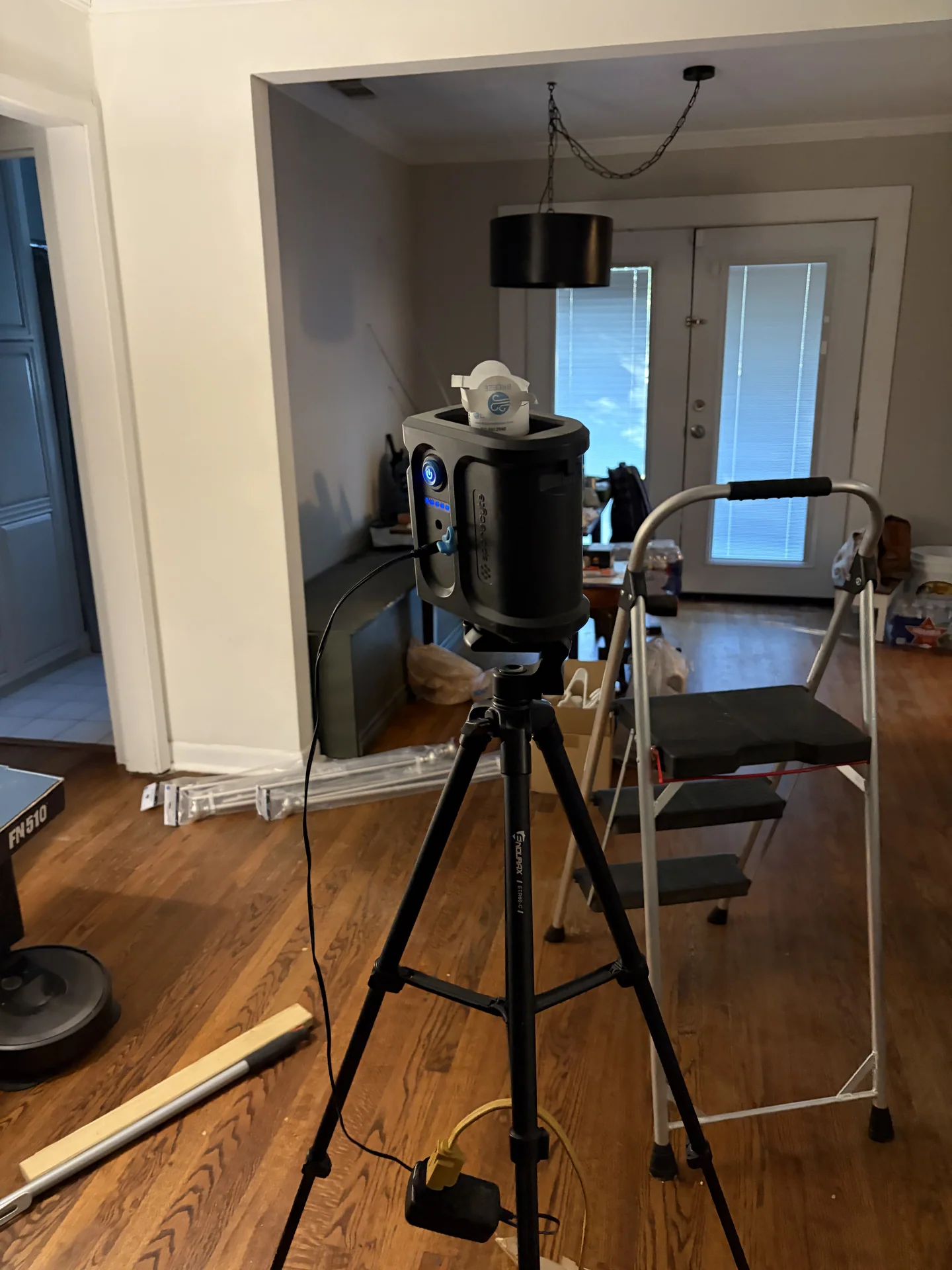
- One indoor living-room spore-trap air sample, one outdoor reference air sample and one surface swab from water-affected ceiling drywall. Both air samples used 75-liter volumes.
- One small, slightly loose section of water-affected drywall at the opening's edge was pulled down to collect the swab from its painted, room-facing surface.
- No other building materials were removed or opened. Other rooms were not inspected, and this was not a whole-home or comprehensive HVAC-system inspection.
What We Observed
The assessor observed an open ceiling area where water-damaged drywall had fallen through, exposing joists, flexible HVAC ductwork, loose-fill insulation and batt insulation.
No visible mold growth was observed on accessible ceiling surfaces. A slight musty odor was noted in the living room.
The loose insulation around the opening and on the attic platform was not observed to be actively wet at inspection. This was an accessible-area observation, not confirmation that the entire attic was dry or mold-free.
What Happened to the Living-Room Ceiling?
According to the owner, a condensate drain-line backup at the attic air handler released water and caused a section of living-room ceiling drywall to fall through. The opening exposed the ceiling assembly. The owner also reported that the line had already been repaired, but neither repair effectiveness nor an ongoing leak was established by this assessment.
What Was Included in the Assessment?
The scope covered the living room and accessible attic above the opening, comparative ceiling-drywall moisture screening, one indoor air sample, one outdoor reference and one surface swab. Only a small, slightly loose drywall section at the opening's edge was pulled down to swab its painted, room-facing surface. No other building materials were removed or opened; other rooms were not inspected.
Elevated Moisture Responses Were Found Around the Ceiling Opening
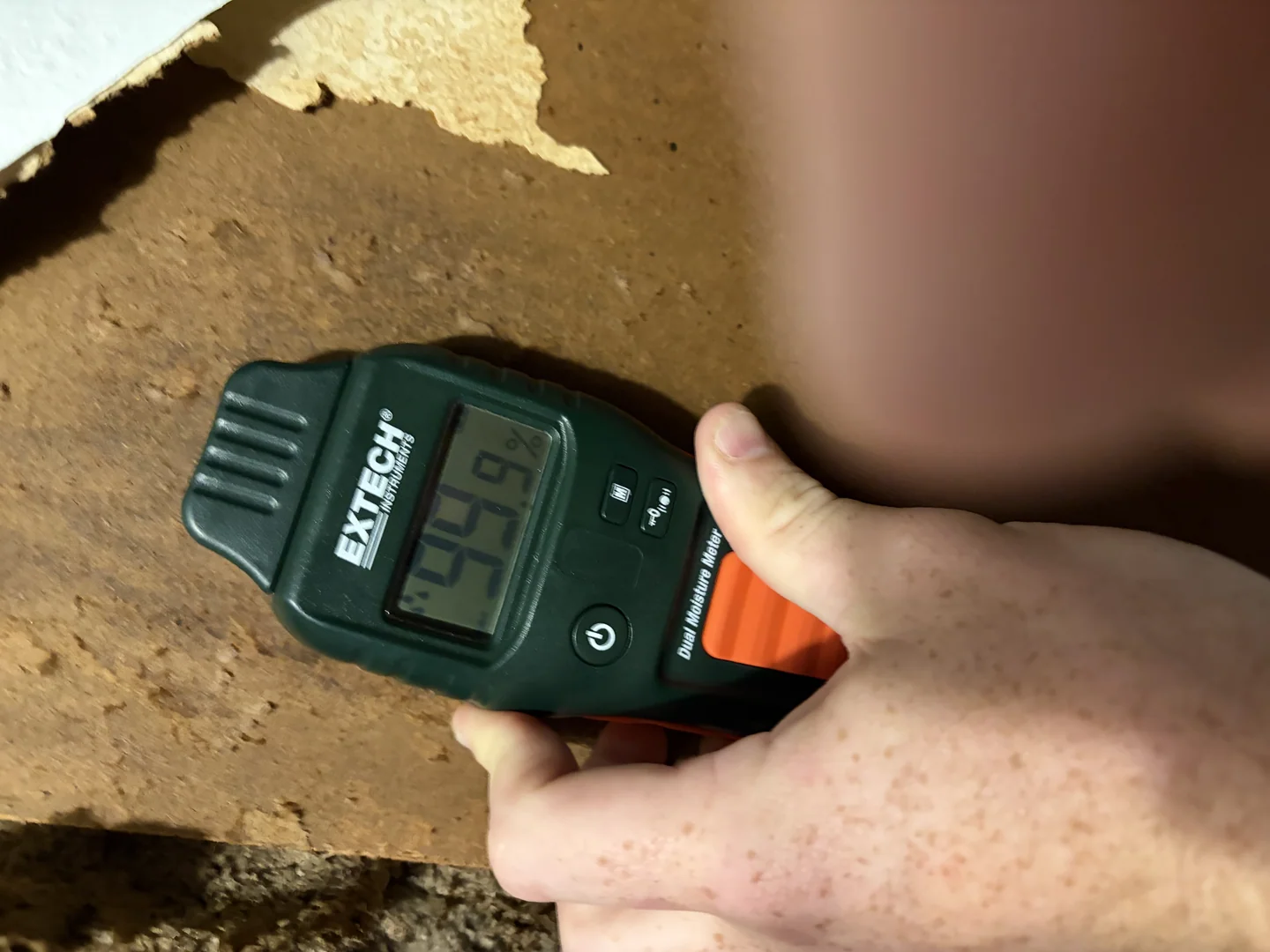
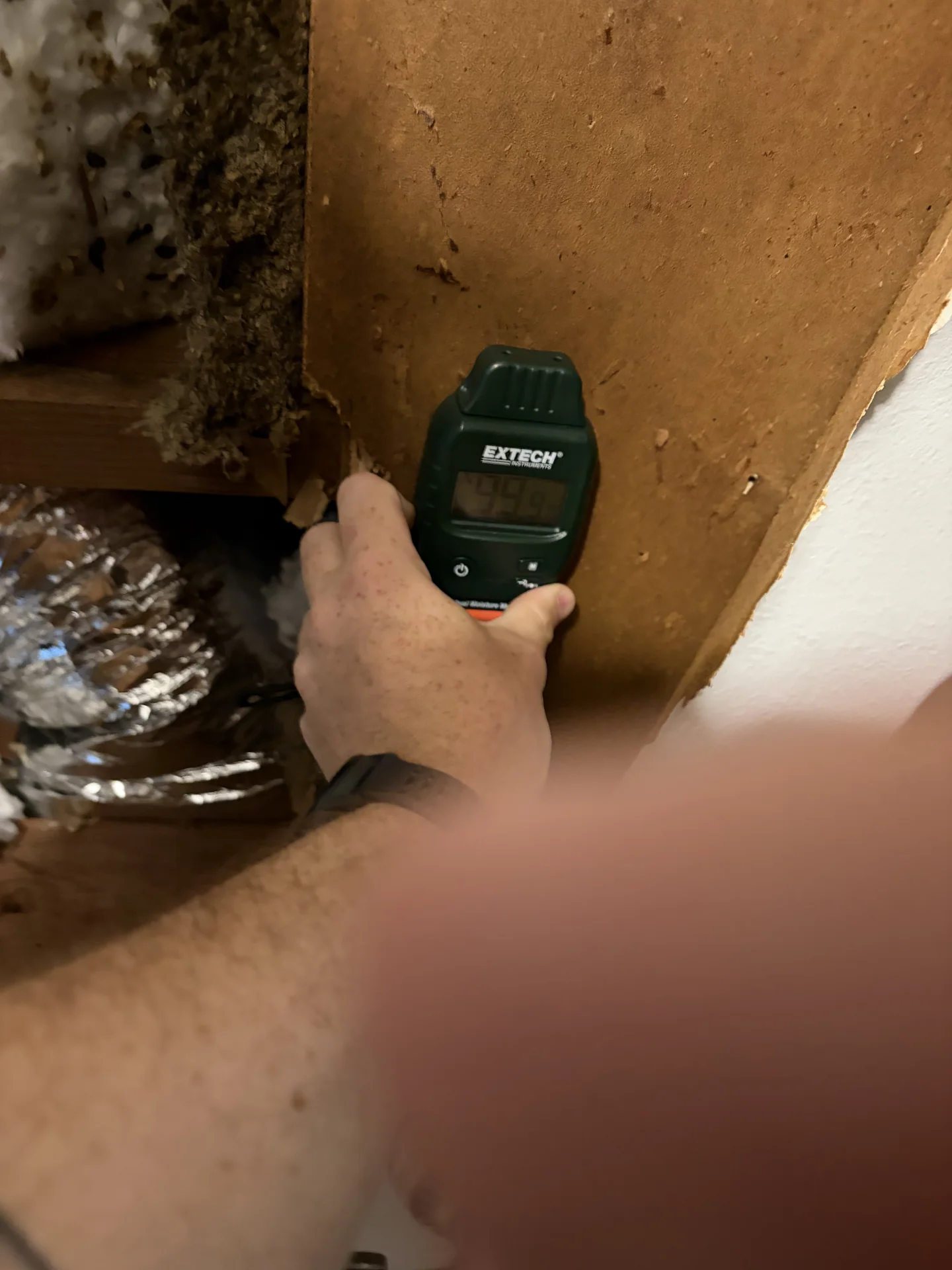
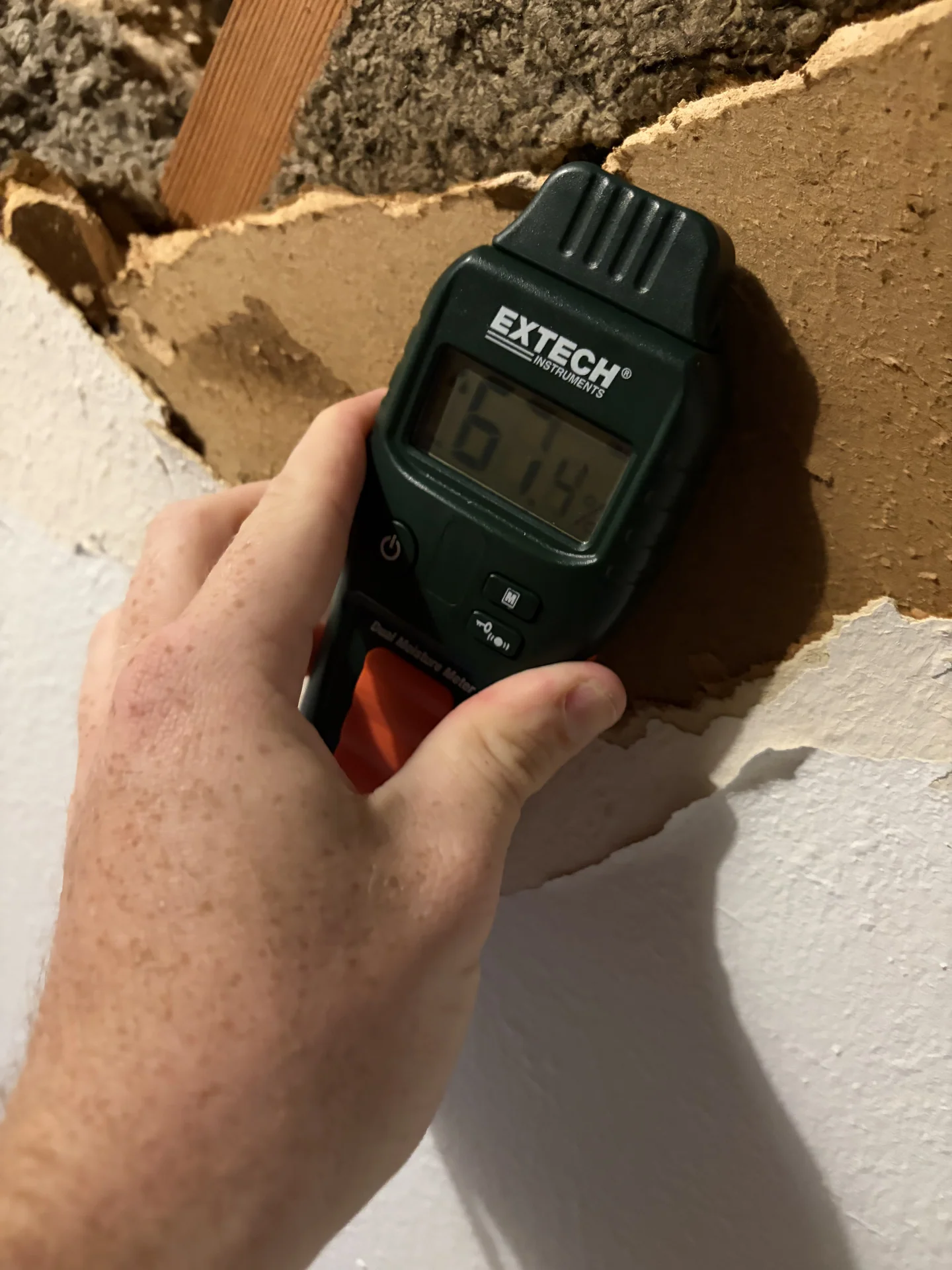
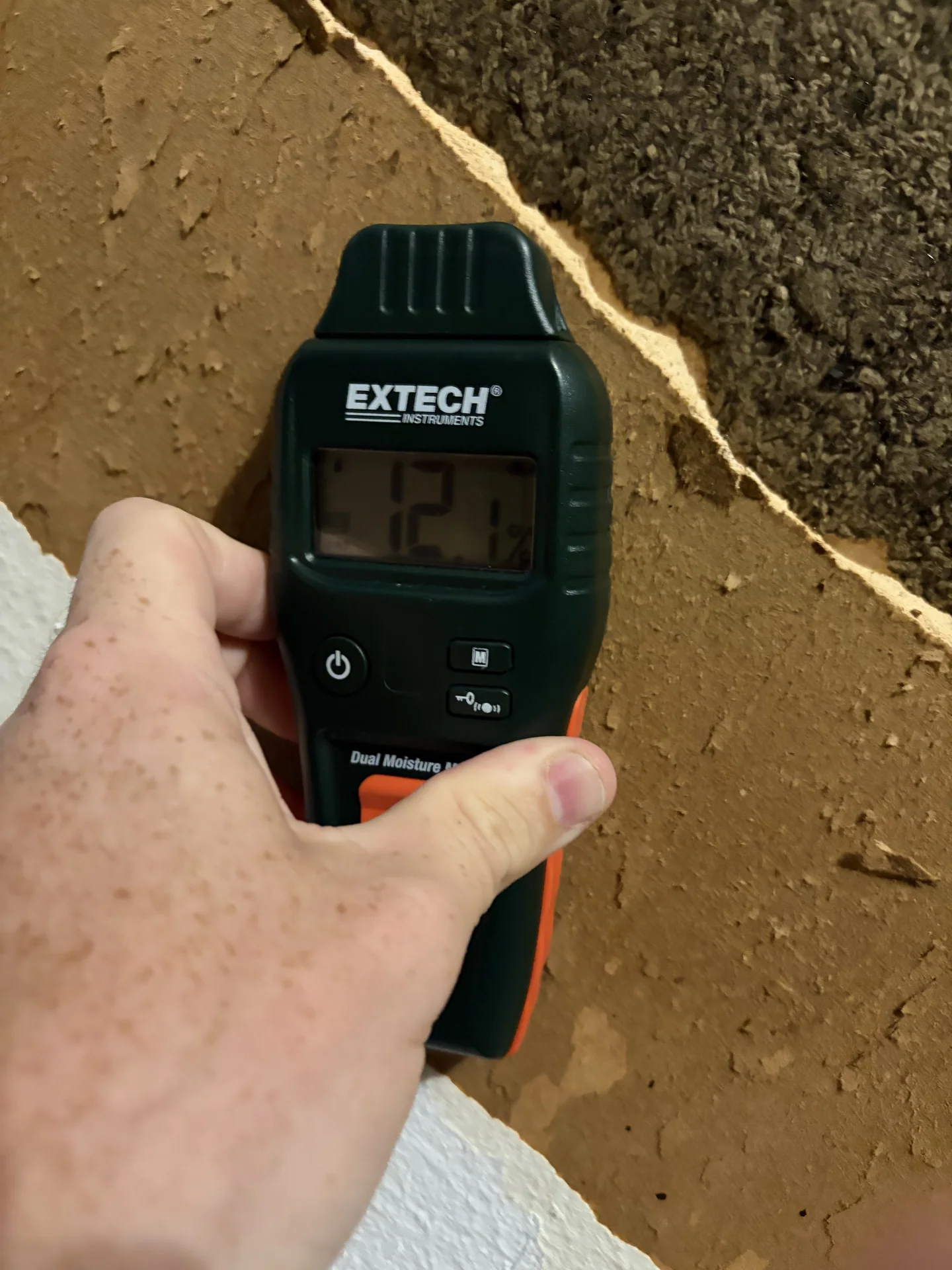
The 99.9 meter-maximum responses and the 67.4 response were substantially higher than the 12.1 reference. They indicated a comparative moisture anomaly in drywall around the opening, not an exact moisture percentage or a precise location within concealed materials. The reference area was not independently confirmed dry.
What Was Visible in the Attic?
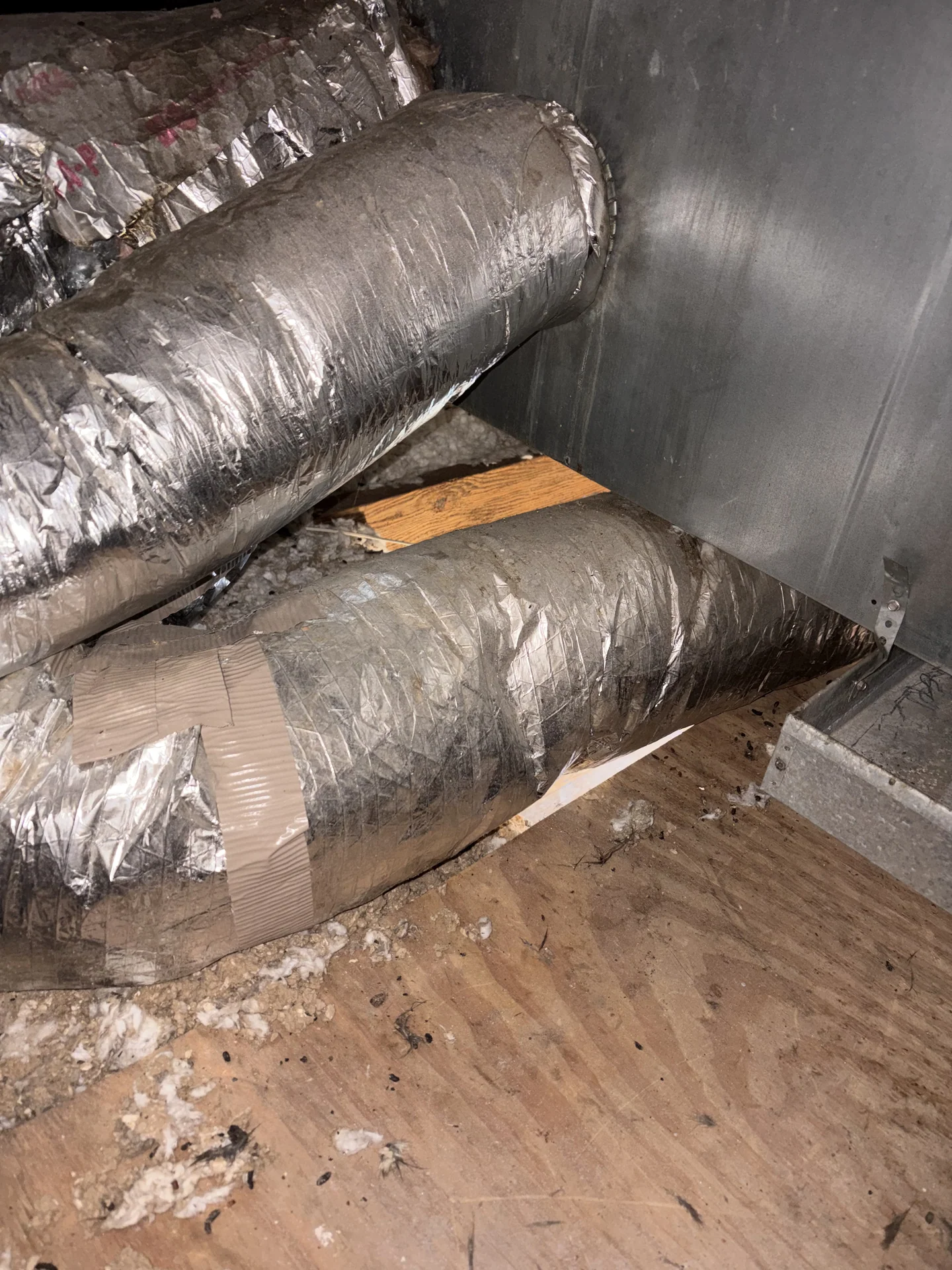
Accessible attic areas around the opening, HVAC equipment and ductwork were viewed. Loose insulation around the opening and on the platform was not observed to be actively wet, and no visible mold growth was observed in the accessible areas. Much of the surrounding attic was inaccessible. These findings do not establish that the entire attic or HVAC system was clean, dry or free of mold.
Moisture / Building Conditions
An Extech dual moisture meter was used in pinless, non-penetrating mode on ceiling drywall. Three readings near the opening and one reference reading farther from the opening were documented.
Elevated responses of 99.9 and 67.4 occurred approximately 6–10 inches from the opening's edge; the comparative reference was 12.1.
These responses were consistent with a moisture anomaly around the opening. Material type and the surrounding assembly affect the response; the readings do not establish exact moisture content, depth or precise moisture location.
The reference area was not independently confirmed dry. The meter's percent icon does not convert these documented comparative responses into moisture-content percentages.
Comparative Moisture Screening Results
| Finding | Reported result | Context |
|---|---|---|
| Ceiling drywall at the opening — two locations | 99.9 comparative | Highest value displayed by the meter |
| Ceiling drywall adjacent to the opening | 67.4 comparative | Elevated relative response |
| Ceiling reference area farther from opening | 12.1 comparative | Reference reading; not independently confirmed dry |
Sampling Performed
- Spore-trap air sample — 75 L — Living room: One indoor sample; Moderate non-microbial debris. Windows and doors closed; HVAC off.
- Spore-trap air sample — 75 L — Outdoor reference: Comparison sample; Moderate non-microbial debris.
- Surface swab — direct examination — Painted, room-facing surface of water-affected ceiling drywall at the opening's edge: One small, slightly loose drywall section was pulled down for this sample. The swab represents one location.
Surface Swab — Painted, Room-Facing Ceiling Drywall
| Finding | Reported result | Context |
|---|---|---|
| Alternaria | Minor | |
| Aspergillus/Penicillium-like | Minor | |
| Cladosporium | Minor |
Living-Room Air Versus Outdoor Reference — 75 L Each
| Sample | Finding | Reported result | Context |
|---|---|---|---|
| Living room — indoor | Total fungal concentration | 2,700 structures/m³ | Lower than outdoor total |
| Outdoor reference | Total fungal concentration | 3,100 structures/m³ | |
| Living room — indoor | Aspergillus/Penicillium-like | 2,300 structures/m³ | Approximately 1.2 times outdoors; modest difference |
| Outdoor reference | Aspergillus/Penicillium-like | 1,900 structures/m³ | |
| Living room — indoor | Cladosporium | 130 structures/m³ | |
| Outdoor reference | Cladosporium | 210 structures/m³ | |
| Living room — indoor | Basidiospores | Not detected | |
| Outdoor reference | Basidiospores | 810 structures/m³ | |
| Living room — indoor | Hyphal fragments | 85 structures/m³ | Two raw structures; not meaningful on their own |
| Outdoor reference | Hyphal fragments | 43 structures/m³ | One raw structure; not meaningful on its own |
Understanding the Laboratory Rating
Minor was the laboratory's lowest non-zero surface rating. The laboratory's interpretive information explains that Minor findings can occur in ordinary settled dust and, considered alone, do not establish active fungal growth at the sampled location. The swab represents one location only.
Both air samples received a Moderate non-microbial debris rating. According to the laboratory, Light or higher debris ratings may cause actual fungal concentrations to be underestimated. Laboratory detection, by itself, is not confirmation of active growth or a health-risk determination.
Indoor Total Mold Levels Were Lower Than Outdoors
Indoor total fungal concentration was 2,700 structures/m³ versus 3,100 outdoors. Aspergillus/Penicillium-like dominated the indoor composition and was modestly higher indoors at 2,300 versus 1,900 structures/m³, approximately 1.2 times the outdoor concentration. Basidiospores were detected outdoors at 810 structures/m³ but not indoors. This composition was consistent with a possible indoor contribution, but the difference was modest and one indoor sample could not identify a source. It did not confirm active growth or establish a health risk.
Why the House's Ventilation History Matters
The occupant told the assessor more than once that the house had been aired out during the days before inspection. Windows and doors were closed during sampling, and the HVAC system was off. Earlier ventilation may have brought indoor airborne concentrations closer to outdoors and reduced the observed contrast, so the samples may not represent typical closed-house conditions. Ventilation was not established as the definitive cause of the measured results.
What the Findings Suggested
Active fungal growth was not confirmed. The visual observations, three Minor swab findings and limited air results did not establish active growth or locate an airborne source.
Water-affected ceiling materials required prompt evaluation. Elevated comparative moisture responses, reported prior ventilation, Moderate sample debris and access limitations must be considered together; concealed moisture or growth could not be ruled out.
No Mold Remediation Protocol Was Issued
No mold remediation protocol was issued based on the accessible conditions observed. Qualified professionals were advised to evaluate the water-affected ceiling materials promptly and dry or replace them as appropriate. If concealed suspected growth is exposed, a licensed Mold Assessment Consultant should evaluate the condition and determine whether a remediation protocol is required.
Why Water Damage Deserves Follow-Up Even When Mold Is Not Confirmed
Evidence of a water-loss event, elevated comparative readings, laboratory detection of fungal structures and confirmation of active growth are not interchangeable findings. Significant ceiling water damage can require repair even when available evidence does not establish active mold. The report recommended verifying the moisture source, assessing and drying or replacing damaged materials, and evaluating concealed areas as they become accessible during repairs. Not every water-damaged ceiling contains mold.
Recommendations
- Have a qualified HVAC contractor verify that the condensate drain-line repair is functioning.
- Have the HVAC contractor evaluate overflow protection, such as a secondary drain pan or float safety switch.
- Have qualified professionals promptly evaluate the water-affected ceiling drywall and insulation, drying or replacing materials as appropriate.
- During ceiling repairs, evaluate concealed areas above the ceiling and previously inaccessible attic areas for residual moisture or visible growth.
- If suspected mold growth is exposed, stop uncontained removal, cleaning or aggressive disturbance. Document the condition, prevent further water entry and contact a licensed Mold Assessment Consultant before further demolition or mold-related work.
- After the moisture source is corrected and affected materials are dried or repaired, consider follow-up air sampling with an outdoor reference after the house has been kept closed for a period under normal occupancy.
- Maintain indoor relative humidity below 60%.
- Before disturbing ceiling drywall, texture, joint compound or insulation, determine whether asbestos, lead-based paint or other hazardous-material requirements apply.
- If a TDLR-regulated remediation project becomes necessary, post-remediation assessment and clearance must be performed by an appropriately licensed Mold Assessment Consultant independent of the remediation contractor or company.
What Homeowners Can Learn From This Case
Water damage, relative moisture responses, fungal detection and confirmed active growth describe different evidence. This assessment did not confirm growth, but it did document a water-damaged ceiling that needed professional evaluation.
A reported repair is not the same as verification that it works or that affected materials are dry. Concealed areas should be evaluated as they become accessible during appropriate repairs.
A single indoor/outdoor air comparison cannot locate a source. Prior ventilation, debris ratings and inaccessible areas limit what the results can establish.
Questions About This Case
Does a ceiling collapse from an HVAC condensate leak mean there is mold?
Not necessarily. Water damage can occur without confirmed fungal growth. In this Fort Worth assessment, the ceiling had water damage and elevated comparative moisture responses, but no visible mold was observed on accessible surfaces and the Minor surface-swab findings did not establish active growth.
What did the mold air test show?
The living-room sample contained 2,700 total fungal structures/m³ compared with 3,100/m³ outdoors. Aspergillus/Penicillium-like spores were modestly higher indoors at 2,300/m³ versus 1,900/m³ outdoors. The pattern could indicate an indoor contribution, but a single sample could not identify a source.
Does a Minor mold swab result confirm mold growth?
Not by itself. In this case, Alternaria, Aspergillus/Penicillium-like and Cladosporium were each rated Minor. The laboratory's interpretation indicated that Minor findings can occur in ordinary settled dust and do not independently establish active growth.
What does a 99.9 moisture-meter reading mean?
It was the highest comparative response displayed by the pinless meter, not a 99.9% moisture-content measurement. It indicated a moisture anomaly relative to the reference reading, but did not establish exact moisture content or the location of moisture within the ceiling assembly.
Was the attic confirmed to be mold-free?
No. No visible mold was observed in the accessible attic areas, but much of the surrounding area was inaccessible. Concealed moisture or fungal growth could not be ruled out.
What should happen after an HVAC condensate drain backup?
Have a qualified HVAC contractor verify the repair and evaluate overflow protection. Qualified professionals should assess the water-damaged drywall and insulation, dry or replace materials as appropriate, and inspect concealed areas as they become accessible during repairs.
Was a mold remediation protocol issued?
No. The source report did not issue a mold remediation protocol based on the accessible conditions observed. If concealed mold growth is discovered during repairs, a licensed Mold Assessment Consultant should evaluate the condition and determine whether a protocol is required.
Related Services
Had a Ceiling Leak or HVAC Condensate Drain Backup?
A repaired water source does not automatically establish that every affected building material has dried or that concealed areas have been evaluated. Mold Testing Dallas provides independent mold assessments in the Dallas–Fort Worth area to document accessible conditions, interpret sampling results, and identify appropriate next steps.
Schedule a Mold AssessmentInspection performed by Ethan Wright, TDLR Licensed Mold Assessment Technician (MAT #1589).
Related Real Inspection Cases
These are separate assessments with different findings. The Dallas wet-ceiling case also documented moisture without visible growth, and the Dallas real-estate wall-cavity case had a favorable targeted result. The Grand Prairie air-only case shows why a lower total alone is not the whole interpretation. In contrast, the Dallas drain-line and earlier Fort Worth overflow cases documented surface growth at their own sampled locations; those findings do not apply to this ceiling-collapse assessment.
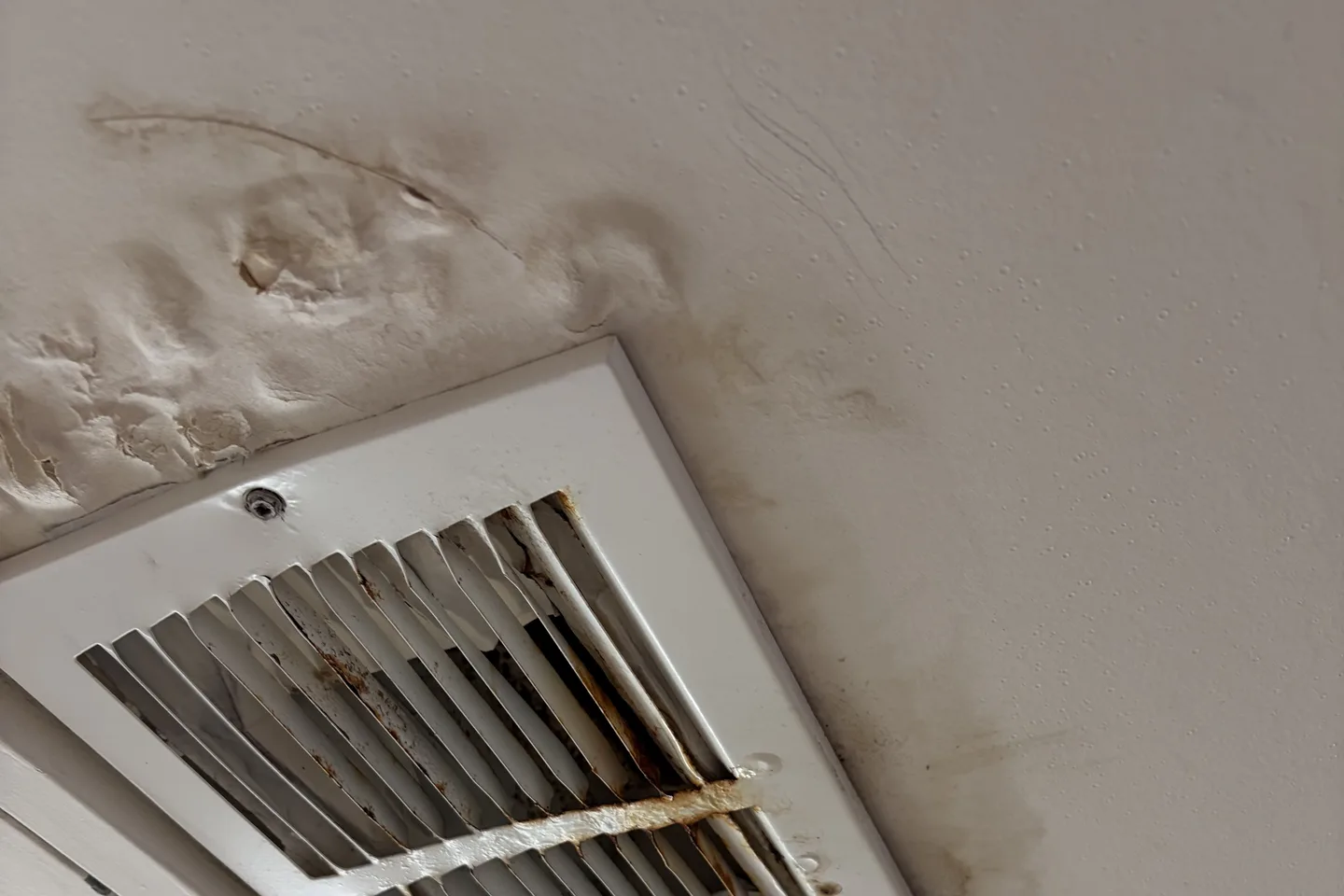
Active HVAC Leak and Wet Ceiling in a Dallas Bathroom
A Dallas property owner requested a limited mold assessment after tenants raised concerns about two bathrooms. The top-floor bathroom had a reported history of HVAC-related water leakage and prior repair attempts. During the assessment, water was actively dripping from a ceiling supply register beside the ceiling-mounted air handler, and surrounding drywall was wet, stained, blistered and bubbling. Comparative moisture responses were much higher by the register than at a same-ceiling reference area. No visible mold was observed on accessible bathroom surfaces, and indoor air samples were below the outdoor reference. The ceiling cavity and concealed materials were not opened.
View Case Study →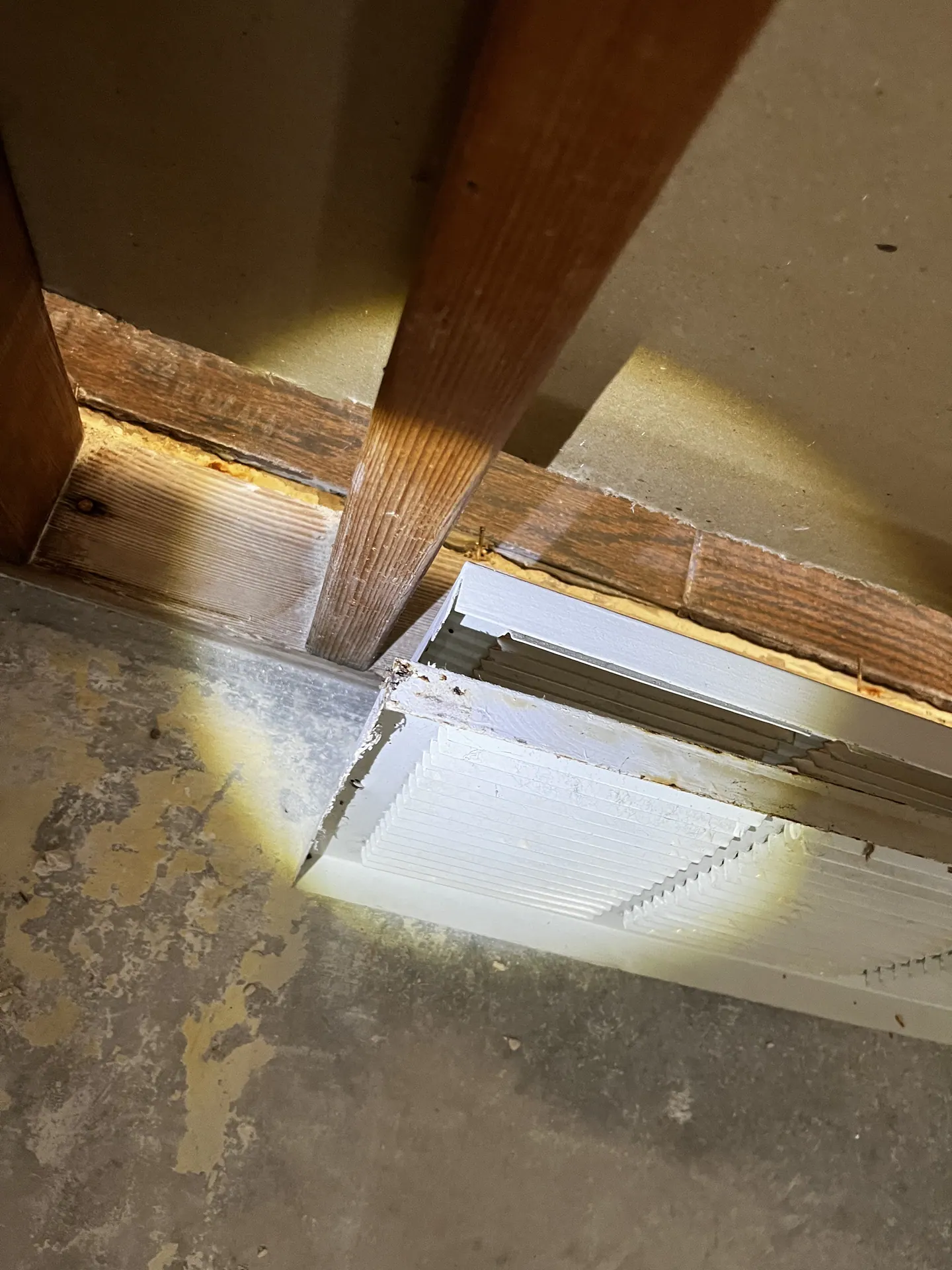
Mold Found After an AC Condensate Drain Overflow in a Fort Worth Home
A reported HVAC condensate-drain backup flooded the HVAC closet and adjoining rooms of a Fort Worth attached duplex residence while the homeowner was away. A restoration contractor had already made flood cuts and removed portions of flooring before the mold assessment. Six surface samples documented different findings across the affected areas: Heavy Stachybotrys at the HVAC-closet concrete-floor surface, Heavy Chaetomium at a water-affected bedroom wall, and Heavy Cladosporium with Heavy hyphal fragments on a bedroom supply register. No air samples were collected.
View Case Study →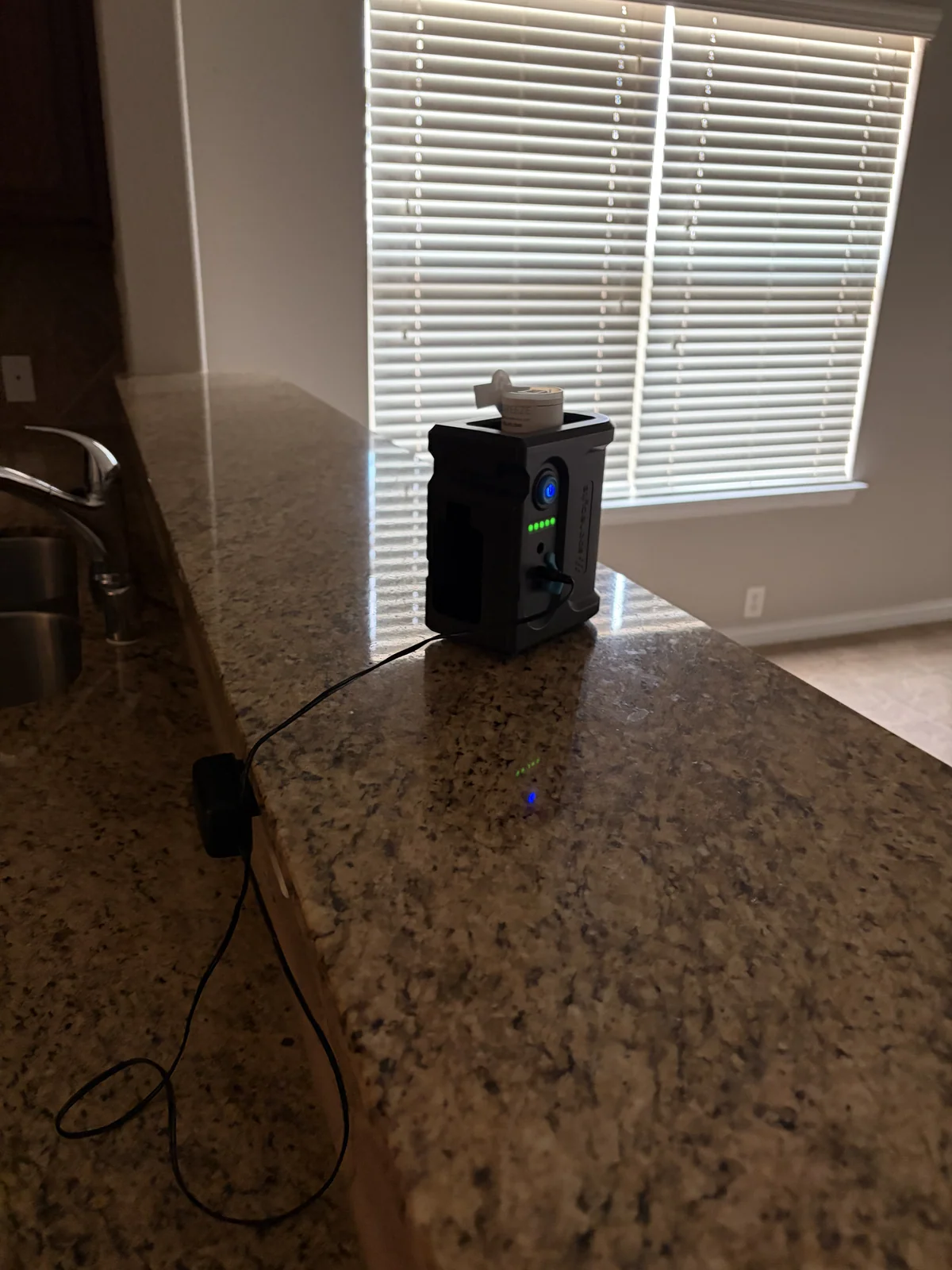
Stachybotrys Detected Even Though Indoor Mold Levels Were Below Outdoors
A client requested a limited air-sampling assessment at a Grand Prairie home. Four indoor non-viable spore-trap samples and one outdoor reference sample were collected; no visual, moisture, surface or HVAC inspection was performed. All indoor total fungal concentrations were below outdoors. One Stachybotrys spore was detected in the Main Living Area, and Aspergillus/Penicillium-like counts exceeded the outdoor reference in three indoor samples. Air results alone did not establish mold growth or identify a source; a follow-up visual and moisture assessment was recommended.
View Case Study →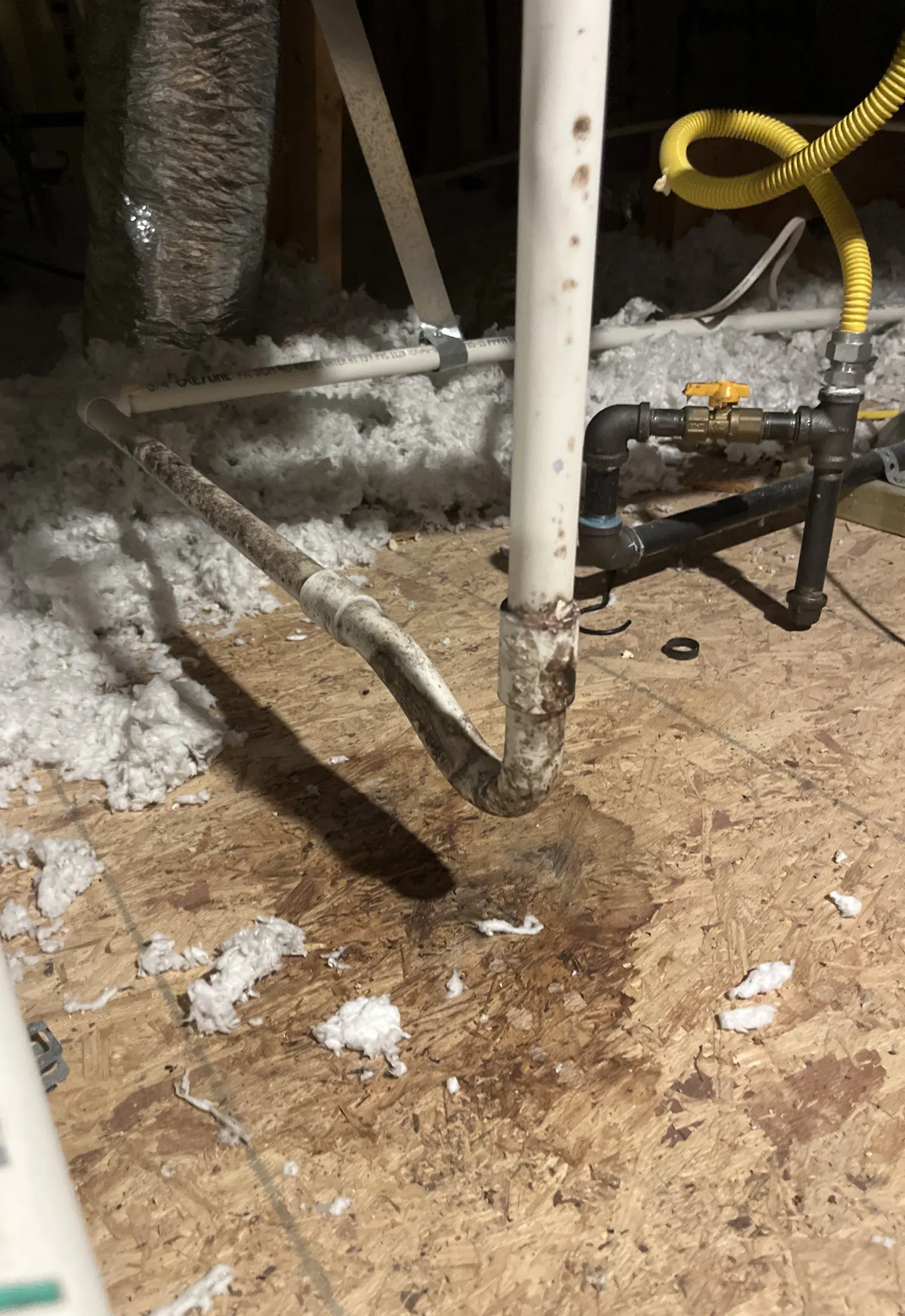
Mold on an AC Condensate Drain Line in a Dallas Attic
A Dallas homeowner requested an independent assessment after an HVAC technician noticed suspected growth on attic condensate piping. A surface swab supported fungal growth on the pipe exterior; no visible mold growth was observed inside accessible portions of the air handler or connected ductwork.
View Case Study →Wall-Cavity Mold Testing During a Dallas Real Estate Transaction
A mold assessment was requested during a Dallas real estate transaction after a prior property inspection identified a moisture concern in a third-floor bedroom wall. The wall was dry, and two targeted wall-cavity samples found no evidence of elevated or unusual fungal activity in the tested wall cavity.
View Case Study →Highly Elevated Mold Spores After Flooring Removal in a Frisco Home
A Frisco homeowner requested an assessment after a contractor discovered an older flooring layer beneath a newer flooring system during planned replacement. The contractor had removed the flooring and underlayment the day before inspection, so those materials were no longer available to evaluate. No visible growth, musty odor or active leak was found, and readings on the exposed slab were not elevated. Nevertheless, the front-room air sample returned >33,000/m³ Aspergillus/Penicillium-like spores and >34,000/m³ total fungal structures. The airborne findings were consistent with a recently disturbed source, not direct confirmation of mold on the discarded materials.
View Case Study →