
- Location
- Grand Prairie, Texas
- Property type
- Residential
- Inspection type
- Air-sampling-only limited mold assessment
- Primary concern
- Interpretation of indoor fungal air results, including a single Stachybotrys detection
- Inspection
- October 2026
The Situation
The client requested airborne fungal sampling; no specific area of concern was communicated to the assessor.
One outdoor reference and four indoor samples were collected between approximately 1:26 PM and 2:02 PM. These were single, short-duration samples taken once at each location.
Indoor conditions were 79.2°F and 48.0% RH. Exterior conditions were 90.6°F and 57.2% RH, with an exterior dew point of 73.4°F. Indoor RH was below the commonly recommended 60% level at the time of sampling.
What Was Inspected
- This was an air-sampling-only limited mold assessment, not a full mold inspection.
- Scope consisted of four indoor and one outdoor-reference 75-liter non-viable spore-trap air samples, laboratory analysis and comparative interpretation.
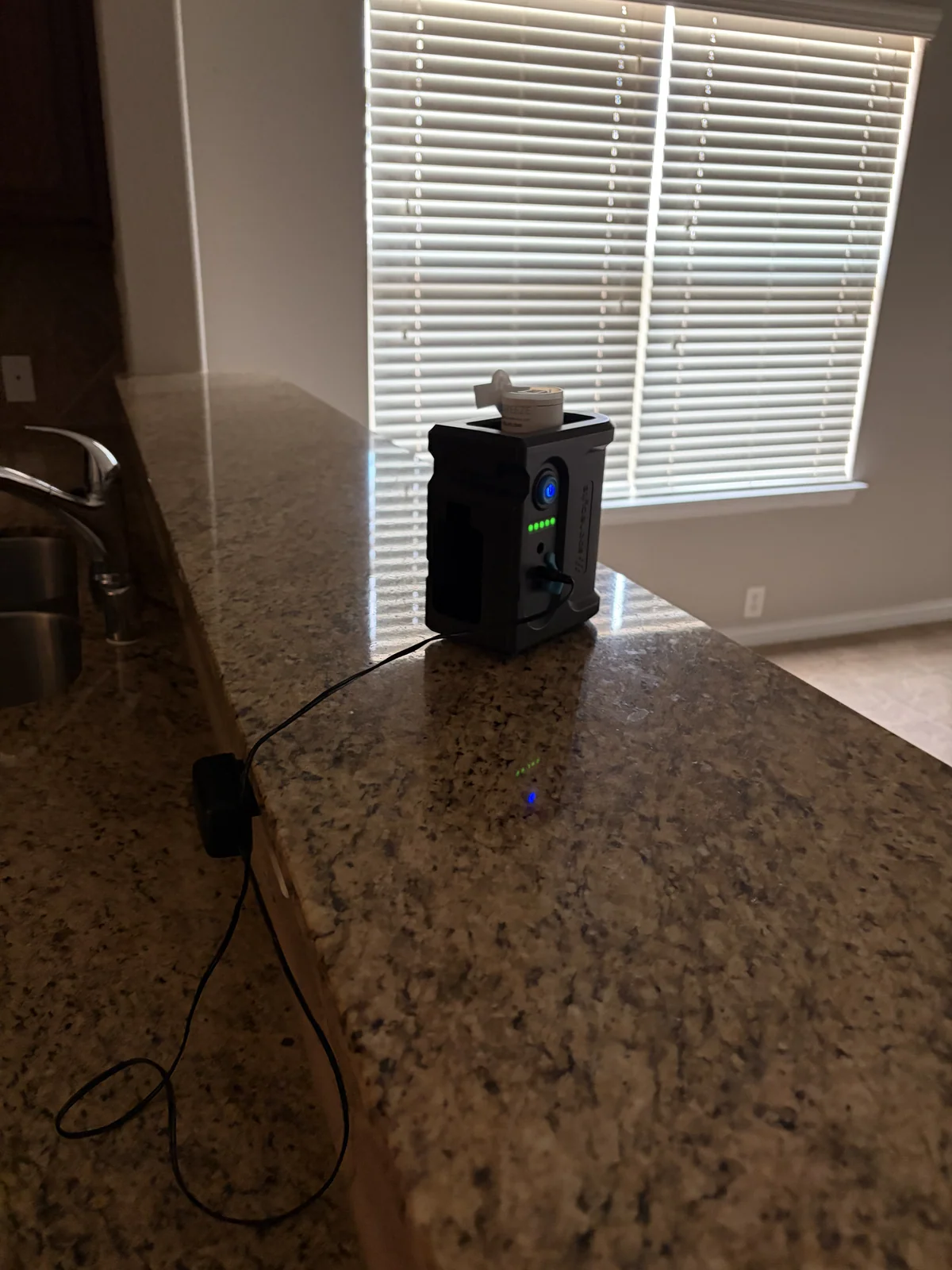
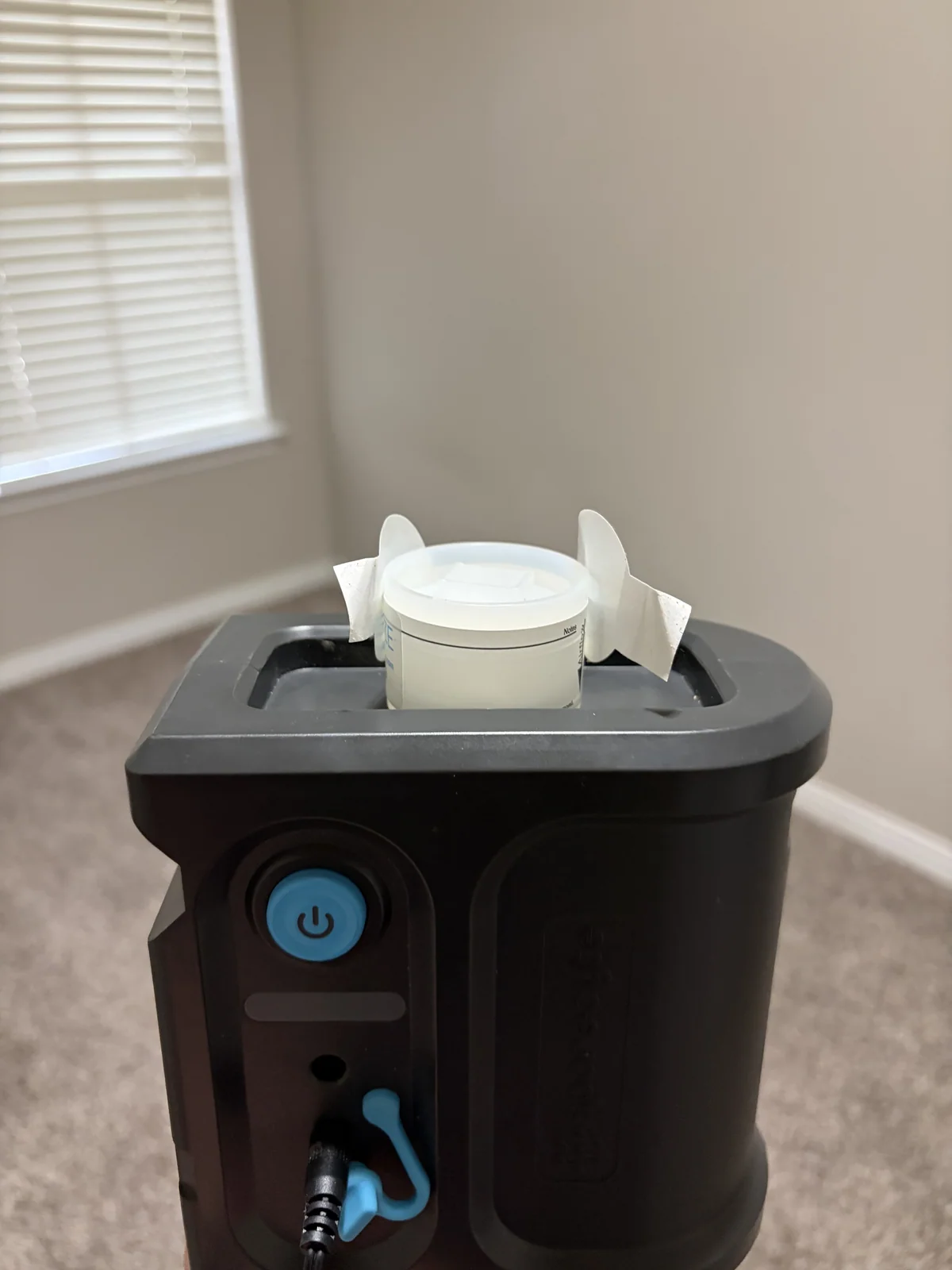
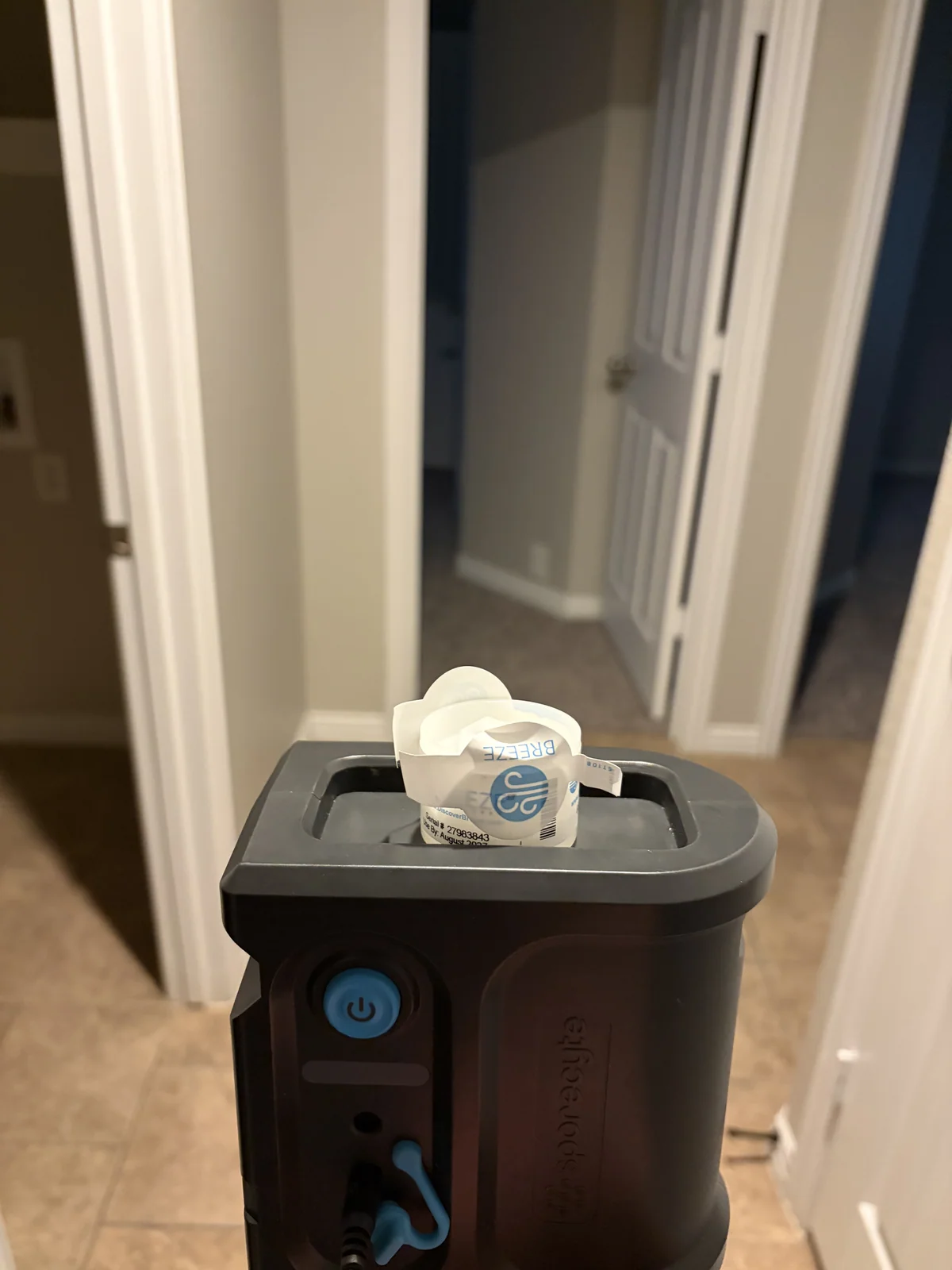
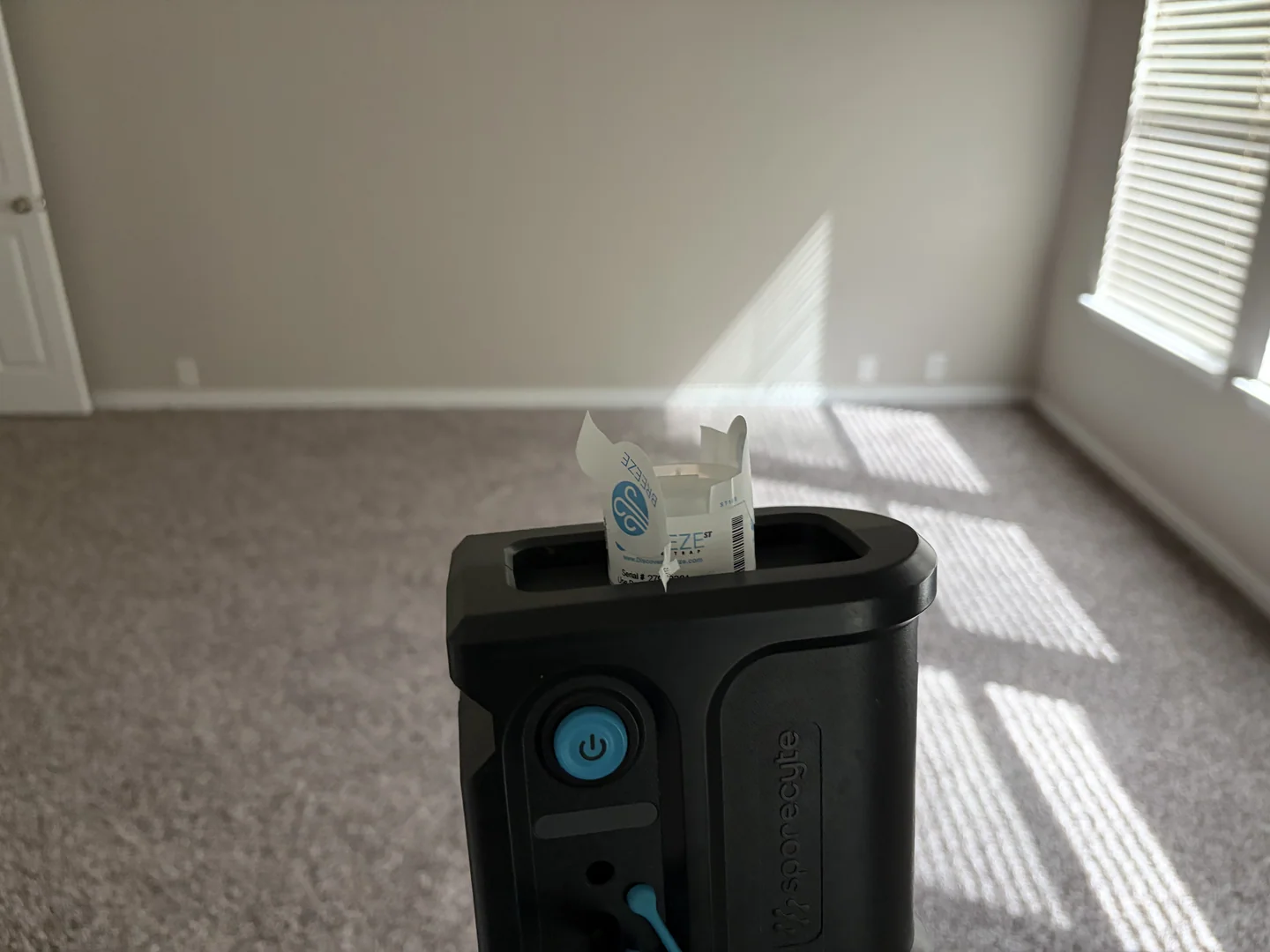
- Each sample was collected on a Breeze spore-trap cassette with a Sporecyte sampling pump at approximately counter or tabletop height. Samples were collected between approximately 1:26 PM and 2:02 PM.
- No visual mold inspection, exploratory investigation, moisture-meter readings, thermal imaging, surface sampling, HVAC inspection, opening of building materials or disturbance of building materials was performed.
- All five samples had a Light non-microbial debris rating. Light debris may create a slight negative bias in reported fungal counts.
- HVAC operating status and door/window status before sampling were not documented. Airborne conditions may vary with time, weather, ventilation, HVAC operation, doors and windows, occupancy and activity.
How the Air Sampling Was Performed
Four indoor and one outdoor-reference non-viable spore-trap samples were collected on Breeze cassettes using a Sporecyte pump. Each sample volume was 75 liters; the sampler was held at approximately counter or tabletop height.
The five samples were collected between approximately 1:26 PM and 2:02 PM. All had a Light non-microbial debris rating. Light debris may create a slight negative bias in reported fungal counts.
Sampling Performed
- 75-liter non-viable spore-trap air sample — Outdoor reference: Breeze cassette; Sporecyte pump; Light debris.
- 75-liter non-viable spore-trap air sample — Back Bedroom: Indoor sample; Light debris.
- 75-liter non-viable spore-trap air sample — Main Living Area: Indoor sample; Light debris.
- 75-liter non-viable spore-trap air sample — Back Hallway: Indoor sample; Light debris.
- 75-liter non-viable spore-trap air sample — Master Area: Indoor sample; Light debris.
Air Sample Results — Structures per Cubic Meter
| Sample | Finding | Reported result | Context |
|---|---|---|---|
| Outdoor reference | Total fungal | 2,100 structures/m³ | |
| Outdoor reference | Aspergillus/Penicillium-like | 40 /m³ | Raw count: 1 |
| Outdoor reference | Cladosporium | 1,200 /m³ | |
| Outdoor reference | Ascospores | 280 /m³ | |
| Outdoor reference | Myxomycetes/Periconia/Smut/Rust | 240 /m³ | |
| Outdoor reference | Basidiospores | 120 /m³ | |
| Outdoor reference | Alternaria | 40 /m³ | |
| Outdoor reference | Bipolaris group | 40 /m³ | |
| Outdoor reference | Nigrospora | 40 /m³ | |
| Outdoor reference | Hyphal fragments | 120 /m³ | |
| Outdoor reference | Stachybotrys | Not detected | |
| Outdoor reference | Curvularia | Not detected | |
| Back Bedroom | Total fungal | 1,100 structures/m³ | |
| Back Bedroom | Aspergillus/Penicillium-like | 240 /m³ | Raw count: 6 |
| Back Bedroom | Cladosporium | 320 /m³ | |
| Back Bedroom | Alternaria | 79 /m³ | |
| Back Bedroom | Bipolaris group | 79 /m³ | |
| Back Bedroom | Curvularia | 40 /m³ | |
| Back Bedroom | Myxomycetes/Periconia/Smut/Rust | 200 /m³ | |
| Back Bedroom | Basidiospores | 40 /m³ | |
| Back Bedroom | Hyphal fragments | 79 /m³ | |
| Back Bedroom | Stachybotrys | Not detected | |
| Main Living Area | Total fungal | 320 structures/m³ | |
| Main Living Area | Aspergillus/Penicillium-like | 120 /m³ | Raw count: 3 |
| Main Living Area | Alternaria | 79 /m³ | |
| Main Living Area | Cladosporium | 40 /m³ | |
| Main Living Area | Myxomycetes/Periconia/Smut/Rust | 40 /m³ | |
| Main Living Area | Stachybotrys | 40 /m³ | Raw count: 1 |
| Back Hallway | Total fungal | 360 structures/m³ | |
| Back Hallway | Aspergillus/Penicillium-like | 40 /m³ | Raw count: 1; equal to outdoor reference |
| Back Hallway | Bipolaris group | 120 /m³ | |
| Back Hallway | Cladosporium | 120 /m³ | |
| Back Hallway | Alternaria | 40 /m³ | |
| Back Hallway | Ascospores | 40 /m³ | |
| Back Hallway | Stachybotrys | Not detected | |
| Master Area | Total fungal | 1,200 structures/m³ | |
| Master Area | Aspergillus/Penicillium-like | 120 /m³ | Raw count: 3 |
| Master Area | Bipolaris group | 280 /m³ | |
| Master Area | Curvularia | 160 /m³ | |
| Master Area | Cladosporium | 280 /m³ | |
| Master Area | Ascospores | 200 /m³ | |
| Master Area | Hyphal fragments | 120 /m³ | |
| Master Area | Stachybotrys | Not detected |
Total Fungal Results — Every Indoor Sample Was Below Outdoors
| Sample | Finding | Reported result | Context |
|---|---|---|---|
| Outdoor reference | Total fungal | 2,100 /m³ | |
| Back Bedroom | Total fungal | 1,100 /m³ | |
| Main Living Area | Total fungal | 320 /m³ | |
| Back Hallway | Total fungal | 360 /m³ | |
| Master Area | Total fungal | 1,200 /m³ |
Notable Individual Findings — Counts Need Context
| Sample | Finding | Reported result | Context |
|---|---|---|---|
| Outdoor reference | Stachybotrys | Not detected | |
| Main Living Area | Stachybotrys | 40/m³ | One raw spore |
| Outdoor reference | Aspergillus/Penicillium-like | 40/m³ | One raw spore |
| Back Bedroom | Aspergillus/Penicillium-like | 240/m³ | Six raw spores; six times outdoor concentration, but a small raw count |
| Main Living Area | Aspergillus/Penicillium-like | 120/m³ | Three raw spores |
| Back Hallway | Aspergillus/Penicillium-like | 40/m³ | One raw spore; equal to outdoors |
| Master Area | Aspergillus/Penicillium-like | 120/m³ | Three raw spores |
| Back Hallway | Bipolaris group | 120/m³ | Above outdoor reference: 40/m³ |
| Master Area | Bipolaris group | 280/m³ | Above outdoor reference: 40/m³ |
| Back Bedroom | Curvularia | 40/m³ | Detected indoors, not detected outdoors |
| Master Area | Curvularia | 160/m³ | Detected indoors, not detected outdoors |
Indoor Totals Were Lower Than Outdoors — But the Results Were Not Completely Typical
All four indoor total fungal concentrations—320 to 1,200/m³—were below the outdoor reference of 2,100/m³. On total concentration alone, results did not indicate airborne fungal amplification at the sampled locations and time.
Total counts are only one part of interpretation. Individual fungal types and indoor/outdoor patterns also matter. The presence of an individual fungal structure in an air sample does not by itself establish a growth source.
One Stachybotrys Spore Was Detected in the Main Living Area
The Main Living Area sample contained Stachybotrys at 40/m³, representing one raw spore. Stachybotrys was not detected outdoors.
Stachybotrys is generally associated with prolonged wetting of cellulose-containing building materials such as drywall paper; its spores are relatively heavy and do not readily become airborne. A single airborne detection does not prove active growth, identify a source or its extent, establish occupant exposure or establish health risk. The report concluded that one spore did not by itself establish that mold growth was present, but recommended further investigation because it was detected indoors and not outdoors.
Aspergillus/Penicillium-Like Spores Were Higher Than Outdoors in Three Rooms
The outdoor reference was 40/m³ (one raw spore). The Back Bedroom was 240/m³ (six raw spores), the Main Living Area 120/m³ (three raw spores), and the Master Area 120/m³ (three raw spores). The Back Hallway was 40/m³ (one raw spore), equal to outdoors.
The Back Bedroom concentration was six times the outdoor concentration, but the raw counts were small and this was a single short-duration event. The pattern may be associated with an indoor source, but does not confirm one or establish Aspergillus/Penicillium-like growth in a room.
Other Fungal Types Also Need Context
Bipolaris-group spores, Curvularia and Alternaria were somewhat above the outdoor reference in selected indoor samples. These fungal types are commonly associated with soil, grasses, plant material and outdoor environmental sources. The differences involved low raw counts, approximately one to seven spores; they were not interpreted alone as evidence of indoor amplification.
A Single Spore Corresponded to About 40 Structures/m³
Approximate analytical sensitivity was 40 structures/m³. At this sample volume, one observed structure corresponds to approximately 40/m³. This is important context for the single-spore Stachybotrys detection.
What the Findings Suggested
All indoor total fungal concentrations were below the outdoor reference. The one-spore indoor Stachybotrys detection and higher Aspergillus/Penicillium-like values in three rooms merited contextual interpretation and further investigation, but did not confirm mold growth or a source.
No remediation protocol was issued based on the air-sampling results alone.
Air Sampling Cannot Tell You Where a Mold Source Is Located
This assessment did not include a visual mold inspection, moisture screening, wall-cavity investigation, attic inspection, HVAC inspection, surface sampling or invasive inspection. It could not determine whether mold growth was present, where a source might be, whether water damage or concealed moisture existed, or whether fungal growth was present in the HVAC system.
The report did not establish that mold was absent. Air sampling alone provides a snapshot of airborne fungal structures and cannot identify a source location.
These Air Samples Were a Snapshot
Each location was sampled once for a short period on one day. Airborne concentrations can vary with time of day, weather, ventilation, HVAC operation, doors and windows, occupancy and activity. HVAC operating status and door/window status before sampling were not documented; results describe only the sampled locations and time, not permanent conditions.
No Mold Remediation Protocol Was Issued
The air samples did not establish a mold-growth source or identify affected materials, so no remediation protocol was issued or recommended based on these air-sampling results alone. Further investigation was recommended first. If a later assessment identifies mold growth, a licensed Mold Assessment Consultant should determine whether a remediation protocol is required.
What Was Recommended Next?
Because Stachybotrys was detected indoors but not outdoors and Aspergillus/Penicillium-like concentrations were higher than outdoors in the Back Bedroom and two other rooms, the report recommended a follow-up assessment with visual inspection and moisture assessment.
Areas for attention included the kitchen, Main Living Area, Back Bedroom, plumbing locations, exterior walls, windows, ceilings and HVAC system. If there is a known history of plumbing leaks, roof leaks or water intrusion, that history should be provided to the assessor.
Recommendations
- Arrange a follow-up assessment that includes visual inspection and moisture assessment, with attention to the kitchen, Main Living Area, Back Bedroom, plumbing locations, exterior walls, windows, ceilings and HVAC system.
- Share any known history of plumbing leaks, roof leaks or water intrusion with the assessor.
What Homeowners Can Learn From This Case
A mold air test is not simply “lower than outdoors = good” or “one spore = bad.” Interpret total fungal concentration, individual fungal types, indoor/outdoor differences, raw counts, analytical sensitivity, debris rating, sample duration and scope limits together.
Here, all indoor totals were below outdoors, but one Stachybotrys spore appeared indoors and Aspergillus/Penicillium-like counts were above the outdoor reference in several rooms. Those patterns supported further investigation without proving mold growth.
Inspection Photos
Questions About This Case
What does it mean if Stachybotrys is found in an air sample?
It means Stachybotrys spores were detected in the collected air sample. It does not by itself prove where growth is located or even that active growth exists. In this case, one Stachybotrys spore was detected indoors and none was detected outdoors, so further investigation was recommended.
Is one Stachybotrys spore significant?
A single spore should be interpreted cautiously because it represents a very small raw count. However, Stachybotrys is associated with prolonged wetting of cellulose-containing materials, so an indoor detection can justify further investigation.
Can total mold indoors be lower than outdoors and still warrant investigation?
Yes. Total fungal concentration is only one part of interpretation. In this case, every indoor total was below outdoors, but one Stachybotrys spore was detected indoors and Aspergillus/Penicillium-like was higher than outdoors in three rooms.
Does a Stachybotrys air sample prove black mold is growing in the house?
No. Air sampling does not identify the source location. This assessment did not include a visual or moisture inspection, so no active Stachybotrys growth was confirmed.
Why was Aspergillus/Penicillium-like higher in the back bedroom?
The Back Bedroom measured 240/m³ compared with 40/m³ outdoors. This was based on six raw spores versus one outdoors. The pattern may be consistent with an indoor source, but a single air-sampling event cannot confirm one.
Can mold air sampling find hidden mold?
It may identify airborne patterns that suggest further investigation, but it cannot determine the exact source or location. Hidden mold investigation generally requires additional visual, moisture or concealed-space assessment.
Was mold confirmed in this house?
No. This was an air-sampling-only assessment. The report did not conclude that mold growth was present and recommended a follow-up visual and moisture assessment.
Was remediation recommended?
No remediation protocol was issued based on the air results alone. Further investigation was recommended first.
Related Services
Got Mold Air Test Results You’re Not Sure How to Interpret?
Air sampling can identify patterns that warrant further investigation, but it does not always reveal where a source is located. Mold Testing Dallas can combine sampling with visual and moisture assessment when a more complete investigation is needed.
Schedule a Mold InspectionInspection performed by Ethan Wright, TDLR Licensed Mold Assessment Technician (MAT #1589).
Related Real Inspection Cases
Other cases illustrate why air results need a scoped context: one HVAC assessment found growth in a plenum despite comparatively low room-air results; a separate duct-branch case localized growth to inspected duct material; and wall and mini-split assessments involved different inspection scopes. Those findings belong to their own properties. This air-only assessment did not identify a source at this residence.
Mold Found Below a Leaking Mini-Split
A commercial client in Waco, Texas requested a limited mold assessment after an employee raised concern about possible mold in a work area. The assessment focused on two rooms. In the Front Room, a wall-mounted mini-split was actively dripping, with evidence of water traveling down the wall to the floor line. Surface testing confirmed fungal growth behind the flexible cove base below the mini-split. Air samples from both rooms were below the outdoor reference and did not indicate airborne fungal amplification at the sampled locations and time.
View Case Study →Mold Confirmed Inside an HVAC Supply Plenum in Dallas
A homeowner who had recently purchased an older Dallas residence requested an independent assessment after an HVAC contractor opened the supply plenum and observed apparent fungal growth. Brown growth and a surface swab supported fungal growth on the sampled plenum surface. Room-air samples did not indicate airborne fungal amplification relative to the same-day outdoor reference. The homeowner had the plenum replaced by others. Five days later, follow-up indoor air samples remained low, with no detectable Aspergillus/Penicillium-like spores or hyphal fragments. No outdoor reference was collected on the second visit: this was an air re-check, not a formal clearance assessment.
View Case Study →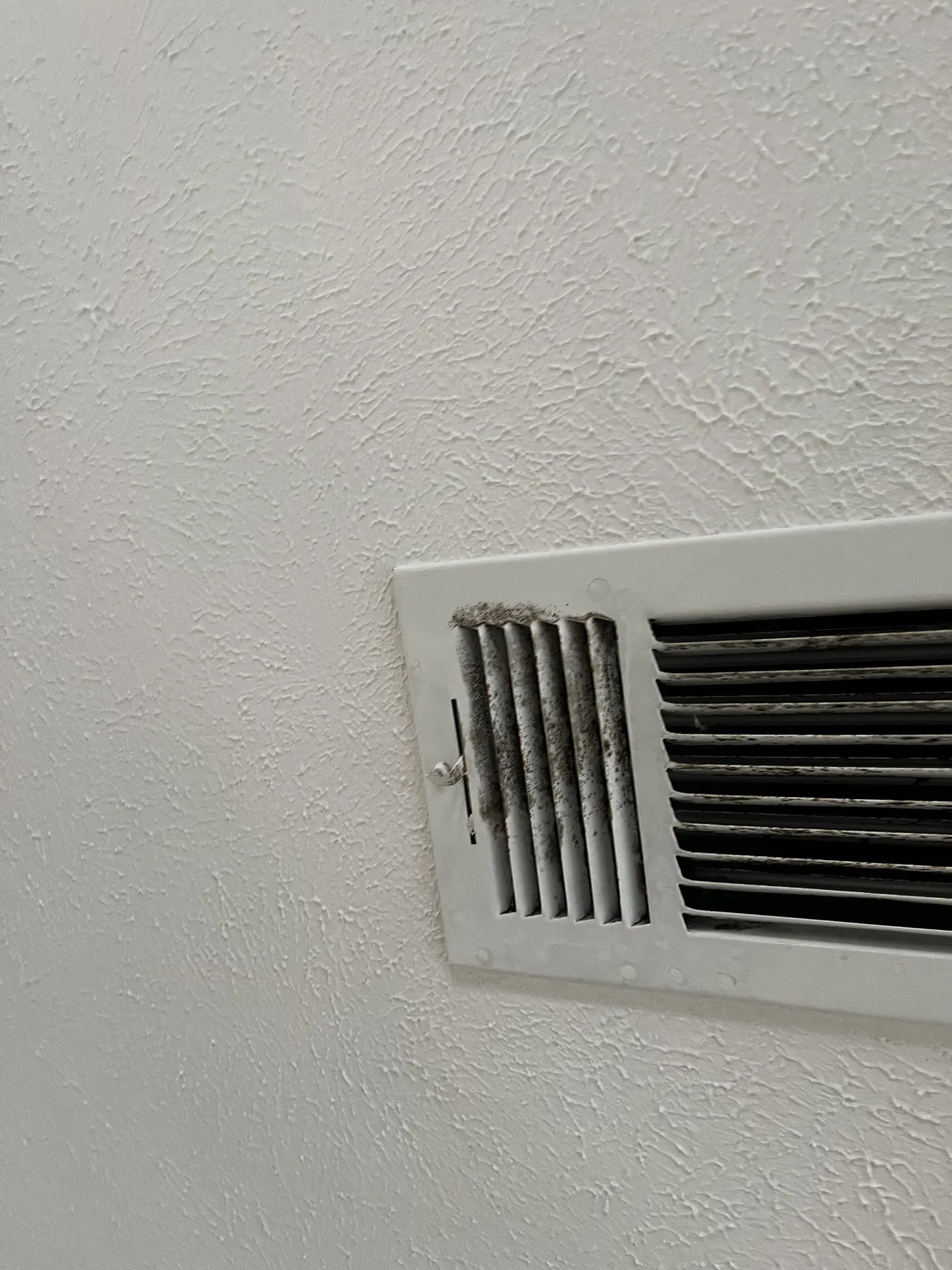
Mold Found Inside One HVAC Duct Branch in a Dallas Home
A Dallas homeowner requested an independent assessment after an HVAC contractor saw material inside supply ductwork that might have been microbial growth or dirt. Two playroom supply grills and accessible interior surfaces behind them showed visible growth. Both grills shared one duct branch with damaged jacket and insulation; the accessible air handler and other inspected runs showed no comparable growth. A swab from the left playroom grill returned Heavy Cladosporium, while the playroom air sample did not show amplification relative to an outdoor comparison at the sampled time.
View Case Study →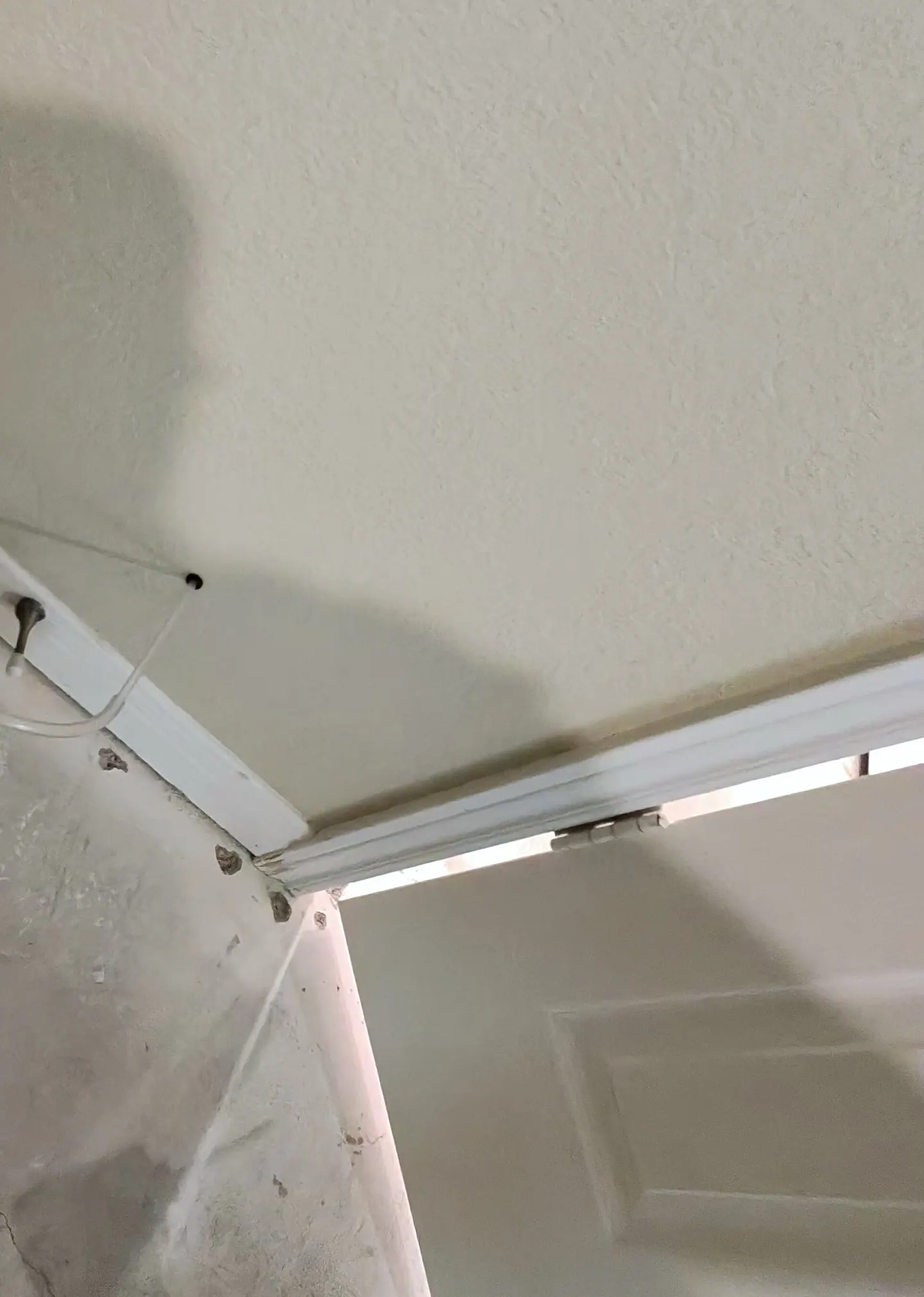
Hidden Mold Concern After an Undetected Water Leak in a Dallas Home
A Dallas homeowner requested an assessment after several past water events, including a master-closet leak that reportedly went undetected for a time and left stored belongings with visible mold. By inspection, the belongings and flooring were gone, the slab was exposed, and no visible mold appeared on accessible master-closet surfaces. A 5-liter air sample from the previously affected corner had the highest fungal finding among four sampled wall cavities. Two other 5-liter cavity samples had no mold detected. The closet wall was not opened, so the condition of concealed materials remained undetermined.
View Case Study →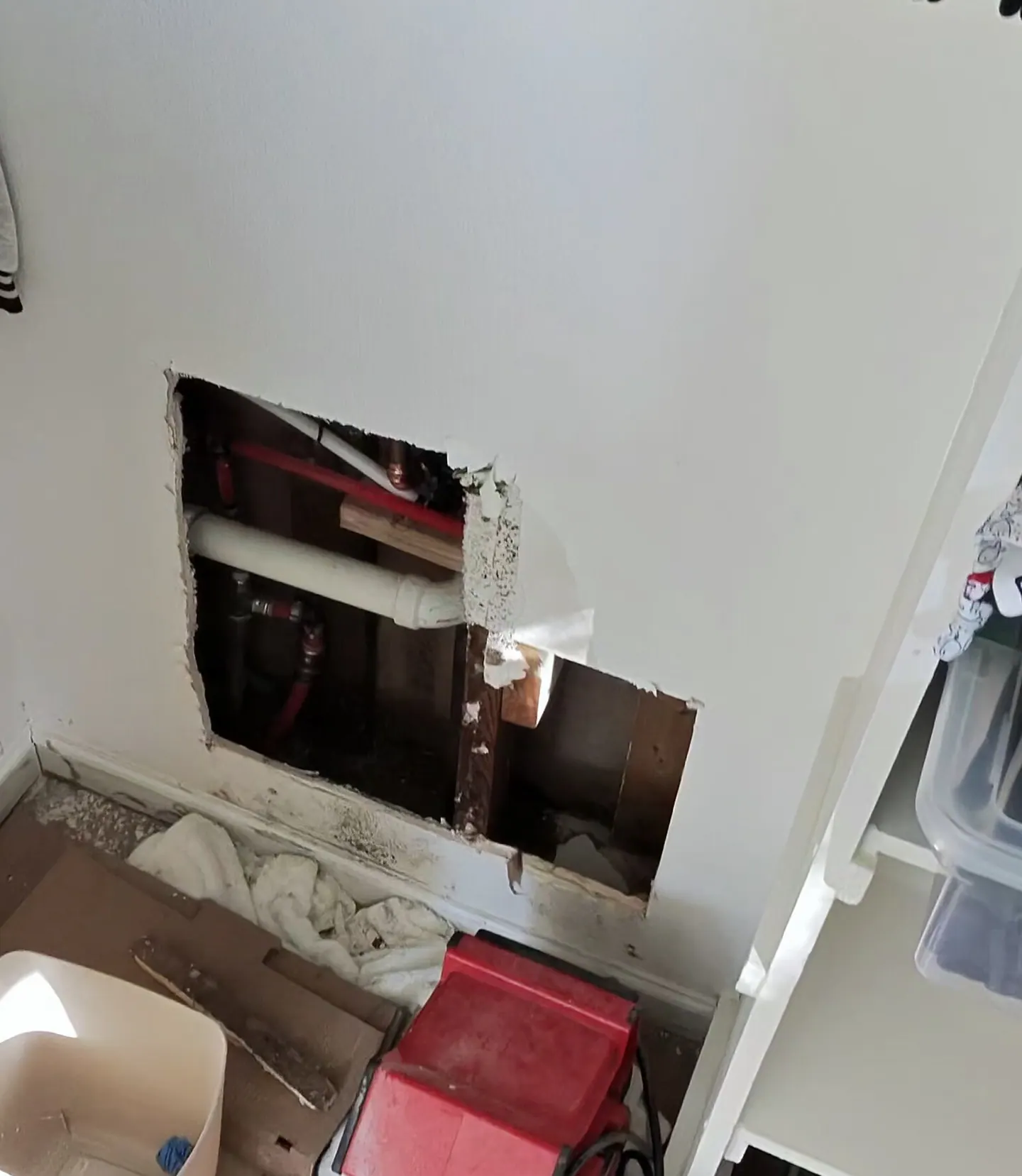
Mold Found Inside a Wall After a Plumbing Leak in Farmers Branch
A Farmers Branch homeowner requested a limited mold assessment after a reported plumbing leak affected a wall shared by a guest bathroom and two closets. The leak had reportedly been repaired, but existing repair openings exposed stained wallboard and framing. A swab through the guest bedroom closet opening supported fungal growth on sampled material. Separate ceiling and former exterior-wall concerns had different, more limited findings.
View Case Study →