
- Location
- Dallas, Texas
- Property type
- Single-family residential
- Inspection type
- Limited mold assessment
- Primary concern
- Suspected growth at playroom supply grills and inside the branch serving them
- Inspection
- August 2026
- Published
- September 2026
The Situation
The homeowner's HVAC contractor had seen material in a supply duct that appeared to be either microbial growth or accumulated dirt. The homeowner requested independent mold evaluation and testing.
The limited assessment included visual inspection of supply grills, borescope views through grill louvers, inspection of accessible attic HVAC components and duct jackets, indoor/attic/outdoor temperature and humidity readings, one indoor and one outdoor air sample, and a surface swab from the left playroom supply grill.
What Was Inspected
- No supply grills were removed, ductwork dismantled or cut open, or building materials removed. Only interior areas visible by borescope through the grill openings were inspected; the full length of the playroom duct branch was not directly viewed.
- Accessible air-handler surfaces, selected other supply grills, their borescope views, and accessible duct runs were compared with the affected playroom branch. Clean accessible views do not establish the condition of every concealed surface.
- Air samples described the playroom and outdoor comparison locations at the time of collection, not all operating or disturbance conditions.
What We Observed
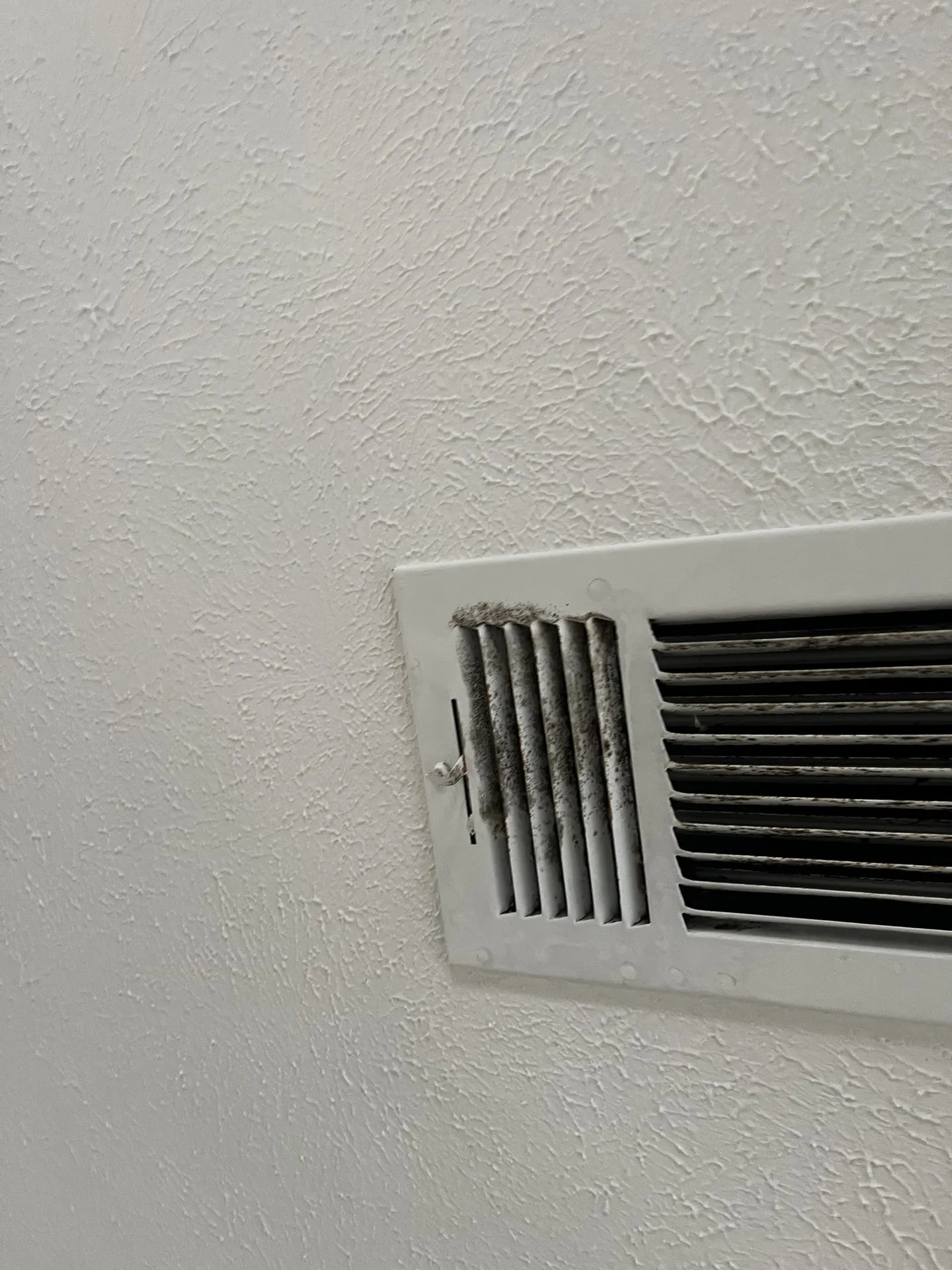
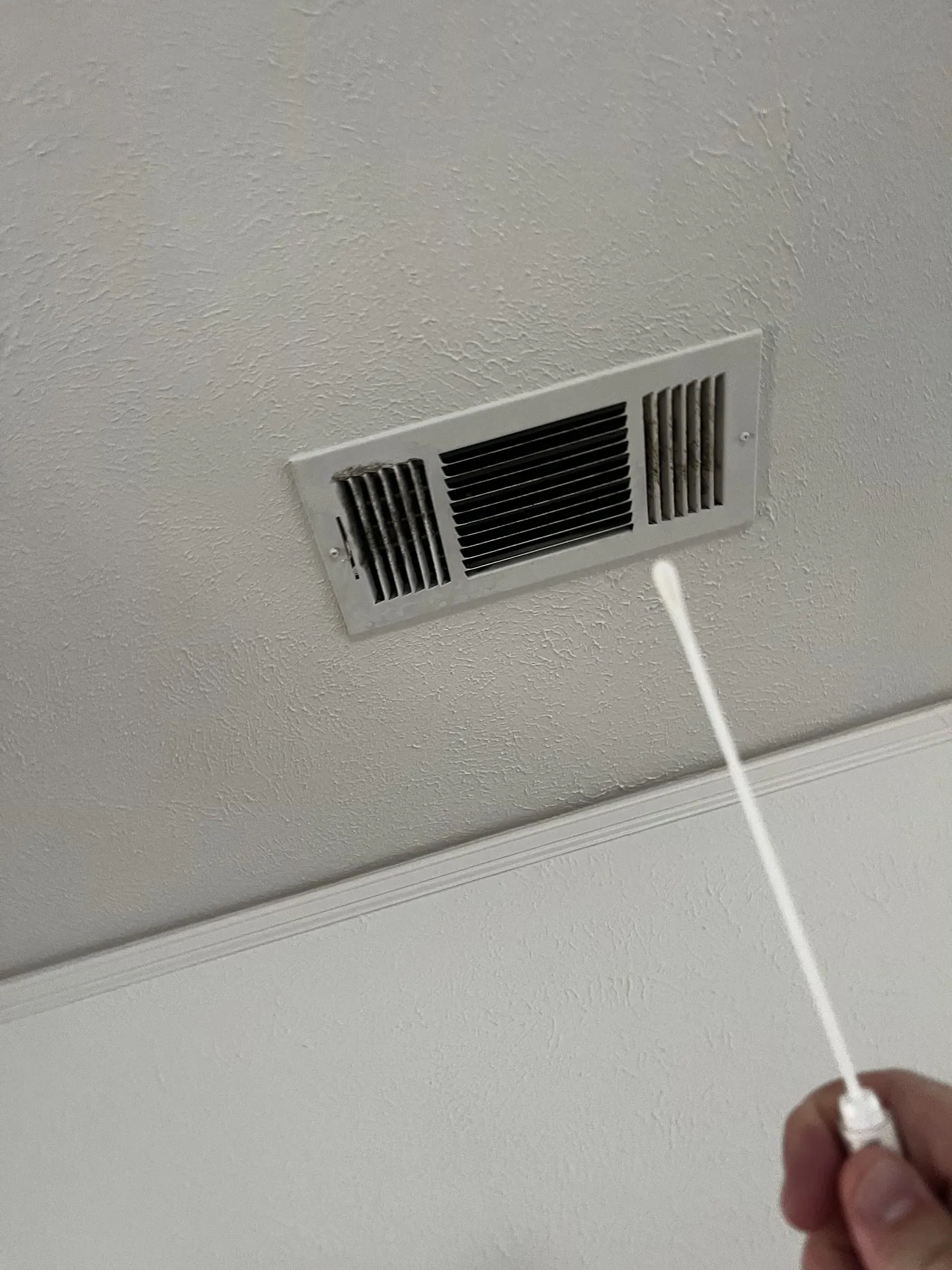
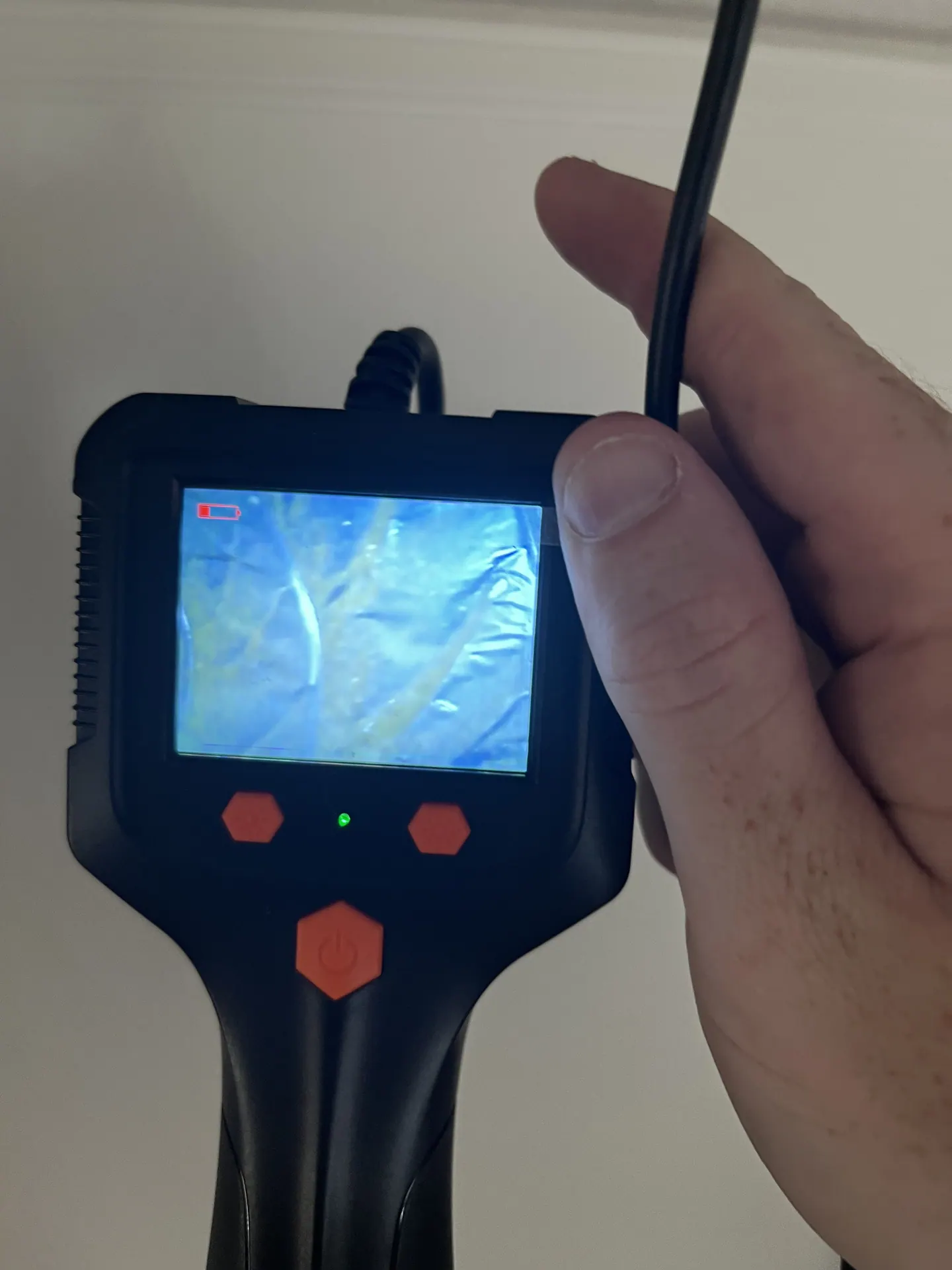
The left playroom supply grill showed visible growth on its face and louvers. A borescope inserted through its louvers showed growth on accessible interior duct surfaces behind the grill. A surface swab was collected from the grill face, and an indoor air sample was collected in the playroom.
The right playroom grill also showed visible surface growth; borescope viewing showed visible growth on accessible surfaces behind it. Tracing the ductwork found that both playroom grills were supplied by the same single branch. Only the left grill was swabbed.
Other inspected supply grills on the same system had no comparable visible growth, and their borescope views showed no comparable discoloration or growth. The bathroom grill's minor surface discoloration was a separate observation with a clean-appearing borescope view behind it.
What Was Found at the Playroom Vents?
Both playroom supply grills had visible growth on their faces. The left grill's louvers also showed growth and supplied the sole surface swab in this assessment. The right grill was not separately sampled. An air sample was collected in the playroom, but neither grill was removed.
Borescope Inspection Showed Growth Inside the Duct Branch
A borescope passed through the existing louvers of each playroom grill showed visible growth on interior duct surfaces behind both openings. This was a visual finding within one shared branch, not a laboratory swab of the entire duct interior.
The duct was not opened or dismantled. The borescope did not document every surface along the branch's full length.

Moisture / Building Conditions
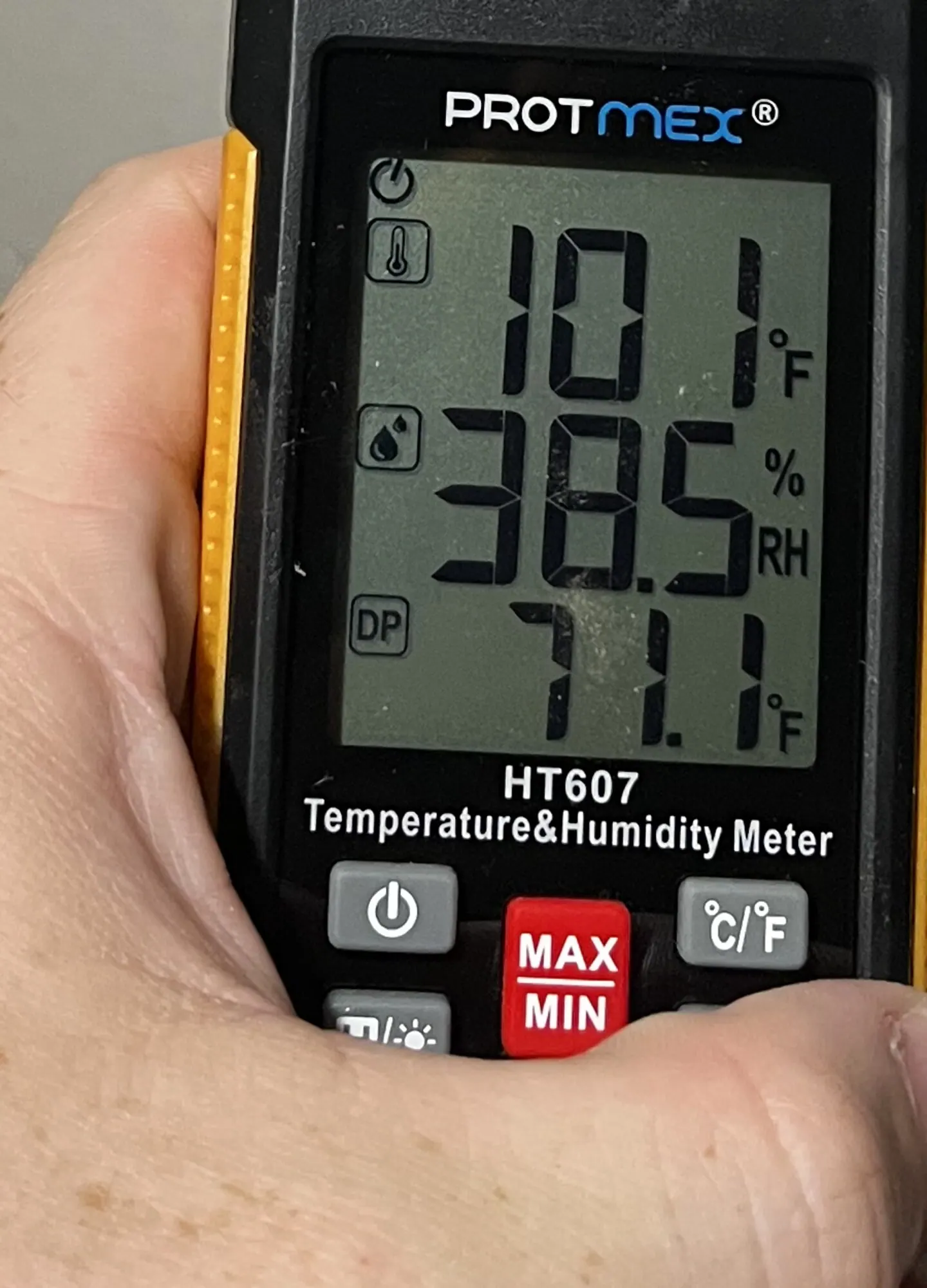
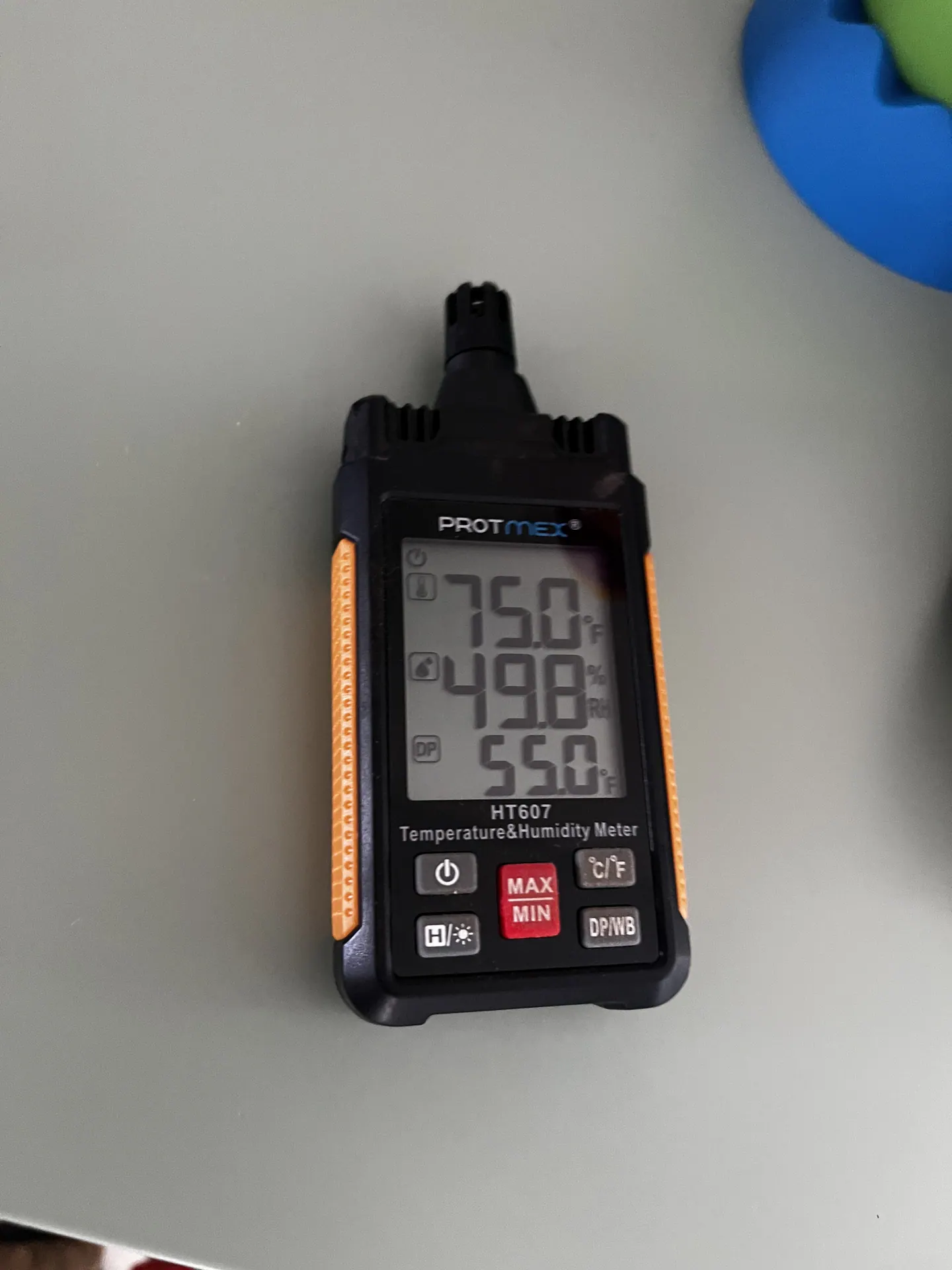
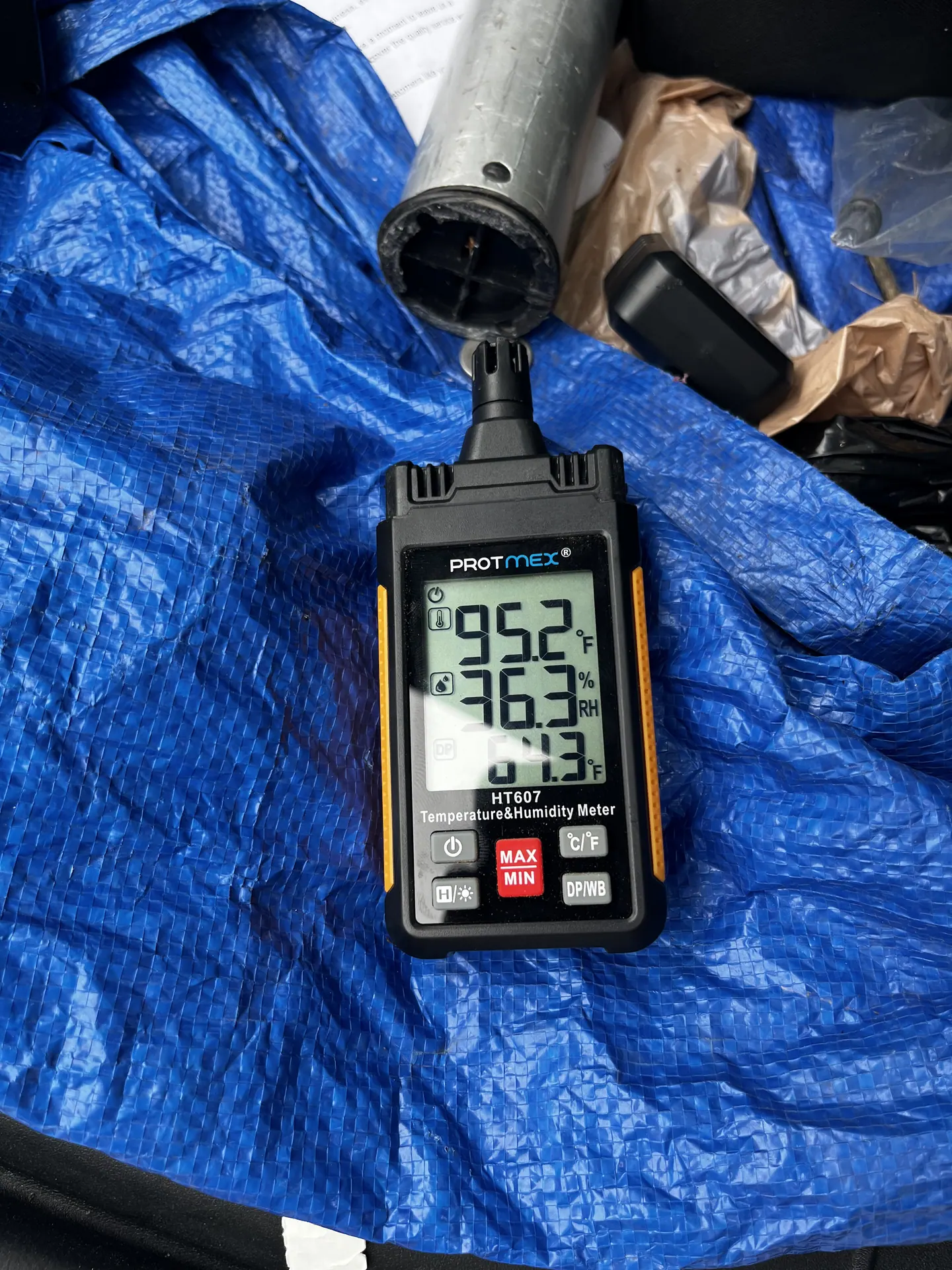
The attic measured 101.1°F with 38.5% relative humidity and a 71.1°F dew point. Indoors: 75.0°F, 49.8% relative humidity, 55.0°F dew point. Outdoors: 95.2°F, 36.3% relative humidity, 61.3°F dew point.
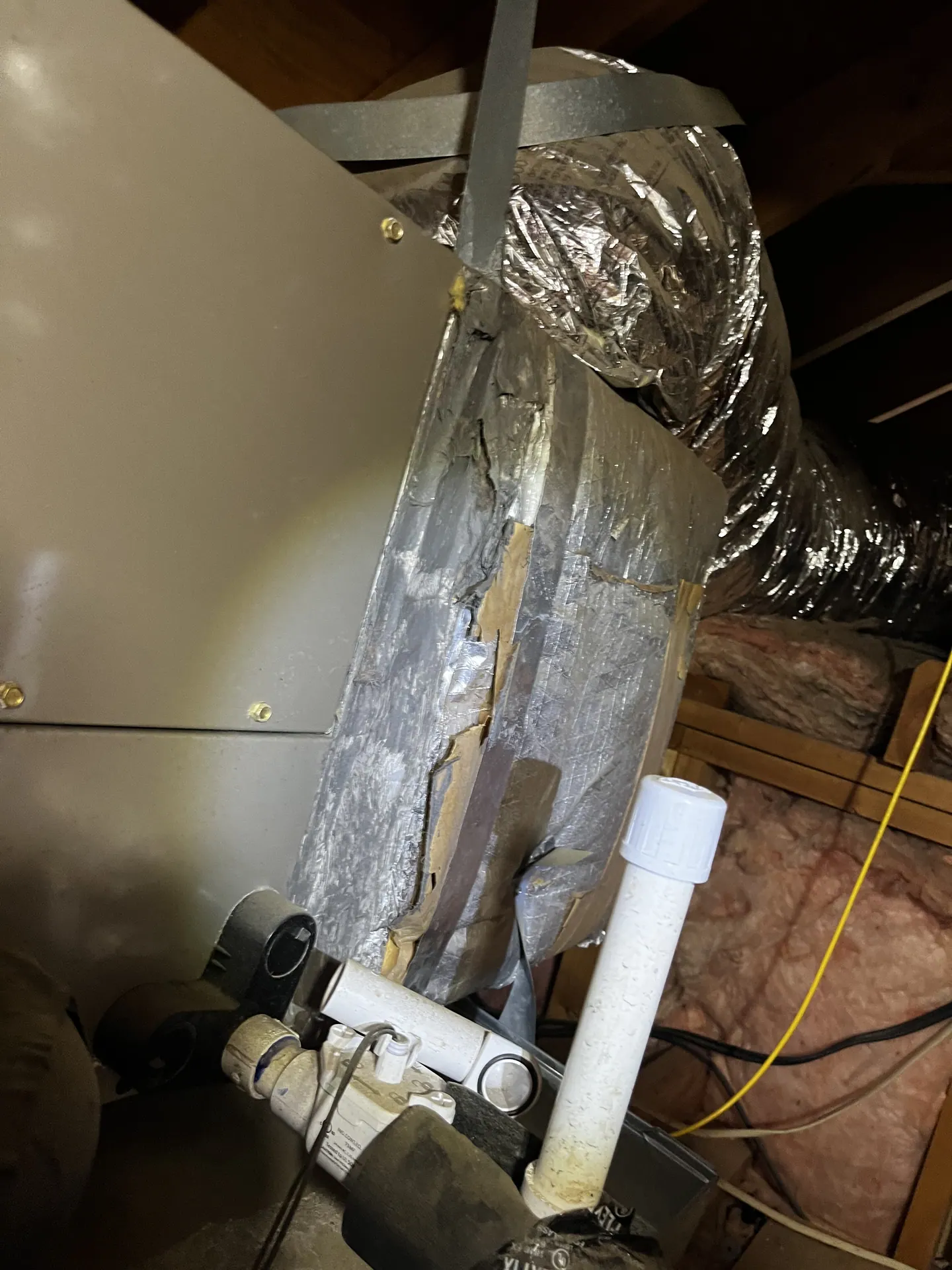
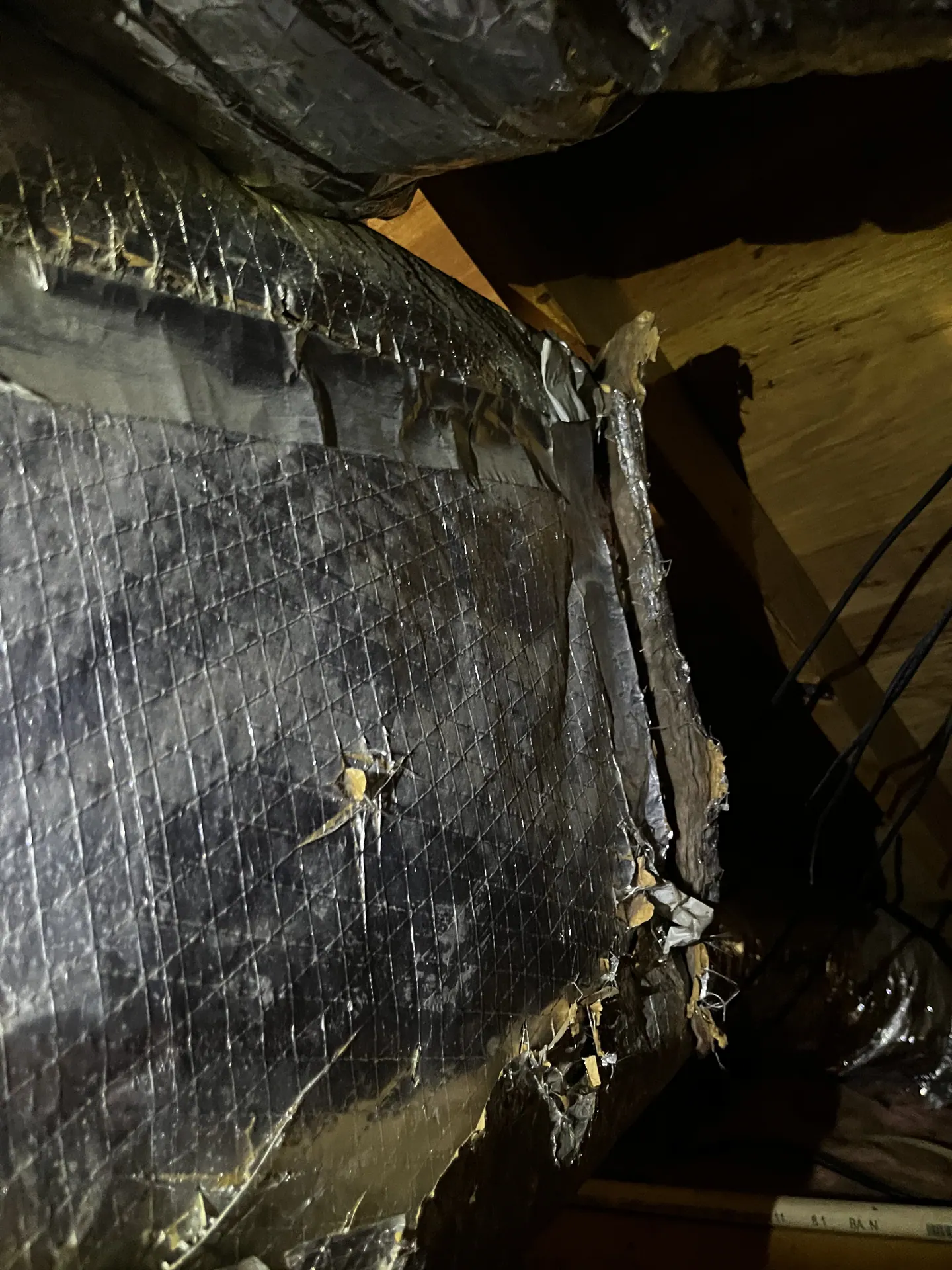
The damaged outer jacket and insulation could allow exchange between the attic and duct air. The readings and visual inspection supported a probable explanation rather than a direct measurement of leakage.
Sampling Performed
- Surface swab, direct microscopic examination — Face of the left playroom supply grill
- Indoor air sample — Playroom: One sample compared with an outdoor air sample at the time of assessment.
- Outdoor comparison air sample — Exterior
Laboratory Findings
| Sample | Finding | Reported result | Context |
|---|---|---|---|
| Left playroom supply-grill swab | Cladosporium | Heavy | Laboratory Heavy category: more than three structures per field of view |
| Left playroom supply-grill swab | Aspergillus/Penicillium-like structures | Minor | |
| Left playroom supply-grill swab | Hyphal fragments | Minor | |
| Playroom air | Total fungal spores | 550 spores/m³ | |
| Playroom air | Cladosporium | 340 spores/m³ | |
| Playroom air | Aspergillus/Penicillium-like | 43 spores/m³ | |
| Playroom air | Basidiospores | 43 spores/m³ | |
| Playroom air | Nigrospora | 43 spores/m³ | |
| Playroom air | Pithomyces | 43 spores/m³ | |
| Playroom air | Hyphal fragments | 43 fragments/m³ | |
| Playroom air | Debris rating | Moderate | |
| Outdoor comparison air | Total fungal spores | 2,300 spores/m³ | |
| Outdoor comparison air | Cladosporium | 1,600 spores/m³ | |
| Outdoor comparison air | Aspergillus/Penicillium-like | 170 spores/m³ | |
| Outdoor comparison air | Myxomycetes/Periconia/Smut/Rust | 210 spores/m³ | |
| Outdoor comparison air | Ascospores | 170 spores/m³ | |
| Outdoor comparison air | Basidiospores | 85 spores/m³ | |
| Outdoor comparison air | Hyphal fragments | 130 fragments/m³ | |
| Outdoor comparison air | Debris rating | Light |
What the Findings Suggested
The swab's Heavy Cladosporium, together with visible growth on the left grill and visible growth behind it, supported fungal growth at the sampled grill. Growth inside the shared branch was directly observed by borescope behind both playroom grills, but no interior-duct material was separately sampled and the entire branch was not inspected.
The playroom air results did not show fungal amplification relative to the outdoor comparison at the sampled time. They cannot establish that no mold was present or predict conditions during HVAC operation or disturbance.
The distribution of visible findings, damaged branch, and attic conditions made air exchange through its jacket and insulation the most probable explanation, not a conclusively established cause.
Why Was Growth Limited to One Duct Branch?
The playroom branch had substantial damage to its outer jacket and insulation, with openings near the air handler and elsewhere along the run. These openings could permit exchange between attic air and conditioned air within the duct.
By contrast, the accessible air handler appeared clean. Other inspected supply grills and their borescope views showed no comparable growth, and their duct runs originated from a different side of the air handler without comparable observed jacket damage. This supports a localized finding, not a claim that the entire HVAC system was contaminated or fully inspected.
Attic and Indoor Conditions
At inspection, the outdoors-ventilated attic measured 101.1°F, 38.5% relative humidity, and a 71.1°F dew point. Indoor readings were 75.0°F, 49.8% relative humidity, and a 55.0°F dew point; outdoor readings were 95.2°F, 36.3% relative humidity, and a 61.3°F dew point.
The attic readings provide context for the report's probable-source assessment. They do not prove that air passed through the damaged jacket or that a particular amount of moisture entered the duct.
How Was the Bathroom Grill Different?
A bathroom supply grill had a small amount of surface discoloration consistent with microbial growth. Its borescope view showed no growth or discoloration in the accessible duct immediately behind it. The assessment interpreted the grill-face condition as consistent with localized condensation or humidity, not growth originating in the playroom branch or in that bathroom duct. The bathroom grill was not separately sampled.
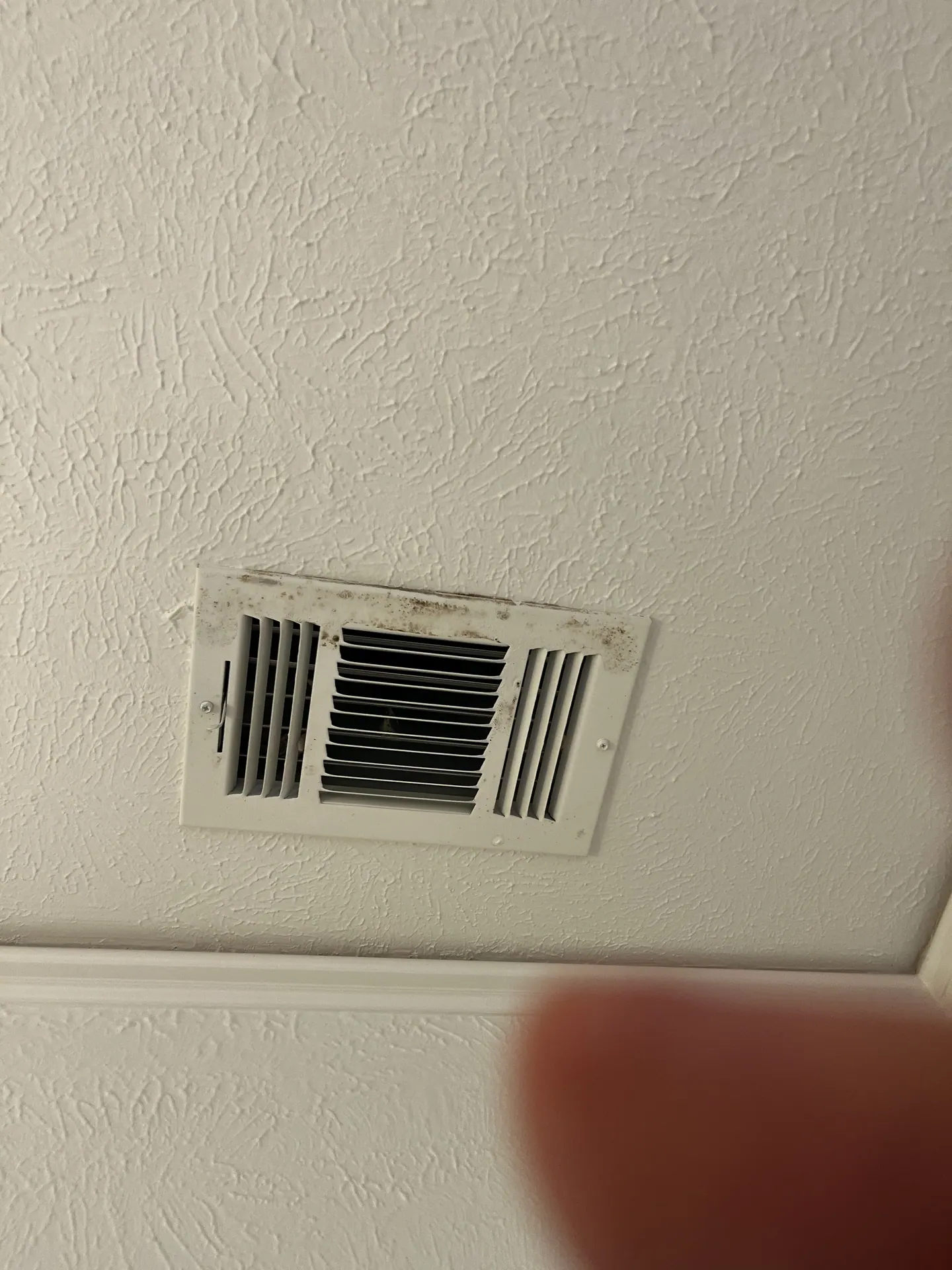
Three Different HVAC Inspection Findings
Other published inspections provide useful contrasts: one found growth on the exterior of AC condensate piping without visible growth inside accessible ducts; another confirmed growth on accessible surfaces inside a supply plenum. Here, the observed interior condition was limited to accessible portions of a single damaged duct branch. These are separate properties, not stages of one system-wide problem.
Recommendations
- The assessment recommended that a qualified HVAC or duct professional evaluate and address the damaged branch serving the playroom and determine the appropriate corrective approach, then confirm its connections and jacket are intact after work.
- It recommended replacing the two playroom supply grills and the separately discolored bathroom grill, considering a filter replacement after duct work, keeping indoor relative humidity below 60%, using bathroom exhaust ventilation during and after showers, and considering a follow-up visual inspection.
- These are high-level report recommendations, not duct repair instructions or a claim that all ducts require replacement.
What Homeowners Can Learn From This Case
Discoloration at a vent does not establish that every duct or the air handler has mold. Here, borescope views differentiated a shared playroom branch with visible interior growth from other inspected runs and a bathroom grill with surface-only discoloration.
An investigation can compare vent faces, visible duct interiors, branch routing, attic conditions, jacket and insulation integrity, targeted surface findings, and time-specific air samples. A lower indoor air result did not undo the direct visual and grill-swab findings in this case.
Questions About This Case
Can mold grow in only one HVAC duct?
Yes. One localized defect or moisture condition can affect a branch without similar findings elsewhere. Visible growth was found inside accessible portions of the damaged branch serving two playroom grills here, while other inspected runs appeared clean.
Does mold on an AC vent mean the entire HVAC system has mold?
No. The two playroom grills and accessible surfaces behind them showed growth, but the accessible air handler and other inspected grills and borescope views had no comparable findings. The complete system was not dismantled or sampled.
Can a damaged flex duct cause mold?
A damaged jacket or insulation can allow air exchange with an attic. In this case the damaged playroom branch and isolated growth made attic air leakage the most probable explanation; the actual leakage mechanism was not proven experimentally.
Can mold be inside a duct even if an air test looks normal?
Yes. An air sample is a snapshot of one time and location. This playroom sample did not show amplification relative to outdoors, but visible growth was observed in the shared branch and the left grill swab returned Heavy Cladosporium.
What kind of mold was found on the vent?
The left playroom supply-grill swab returned Heavy Cladosporium, Minor Aspergillus/Penicillium-like structures, and Minor hyphal fragments. The right grill and duct interior were not separately swabbed.
Can bathroom vent discoloration come from condensation?
It can. The bathroom grill's slight surface discoloration was interpreted as consistent with localized condensation or humidity; no comparable growth was seen behind it in the borescope view. This grill was not separately sampled.
Related Services
Seeing Mold or Discoloration Around Your AC Vents?
Mold around a supply vent can come from different conditions, including localized condensation, duct damage, or growth farther inside the HVAC system. An independent inspection can help determine where the condition is actually located.
Schedule a Mold InspectionInspection performed by Ethan Wright, TDLR Licensed Mold Assessment Technician (MAT #1589).
Related Real Inspection Cases
Compare another HVAC inspection that confirmed growth inside a supply plenum and one that found growth only on the outside of condensate piping. Here, visible interior growth was localized to accessible portions of a single damaged duct branch.
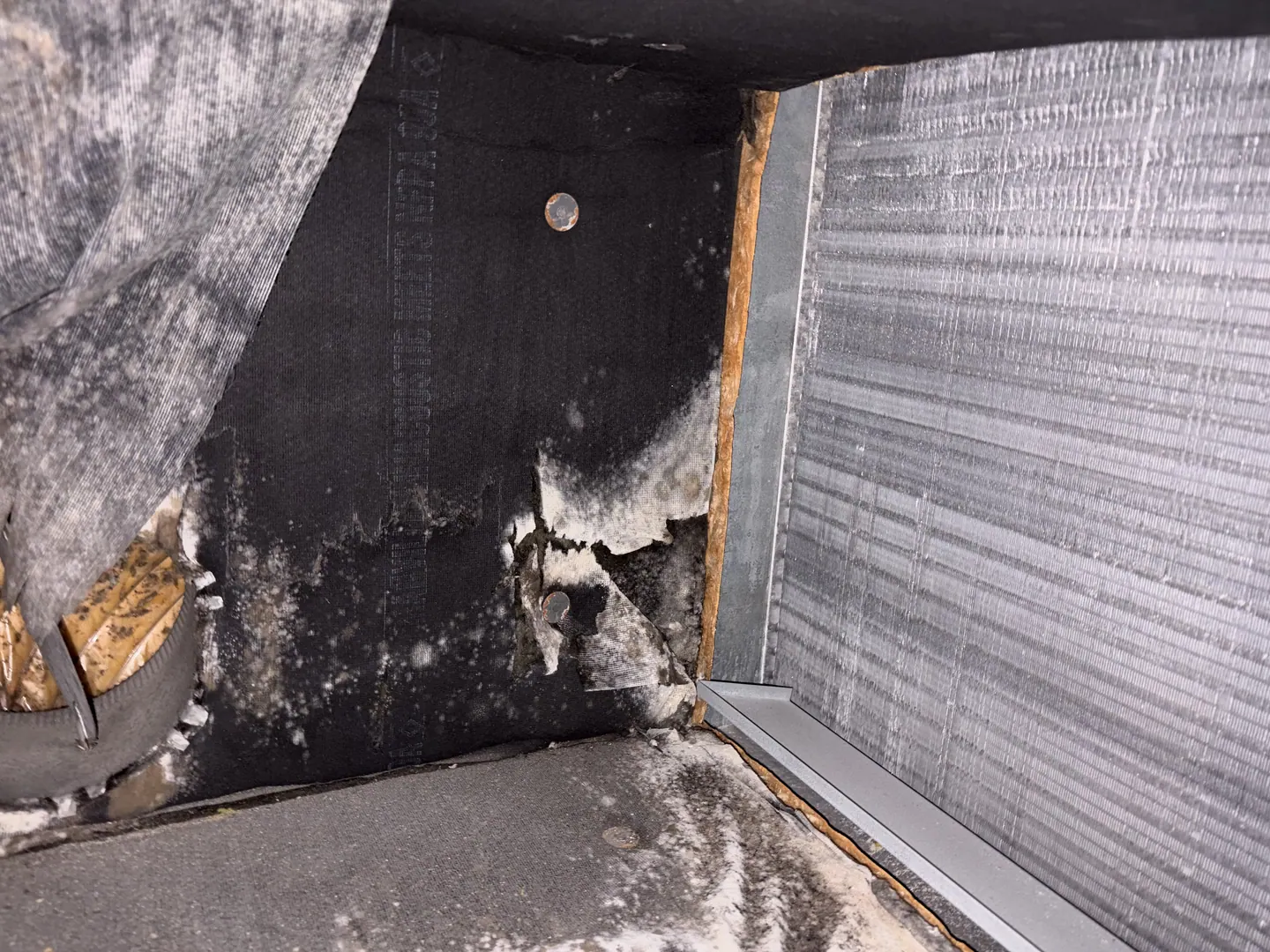
Mold Found Inside an HVAC Supply Plenum in a Dallas Home
A Dallas homeowner requested an independent assessment after an HVAC professional reported suspected growth inside an attic supply plenum. Accessible fiberglass duct-board liner showed extensive surface colonization. Surface swabs supported fungal growth inside the plenum and on a downstream living-room supply grill. No air samples were collected.
View Case Study →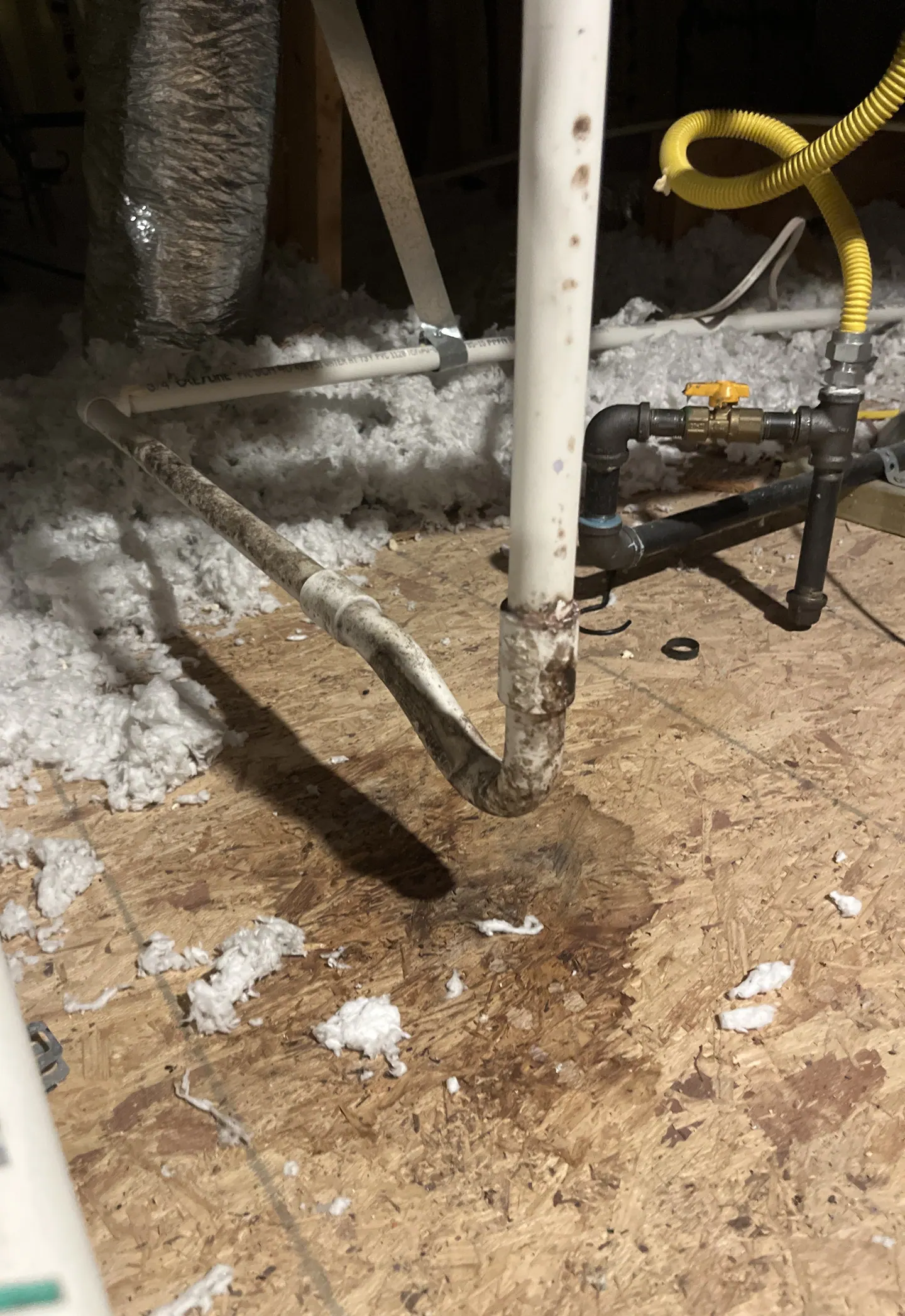
Mold on an AC Condensate Drain Line in a Dallas Attic
A Dallas homeowner requested an independent assessment after an HVAC technician noticed suspected growth on attic condensate piping. A surface swab supported fungal growth on the pipe exterior; no visible mold growth was observed inside accessible portions of the air handler or connected ductwork.
View Case Study →
Mold Found After an AC Condensate Drain Overflow in a Fort Worth Home
A reported HVAC condensate-drain backup flooded the HVAC closet and adjoining rooms of a Fort Worth attached duplex residence while the homeowner was away. A restoration contractor had already made flood cuts and removed portions of flooring before the mold assessment. Six surface samples documented different findings across the affected areas: Heavy Stachybotrys at the HVAC-closet concrete-floor surface, Heavy Chaetomium at a water-affected bedroom wall, and Heavy Cladosporium with Heavy hyphal fragments on a bedroom supply register. No air samples were collected.
View Case Study →