
- Location
- Dallas, Texas
- Property type
- Single-family residential
- Inspection type
- Limited mold assessment
- Primary concern
- Persistent musty bedroom odor and attic-air leakage through an HVAC closet
- Inspection
- October 2026
The Situation
The homeowner reported a persistent musty odor in a bedroom and prior flooding associated with the HVAC air handler. The homeowner stated that the earlier water damage had already been mitigated; this history was reported, not independently confirmed.
The homeowner was also concerned about discoloration on exposed building material visible through an existing wall opening.
What Was Inspected
- The limited assessment included the bedroom, its HVAC air-handler closet, the bedroom-associated bathroom and the master bathroom. Both bathrooms shared a wall with the bedroom.
- Methods included non-invasive visual inspection, comparative moisture-meter screening, temperature and relative-humidity measurement, and borescope inspection through the existing wall opening.
- No building materials were removed, cut or opened, and the existing opening was not enlarged. No air or surface samples were collected.
- The attic was only viewed from the air-handler closet. The borescope inspected only the portion of the wall cavity within its field of view.
What We Observed
Inspection during active rain did not reveal active leaks, window intrusion, current water entry or visible current water damage on accessible inspected surfaces.
Comparative moisture screening did not show elevated responses in the bedroom, either bathroom or shared walls. No specific comparative values were documented in the report.
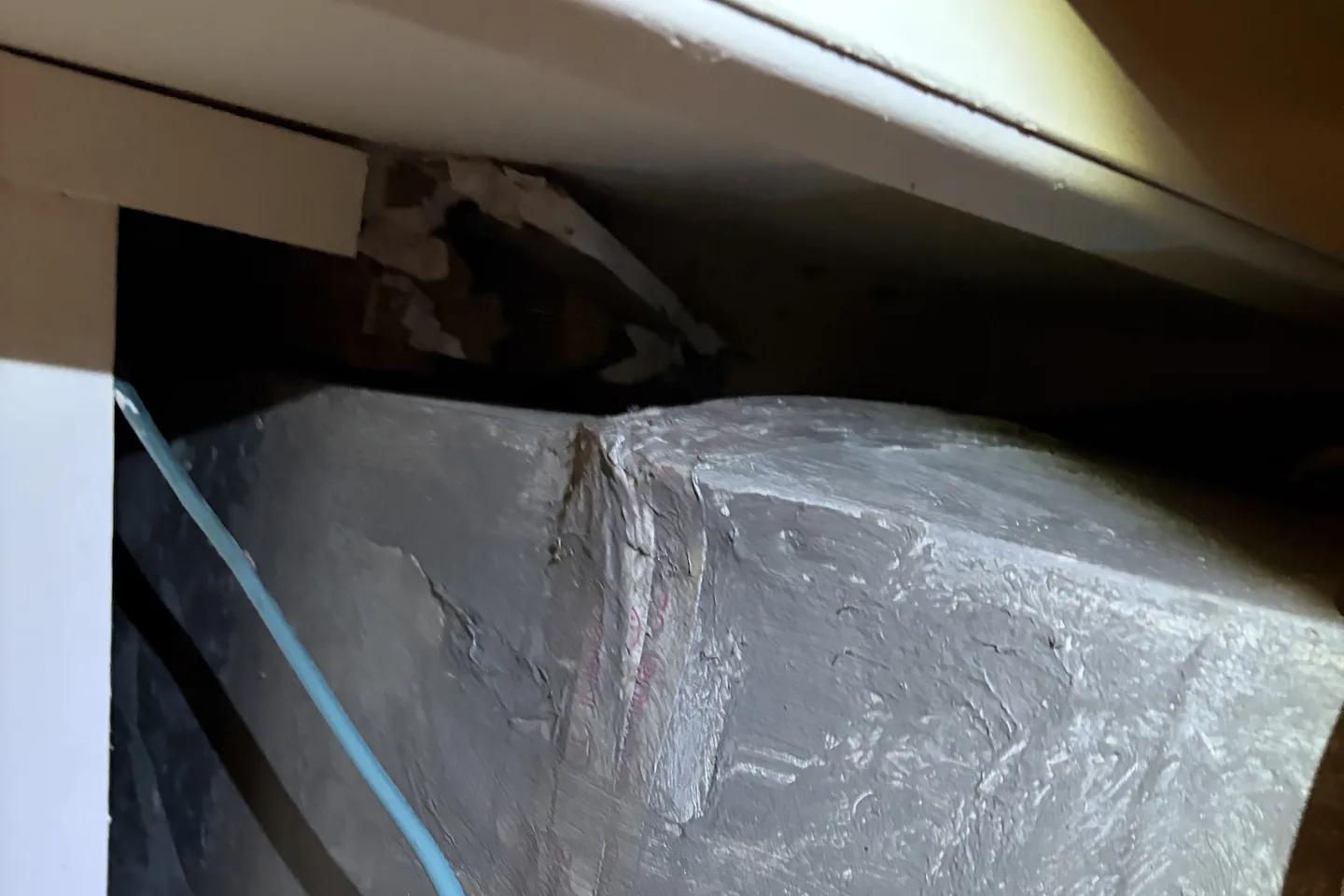
The air-handler closet had large unsealed openings to the vented attic around the equipment and ductwork. The closet opened directly to the occupied bedroom, and a musty odor was noted at the closet.
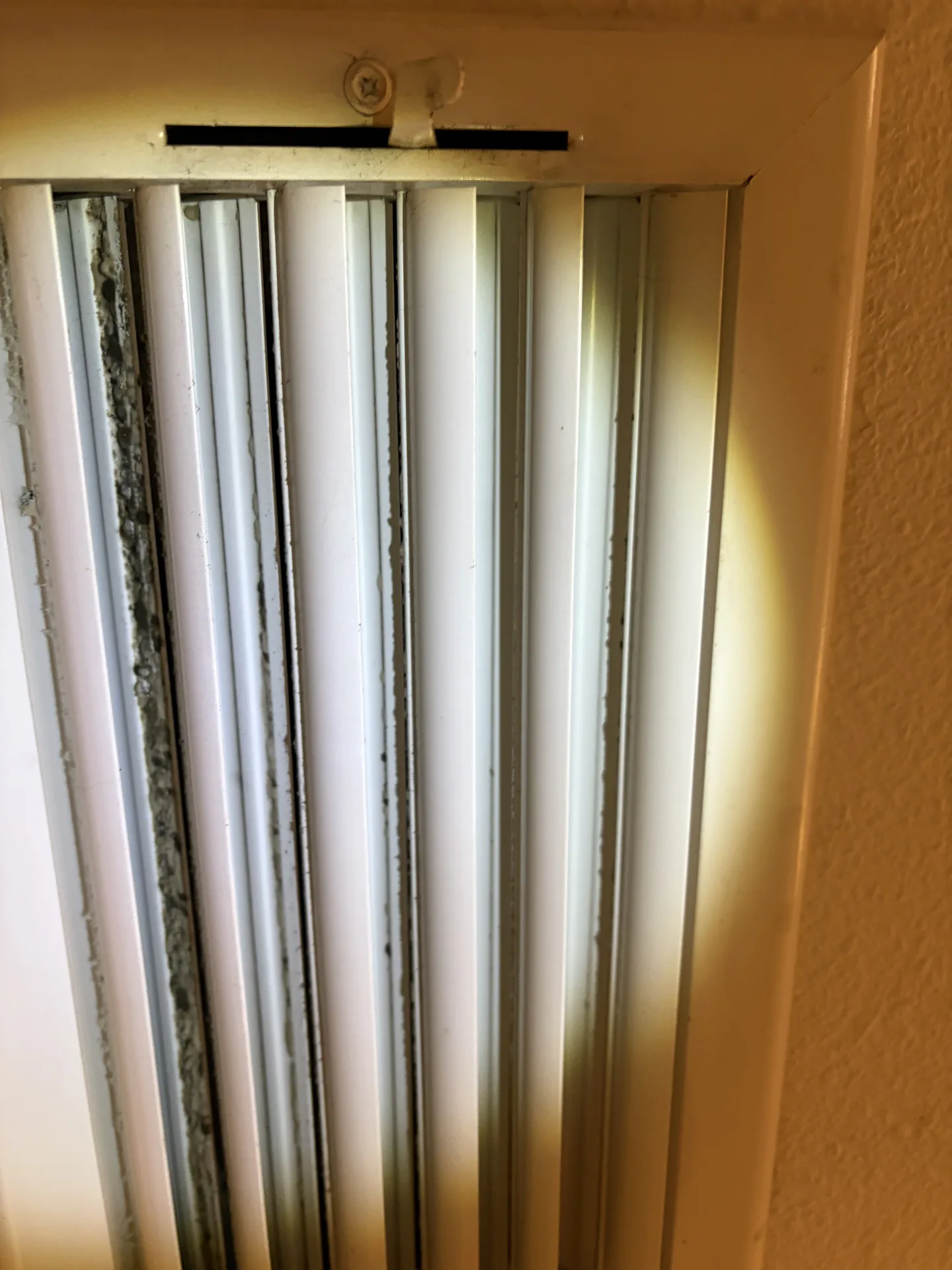
One bedroom supply grille had a small amount of dark growth visually consistent with condensation-related mold; it was not sampled. The second bedroom grille had no visible growth.
No suspect growth was observed in the limited borescope field of view. The visible material coloration appeared uniform and consistent with its natural color, not water staining or fungal growth.
The Home Was Inspected During Active Rain
Rain during the assessment provided an opportunity to look for active water entry under wet-weather conditions. No active leaks, window intrusion, current water entry or visible current water damage were observed in the inspected areas.
The earlier HVAC-related water damage was not visibly evident during the assessment, consistent with the homeowner's statement that it had already been mitigated. The prior event was not independently verified.
No active water intrusion was observed at the time of inspection, including during active rain. This does not establish that the property could never leak or characterize conditions at other times.
No Elevated Moisture Was Found on Accessible Surfaces
Comparative moisture screening covered the bedroom, the bedroom-associated bathroom, the master bathroom and shared walls. No responses were elevated compared with surrounding reference areas.
The meter was used for comparative wet/dry screening, not to determine exact moisture content, precise moisture depth or the exact location of moisture within a wall or floor assembly. No specific comparative moisture values were documented.
The Biggest Problem Was the Missing Air Barrier Around the HVAC Closet
The air handler was in a closet inside the bedroom. When the closet was opened, large unsealed gaps were observed around the air handler and the ductwork where it passed into the attic. The vented, unconditioned attic was visible through the openings.
There was no complete air barrier separating the vented attic, air-handler closet and bedroom. Because the closet opened into the occupied room, the gaps allowed unconditioned attic air into the living space.
A musty odor was noted coming from the closet. In the assessor's professional opinion, this attic-air entry was the most likely source of the bedroom odor.
Why Attic Air Can Create a Musty Bedroom
A vented attic contains outdoor-influenced air that can be warmer, more humid, dusty, musty-smelling and carry outdoor particulate matter. Large openings around HVAC equipment can allow that air into an occupied room.
Such air entry can contribute to elevated relative humidity, odor and condensation potential on cooler surfaces. In this case, the assessor considered attic-air entry the most likely odor source and a likely contributor to elevated bedroom humidity, not proof of the only possible humidity source.
No attic mold assessment or air sampling was performed. The findings do not establish fungal contamination of the attic or demonstrate airborne fungal transport into the bedroom.
Bedroom Humidity Was Slightly Elevated
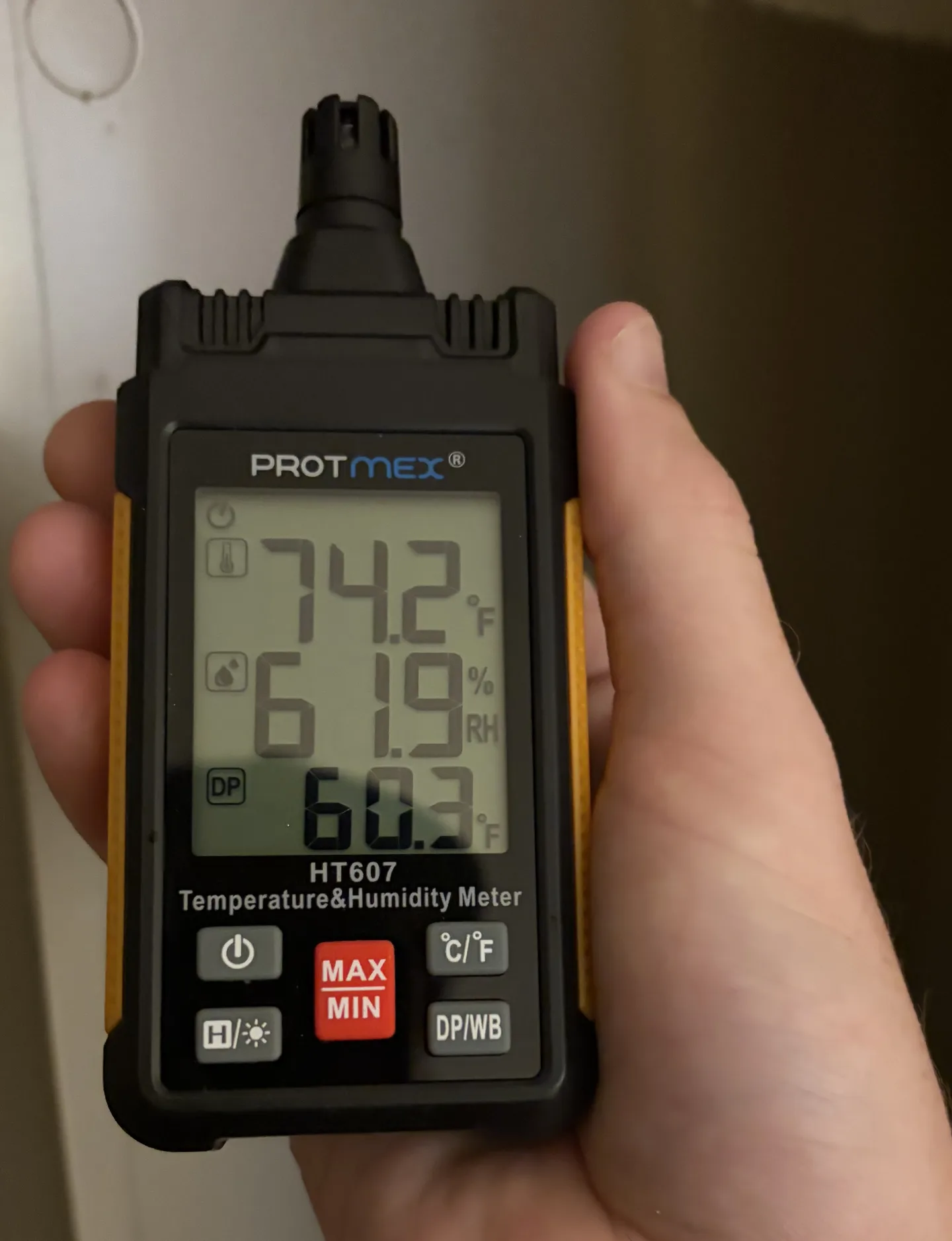
Bedroom conditions measured 74.2°F, 61.9% relative humidity and a 60.3°F dew point. The relative-humidity reading was slightly above the generally recommended indoor maximum of 60%.
The report considered the reading consistent with humid attic air entering through the unsealed closet. Attic-air entry was considered a likely contributor, not established as the sole source of indoor humidity.
A Small Amount of Growth Was Visible on One Supply Grille
The bedroom had two supply-air grilles. The grille beside the air-handler closet had a small amount of dark growth on its louvers, visually consistent with condensation-related mold. The second grille showed no visible growth.
The affected grille was not sampled. Its fungal identity was not determined, and the growth was not laboratory confirmed.
With humid room air and cool supply air at the grille, a metal surface can become cool enough for localized condensation that supports surface growth. The visible pattern was considered consistent with condensation-related growth; condensation on the grille was not directly measured.
The Suspicious Wall Discoloration Was Not Interpreted as Mold
A borescope was inserted through the existing wall opening without enlarging it. Within the visible field of view, the material color was uniform and appeared consistent with the natural coloring of the building material, rather than water staining or fungal growth.
No suspect mold growth was observed within the portion of the wall cavity visible through the existing opening. This limited view did not establish the condition of the entire wall cavity.
What Was Observed in the Two Bathrooms?
The bedroom-associated bathroom and master bathroom both shared a wall with the bedroom. Neither had observed leaks, visible current water damage, visible suspect growth or elevated comparative moisture responses on accessible surfaces.
No visible suspect growth or elevated accessible moisture was observed. These accessible findings do not establish the condition of unobserved concealed bathroom materials.
What the Findings Suggested
In the assessor's professional opinion, attic-air entry through the unsealed HVAC closet was the most likely odor source and a likely contributor to the bedroom's slightly elevated humidity.
No active water entry or elevated accessible moisture was identified during the rain-time inspection. The limited borescope view did not show suspect growth; unobserved concealed areas remained outside the assessment.
The grille condition was visual only and consistent with condensation-related growth. No sampling was performed, and no mold-remediation protocol was issued.
Not Every Musty Odor Means Hidden Mold
A persistent musty odor can justify assessment, but an investigation may identify a building or HVAC condition rather than a mold-remediation problem.
Here, no active leak, elevated accessible moisture, suspect growth through the wall opening or visible building-material mold was identified. The most significant finding was large attic-to-room air leaks around the HVAC equipment.
The report identified the unsealed air-handler closet as the most likely odor source. The purpose of assessment is to identify the actual condition, not assume that mold is always the cause.
No Mold Remediation Protocol Was Issued
No mold-remediation protocol was issued based on the accessible conditions observed. Corrective recommendations focused on air sealing, HVAC evaluation, humidity control, cleaning or replacing the affected grille, and follow-up if odor or visible conditions persisted.
This assessment did not establish a hidden mold source or a need for mold remediation based on the accessible findings.
Recommendations
- Have a qualified HVAC or building-envelope professional seal openings between the vented attic and air-handler closet.
- Restore a continuous air barrier between the attic and living space.
- Clean or replace the affected supply grille beside the HVAC closet.
- Have a qualified HVAC professional evaluate the air handler, closet duct connections and the system's ability to control indoor humidity.
- Maintain indoor relative humidity below 60%.
- Use a low-cost digital hygrometer in the bedroom to verify whether humidity improves after the attic openings are sealed.
- If the musty odor persists after correcting air leakage and addressing the grille, perform follow-up assessment.
- If new water damage or visible growth appears, obtain further evaluation.
- If suspected mold is exposed during repairs, stop uncontained removal, cleaning or aggressive disturbance and contact a licensed Mold Assessment Consultant.
What Homeowners Can Learn From This Case
A musty room does not automatically mean mold is hidden inside the walls. Possible causes include active moisture intrusion, hidden mold, elevated humidity, HVAC condensation, attic-air leakage, duct leakage and poorly sealed mechanical closets.
Useful assessment can distinguish among these possibilities using wet-weather observation when available, moisture screening, visual inspection, HVAC-area inspection, humidity measurement, borescope inspection where appropriate and targeted sampling only when justified.
A favorable finding in an accessible area or limited borescope view should not be extended to every concealed surface. This case identified an air-barrier problem without establishing a hidden mold source.
Questions About This Case
Can attic air make a bedroom smell musty?
Yes. Vented attic air can carry humidity, dust and odors into a bedroom if gaps around HVAC equipment allow direct air movement. In this Dallas case, large unsealed openings around an air handler were identified as the most likely source of a persistent musty odor.
Can a room smell musty even if no mold is found?
Yes. Musty odor can be associated with humidity, HVAC conditions, air leakage or other building issues. In this case, no visible building-material mold or elevated accessible moisture was found, but attic air was entering through the HVAC closet.
Can attic air raise indoor humidity?
Yes. Humid unconditioned attic air entering an occupied space can contribute to higher indoor relative humidity. The bedroom in this case measured 61.9% RH.
Can mold grow on an AC supply vent from condensation?
Yes. Cool metal supply grilles can collect condensation when surrounding air is humid. In this case, a small amount of dark growth visually consistent with condensation-related mold was observed on one supply grille, although it was not sampled.
Does no mold seen with a borescope mean the entire wall is clear?
No. A borescope shows only a limited portion of a concealed cavity. In this case, no suspect mold was observed within the field of view, but unobserved concealed areas were not ruled out.
Why wasn’t mold sampling performed?
The assessor did not identify visible suspect mold on building materials, elevated accessible moisture, or suspect growth within the visible wall cavity. The only visible growth was limited to one non-porous supply grille with a probable condensation-related explanation.
Was a mold remediation protocol needed?
No mold-remediation protocol was issued based on the accessible conditions observed. The primary recommendations involved sealing attic air leaks, HVAC evaluation and humidity control.
Related Services
Musty Bedroom but No Obvious Mold?
A persistent musty odor can come from hidden moisture, HVAC conditions, attic air leakage or other building issues. Mold Testing Dallas can inspect the area and help determine what the evidence actually supports.
Schedule a Mold InspectionInspection performed by Ethan Wright, TDLR Licensed Mold Assessment Technician (MAT #1589).
Related Real Inspection Cases
In other HVAC-related cases, fungal growth was confirmed inside ductwork or on wet materials. In this inspection, the primary issue was attic-air leakage and humidity rather than a confirmed hidden mold source. The active HVAC leak case separately documented wet materials without elevated indoor air results; its sampling findings do not apply to this unsampled bedroom.
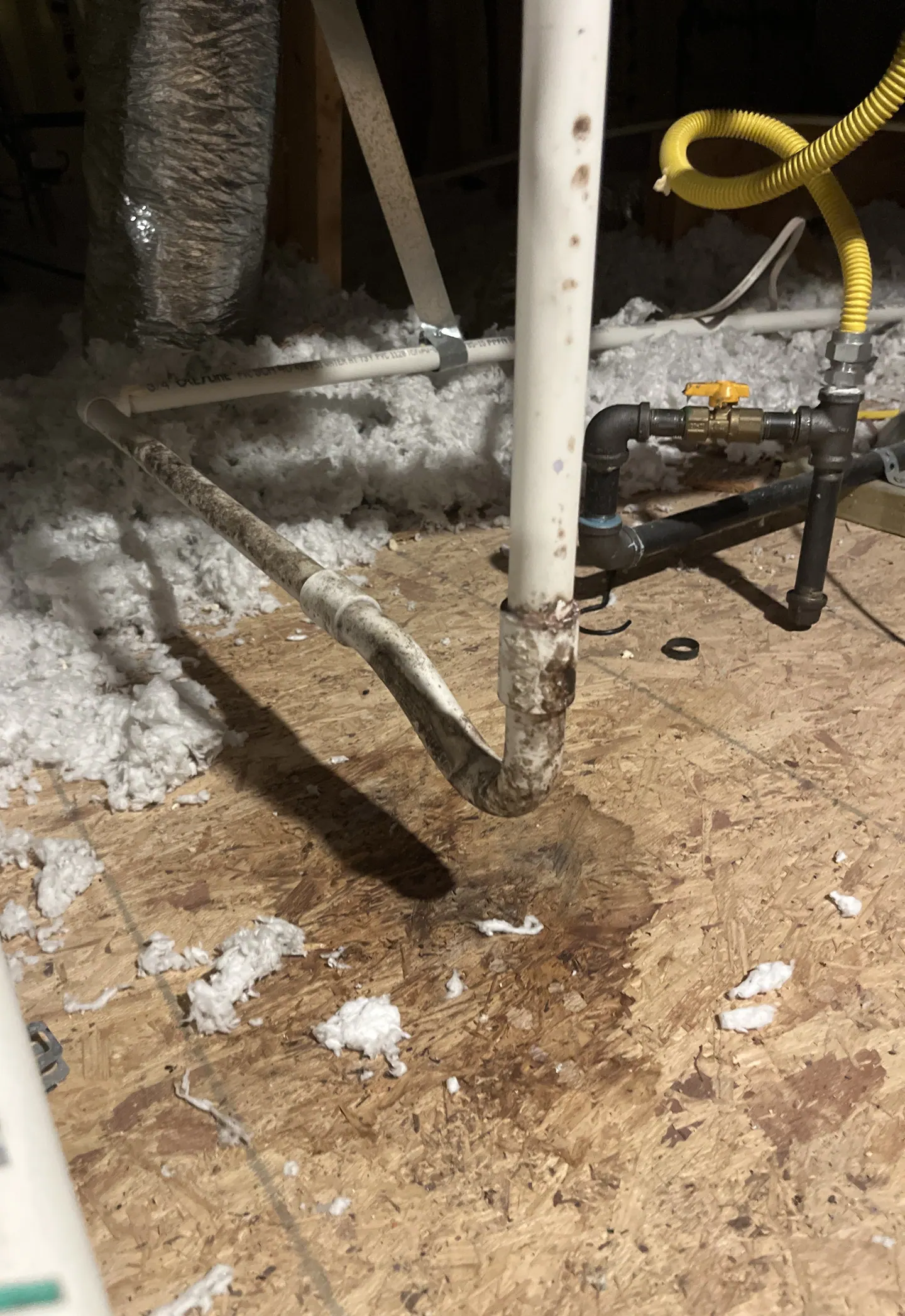
Mold on an AC Condensate Drain Line in a Dallas Attic
A Dallas homeowner requested an independent assessment after an HVAC technician noticed suspected growth on attic condensate piping. A surface swab supported fungal growth on the pipe exterior; no visible mold growth was observed inside accessible portions of the air handler or connected ductwork.
View Case Study →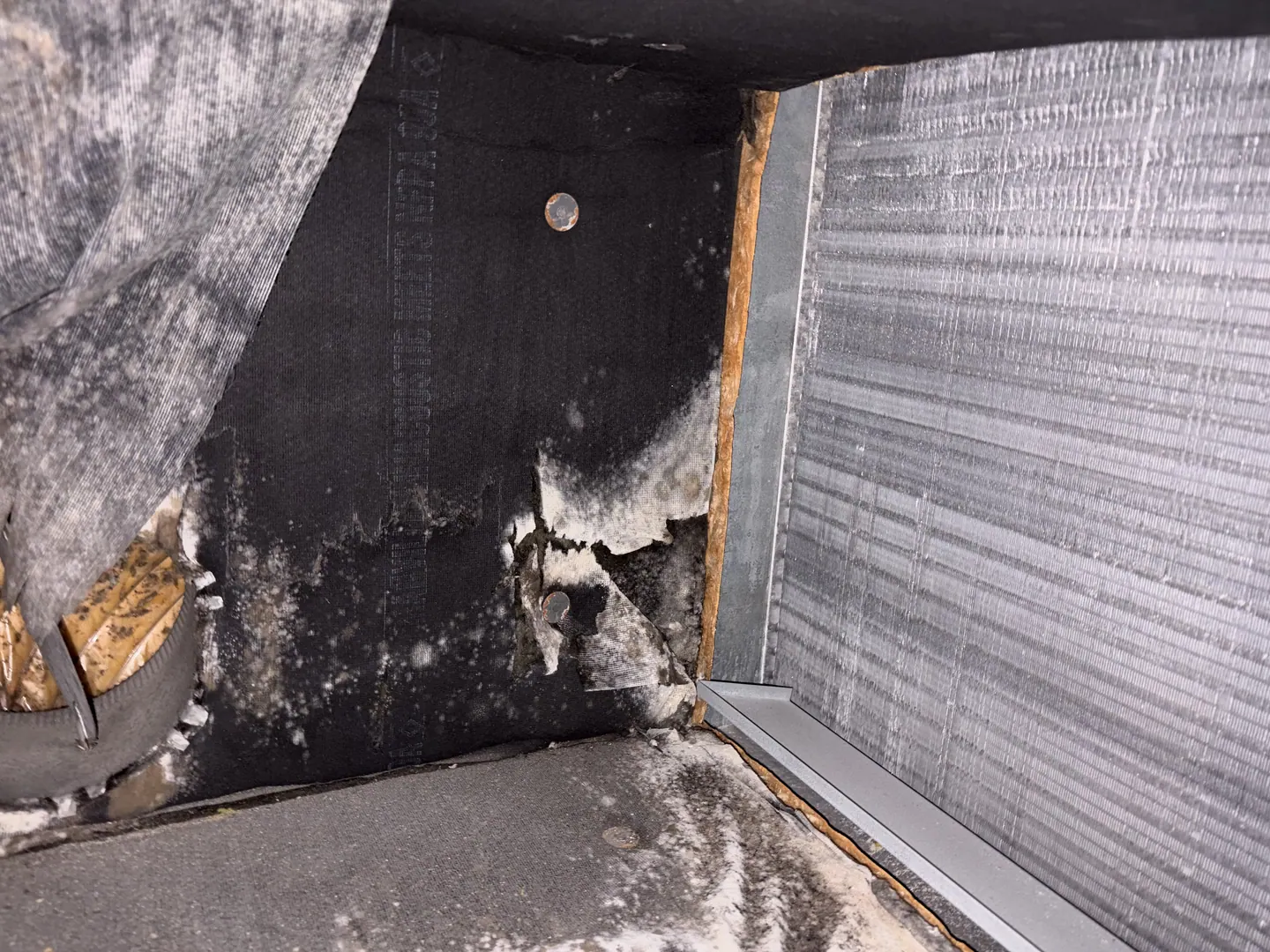
Mold Found Inside an HVAC Supply Plenum in a Dallas Home
A Dallas homeowner requested an independent assessment after an HVAC professional reported suspected growth inside an attic supply plenum. Accessible fiberglass duct-board liner showed extensive surface colonization. Surface swabs supported fungal growth inside the plenum and on a downstream living-room supply grill. No air samples were collected.
View Case Study →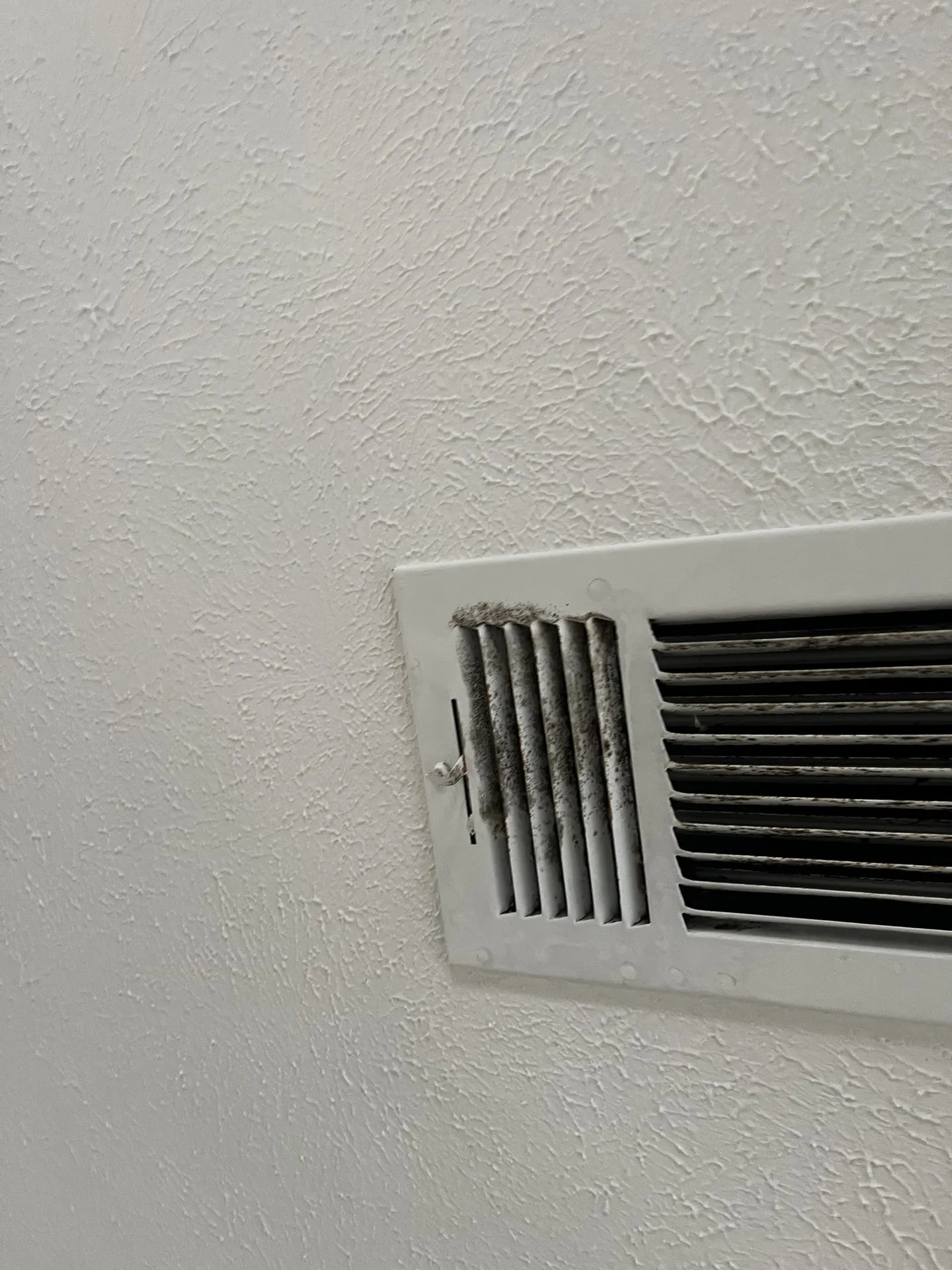
Mold Found Inside One HVAC Duct Branch in a Dallas Home
A Dallas homeowner requested an independent assessment after an HVAC contractor saw material inside supply ductwork that might have been microbial growth or dirt. Two playroom supply grills and accessible interior surfaces behind them showed visible growth. Both grills shared one duct branch with damaged jacket and insulation; the accessible air handler and other inspected runs showed no comparable growth. A swab from the left playroom grill returned Heavy Cladosporium, while the playroom air sample did not show amplification relative to an outdoor comparison at the sampled time.
View Case Study →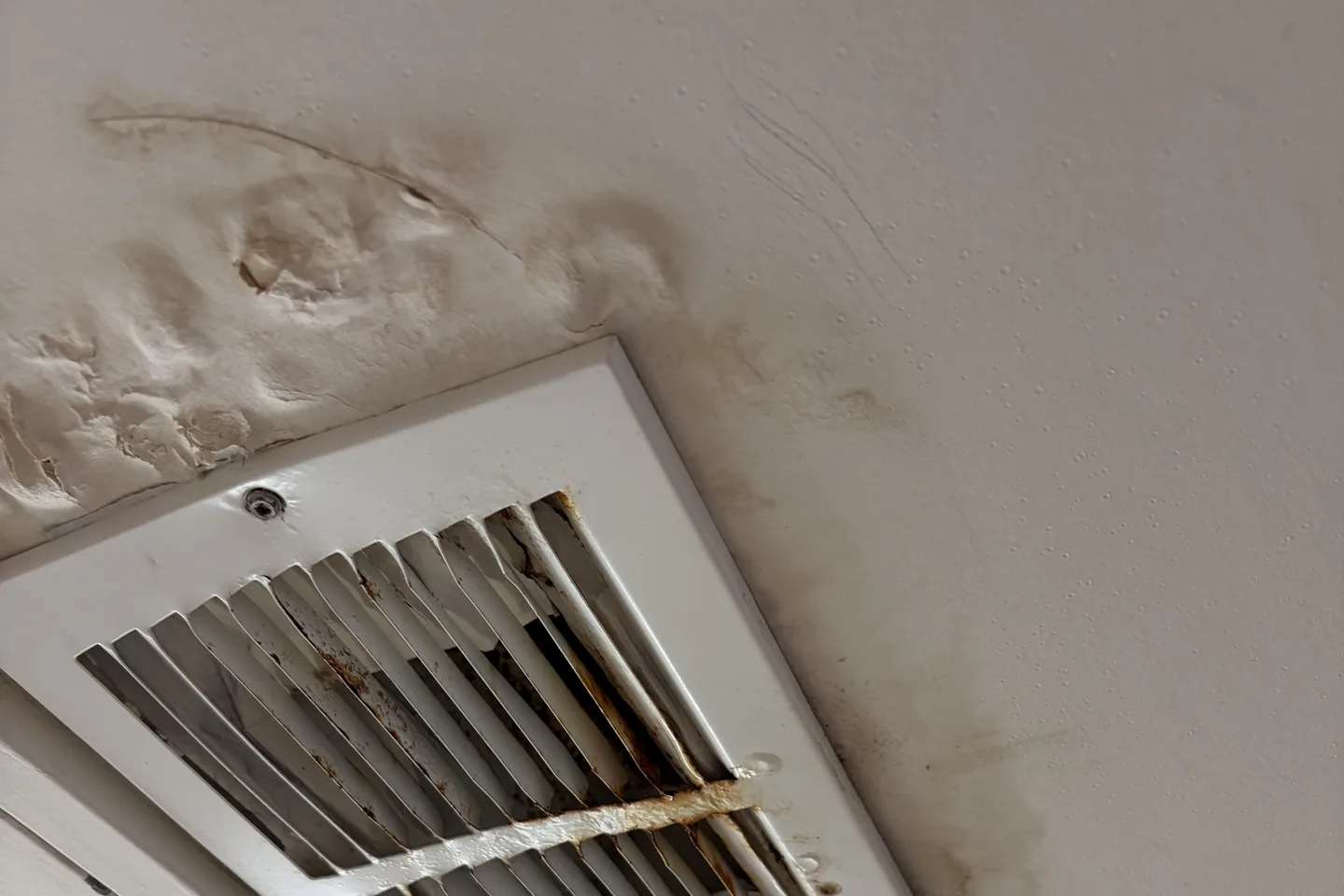
Active HVAC Leak and Wet Ceiling in a Dallas Bathroom
A Dallas property owner requested a limited mold assessment after tenants raised concerns about two bathrooms. The top-floor bathroom had a reported history of HVAC-related water leakage and prior repair attempts. During the assessment, water was actively dripping from a ceiling supply register beside the ceiling-mounted air handler, and surrounding drywall was wet, stained, blistered and bubbling. Comparative moisture responses were much higher by the register than at a same-ceiling reference area. No visible mold was observed on accessible bathroom surfaces, and indoor air samples were below the outdoor reference. The ceiling cavity and concealed materials were not opened.
View Case Study →Mold Found Below a Leaking Mini-Split
A commercial client in Waco, Texas requested a limited mold assessment after an employee raised concern about possible mold in a work area. The assessment focused on two rooms. In the Front Room, a wall-mounted mini-split was actively dripping, with evidence of water traveling down the wall to the floor line. Surface testing confirmed fungal growth behind the flexible cove base below the mini-split. Air samples from both rooms were below the outdoor reference and did not indicate airborne fungal amplification at the sampled locations and time.
View Case Study →Mold Confirmed Inside an HVAC Supply Plenum in Dallas
A homeowner who had recently purchased an older Dallas residence requested an independent assessment after an HVAC contractor opened the supply plenum and observed apparent fungal growth. Brown growth and a surface swab supported fungal growth on the sampled plenum surface. Room-air samples did not indicate airborne fungal amplification relative to the same-day outdoor reference. The homeowner had the plenum replaced by others. Five days later, follow-up indoor air samples remained low, with no detectable Aspergillus/Penicillium-like spores or hyphal fragments. No outdoor reference was collected on the second visit: this was an air re-check, not a formal clearance assessment.
View Case Study →