
- Location
- Dallas, Texas
- Property type
- Residential — older, recently purchased home
- Inspection type
- Limited mold assessment with follow-up air re-check
- Primary concern
- Visible growth inside an opened supply plenum and occupied-room airborne fungal conditions
- Inspection
- October 2026
The Situation
During HVAC work at the recently purchased older residence, the HVAC contractor opened the supply-side plenum and observed apparent fungal growth. The homeowner requested an independent assessment of the opened plenum and airborne fungal conditions in occupied living areas.
The first visit was on October 6, 2026. After that visit, the homeowner elected to have the original supply plenum replaced by others. The second visit was five days later, on October 11, 2026, at the homeowner's request.
What Was Inspected
- Visit 1: visual observation of the already-opened supply plenum, one surface swab from its exposed interior, one outdoor spore-trap sample, and one indoor air sample each in the daughter's room and living room.
- The assessor did not open the plenum, remove HVAC components, dismantle ductwork or inspect concealed HVAC components.
- Visit 2 consisted only of one living-room air sample and one daughter's-room air sample. No outdoor reference was collected during that visit.
- Mold Testing Dallas did not specify, observe or evaluate the replacement work. Ductwork beyond the original plenum, the air-handler interior and evaporator coil were not evaluated.
What We Observed
The plenum was already open when the assessor arrived. Brown growth was observed on exposed interior plenum surfaces, and a surface swab was collected from the exposed interior.
These observations and the laboratory findings apply to the sampled plenum surface. They do not establish fungal conditions throughout the HVAC system.
What Was Found Inside the Supply Plenum?
The HVAC contractor had already opened the supply plenum before the mold assessor arrived. The assessor observed brown growth on exposed interior surfaces and collected one surface swab. Mold Testing Dallas did not open or dismantle the HVAC system.
What Caused the Mold Inside the Plenum?
The assessment confirmed fungal growth in the plenum but did not determine the specific moisture mechanism that supported it.
Recommended HVAC evaluation included condensation on uninsulated or poorly insulated surfaces, coil condition, drain-pan condition and airflow conditions. These were items to investigate, not confirmed causes or findings of contamination, leakage or poor airflow.
Moisture / Building Conditions
Visit 1 indoor temperature: 75.9°F.
Visit 1 indoor relative humidity: 45.2%, below the commonly recommended 60% level at the time of inspection.
This single indoor humidity reading does not establish that condensation or higher humidity had never occurred at other times.
Sampling Performed
- Surface swab — direct microscopic examination — Exposed interior supply-plenum surface: Visit 1, October 6, 2026.
- Spore-trap air sampling — Outdoor reference, daughter's room and living room: Visit 1, October 6, 2026.
- Follow-up indoor air re-check — Living room and daughter's room: Visit 2, October 11, 2026. No same-day outdoor sample; not formal clearance.
Supply Plenum Surface Swab — Direct Microscopic Examination
| Finding | Reported result | Context |
|---|---|---|
| Aspergillus/Penicillium-like | Heavy | |
| Cladosporium | Moderate | |
| Ascospores, non-specified | Minor | |
| Hyphal fragments | Minor |
Visit 1 Air Results — October 6, 2026
| Sample | Finding | Reported result | Context |
|---|---|---|---|
| Outdoor reference | Total fungal | >10,000 /m³ | |
| Outdoor reference | Cladosporium | >8,100 /m³ | |
| Outdoor reference | Basidiospores | 1,200 /m³ | |
| Outdoor reference | Aspergillus/Penicillium-like | 170 /m³ | |
| Daughter's room | Total fungal | 600 /m³ | |
| Daughter's room | Aspergillus/Penicillium-like | 170 /m³ | |
| Daughter's room | Cladosporium | 170 /m³ | |
| Daughter's room | Bipolaris/Drechslera group | 85 /m³ | |
| Daughter's room | Curvularia | 85 /m³ | |
| Daughter's room | Epicoccum | 43 /m³ | |
| Daughter's room | Hyphal fragments | 43 /m³ | |
| Living room | Total fungal | 300 /m³ | |
| Living room | Cladosporium | 130 /m³ | |
| Living room | Ascospores; Basidiospores; Bipolaris/Drechslera group; Hyphal fragments | Detected at low counts | Individual concentrations not provided in the approved brief. |
| Living room | Aspergillus/Penicillium-like | Not detected | |
| All Visit 1 air samples | Stachybotrys; Chaetomium | Not detected |
Visit 2 Indoor Air Re-Check — October 11, 2026 (No Same-Day Outdoor Reference; Not Clearance)
| Sample | Finding | Reported result | Context |
|---|---|---|---|
| Living room | Total fungal | 170 /m³ | |
| Living room | Aspergillus/Penicillium-like; Hyphal fragments | Not detected | |
| Daughter's room | Total fungal | 380 /m³ | |
| Daughter's room | Aspergillus/Penicillium-like; Hyphal fragments | Not detected | |
| Daughter's room | Myrothecium; Nigrospora | Detected at low counts | The laboratory describes these as soil- and plant-associated fungal types; these low-count findings do not establish an indoor source. |
Two Indoor Sampling Events Five Days Apart
| Sample | Finding | Reported result | Context |
|---|---|---|---|
| Daughter's room — October 6 | Total fungal / Aspergillus/Penicillium-like | 600 / 170 /m³ | |
| Daughter's room — October 11 | Total fungal / Aspergillus/Penicillium-like | 380 / Not detected /m³ | |
| Living room — October 6 | Total fungal / Aspergillus/Penicillium-like | 300 / Not detected /m³ | |
| Living room — October 11 | Total fungal / Aspergillus/Penicillium-like | 170 / Not detected /m³ |
Confirmed Plenum Mold Did Not Mean the Room Air Was Elevated
The laboratory defines Heavy as more than three fungal structures per microscope field of view. Visible brown growth, Heavy Aspergillus/Penicillium-like and Moderate Cladosporium were interpreted as consistent with fungal growth on the sampled plenum surface. The microscopy does not identify Aspergillus or Penicillium to species.
Visit 1 daughter's-room total fungal was 600/m³ and living-room total fungal was 300/m³, both well below the same-day outdoor total of >10,000/m³. Daughter's-room Aspergillus/Penicillium-like was 170/m³, equal to the outdoor concentration; it was not detected in the living-room sample.
The Visit 1 room-air samples did not indicate airborne fungal amplification relative to outdoors at the sampled locations and time. Localized growth in an HVAC component does not automatically mean occupied-room air samples will be elevated during a particular event.
Air sampling is a snapshot, not proof that the room air was mold-free, that the plenum growth was harmless or that the plenum was not releasing spores.
Low-Count Laboratory Flags Require Context
The laboratory highlighted Bipolaris/Drechslera group, Curvularia and Epicoccum in the daughter's-room sample because they were numerically above the outdoor comparison. Each represented only one or two actual spores counted, at or near the analytical sensitivity of 43/m³. Such small differences should not automatically be interpreted as indoor amplification or a confirmed indoor source.
The Homeowner Replaced the Supply Plenum
After Visit 1, the homeowner elected to have the original supply plenum replaced by an HVAC contractor. Mold Testing Dallas did not specify, observe or evaluate the work. This was not remediation performed by Mold Testing Dallas, and no mold-remediation protocol was issued for the case.
What Did the Follow-Up Air Testing Show?
Five days after Visit 1, the assessor returned at the homeowner's request. Living-room total fungal was 170/m³ and daughter's-room total fungal was 380/m³. Aspergillus/Penicillium-like spores and hyphal fragments were not detected in either follow-up sample.
The daughter's-room sample included low-count Myrothecium and Nigrospora, described by the laboratory as soil- and plant-associated fungal types. Those low-count findings were not interpreted as a confirmed indoor source.
These are two indoor sampling events five days apart. No outdoor sample was collected on the second date, and the second visit was not a formal clearance assessment. The comparison table is not a statistically controlled before/after experiment.
What the Findings Suggested
Visible growth and the surface sample supported fungal growth on the sampled plenum interior. The Visit 1 room-air results did not indicate airborne amplification relative to the same-day outdoor reference.
The follow-up samples were low, but no same-day outdoor sample or evaluation of the replacement process was performed. The exact moisture mechanism and conditions in uninspected HVAC components remained undetermined.
Why the Follow-Up Was Still Useful
The second visit provided a snapshot of occupied-room airborne fungal conditions after the original plenum had been replaced. Results were low, lower than or comparable to the first indoor results, and without detectable Aspergillus/Penicillium-like or hyphal fragments. This does not demonstrate that replacement definitively solved the problem or that every HVAC component was free of growth.
No Mold Remediation Protocol Was Issued
No remediation protocol was issued based on the documented conditions. The affected supply plenum had been replaced by the homeowner's HVAC contractor. The primary remaining recommendation was to investigate conditions that could have allowed growth in the original plenum to reduce the likelihood of recurrence.
Older Home Consideration
Before disturbing HVAC insulation, duct insulation, mastics or painted building materials, the report recommended determining whether asbestos, lead-based paint or other hazardous-material requirements apply. The assessment did not establish the presence of these materials or a specific construction age.
Recommendations
- Have a qualified HVAC professional investigate conditions that could introduce moisture into supply-side components, including insulation and condensation conditions, coil and drain-pan condition, and airflow.
- Determine applicable hazardous-material requirements before disturbing older HVAC insulation, mastics or painted building materials.
- Use follow-up testing where appropriate for the specific inspection question; do not treat this air re-check as regulatory clearance.
What Homeowners Can Learn From This Case
Mold can be localized inside one HVAC component even when occupied-room air samples do not show airborne amplification.
Direct inspection of accessible components, surface sampling and indoor/outdoor air comparisons answer different questions. Conditions involving insulation, condensation, coil and drain-pan condition, and airflow may require HVAC-professional evaluation.
Removing a contaminated component does not automatically equal formal mold remediation. A follow-up air re-check is not the same thing as regulatory clearance, and the moisture mechanism still warrants investigation to reduce recurrence.
Questions About This Case
Can mold grow inside an HVAC supply plenum?
Yes. Moisture or condensation inside a supply-side HVAC component can create conditions that support fungal growth. In this Dallas case, brown growth was visible inside the plenum and laboratory testing confirmed fungal growth on the sampled surface.
What mold was found inside the supply plenum?
The plenum surface sample returned Heavy Aspergillus/Penicillium-like structures and Moderate Cladosporium, along with Minor ascospores and hyphal fragments.
Can HVAC mold be present even if room-air testing is not elevated?
Yes. In this case, fungal growth was confirmed inside the supply plenum while both occupied-room air samples remained well below the outdoor fungal concentration at the time of testing.
Does replacing a moldy plenum count as mold remediation clearance?
Not automatically. In this case, the homeowner had the plenum replaced by others and later requested an air re-check, but the replacement was not observed or evaluated by Mold Testing Dallas and the follow-up was not a formal post-remediation clearance assessment.
What happened to the air results after the plenum was replaced?
Five days later, the living room measured 170 fungal structures per cubic meter and the daughter's room measured 380. Aspergillus/Penicillium-like spores and hyphal fragments were not detected in either follow-up sample.
Why wasn't the follow-up considered a formal clearance?
No outdoor reference sample was collected during the follow-up visit, the replacement work was performed by others, and Mold Testing Dallas did not inspect or verify the replacement process.
Was the entire HVAC system inspected?
No. The assessment did not evaluate the full duct system, air-handler interior or evaporator coil.
What caused the mold in the original plenum?
The exact cause was not determined. The report recommended HVAC evaluation for possible moisture-related conditions including insulation, condensation, coil and drain-pan condition, and airflow.
Related Services
Concerned About Mold Inside Your HVAC System?
Visible growth inside a plenum, duct, register or other HVAC component does not always mean the entire system or room air is affected. Mold Testing Dallas can document the specific condition and use targeted surface or air sampling where appropriate.
Schedule a Mold InspectionInspection performed by Ethan Wright, TDLR Licensed Mold Assessment Technician (MAT #1589).
Related Real Inspection Cases
A separate HVAC case found mold isolated to a damaged duct branch. Another documented growth on the outside of AC condensate piping, rather than inside accessible ducts. Compare the leaking mini-split, active HVAC leak with wet ceiling, and bathroom exhaust-duct cases as different inspection questions. Here, growth was confirmed on the sampled supply-plenum interior while Visit 1 room-air samples remained comparatively low.
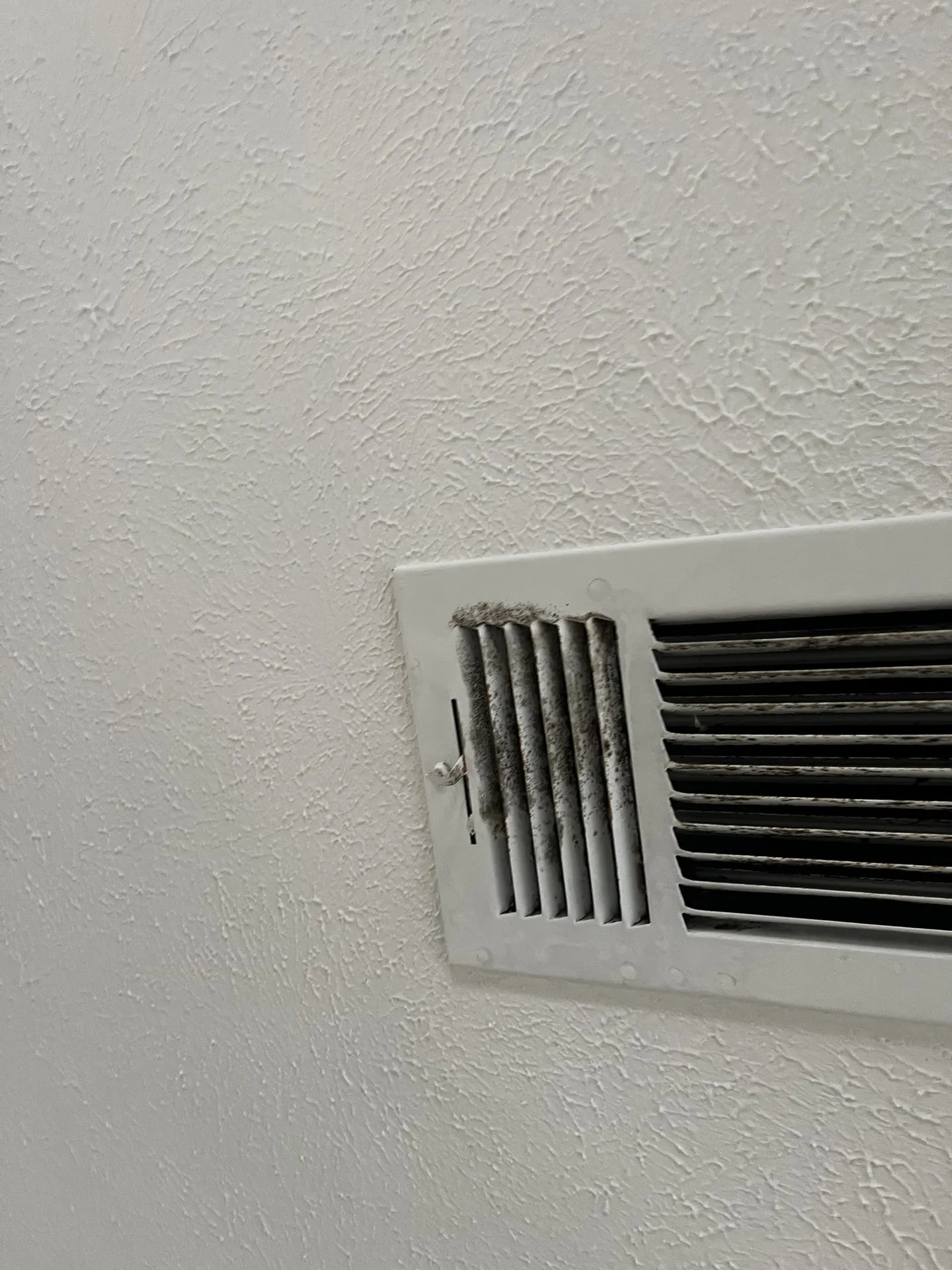
Mold Found Inside One HVAC Duct Branch in a Dallas Home
A Dallas homeowner requested an independent assessment after an HVAC contractor saw material inside supply ductwork that might have been microbial growth or dirt. Two playroom supply grills and accessible interior surfaces behind them showed visible growth. Both grills shared one duct branch with damaged jacket and insulation; the accessible air handler and other inspected runs showed no comparable growth. A swab from the left playroom grill returned Heavy Cladosporium, while the playroom air sample did not show amplification relative to an outdoor comparison at the sampled time.
View Case Study →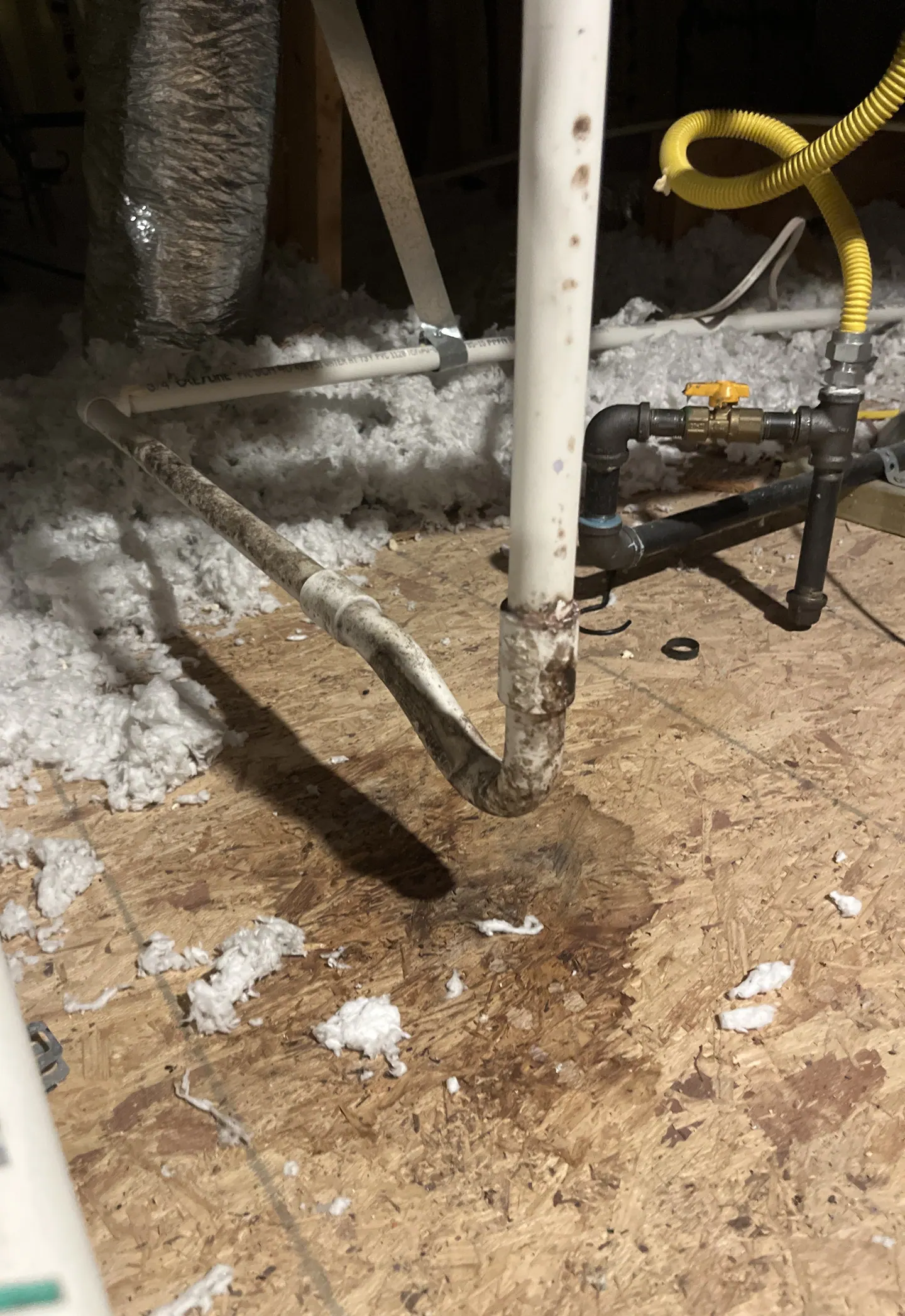
Mold on an AC Condensate Drain Line in a Dallas Attic
A Dallas homeowner requested an independent assessment after an HVAC technician noticed suspected growth on attic condensate piping. A surface swab supported fungal growth on the pipe exterior; no visible mold growth was observed inside accessible portions of the air handler or connected ductwork.
View Case Study →Mold Found Below a Leaking Mini-Split
A commercial client in Waco, Texas requested a limited mold assessment after an employee raised concern about possible mold in a work area. The assessment focused on two rooms. In the Front Room, a wall-mounted mini-split was actively dripping, with evidence of water traveling down the wall to the floor line. Surface testing confirmed fungal growth behind the flexible cove base below the mini-split. Air samples from both rooms were below the outdoor reference and did not indicate airborne fungal amplification at the sampled locations and time.
View Case Study →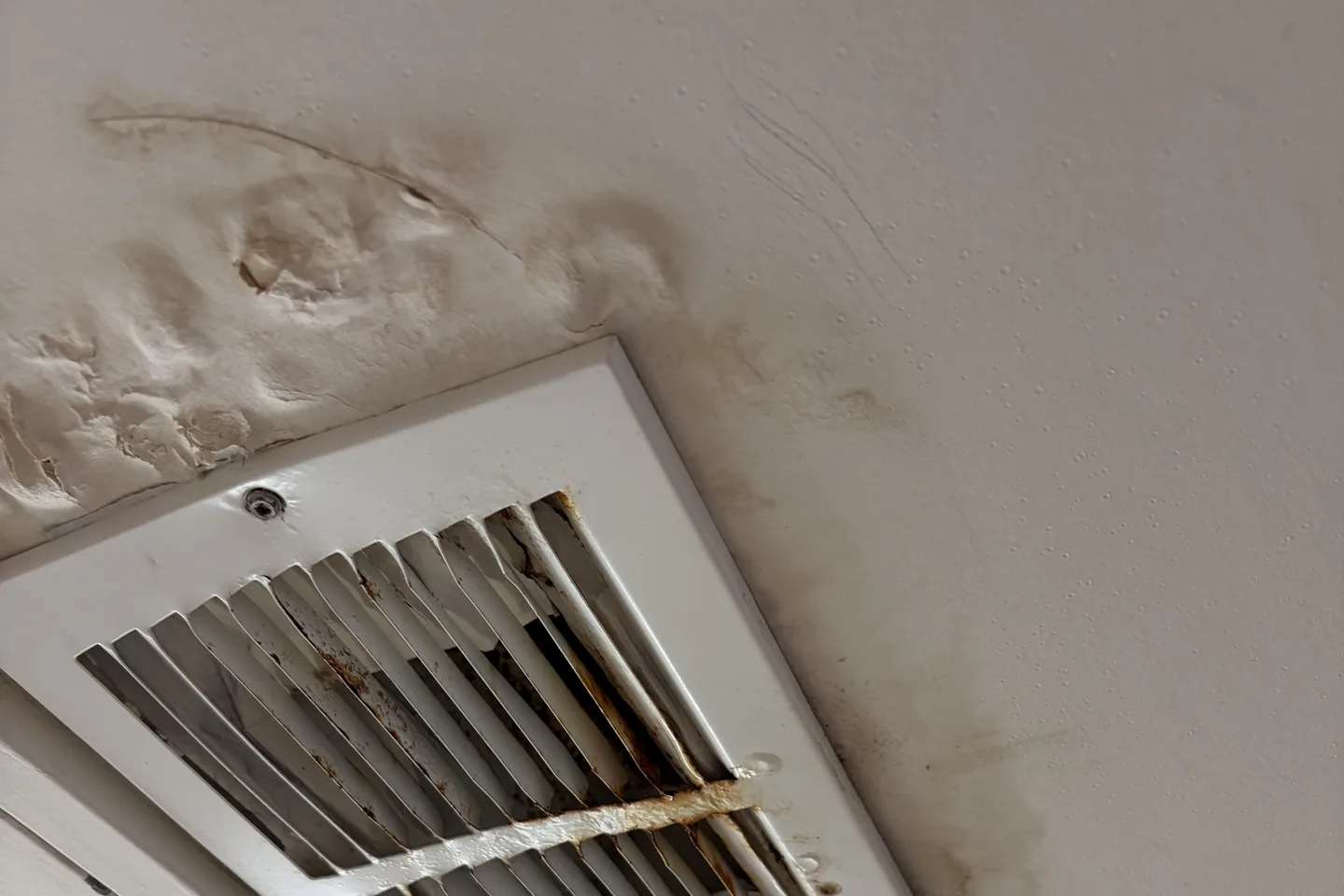
Active HVAC Leak and Wet Ceiling in a Dallas Bathroom
A Dallas property owner requested a limited mold assessment after tenants raised concerns about two bathrooms. The top-floor bathroom had a reported history of HVAC-related water leakage and prior repair attempts. During the assessment, water was actively dripping from a ceiling supply register beside the ceiling-mounted air handler, and surrounding drywall was wet, stained, blistered and bubbling. Comparative moisture responses were much higher by the register than at a same-ceiling reference area. No visible mold was observed on accessible bathroom surfaces, and indoor air samples were below the outdoor reference. The ceiling cavity and concealed materials were not opened.
View Case Study →Mold Found Inside a Bathroom Exhaust Duct in Grand Prairie
A homeowner requested evaluation of suspected mold in two bathroom shower areas and inside a downstairs bathroom exhaust vent. Surface samples from the upstairs shower, downstairs shower, and exhaust duct returned Minor fungal findings in the shower samples, which were not interpreted as active mold growth, and Heavy Cladosporium with Moderate hyphal fragments on the sampled interior duct surface.
View Case Study →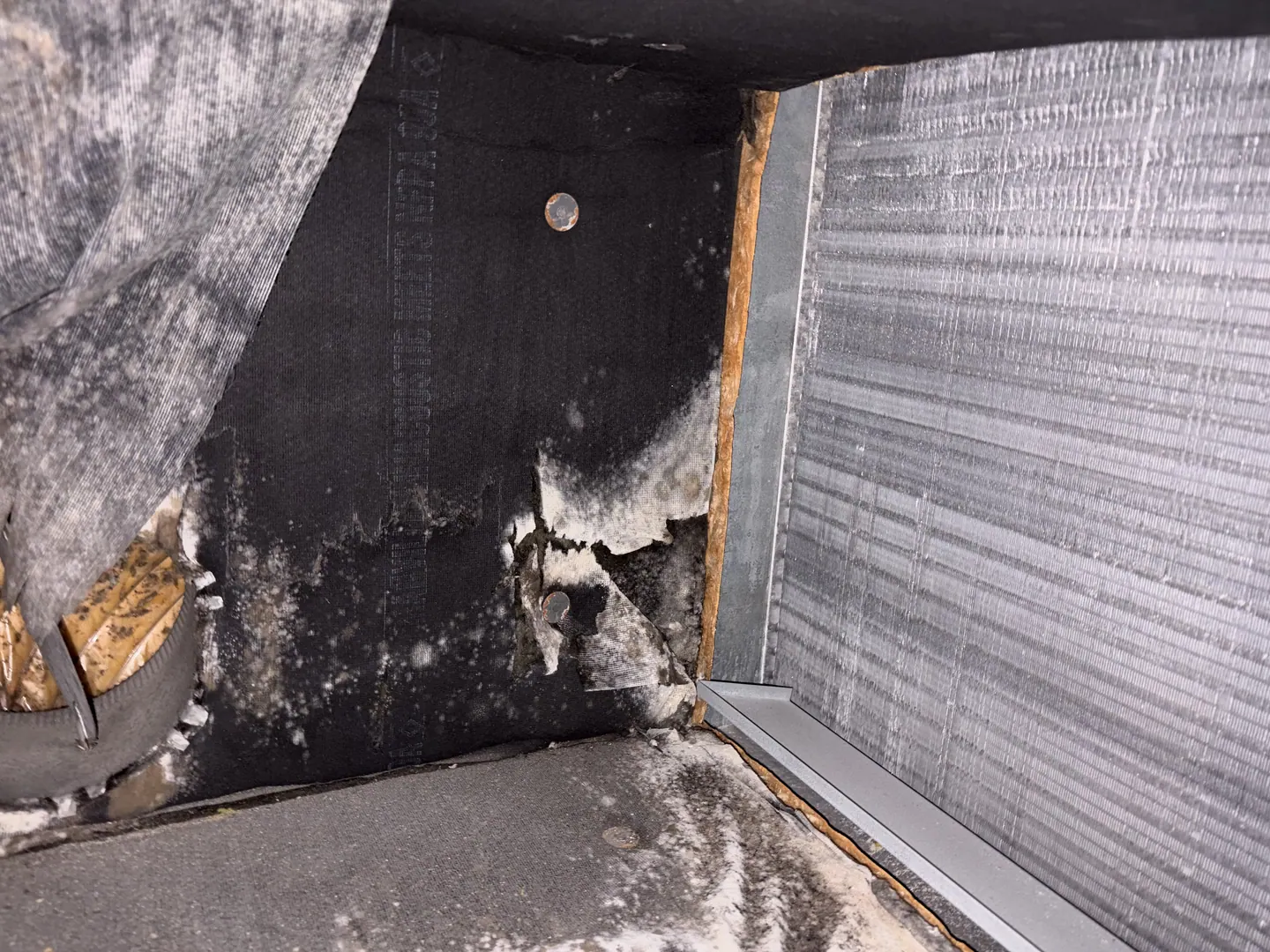
Mold Found Inside an HVAC Supply Plenum in a Dallas Home
A Dallas homeowner requested an independent assessment after an HVAC professional reported suspected growth inside an attic supply plenum. Accessible fiberglass duct-board liner showed extensive surface colonization. Surface swabs supported fungal growth inside the plenum and on a downstream living-room supply grill. No air samples were collected.
View Case Study →