
- Location
- Waco, Texas
- Property type
- Commercial manufacturing facility
- Inspection type
- Limited mold assessment
- Primary concern
- Condensate from a dripping mini-split and suspected mold behind wall trim
- Inspection
- September 2026
The Situation
A commercial client requested the assessment after an employee raised concern about possible mold in a work area. The inspected property was a commercial manufacturing facility in Waco, Texas. Mold Testing Dallas performed the limited assessment.
The assessment covered two rooms, identified here as the Front Room and Back Room. It included visual inspection of accessible surfaces, interior temperature and humidity readings, one air sample in each room, an outdoor reference air sample, and one surface swab from the Front Room.
What Was Inspected
- Accessible surfaces in the Front Room and Back Room were visually inspected. No wall, ceiling or floor assemblies were opened, and no building materials were removed.
- A short section of flexible cove base below the mini-split was temporarily pulled away from the wall only far enough to insert a swab. The cove base was not removed.
- Air sampling represented conditions at the sampled locations and time. The surface sample evaluated one specific location behind the cove base.
What Was Happening at the Mini-Split?
The wall-mounted ductless mini-split in the Front Room was actively dripping during inspection. Condensation droplets were observed on its discharge louvers and internal vanes. The wall beneath the mini-split showed evidence that water had run downward to the floor line.
At the base of the wall, the flexible cove base was pulled slightly away and suspected microbial growth was visible behind the trim. No other visible mold growth, water staining or musty odor was observed on accessible Front Room surfaces.
Back Room Findings
No visible mold growth or moisture-related condition was observed on accessible surfaces. There was no observed water staining, active leak or other moisture-related condition. The Back Room measured 71.9°F and 52.7% relative humidity, and its air sample measured 43/m³ with Basidiospores only.
These findings describe accessible surfaces and sampled conditions; they do not establish that concealed areas were free of mold.
Moisture / Building Conditions
The Front Room measured 71.7°F and 52.6% relative humidity. The Back Room measured 71.9°F and 52.7% relative humidity.
Both rooms were below the commonly referenced 60% relative-humidity guideline at inspection. The documented condition was associated with localized water from the dripping mini-split rather than evidence of a general high-humidity problem in the rooms.
These readings describe the inspection period and do not establish that indoor humidity could never have varied at other times.
Sampling Performed
- Surface swab / direct microscopic examination — Front Room, behind flexible cove base at the base of the wall below the mini-split: The trim was pulled away only far enough to insert a swab; it was not removed.
- Air sample — Front Room
- Air sample — Back Room
- Outdoor reference air sample — Outdoors
Surface Sample Results
| Sample | Finding | Reported result | Context |
|---|---|---|---|
| Front Room, behind cove base below mini-split | Aspergillus/Penicillium-like structures | Heavy | |
| Front Room, behind cove base below mini-split | Alternaria | Moderate | |
| Front Room, behind cove base below mini-split | Hyphal fragments | Moderate | |
| Front Room, behind cove base below mini-split | Stachybotrys | Minor | |
| Front Room, behind cove base below mini-split | Ulocladium | Minor | |
| Front Room, behind cove base below mini-split | Non-specified spore | Minor |
Air Sample Comparison
| Sample | Finding | Reported result | Context |
|---|---|---|---|
| Outdoor reference | Total fungal | Approximately 4,000 /m³ | Outdoor reference at the time of sampling; not a calculated total. |
| Outdoor reference | Cladosporium | 2,200 /m³ | |
| Outdoor reference | Basidiospores | 430 /m³ | |
| Outdoor reference | Ascospores | 380 /m³ | |
| Outdoor reference | Aspergillus/Penicillium-like | 340 /m³ | |
| Outdoor reference | Hyphal fragments | 430 /m³ | |
| Front Room | Total fungal | 510 /m³ | Below the outdoor reference at the sampled location and time. |
| Front Room | Cladosporium | 510 /m³ | Cladosporium only; no other fungal spore types reported. |
| Back Room | Total fungal | 43 /m³ | Below the outdoor reference at the sampled location and time. |
| Back Room | Basidiospores | 43 /m³ | Basidiospores only; no other fungal spore types reported. |
Understanding the Laboratory Rating
Heavy Aspergillus/Penicillium-like structures, Moderate Alternaria and Moderate hyphal fragments, together with visible suspected growth and documented condensate wetting, were interpreted as consistent with fungal growth on the sampled surface.
The surface ratings describe findings at that sampled point. They are not airborne concentrations and do not determine how far growth extended behind the trim or into concealed assemblies.
Minor Stachybotrys in the Surface Sample
Minor Stachybotrys was detected in the surface sample collected behind the cove base. The dominant finding on that sample was Heavy Aspergillus/Penicillium-like structures; Stachybotrys was present only at a Minor rating.
The finding applies to the specific sampled surface. It does not establish a severe whole-building mold problem or support a health-risk conclusion.
What the Findings Suggested
The combined observations and surface findings documented localized fungal growth behind the cove base below the mini-split. Indoor air results did not indicate room-wide airborne fungal amplification relative to the outdoor reference at the sampled locations and time.
Air testing and surface testing answer different questions. The lower indoor air results did not disprove the confirmed localized surface growth.
What Caused the Mold?
The assessment associated the fungal growth below the mini-split with condensate from the actively dripping equipment. Documented evidence included active dripping, condensation on the louvers and vanes, evidence of water travel down the wall, and growth behind the cove base at the termination point of that water path.
The assessment did not determine the mechanical reason for the dripping. Possible drainage or condensation issues were referred to a qualified HVAC technician; a clogged condensate drain was not established.
Why This Case Matters in a Commercial Building
Localized moisture problems from wall-mounted HVAC equipment can occur in offices, manufacturing facilities, break rooms, storage rooms and other commercial spaces. A concern may arise in one employee work area even when the room does not have elevated general humidity, the air sample is below outdoors, and an adjacent room does not show the same condition.
This case documents building observations and sample results. It does not attribute an employee's concerns to mold or establish medical causation.
Professional Remediation Protocol
A licensed Texas Mold Assessment Consultant separately prepared the formal remediation protocol. It addressed the affected Front Room wall beneath the mini-split and called for controlled remediation of affected materials after the mini-split was removed and the moisture source was corrected.
The professional protocol is separate from this public case study. Detailed remediation procedures are not reproduced here, and this article is not DIY remediation guidance. The available account does not establish that remediation or clearance was completed.
Recommendations
- Have a qualified HVAC technician evaluate and correct why the mini-split is dripping.
- Stop water from reaching the wall before or alongside mold-related corrective work.
- Use a TDLR-licensed Mold Remediation Contractor for the affected Front Room area in accordance with the Mold Assessment Consultant's protocol.
- Avoid disturbing the affected cove base and wall before remediation.
- If additional suspected growth is exposed, stop uncontained cleaning or disturbance and obtain professional guidance.
- Use an independent licensed Mold Assessment Consultant for post-remediation assessment and clearance where required.
- Maintain indoor relative humidity below 60%.
- Periodically check mini-split equipment for condensate leaks or dripping.
What Homeowners Can Learn From This Case
For property managers and homeowners, a mini-split leak can create a highly localized mold condition hidden behind trim at the base of a wall. This commercial assessment illustrates why the moisture pathway and the specific surface matter.
When a mini-split is dripping, relevant areas for professional evaluation include louvers and internal vanes, the wall directly beneath the equipment, baseboard or cove base, the flooring edge, the concealed surface behind removable trim, condensate drainage, and recurring water tracks. Avoid disturbing affected trim or suspected growth before professional guidance.
Air testing and surface testing provide different information. In this case, air testing did not indicate room-wide amplification at sampling, while surface testing confirmed localized fungal growth.
Questions About This Case
Can a leaking mini-split cause mold on a wall?
Yes. If condensate repeatedly runs down a wall or becomes trapped behind trim, it can create conditions that support fungal growth. In this case, mold was confirmed behind the cove base directly below an actively dripping mini-split.
Can mold grow behind baseboard or cove base?
Yes. Trim at the bottom of a wall can conceal moisture and fungal growth. In this case, suspected growth became visible only after the flexible cove base was gently pulled away from the wall.
Can a mini-split leak even if indoor humidity is normal?
Yes. Localized condensate leakage is different from a whole-room humidity problem. The Front Room measured 52.6% RH at the time of inspection even though the mini-split was actively dripping.
Can an air mold test be normal when mold is growing on a wall?
Yes. Air sampling is a snapshot of airborne conditions, while surface testing evaluates a specific material. In this case, the Front Room air sample was below the outdoor reference even though surface testing confirmed fungal growth behind the cove base.
What mold was found below the mini-split?
The surface sample returned Heavy Aspergillus/Penicillium-like structures, Moderate Alternaria, Moderate hyphal fragments, and Minor Stachybotrys, Ulocladium and non-specified spores.
Does Stachybotrys automatically mean a severe whole-building mold problem?
No. A laboratory finding applies to the specific sample and location tested. In this case, Stachybotrys was detected at a Minor rating on one surface sample behind the cove base, while the dominant finding was Heavy Aspergillus/Penicillium-like.
Why was there mold when the room-air sample was lower than outdoors?
Localized fungal growth does not always produce elevated airborne concentrations at the exact place and time an air sample is collected. Surface and air samples provide different types of information.
Can a commercial building have a localized mold problem without elevated room-air results?
Yes. In this case, localized fungal growth was confirmed below a leaking mini-split even though indoor air concentrations in both rooms were below the outdoor reference at the time of sampling.
Related Services
Mini-Split Leaking or Concerned About Mold in Dallas?
If a ductless AC is dripping, leaving water on the wall, or creating suspected mold behind trim, Mold Testing Dallas can evaluate the condition and document whether fungal growth is present.
Schedule a Mold InspectionInspection performed by Ethan Wright, TDLR Licensed Mold Assessment Technician (MAT #1589).
Related Real Inspection Cases
The Dallas HVAC cases below involve different sampled locations, including ductwork and a supply plenum. This Waco case instead involved condensate traveling down a wall from a ductless mini-split and fungal growth behind wall trim. The Fort Worth condensate-overflow case provides another documented moisture-source comparison.
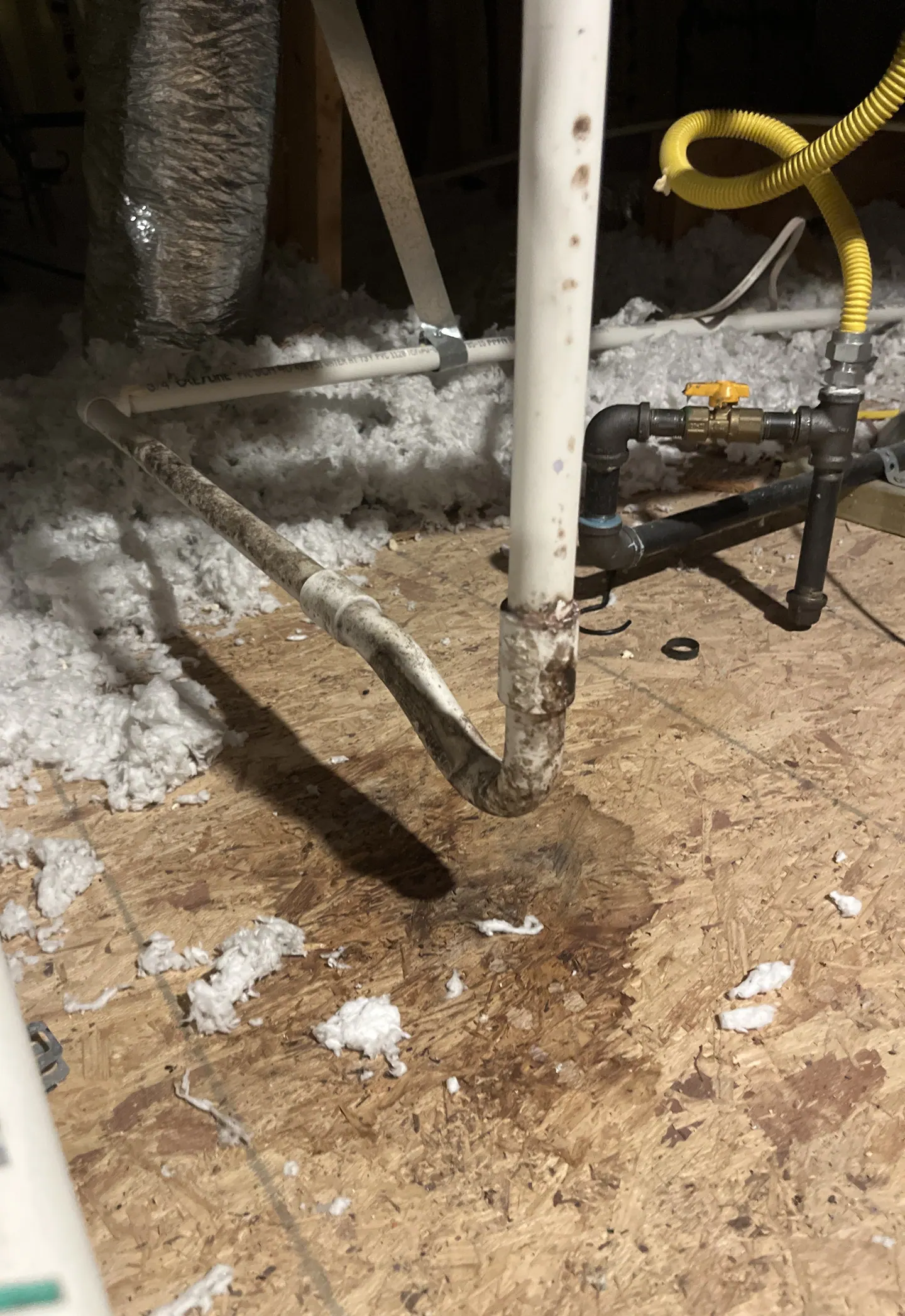
Mold on an AC Condensate Drain Line in a Dallas Attic
A Dallas homeowner requested an independent assessment after an HVAC technician noticed suspected growth on attic condensate piping. A surface swab supported fungal growth on the pipe exterior; no visible mold growth was observed inside accessible portions of the air handler or connected ductwork.
View Case Study →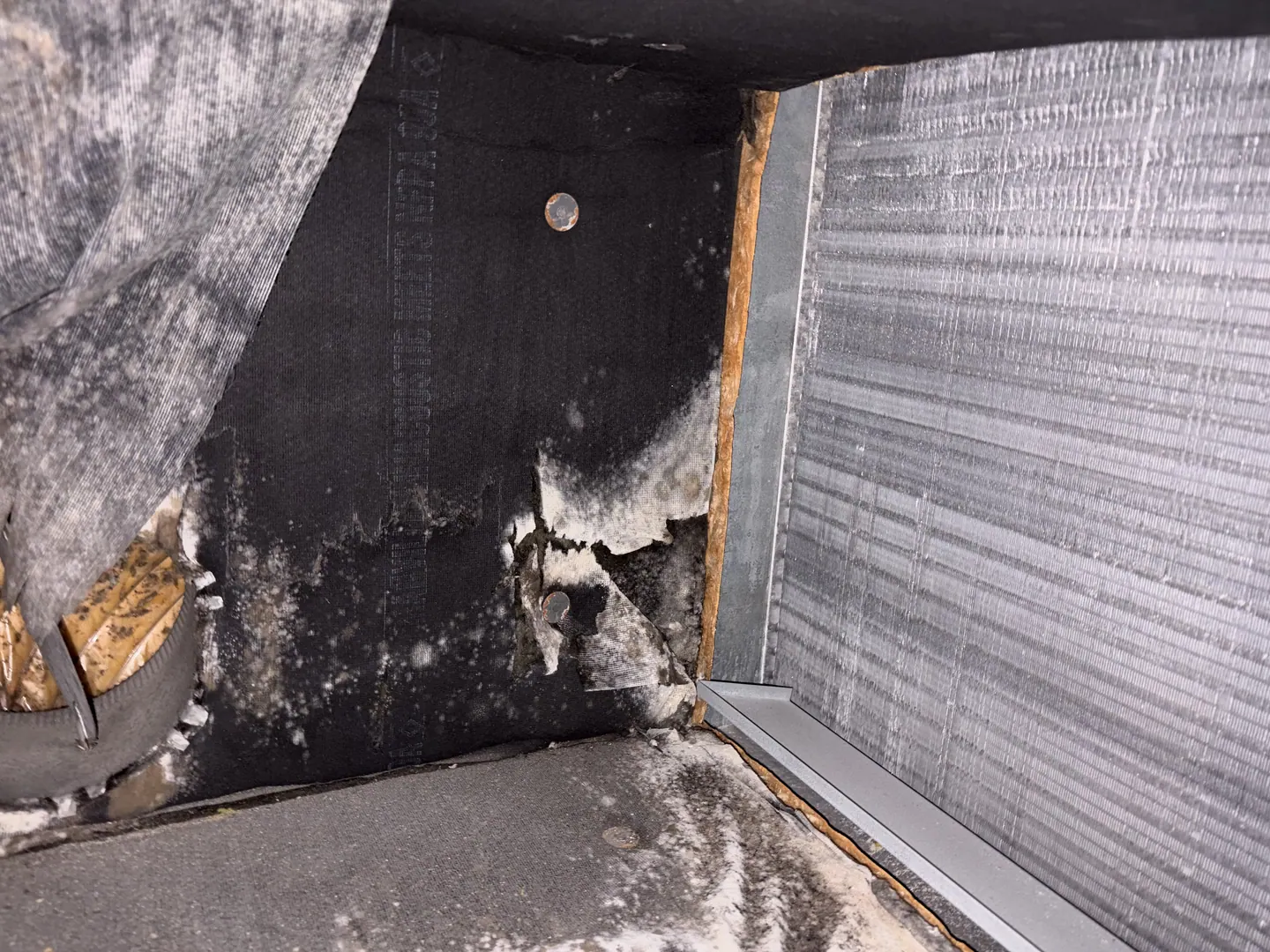
Mold Found Inside an HVAC Supply Plenum in a Dallas Home
A Dallas homeowner requested an independent assessment after an HVAC professional reported suspected growth inside an attic supply plenum. Accessible fiberglass duct-board liner showed extensive surface colonization. Surface swabs supported fungal growth inside the plenum and on a downstream living-room supply grill. No air samples were collected.
View Case Study →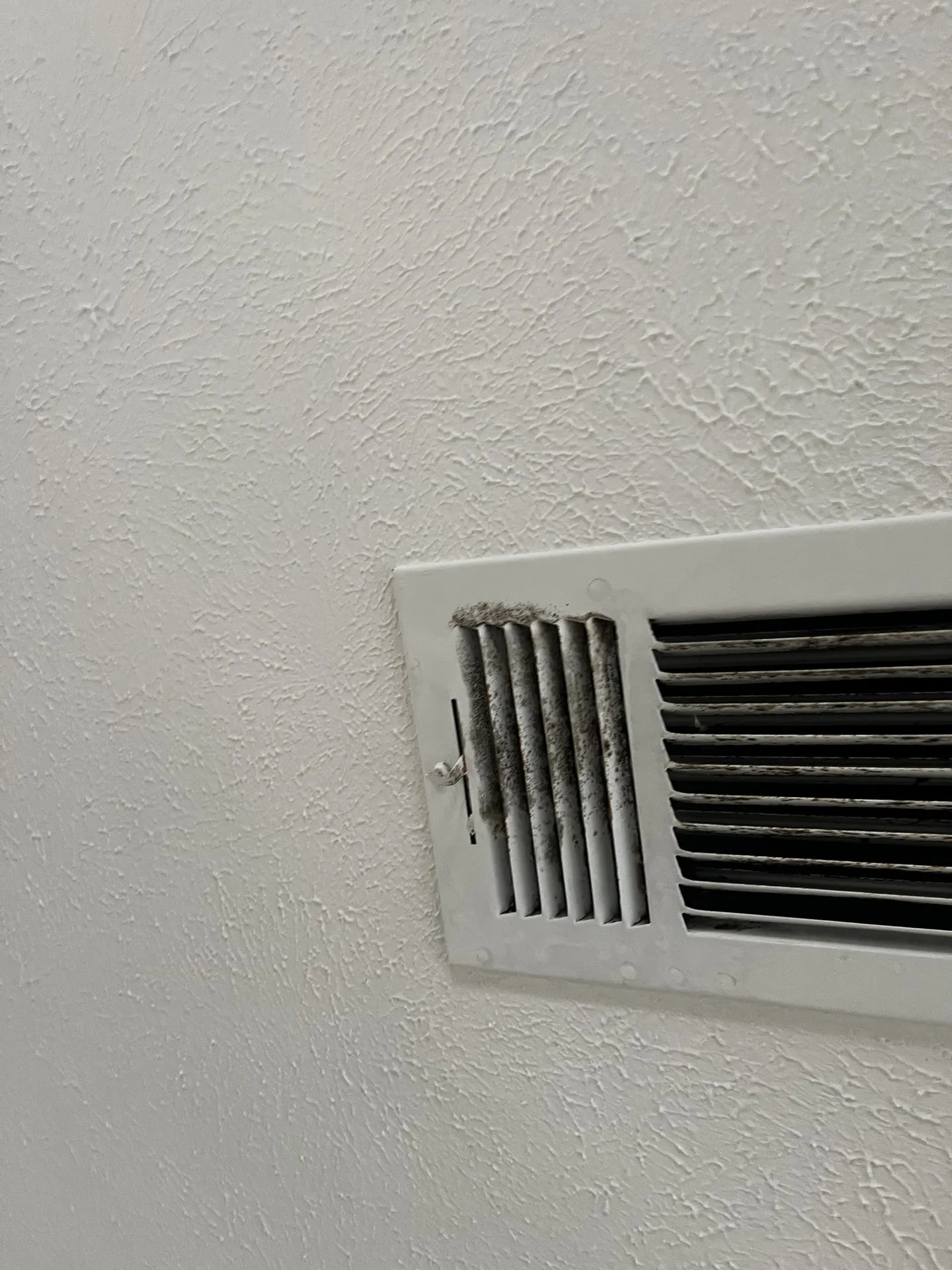
Mold Found Inside One HVAC Duct Branch in a Dallas Home
A Dallas homeowner requested an independent assessment after an HVAC contractor saw material inside supply ductwork that might have been microbial growth or dirt. Two playroom supply grills and accessible interior surfaces behind them showed visible growth. Both grills shared one duct branch with damaged jacket and insulation; the accessible air handler and other inspected runs showed no comparable growth. A swab from the left playroom grill returned Heavy Cladosporium, while the playroom air sample did not show amplification relative to an outdoor comparison at the sampled time.
View Case Study →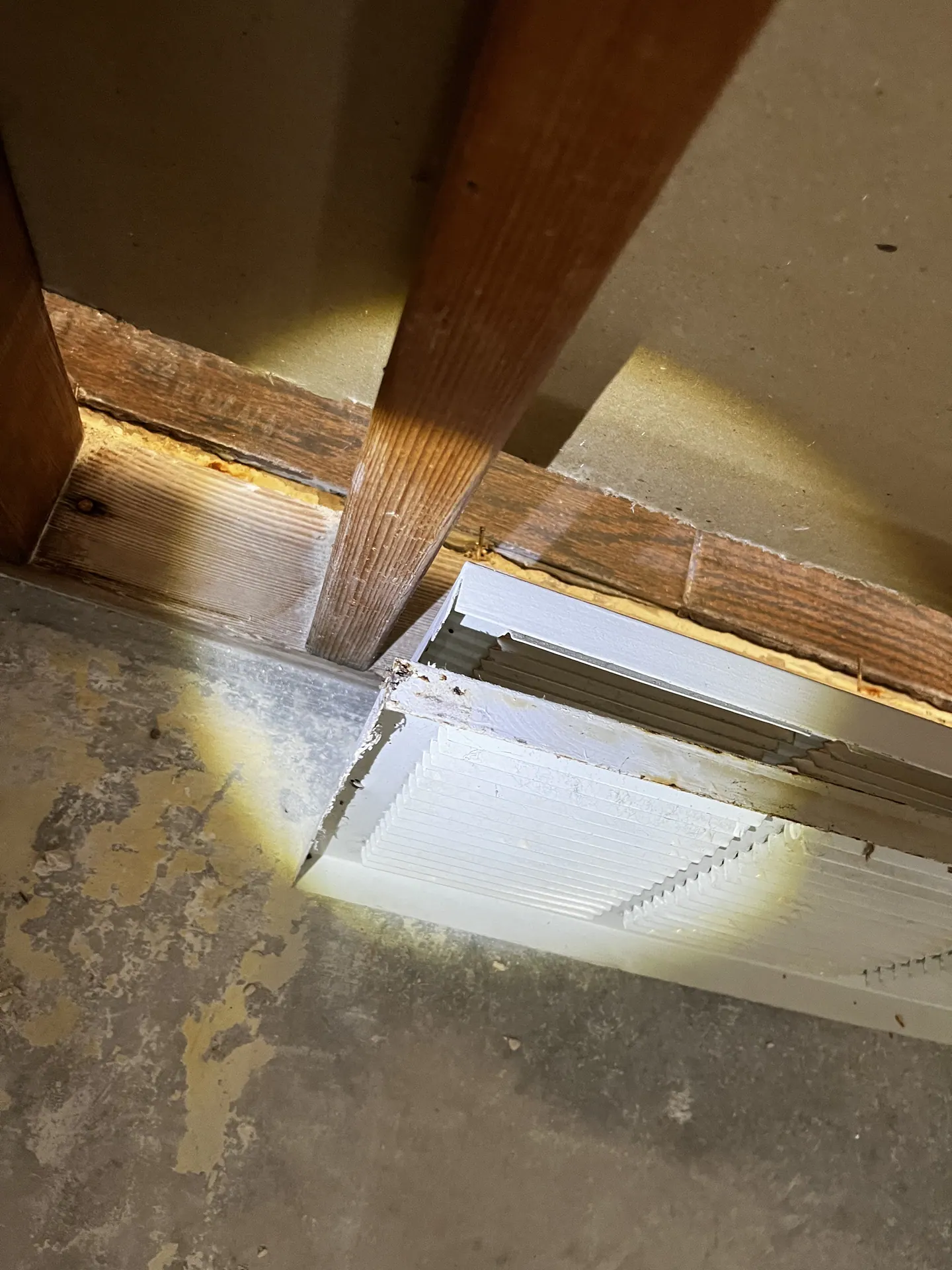
Mold Found After an AC Condensate Drain Overflow in a Fort Worth Home
A reported HVAC condensate-drain backup flooded the HVAC closet and adjoining rooms of a Fort Worth attached duplex residence while the homeowner was away. A restoration contractor had already made flood cuts and removed portions of flooring before the mold assessment. Six surface samples documented different findings across the affected areas: Heavy Stachybotrys at the HVAC-closet concrete-floor surface, Heavy Chaetomium at a water-affected bedroom wall, and Heavy Cladosporium with Heavy hyphal fragments on a bedroom supply register. No air samples were collected.
View Case Study →