
- Location
- Dallas, Texas
- Property type
- Single-family residential
- Inspection type
- Limited mold assessment
- Primary concern
- Suspected growth inside the attic HVAC supply plenum
- Inspection
- September 2026
- Published
- September 2026
The Situation
An HVAC service professional reported suspected mold growth inside the home's attic HVAC supply plenum. The homeowner requested an independent assessment to document the condition, evaluate accessible HVAC components, and collect samples for laboratory analysis.
The limited assessment included accessible living areas, the attic air handler and supply plenum, visible ceiling supply grills, ambient measurements, and two surface swabs.
What Was Inspected
- The supply plenum was viewed and sampled through the existing opening at the air-handler cabinet. No plenum or duct material was cut, dismantled, or removed.
- Building materials were not removed, and wall, ceiling, and floor assemblies were not opened. Concealed duct runs and building cavities were not evaluated.
What We Observed
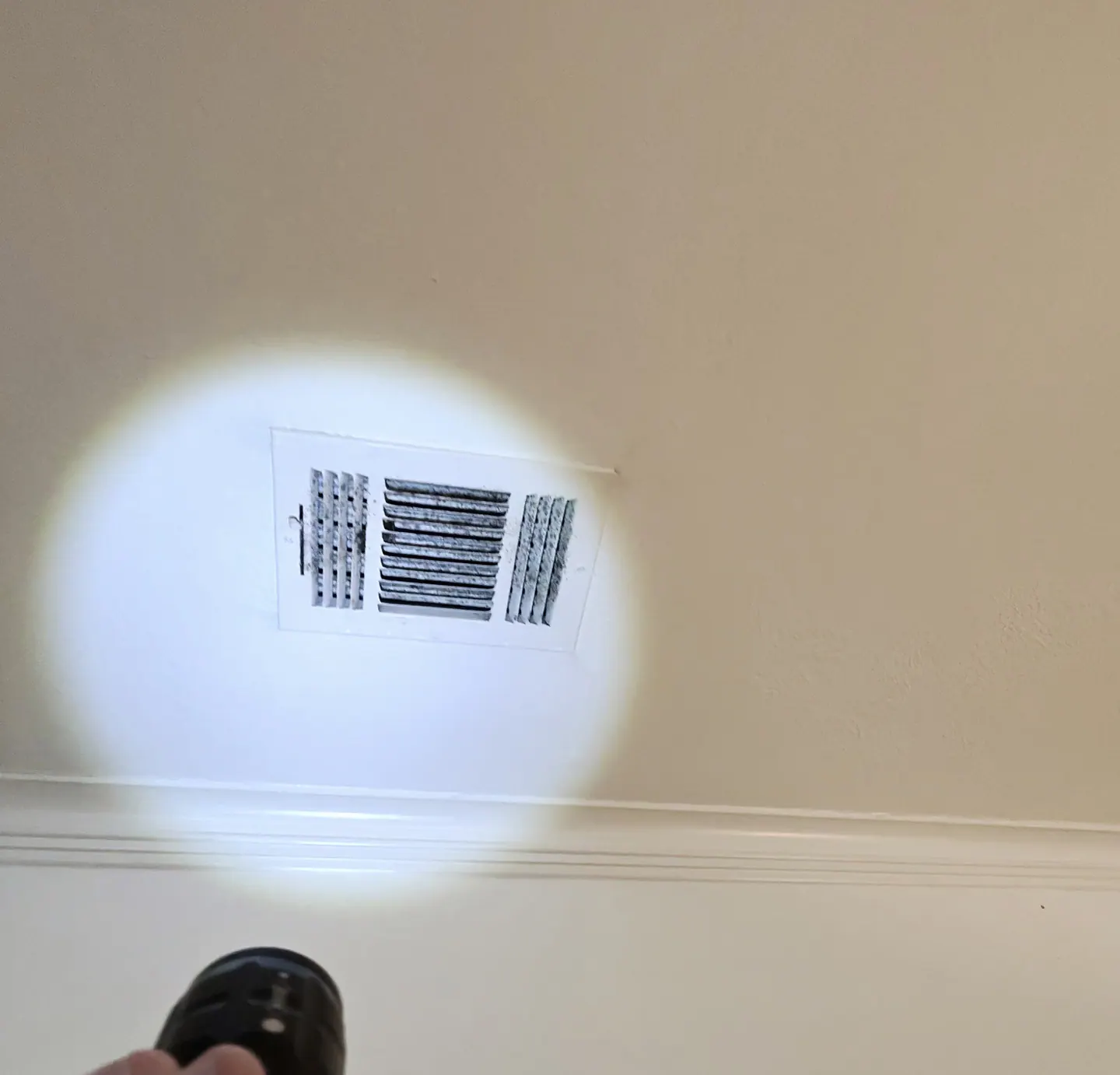
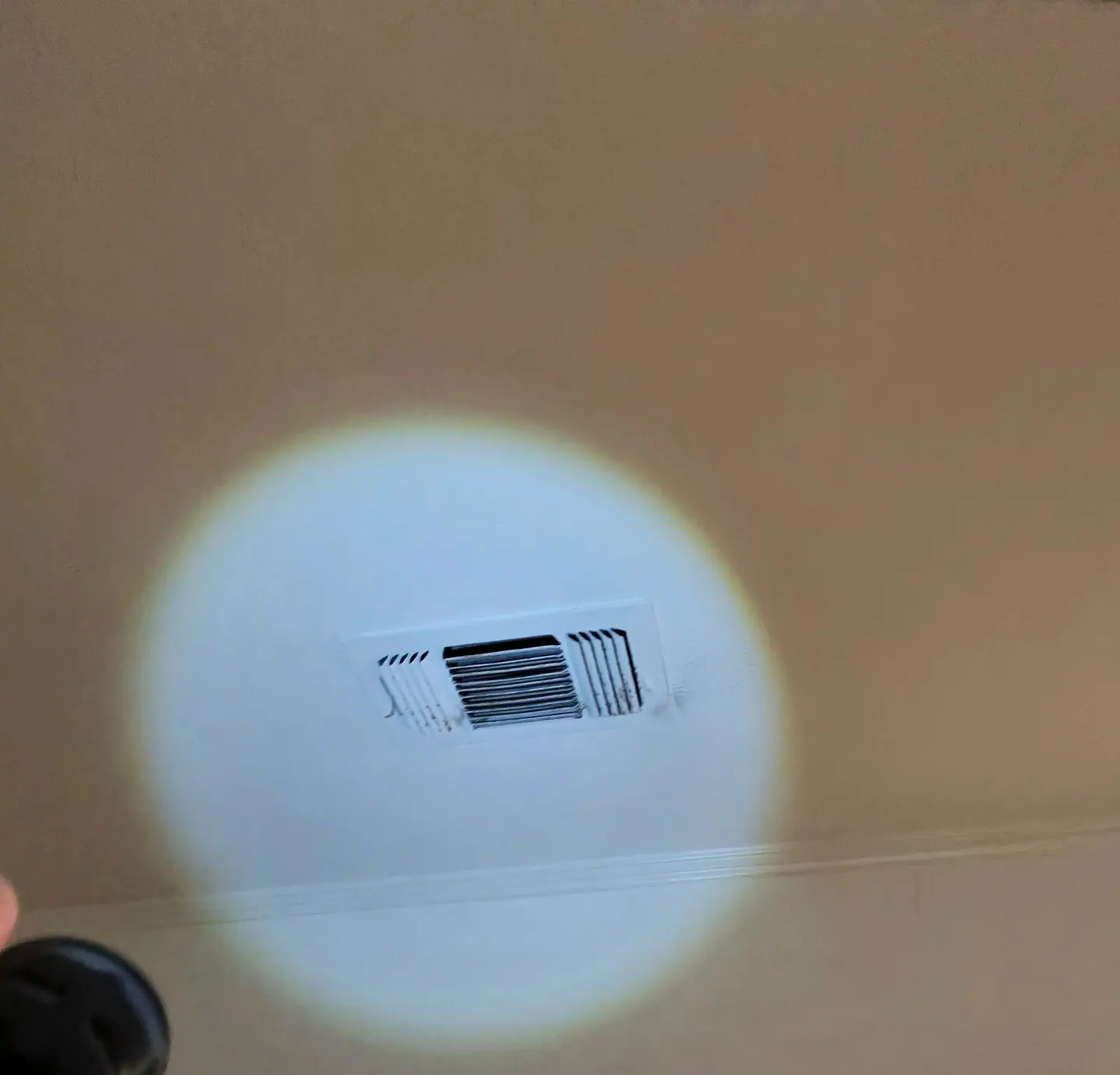
The accessible HVAC supply-plenum interior showed widespread surface colonization rather than one isolated spot. Separately, the living-room and bedroom ceiling supply grills had dark discoloration. Only the plenum and living-room grill were sampled.
In accessible living areas, no visible mold growth was observed on finish surfaces apart from the supply grills described in the report. No active water intrusion, standing water, or water-stained finishes were observed on accessible finish surfaces. Concealed areas were not opened.
What Was Found Inside the HVAC Supply Plenum?
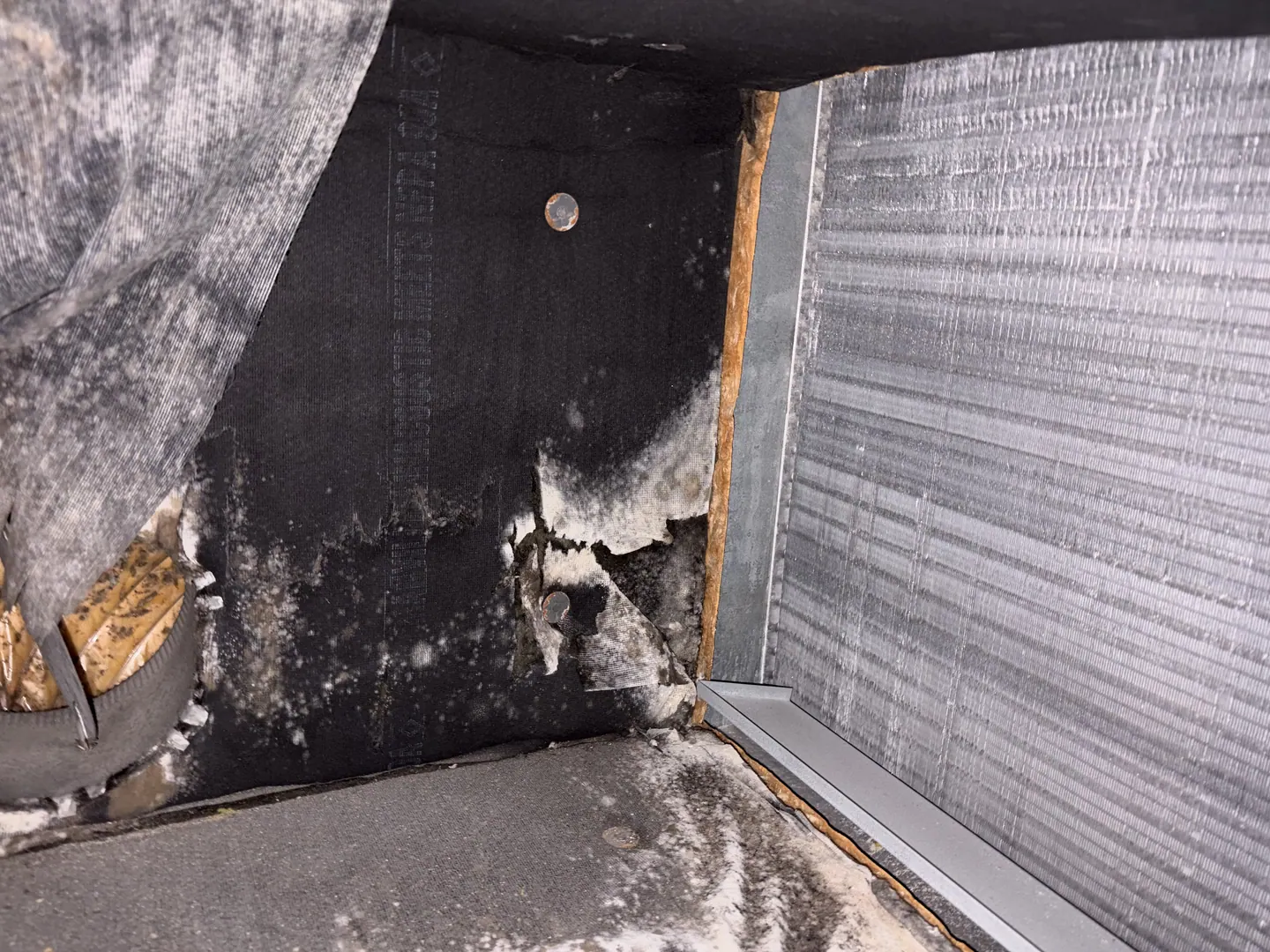
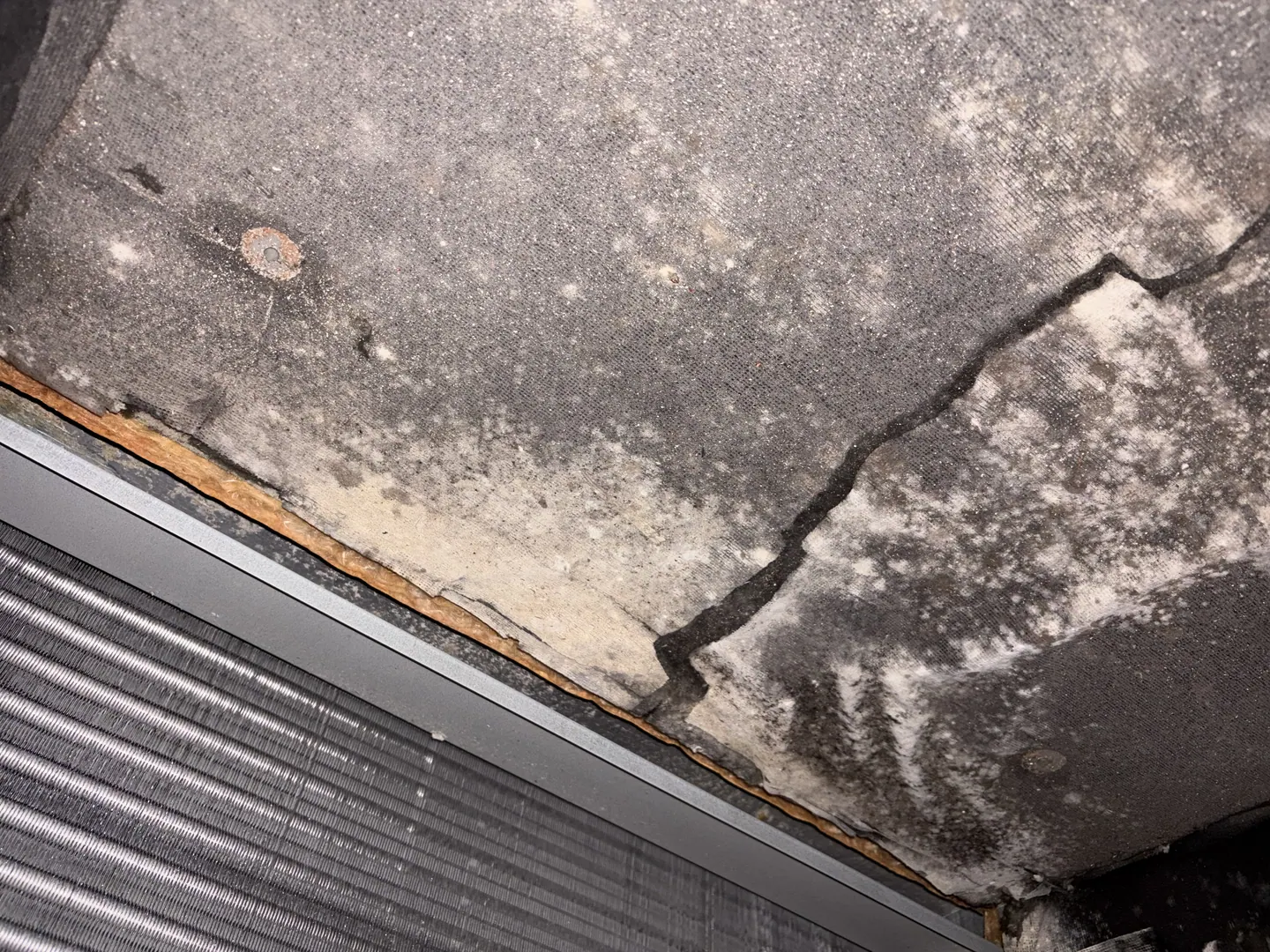
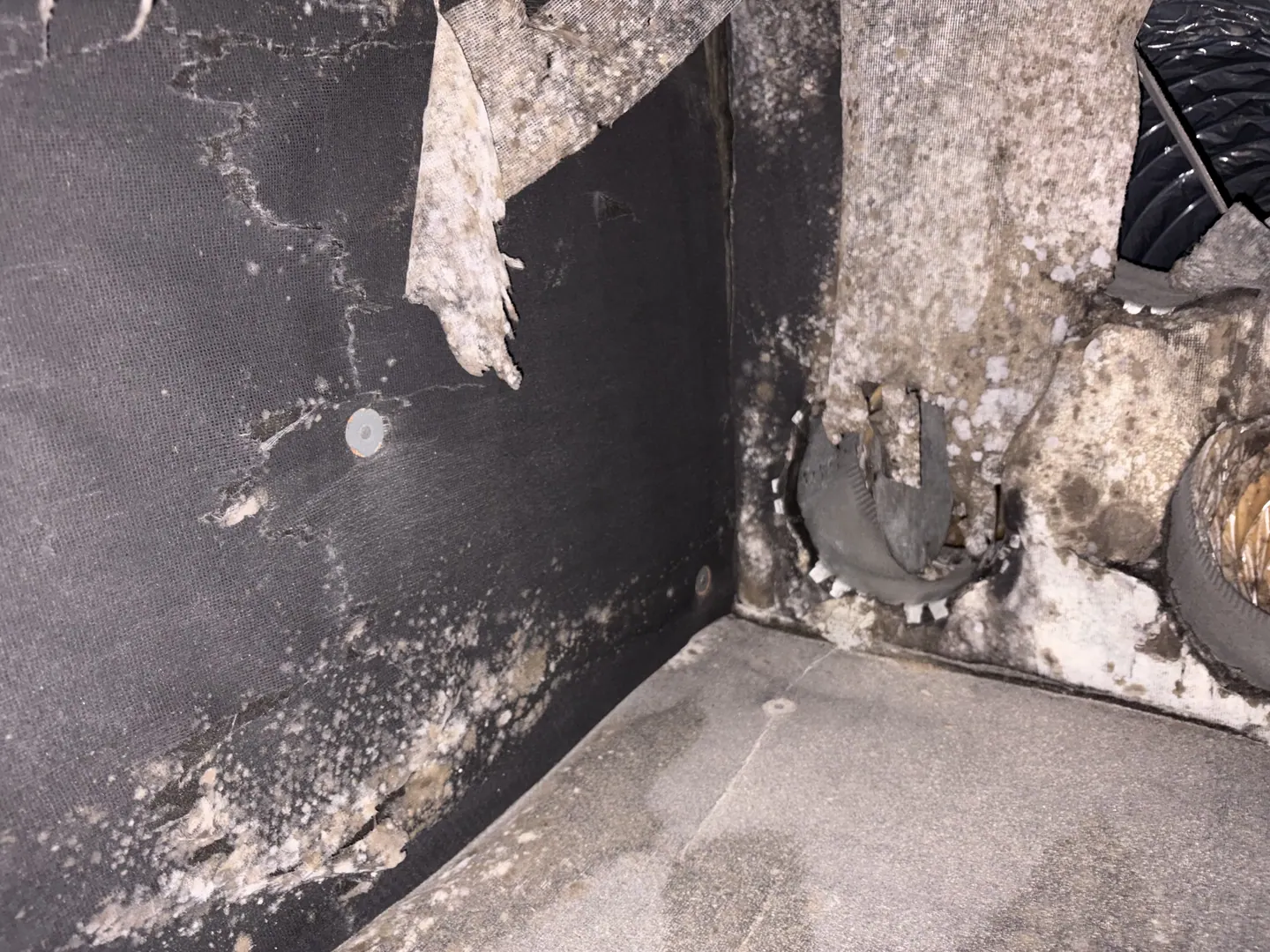
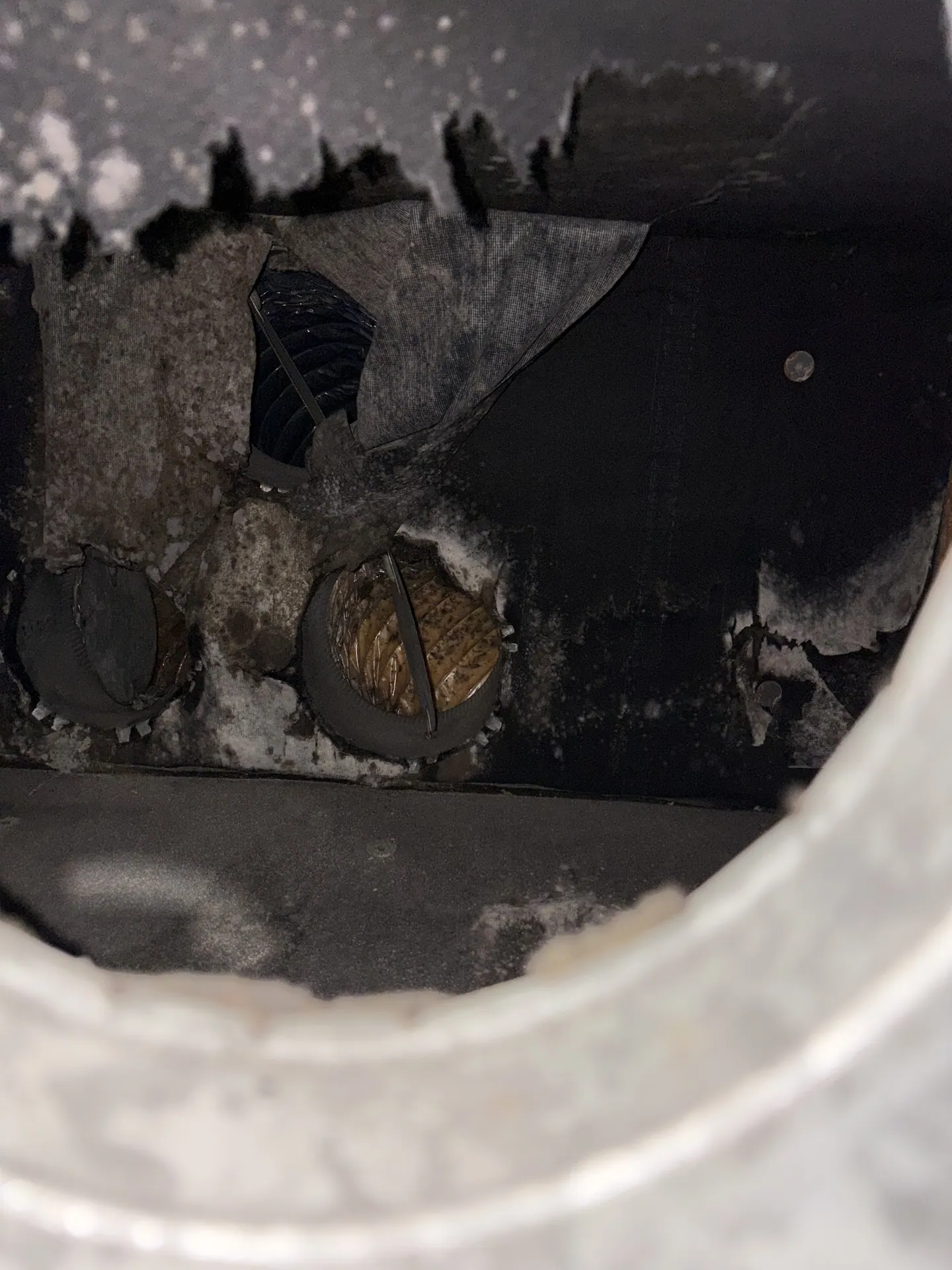
The accessible plenum interior consisted of fiberglass duct-board material. Extensive white and gray colonization appeared on multiple accessible surfaces: the plenum floor, vertical liner panels adjacent to the evaporator coil, and liner around flexible-duct takeoff collars.
Parts of the facing were torn, delaminated, and hanging loose. Colonization was visible on exposed liner facing and underlying duct-board material. Dark discoloration and debris were also present on the plenum floor and near the base of the coil. These observations describe accessible surfaces, not concealed duct runs.
Mold Was Also Confirmed on a Downstream Supply Grill
Dark discoloration followed the louvers and face of the living-room ceiling supply grill, concentrated along its air-discharge path. A surface swab from this downstream grill returned findings consistent with fungal growth on the sampled surface.
The sampled grill and accessible supply plenum both showed fungal growth; these findings were consistent with one another. The assessment did not establish that the plenum caused the grill condition.
What About the Bedroom Supply Grill?
The bedroom ceiling supply grill had visually similar dark discoloration, but it was not sampled. Its condition remains undetermined; the living-room lab result cannot be applied to the bedroom grill.
Moisture / Building Conditions
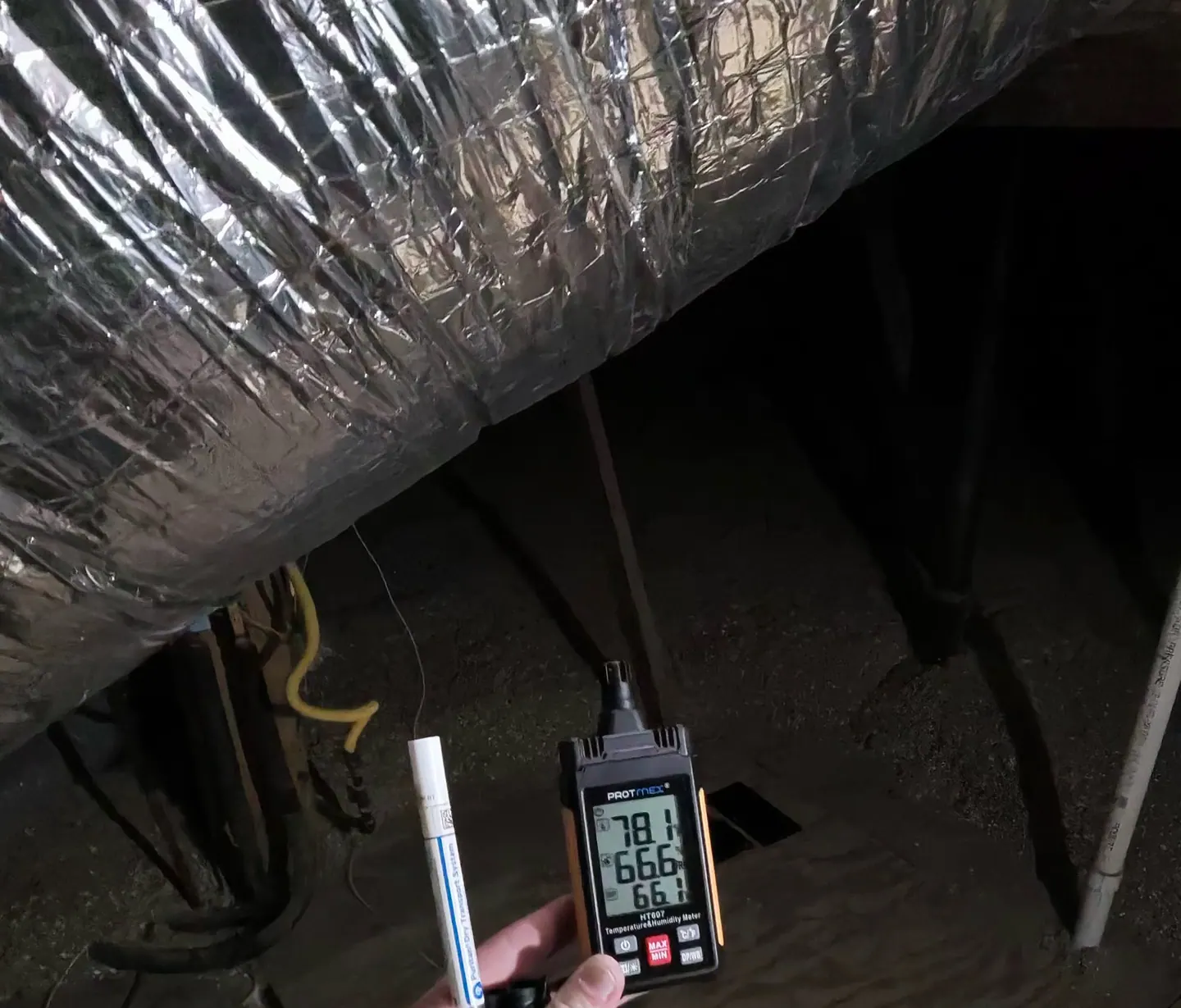
At the attic air handler, the measured temperature was 78.1°F, relative humidity was 66.6%, and dew point was approximately 66.1°F. In an interior dining area, temperature was 75.3°F, relative humidity was 48.4%, and dew point was 54.5°F. These measurements describe conditions at one point in time, not typical or sustained conditions.
The report noted that sustained relative humidity above 60% is generally recognized as supportive of fungal growth. Cooled HVAC surfaces may also fall below the surrounding air's dew point and accumulate condensation. Neither observation established the specific moisture mechanism responsible here.
Sampling Performed
- Surface swab — Accessible interior surface of the attic HVAC supply plenum: One of two surface swabs; no air samples were collected.
- Surface swab — Living-room ceiling supply grill: The bedroom grill was not sampled.
Laboratory Findings
| Sample | Finding | Reported result | Context |
|---|---|---|---|
| Attic HVAC supply-plenum interior | Aspergillus/Penicillium-like structures | Heavy | |
| Attic HVAC supply-plenum interior | Cladosporium | Heavy | |
| Attic HVAC supply-plenum interior | Hyphal fragments | Heavy | |
| Living-room ceiling supply grill | Cladosporium | Heavy | |
| Living-room ceiling supply grill | Hyphal fragments | Heavy | |
| Living-room ceiling supply grill | Aspergillus/Penicillium-like structures | Moderate | |
| Living-room ceiling supply grill | Non-specified fungal spore | Minor |
Understanding the Laboratory Rating
For these surface samples, the laboratory's categories were: No Mold Detected, fewer than one fungal structure; Minor, one or fewer structures per field of view; Moderate, greater than one to three per field of view; and Heavy, greater than three per field of view.
Heavy was the laboratory's highest rating and may indicate a sample was taken from a source of mold. These are laboratory surface-sample categories, not health-risk levels or measures of airborne exposure.
No Air Samples Were Collected
Both samples were surface swabs. Airborne fungal concentrations inside the residence were not measured. These results cannot establish airborne spore levels or quantify occupant exposure.
What the Findings Suggested
The report concluded that the combination of widespread visible colonization and Heavy Aspergillus/Penicillium-like structures, Cladosporium, and hyphal fragments was consistent with fungal growth on accessible supply-plenum interior surfaces.
The living-room supply-grill sample was separately interpreted as consistent with fungal growth on the sampled grill surface rather than merely incidental settled spores. The findings do not establish conditions on unsampled vents, concealed duct surfaces, or in the air.
What Caused the Moisture?
The limited mold assessment did not determine one specific moisture mechanism. It recommended that a qualified HVAC professional evaluate condensate collection and drainage, evaporator-coil condition, air-handler cabinet condition, insulation integrity, and air sealing at the plenum and duct connections.
The attic humidity reading and the possibility of condensation on cooled surfaces are relevant context, not proof that either was the sole cause of the plenum condition.
Recommendations
- Engage a qualified, licensed HVAC professional to evaluate and correct the moisture mechanism affecting the attic air handler and supply plenum. The evaluation should consider condensate collection and drainage, coil and cabinet condition, insulation integrity, and air sealing at plenum and duct connections.
- Correct the moisture condition before attempting a durable resolution of affected materials. Have qualified professionals address the affected HVAC components. The affected plenum contains porous fiberglass duct-board liner, which can be difficult to clean effectively after supporting fungal growth.
- Do not aggressively scrape, cut, clean, or otherwise disturb suspected growth without appropriate controls and personal protective equipment.
- Consider limiting operation of the affected HVAC system until it is evaluated, and discuss operating options with the HVAC professional.
- Consider evaluating other supply grills, including the unsampled bedroom grill. Maintain indoor relative humidity below 60%, and consider follow-up sampling after corrective work.
- This assessment was performed under a Texas Mold Assessment Technician license. The inspector did not prepare a remediation protocol, scope of work, containment design, or clearance criteria; this case study is not a remediation protocol.
What Homeowners Can Learn From This Case
Discoloration on an AC vent does not automatically tell a homeowner what is happening elsewhere in an HVAC system. In this case, a limited investigation documented fungal growth on accessible plenum surfaces and on a sampled downstream living-room grill. The bedroom grill remained undetermined.
Depending on the question, a scoped investigation may include inspection of accessible system components and plenum materials, supply-grill observations, selected surface sampling, temperature and humidity measurements, and HVAC-professional evaluation of the moisture mechanism. Findings at one home should not be assumed to describe another.
Questions About This Case
Can mold grow inside an HVAC supply plenum?
Yes. Fungal growth can occur on HVAC materials when sufficient moisture and suitable surfaces are present. In this Dallas case, visible colonization on accessible plenum surfaces was supported by surface sampling.
Does mold on an AC vent mean mold is inside the ductwork?
Not necessarily. Supply-grill discoloration can have multiple causes. Here, separate samples supported fungal growth on the living-room grill and on accessible interior surfaces of the HVAC supply plenum; concealed duct runs were not evaluated.
Can fiberglass duct board grow mold?
Fiberglass duct-board surfaces can accumulate dust and moisture, and fungal growth may occur under suitable conditions. Widespread colonization was documented on accessible liner surfaces in this case, but that is not a conclusion about every duct-board system.
What kind of mold was found inside the HVAC system?
The surface swab from the accessible supply plenum contained Heavy Aspergillus/Penicillium-like structures, Heavy Cladosporium, and Heavy hyphal fragments.
Was mold found in the air?
Air sampling was not performed during this assessment, so airborne fungal concentrations were not measured.
What causes mold inside an HVAC plenum?
Moisture is needed for fungal growth, but the mechanism can vary. In this case, the assessor recommended that a qualified HVAC professional evaluate condensate drainage, coil and cabinet condition, insulation integrity, and air sealing. No single cause was confirmed.
Related Services
Seeing Mold or Discoloration Around Your AC Vents?
If you are seeing suspected mold on supply vents, inside HVAC components, or around your air-conditioning system, an independent mold assessment can help document what is occurring and where.
Schedule a Mold InspectionInspection performed by Ethan Wright, TDLR Licensed Mold Assessment Technician (MAT #1589).
Related Real Inspection Cases
Compare growth limited to one damaged duct branch with this supply-plenum case, and a separate condensate-line case where growth was found outside the equipment rather than in accessible ducts.
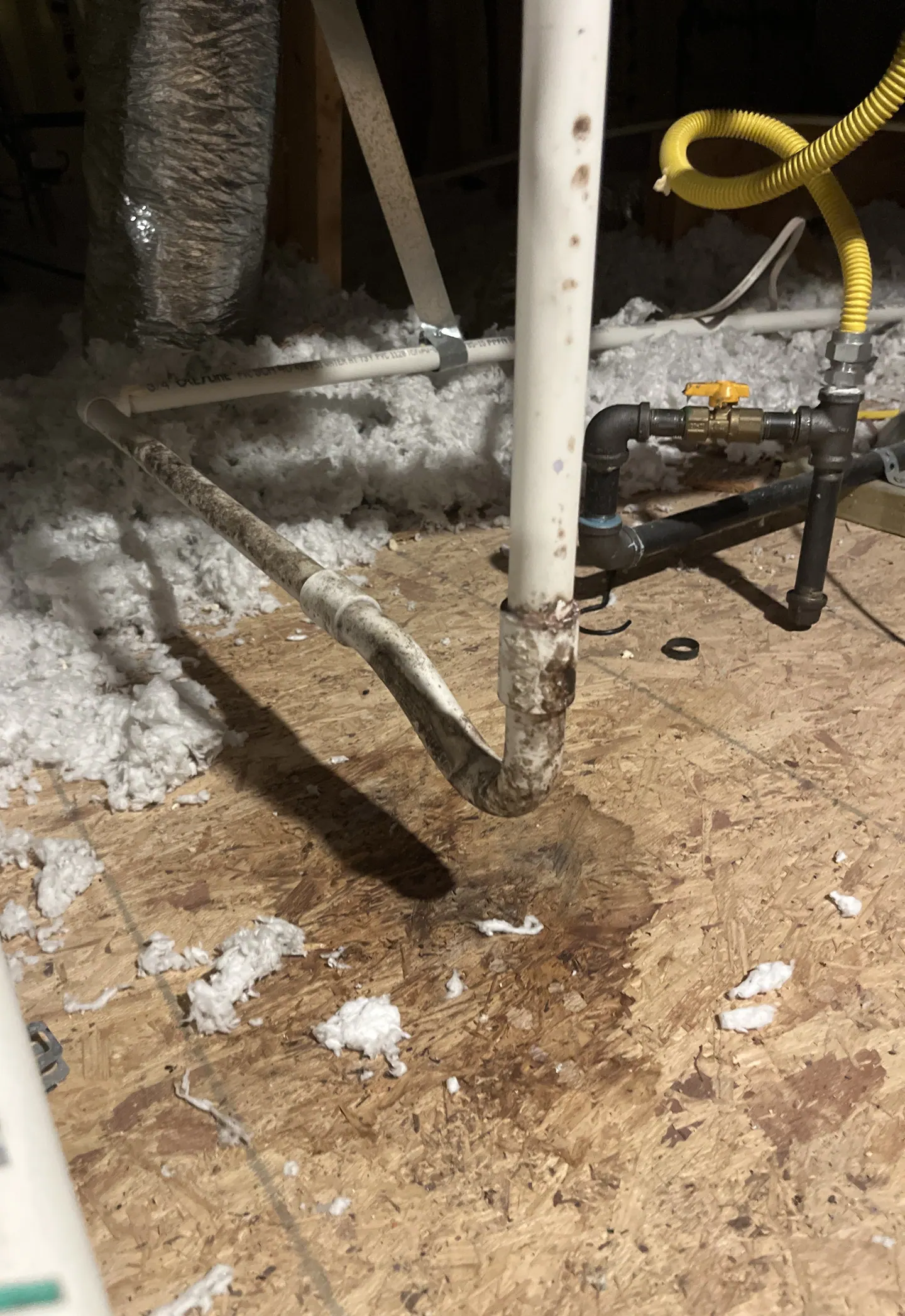
Mold on an AC Condensate Drain Line in a Dallas Attic
A Dallas homeowner requested an independent assessment after an HVAC technician noticed suspected growth on attic condensate piping. A surface swab supported fungal growth on the pipe exterior; no visible mold growth was observed inside accessible portions of the air handler or connected ductwork.
View Case Study →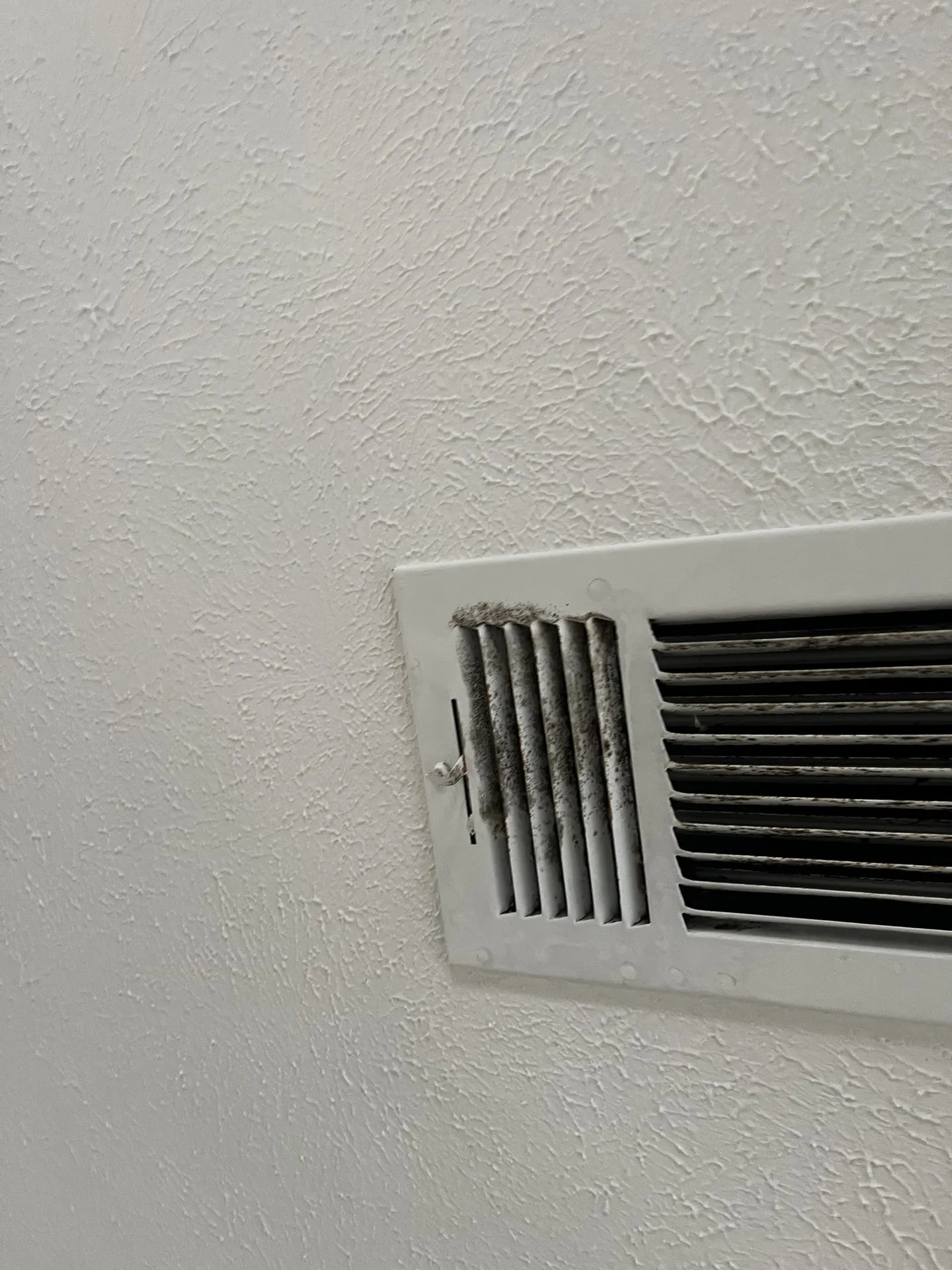
Mold Found Inside One HVAC Duct Branch in a Dallas Home
A Dallas homeowner requested an independent assessment after an HVAC contractor saw material inside supply ductwork that might have been microbial growth or dirt. Two playroom supply grills and accessible interior surfaces behind them showed visible growth. Both grills shared one duct branch with damaged jacket and insulation; the accessible air handler and other inspected runs showed no comparable growth. A swab from the left playroom grill returned Heavy Cladosporium, while the playroom air sample did not show amplification relative to an outdoor comparison at the sampled time.
View Case Study →