
- Location
- Irving, Texas
- Property type
- Occupied residential apartment — multifamily rental property
- Inspection type
- Limited visual, moisture, borescope and sampling assessment
- Primary concern
- Visible dark growth on multiple HVAC supply registers
- Inspection
- October 2026
The Situation
The occupant requested an independent assessment to determine whether dark material on several supply registers was mold growth and whether corrective action was warranted.
The assessment concerned an occupied multifamily rental residence. The affected supply registers were in the bathroom, bedroom, bathroom walk-in closet and office.
According to the assessor's observations, the bedroom, closet and office registers were directly outside the bathroom. The pattern suggested possible contributing conditions, not a confirmed causal diagnosis.
What Was Inspected
- Limited, non-invasive visual assessment of accessible interior surfaces, emphasizing supply registers and the return grille.
- Comparative moisture screening of accessible wall and ceiling surfaces, indoor temperature and humidity measurement, and borescope views through register openings.
- One bedroom indoor air sample and one outdoor reference, each 75 L, plus one direct-examination surface swab from the bedroom grille face and louvers.
- No building materials were removed or opened. Ductwork beyond the borescope's field of view and the condition of the air handler were not evaluated.
What We Observed
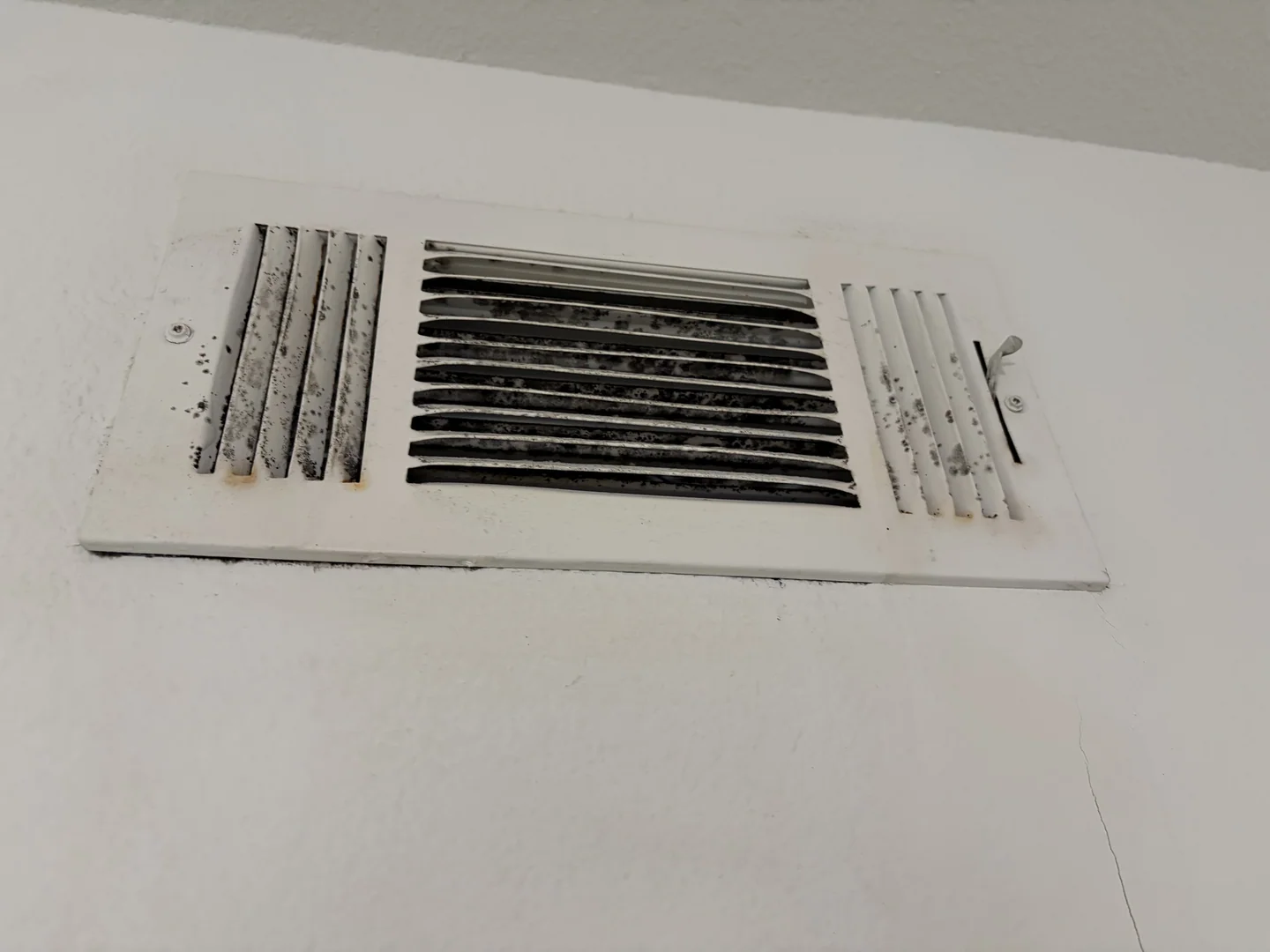
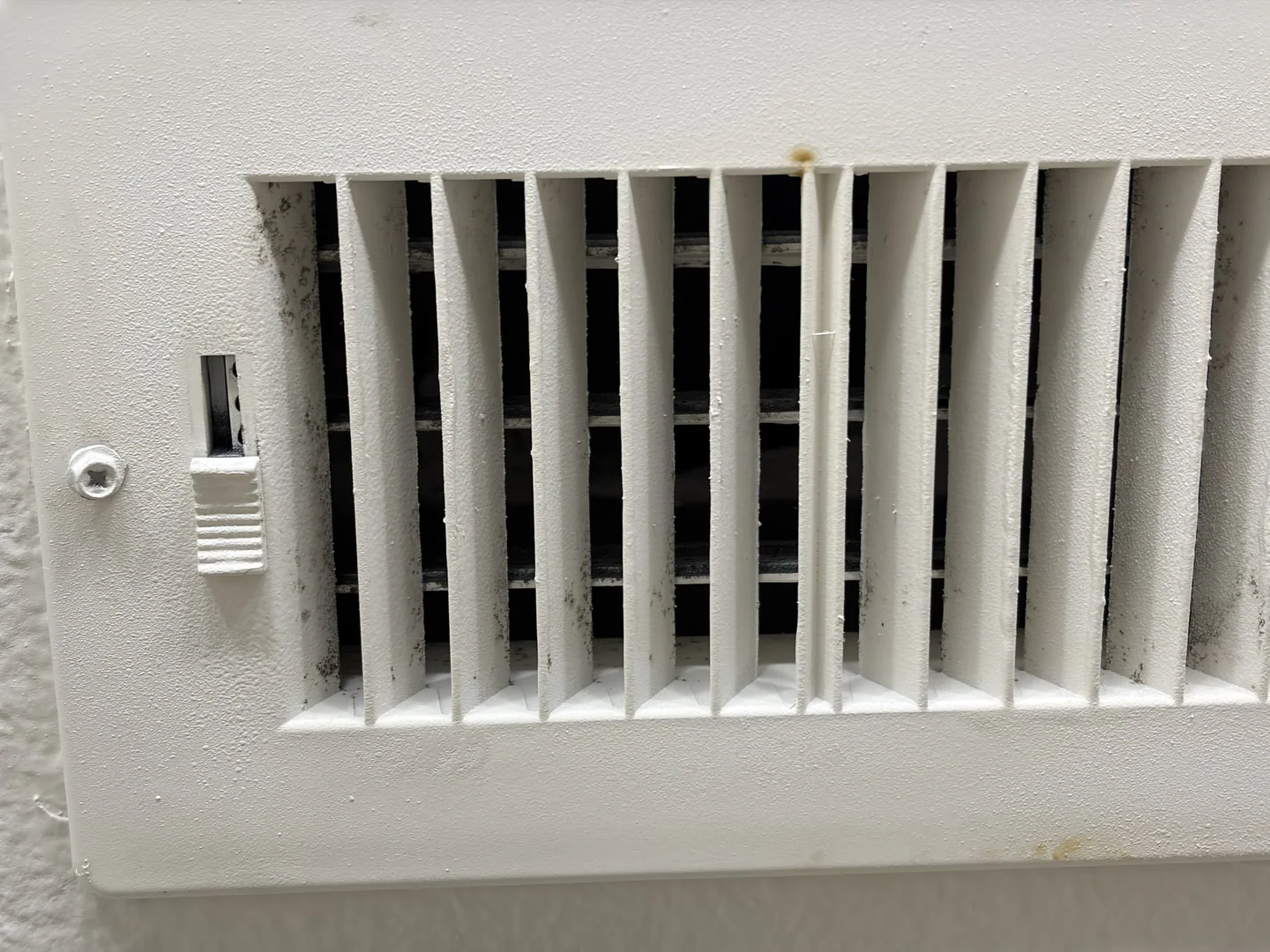
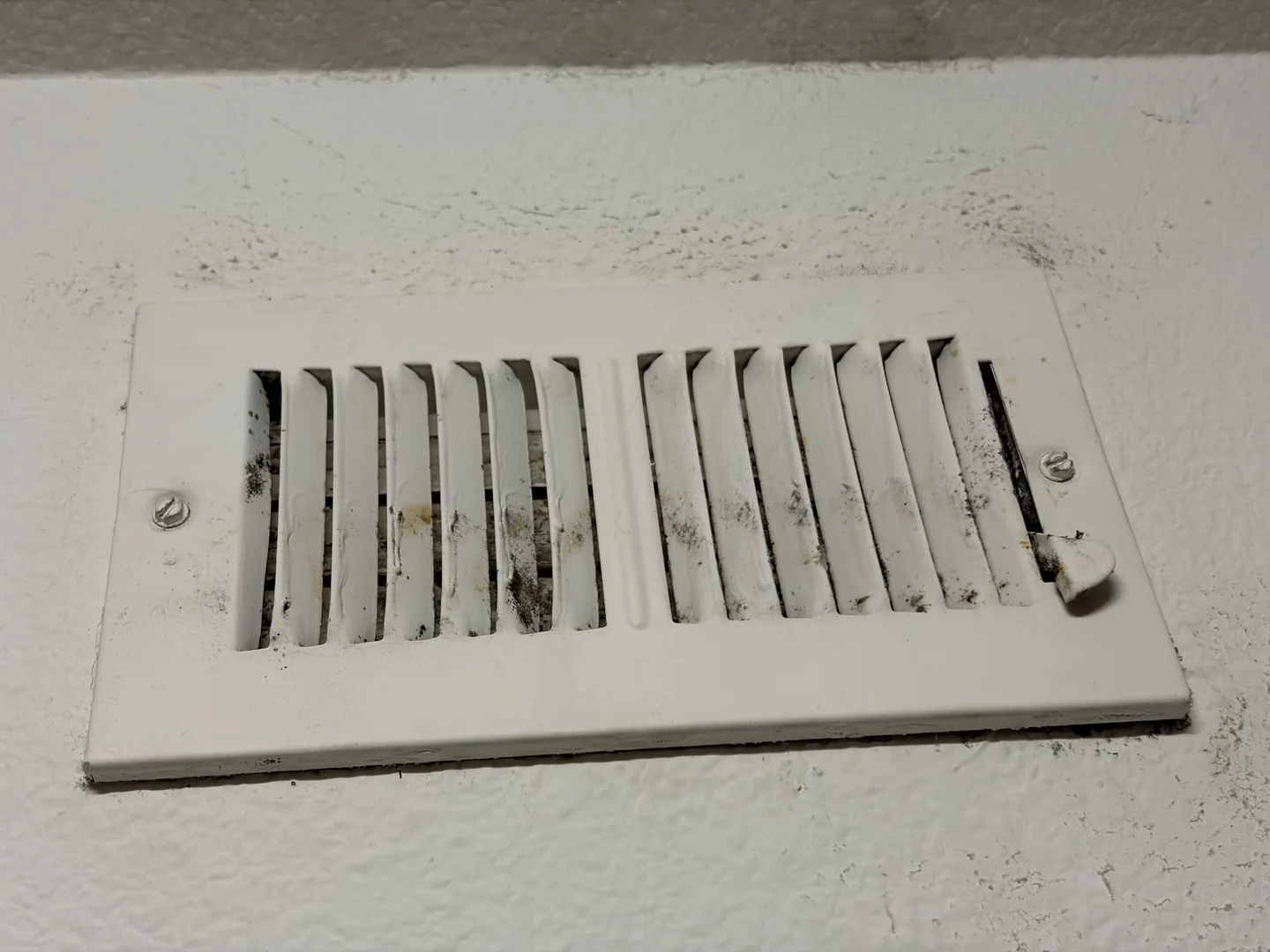
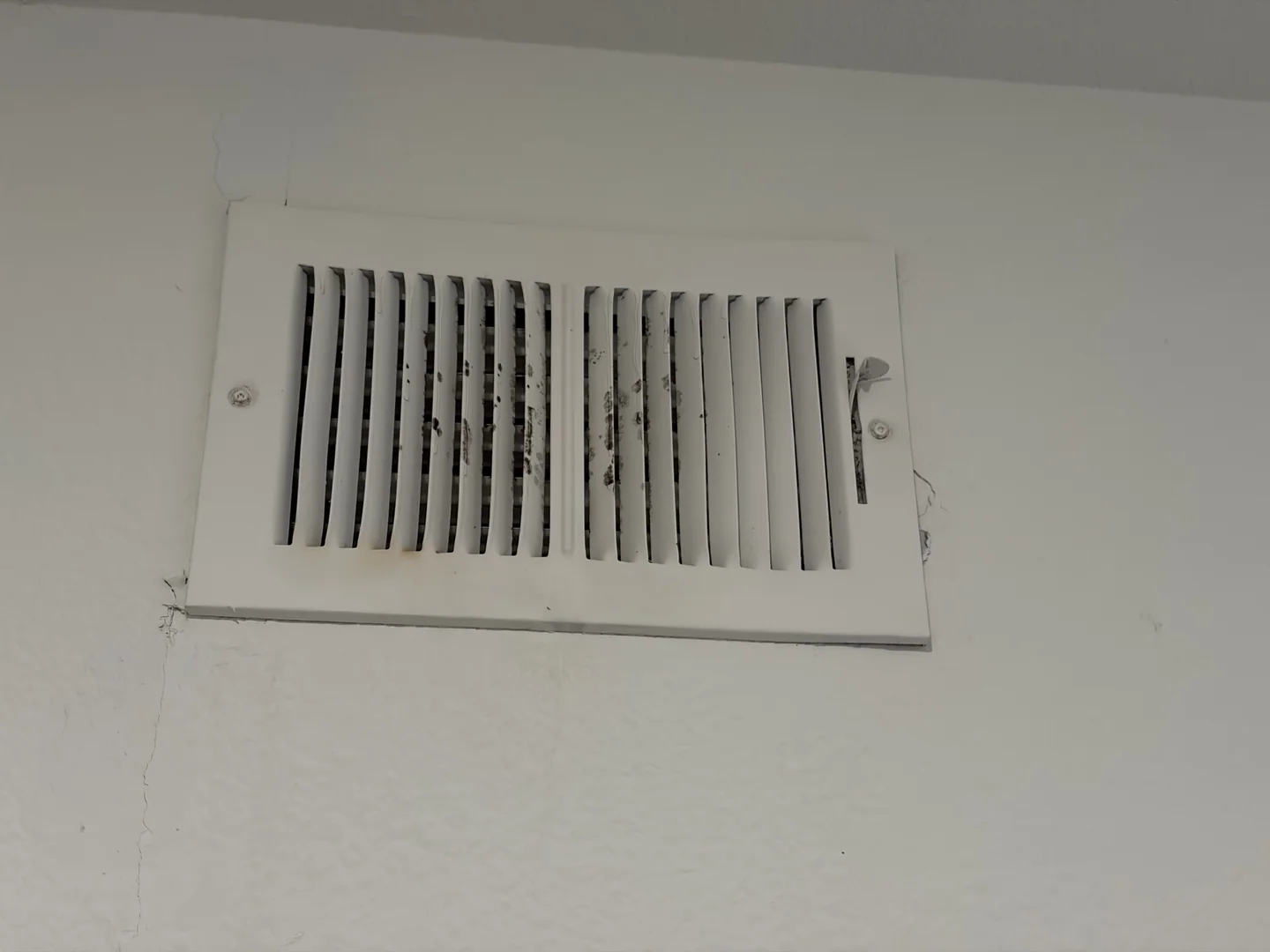
Dark spotting consistent with mold growth was present on the bathroom grille louvers and frame. The bedroom and bathroom walk-in closet grilles showed heavy dark growth; the office grille had dark spotting.
Growth was confined to the observed metal register components. Other accessible supply registers and the return grille showed no visible growth.
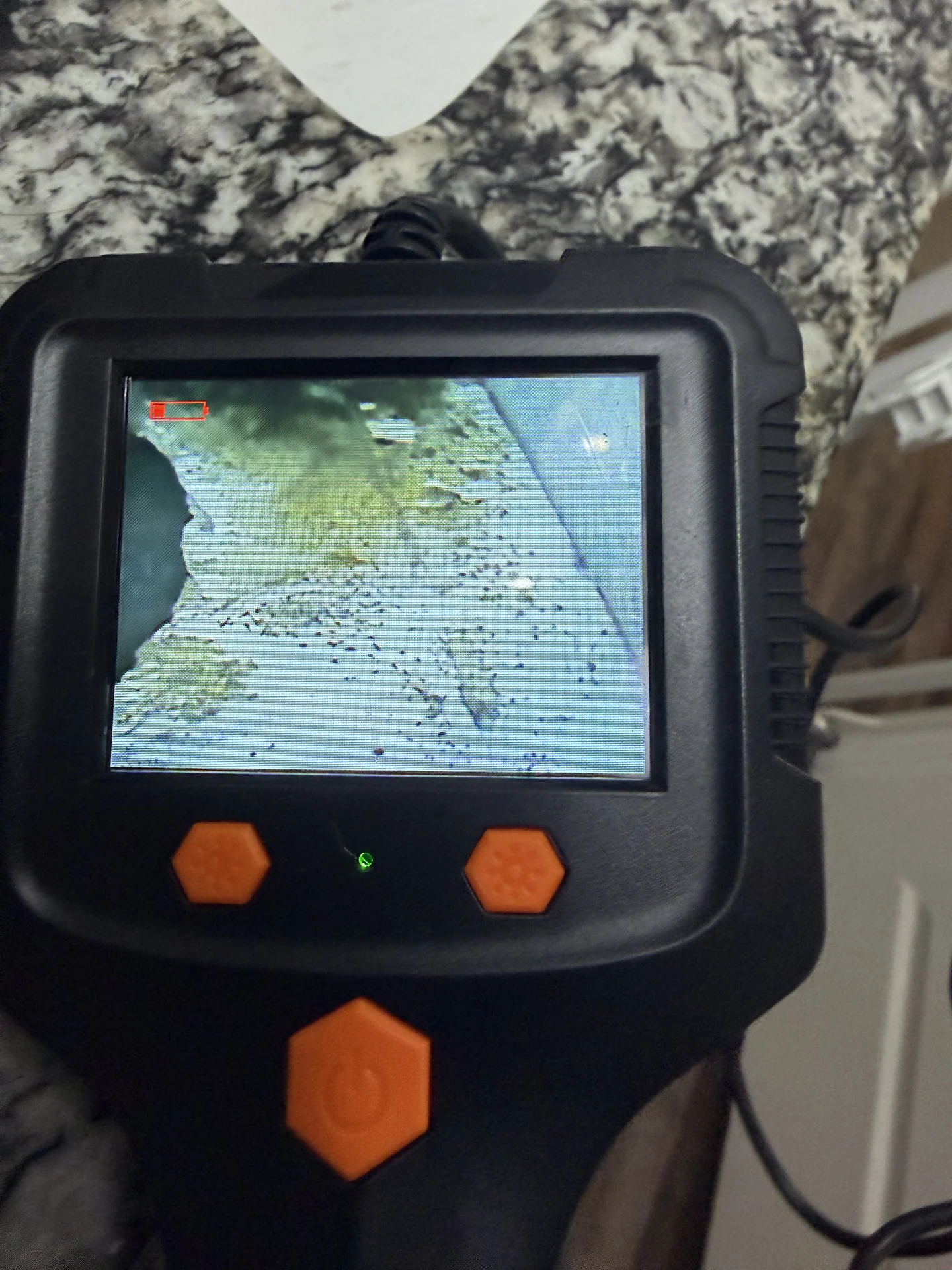
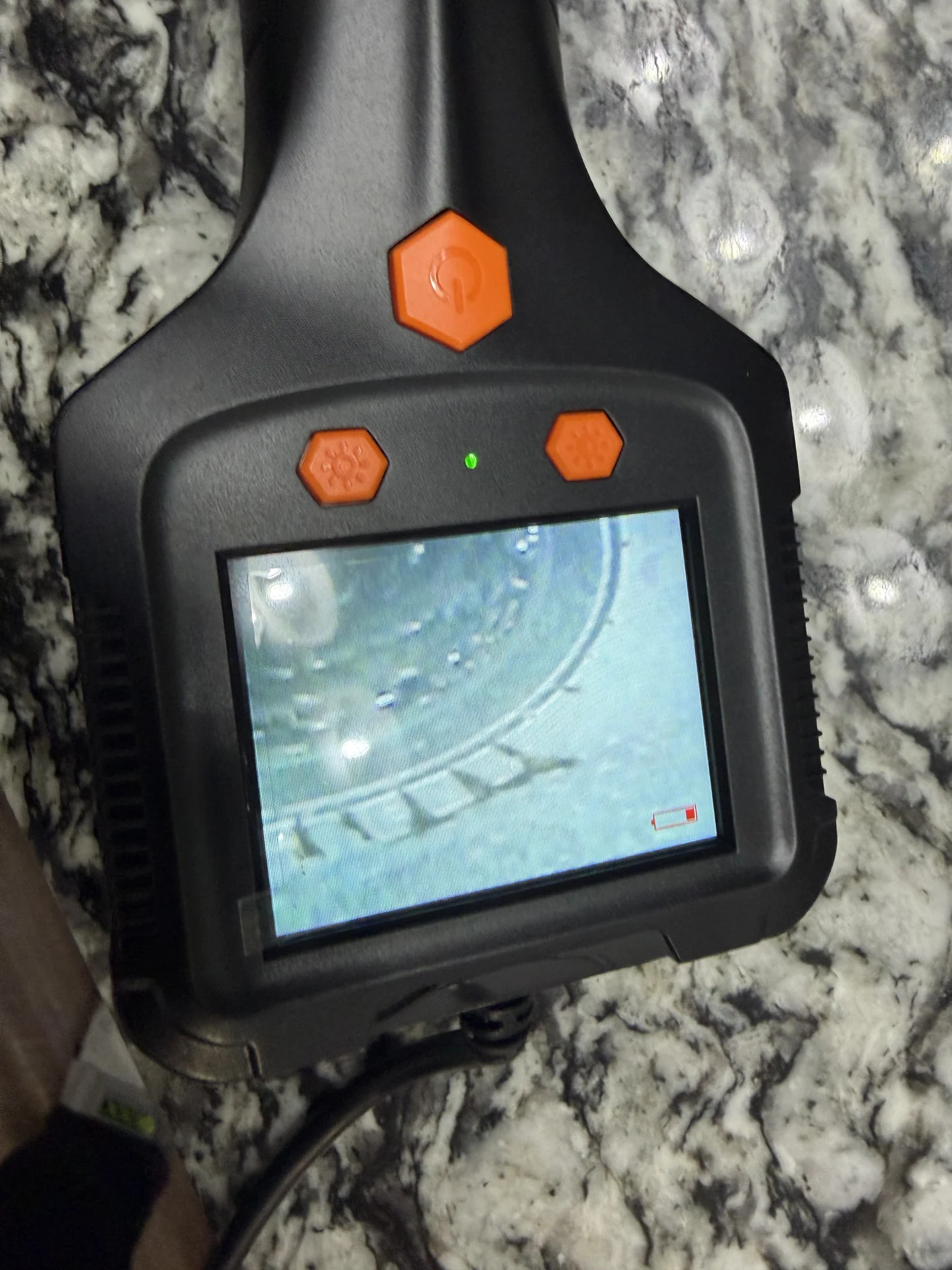
A borescope inserted through the register openings showed visible growth on the bathroom boot's interior metal surfaces. Within the camera's view, it did not appear to extend into the connecting ductwork; growth was not confirmed in the other examined boots.
Documented Visual Findings
| Finding | Reported result | Context |
|---|---|---|
| Bathroom supply register | Dark spotting on grille louvers and frame | |
| Bathroom register boot | Visible growth on interior metal surfaces | Limited to borescope field of view; farther ductwork not evaluated |
| Bedroom supply register | Heavy dark growth on grille louvers and frame | Surface swab collected from this grille only |
| Bathroom walk-in closet supply register | Heavy dark growth on grille louvers and frame | |
| Office supply register | Dark spotting on grille louvers | |
| Other accessible supply registers | No visible growth observed | |
| Return grille | No visible growth observed |
Dark Growth Appeared on Multiple HVAC Vents
The occupant asked whether the dark material on the supply grilles was mold and whether corrective work was warranted. The affected locations were the bathroom and the bedroom, bathroom walk-in closet and office directly outside it. The remaining accessible supply registers and return grille showed no visible growth; not every vent was affected.
Were Elevated Moisture Readings Found?
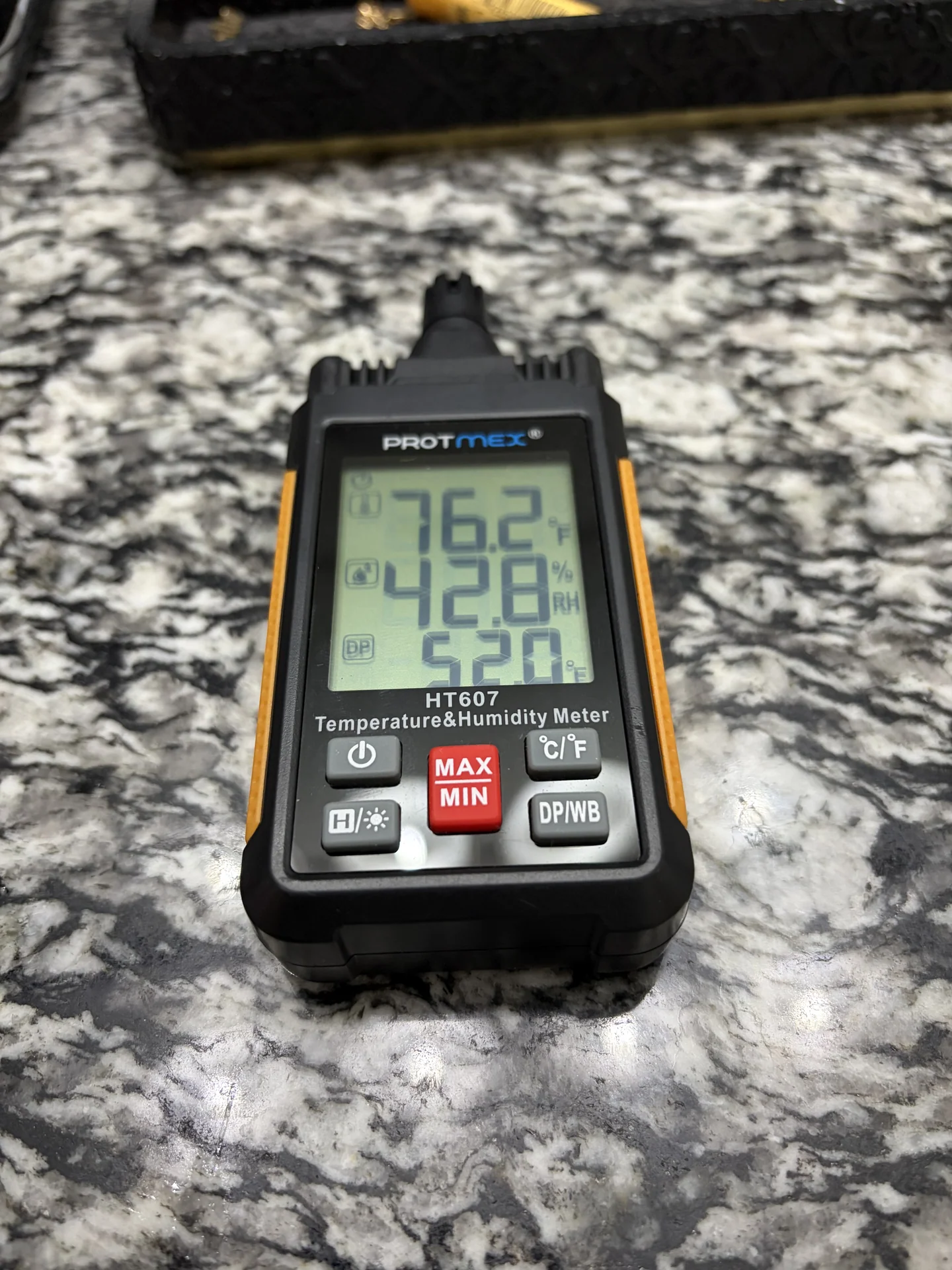
No. Comparative screening responses were 8–12, without elevated readings in the accessible materials screened. The 42.8% RH reading at 76.2°F reflected one moment. It neither established humidity during or immediately after showering nor ruled out earlier condensation on cool register surfaces. A moisture defect was not confirmed.
Moisture / Building Conditions
Comparative moisture-meter readings on accessible materials ranged from 8 to 12. No screened material produced an elevated comparative response.
The meter provided comparative wet/dry screening, not a direct moisture-content measurement.
Indoor conditions were 76.2°F and 42.8% relative humidity, with a calculated dew point of 52.0°F. This was one point in time, not a record of humidity during or after showering.
Comparative Moisture Screening Results
| Finding | Reported result | Context |
|---|---|---|
| Comparative material-screening readings | 8–12 comparative | No elevated comparative responses identified |
| Indoor temperature | 76.2 °F | |
| Indoor relative humidity | 42.8 % | |
| Calculated dew point | 52.0 °F |
Sampling Performed
- Spore-trap air sample — 75 L — Indoor bedroom — corrected identity: Laboratory Sample 1, originally labeled Outdoor; actually indoors. Moderate debris.
- Spore-trap air sample — 75 L — Outdoor reference — corrected identity: Laboratory Sample 2, originally labeled Indoor; actually outdoors. Light debris.
- Surface swab — direct microscopic examination — Bedroom supply register face and louvers: The only surface-swab location. Not an air sample or measurement of all HVAC components.
Laboratory Findings
| Finding | Reported result | Context |
|---|---|---|
| Cladosporium | Heavy | Bedroom supply register face and louvers — surface swab |
| Hyphal fragments | Heavy | Bedroom supply register face and louvers — surface swab |
Corrected Air-Sample Comparison — 75 L Each
| Measurement | Indoor bedroom — corrected | Outdoor reference — corrected |
|---|---|---|
| Total fungal concentration | 550 structures/m³ | 2,000 structures/m³ |
| Total spores | 430 structures/m³ | 1,800 structures/m³ |
| Hyphal fragments | 130 structures/m³ | 210 structures/m³ |
| Cladosporium | Not detected | 810 structures/m³ |
| Aspergillus/Penicillium-like | Not detected | 380 structures/m³ |
| Basidiospores | 85 structures/m³ | 430 structures/m³ |
| Bipolaris/Drechslera group | 130 structures/m³ | Not detected |
| Curvularia | 85 structures/m³ | 43 structures/m³ |
| Myxomycetes/Smut group | 85 structures/m³ | 85 structures/m³ |
| Nigrospora | 43 structures/m³ | Not detected |
| Ascospores | Not detected | 85 structures/m³ |
| Non-microbial debris rating | Moderate | Light |
Understanding the Laboratory Rating
Heavy was the laboratory's highest direct-examination rating. Hyphal fragments are pieces of the thread-like filaments that form fungal colonies. The visual findings and bedroom swab supported localized growth on the sampled metal surface, not merely a whole-room airborne measurement.
The swab does not quantify airborne mold, establish the condition of every HVAC component, determine a health outcome or independently identify the cause of growth.
Reported air totals are retained exactly. Rounded category concentrations must not be independently added to replace the laboratory totals. The Moderate indoor and Light outdoor debris ratings may negatively bias counts; the laboratory notes that Light or higher debris can cause concentrations to be underestimated.
Why Were Indoor Air Results Lower Than Outdoors?
The corrected bedroom sample contained 550 total fungal structures/m³, roughly one-quarter of the outdoor reference of 2,000 structures/m³. Cladosporium and Aspergillus/Penicillium-like were detected outdoors but not in the indoor sample. The assessment concluded that bedroom air did not indicate amplification relative to outdoors at that location and time.
This does not establish that the confirmed register growth was harmless, absent or unable to release particles. Only one indoor location was sampled over a short collection period; airborne concentrations vary over time. HVAC operation and disturbance of affected surfaces can change what becomes airborne. Moderate indoor and Light outdoor debris also limit interpretation.
What the Findings Suggested
Localized growth on the four affected supply grilles and bathroom boot was confirmed. Only the bedroom grille was swabbed, returning Heavy Cladosporium and Heavy hyphal fragments.
Corrected bedroom air results did not indicate amplification relative to outdoors at the sampled time. That finding and the direct evidence of localized surface growth address different questions.
The cause remained unconfirmed. Ductwork beyond camera view and the air handler's condition remained undetermined.
Could Bathroom Humidity or Condensation Have Contributed?
The distribution of affected registers was consistent with a possible humidity- or condensation-related mechanism. Warm, humid shower air contacting cool metal registers was one possibility. Supply-air temperature, insulation and sealing of boots and nearby ductwork, and bathroom exhaust ventilation were factors for further evaluation. None was confirmed as the cause; condensation was not measured, and no exhaust-fan or insulation defect was established.
A Remediation Protocol Was Not Included
A remediation protocol was not requested and was not included in this assessment. Mold Testing Dallas performed the assessment under a Mold Assessment Technician license. If corrective work constitutes a TDLR-regulated remediation project, a licensed Mold Assessment Consultant should determine whether a protocol is required and appropriately licensed professionals must perform regulated work.
Can an HVAC Vent Have Mold Even When Indoor Air Samples Are Lower Than Outdoors?
Yes. Visual inspection documents accessible surfaces; a surface sample characterizes material at its collection location; an air sample measures airborne structures at a particular place and time. A lower indoor air total does not disprove localized register growth, and one air sample does not establish the condition of every room or HVAC component. The correct interpretation combines the evidence, locations and limitations.
Recommended Next Steps
- Notify the property owner or management and share the report. Corrective work in this rented residence would ordinarily be arranged by the owner or management.
- Have qualified, appropriately licensed professionals evaluate and address the affected supply grilles and bathroom register boot. The owner should determine whether TDLR mold-remediation requirements apply.
- If the work constitutes a TDLR-regulated remediation project, have a licensed Mold Assessment Consultant determine whether a remediation protocol is required. Regulated work must be performed by appropriately licensed professionals.
- Have a licensed HVAC contractor evaluate supply-air temperature, boot and nearby ductwork insulation and sealing, and ductwork beyond the borescope's view for possible contributing conditions.
- Confirm that the bathroom exhaust fan functions and vents to the exterior; use it during and after showers.
- Maintain indoor relative humidity below 60%.
- Avoid dry-brushing, wiping or vacuuming affected grilles with non-HEPA equipment before corrective work; disturbance can release spores and fragments.
- If a TDLR-regulated remediation project becomes necessary, independent post-remediation assessment and clearance must be performed by an appropriately licensed Mold Assessment Consultant independent of the remediation contractor or company.
- After corrective work, monitor the affected registers, especially around the bathroom, for renewed discoloration that may suggest unresolved contributing conditions.
What Homeowners Can Learn From This Case
A surface finding and an airborne result are not interchangeable. Confirmed register growth can coexist with lower indoor air concentrations.
Uniform comparative readings and a single RH measurement do not establish historical shower humidity or rule out earlier condensation.
Addressing affected components and evaluating possible contributing HVAC and ventilation conditions are different from claiming that a cause has already been established.
Questions About This Case
Is the black material on an air conditioning vent mold?
It can be, but appearance alone is not conclusive. In this Irving case, the assessment documented visible growth on four supply registers, and a bedroom register swab returned Heavy Cladosporium and Heavy hyphal fragments. The assessor concluded that localized mold growth was confirmed.
Can mold grow on HVAC vents even when moisture readings are normal?
Yes. In this case, comparative moisture-meter readings on accessible building materials ranged from 8 to 12, with no elevated responses. Nevertheless, visible growth was present on metal register components. The readings reflected inspection-time conditions and did not establish historical humidity or condensation conditions.
Does a low indoor mold air count mean there is no mold problem?
Not necessarily. The corrected bedroom sample contained 550 total fungal structures/m³ compared with 2,000/m³ outdoors. The assessment also confirmed localized growth on registers and the bathroom register boot. Air sampling and surface observations measure different aspects of conditions.
What type of mold was found on the bedroom vent?
The surface swab returned Heavy Cladosporium and Heavy hyphal fragments. These were the laboratory's highest direct-examination ratings for the sampled bedroom register.
Was mold found inside the HVAC ducts?
Visible growth was observed on interior metal surfaces of the bathroom register boot. Within the borescope's field of view it did not appear to extend into connecting ductwork. Ductwork beyond that view was not evaluated, so its condition could not be determined.
What causes mold on bathroom air vents?
Humidity and condensation are possible contributors when humid bathroom air contacts cool metal registers. The affected-register pattern was consistent with that possibility, but the precise cause was not confirmed. HVAC temperature, insulation, sealing and exhaust ventilation required further evaluation.
Should HVAC vents with confirmed mold growth be addressed?
Yes. Qualified professionals should address affected grilles and the bathroom register boot, and a licensed HVAC contractor should evaluate possible contributing conditions. Applicable Texas remediation licensing and protocol requirements should be determined before regulated work proceeds.
Was the entire HVAC system inspected?
No. The assessment used limited visual inspection, moisture screening and borescope views through register openings. The air handler and ductwork beyond the camera's view were not evaluated.
Related Services
Concerned About Mold on Your HVAC Vents?
Visible discoloration on HVAC registers can have different causes, and an assessment can help determine whether mold growth is present and what further evaluation may be appropriate. Mold Testing Dallas provides independent mold assessment services throughout the Dallas–Fort Worth area.
Schedule a Mold AssessmentInspection performed by Ethan Wright, TDLR Licensed Mold Assessment Technician (MAT #1589).
Related Real Inspection Cases
These are separate investigations, not additional findings at this residence. The Dallas drain-line, plenum and isolated duct-branch cases document different HVAC component scopes. The Grand Prairie air-only case shows why a lower indoor total does not answer every mold question. The Dallas wet-ceiling case documented active water leakage without visible growth on accessible bathroom surfaces; no such active leak was established in this Irving register assessment.
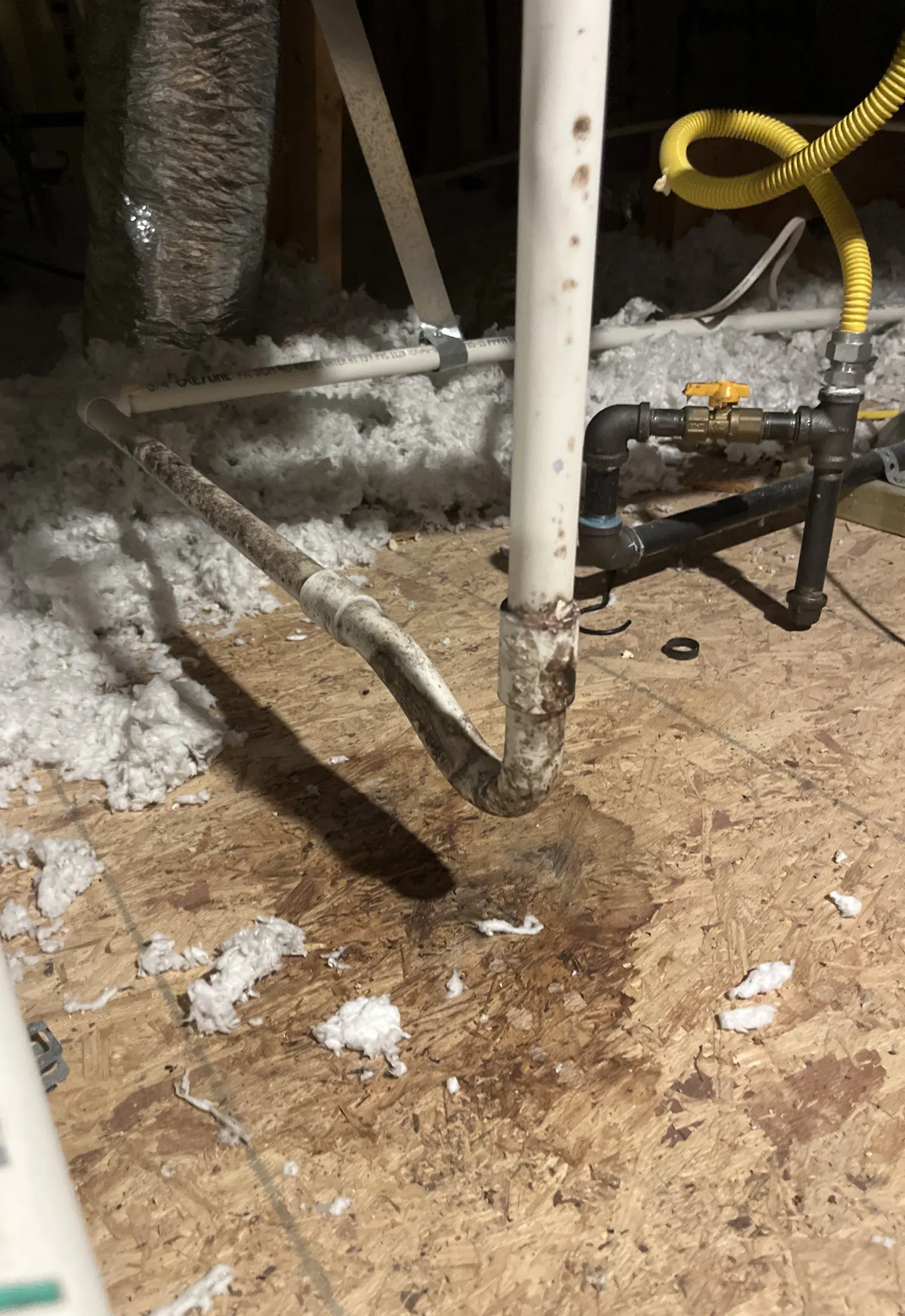
Mold on an AC Condensate Drain Line in a Dallas Attic
A Dallas homeowner requested an independent assessment after an HVAC technician noticed suspected growth on attic condensate piping. A surface swab supported fungal growth on the pipe exterior; no visible mold growth was observed inside accessible portions of the air handler or connected ductwork.
View Case Study →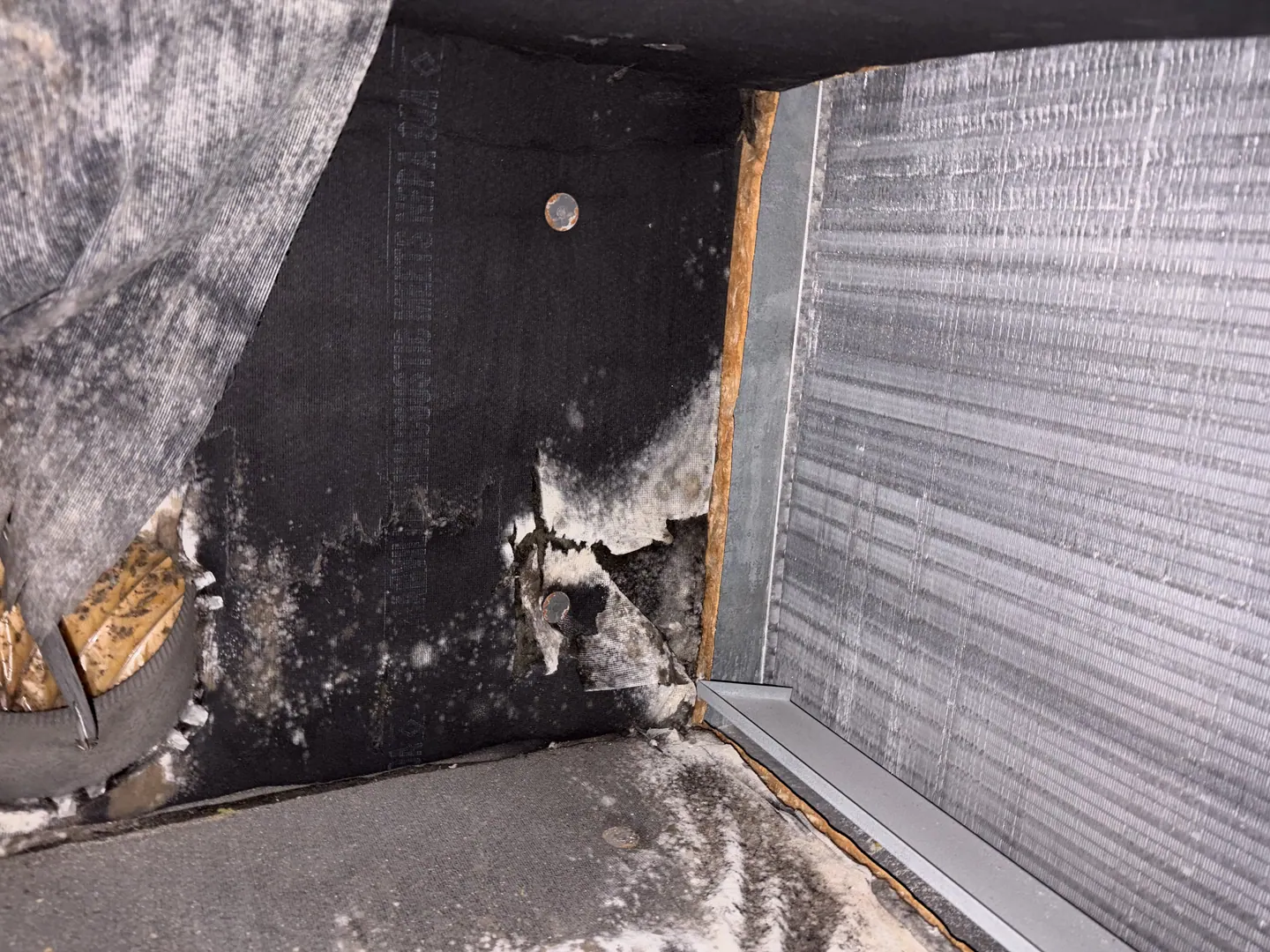
Mold Found Inside an HVAC Supply Plenum in a Dallas Home
A Dallas homeowner requested an independent assessment after an HVAC professional reported suspected growth inside an attic supply plenum. Accessible fiberglass duct-board liner showed extensive surface colonization. Surface swabs supported fungal growth inside the plenum and on a downstream living-room supply grill. No air samples were collected.
View Case Study →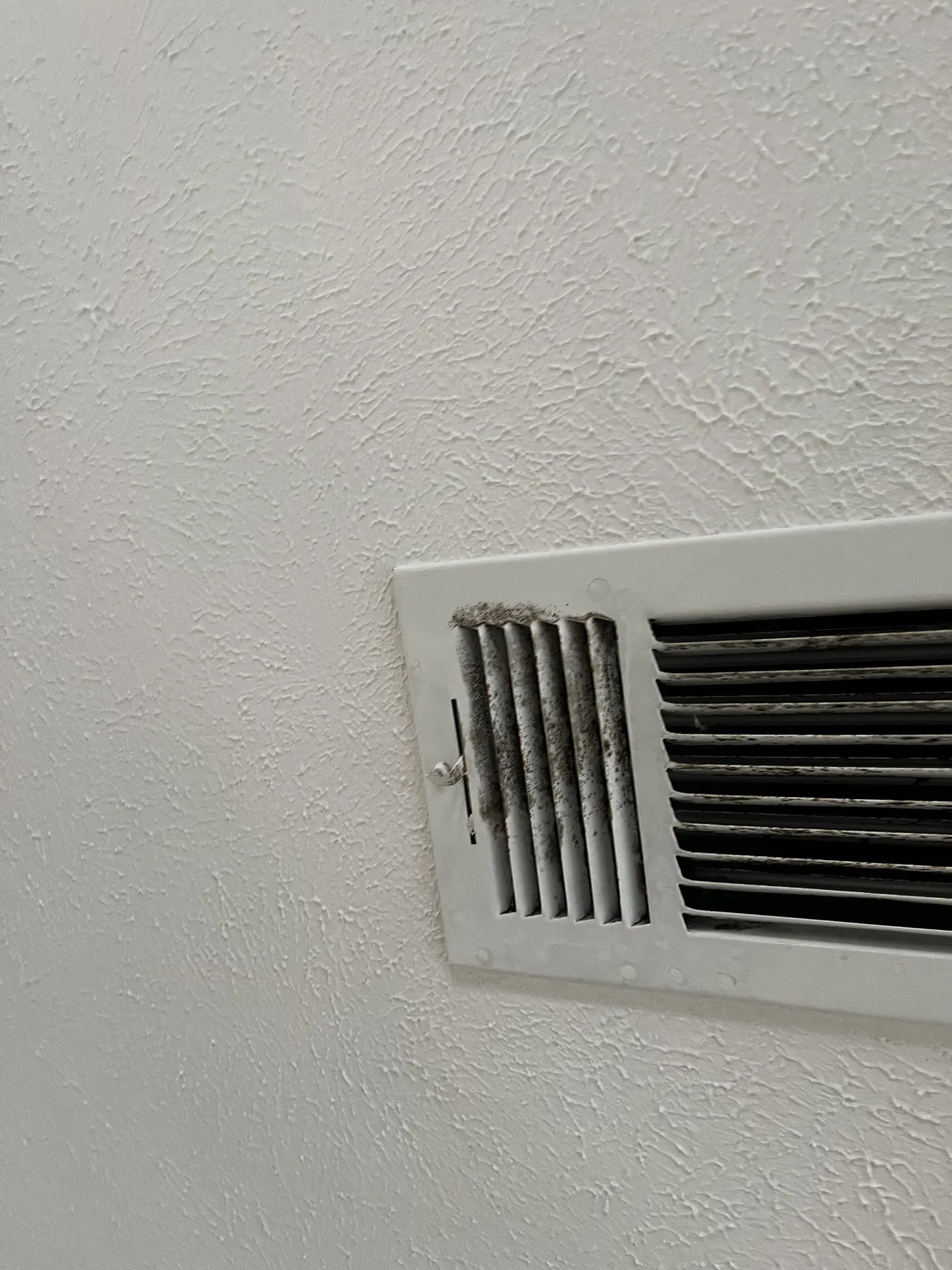
Mold Found Inside One HVAC Duct Branch in a Dallas Home
A Dallas homeowner requested an independent assessment after an HVAC contractor saw material inside supply ductwork that might have been microbial growth or dirt. Two playroom supply grills and accessible interior surfaces behind them showed visible growth. Both grills shared one duct branch with damaged jacket and insulation; the accessible air handler and other inspected runs showed no comparable growth. A swab from the left playroom grill returned Heavy Cladosporium, while the playroom air sample did not show amplification relative to an outdoor comparison at the sampled time.
View Case Study →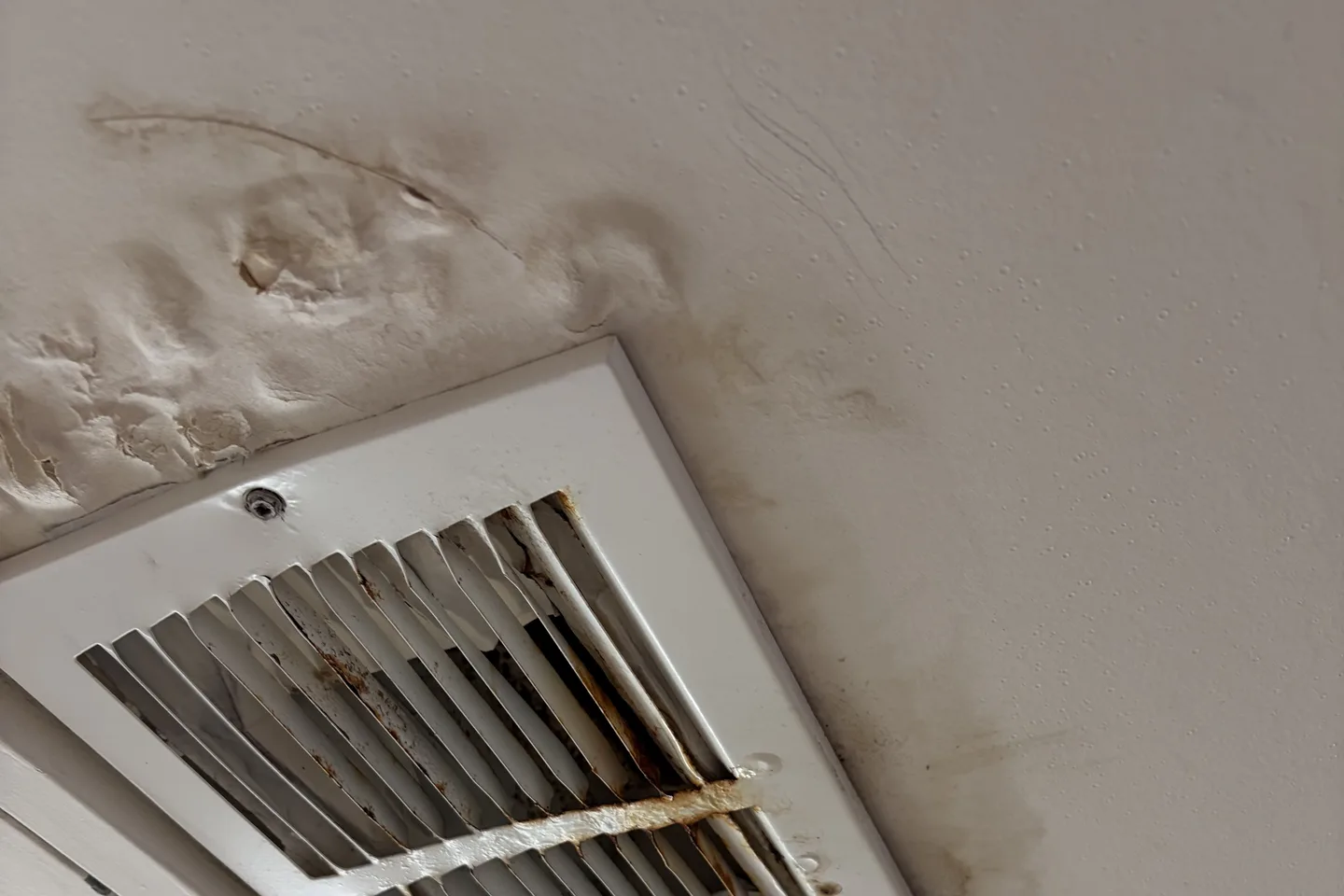
Active HVAC Leak and Wet Ceiling in a Dallas Bathroom
A Dallas property owner requested a limited mold assessment after tenants raised concerns about two bathrooms. The top-floor bathroom had a reported history of HVAC-related water leakage and prior repair attempts. During the assessment, water was actively dripping from a ceiling supply register beside the ceiling-mounted air handler, and surrounding drywall was wet, stained, blistered and bubbling. Comparative moisture responses were much higher by the register than at a same-ceiling reference area. No visible mold was observed on accessible bathroom surfaces, and indoor air samples were below the outdoor reference. The ceiling cavity and concealed materials were not opened.
View Case Study →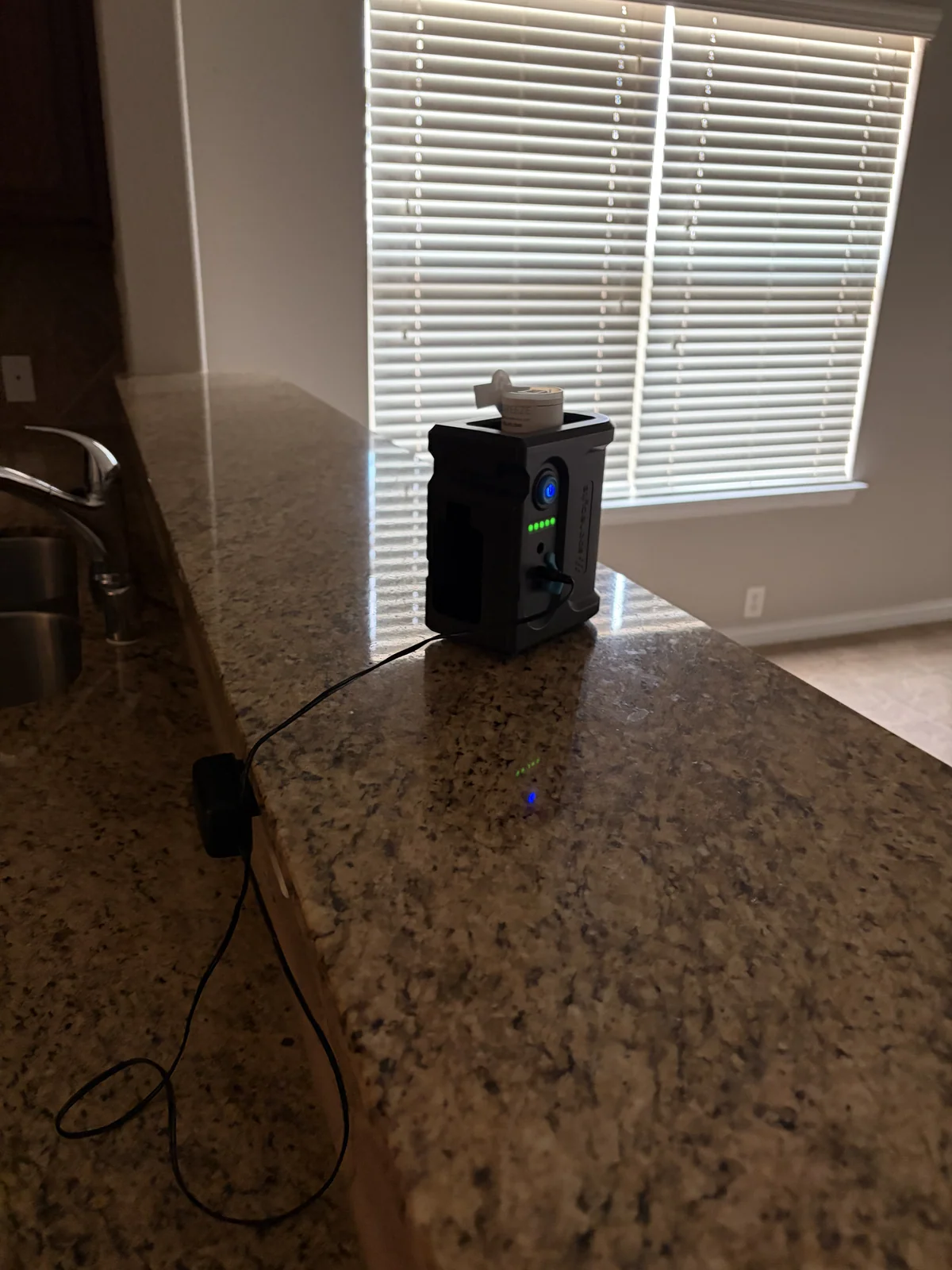
Stachybotrys Detected Even Though Indoor Mold Levels Were Below Outdoors
A client requested a limited air-sampling assessment at a Grand Prairie home. Four indoor non-viable spore-trap samples and one outdoor reference sample were collected; no visual, moisture, surface or HVAC inspection was performed. All indoor total fungal concentrations were below outdoors. One Stachybotrys spore was detected in the Main Living Area, and Aspergillus/Penicillium-like counts exceeded the outdoor reference in three indoor samples. Air results alone did not establish mold growth or identify a source; a follow-up visual and moisture assessment was recommended.
View Case Study →Mold Confirmed Inside an HVAC Supply Plenum in Dallas
A homeowner who had recently purchased an older Dallas residence requested an independent assessment after an HVAC contractor opened the supply plenum and observed apparent fungal growth. Brown growth and a surface swab supported fungal growth on the sampled plenum surface. Room-air samples did not indicate airborne fungal amplification relative to the same-day outdoor reference. The homeowner had the plenum replaced by others. Five days later, follow-up indoor air samples remained low, with no detectable Aspergillus/Penicillium-like spores or hyphal fragments. No outdoor reference was collected on the second visit: this was an air re-check, not a formal clearance assessment.
View Case Study →