
- Location
- Dallas, Texas
- Property type
- Single-family residential
- Inspection type
- Limited mold assessment
- Primary concern
- Visible growth on nightstand feet and wet carpet along a guest-bedroom exterior wall
- Inspection
- September 2026
- Published
- September 2026
The Situation
The homeowner reported finding visible growth on the wooden feet of a guest-bedroom nightstand. The limited assessment focused on the bedroom, its exterior wall, and the immediately corresponding exterior elevation to evaluate visible conditions, moisture, a probable source, and a targeted carpet sample.
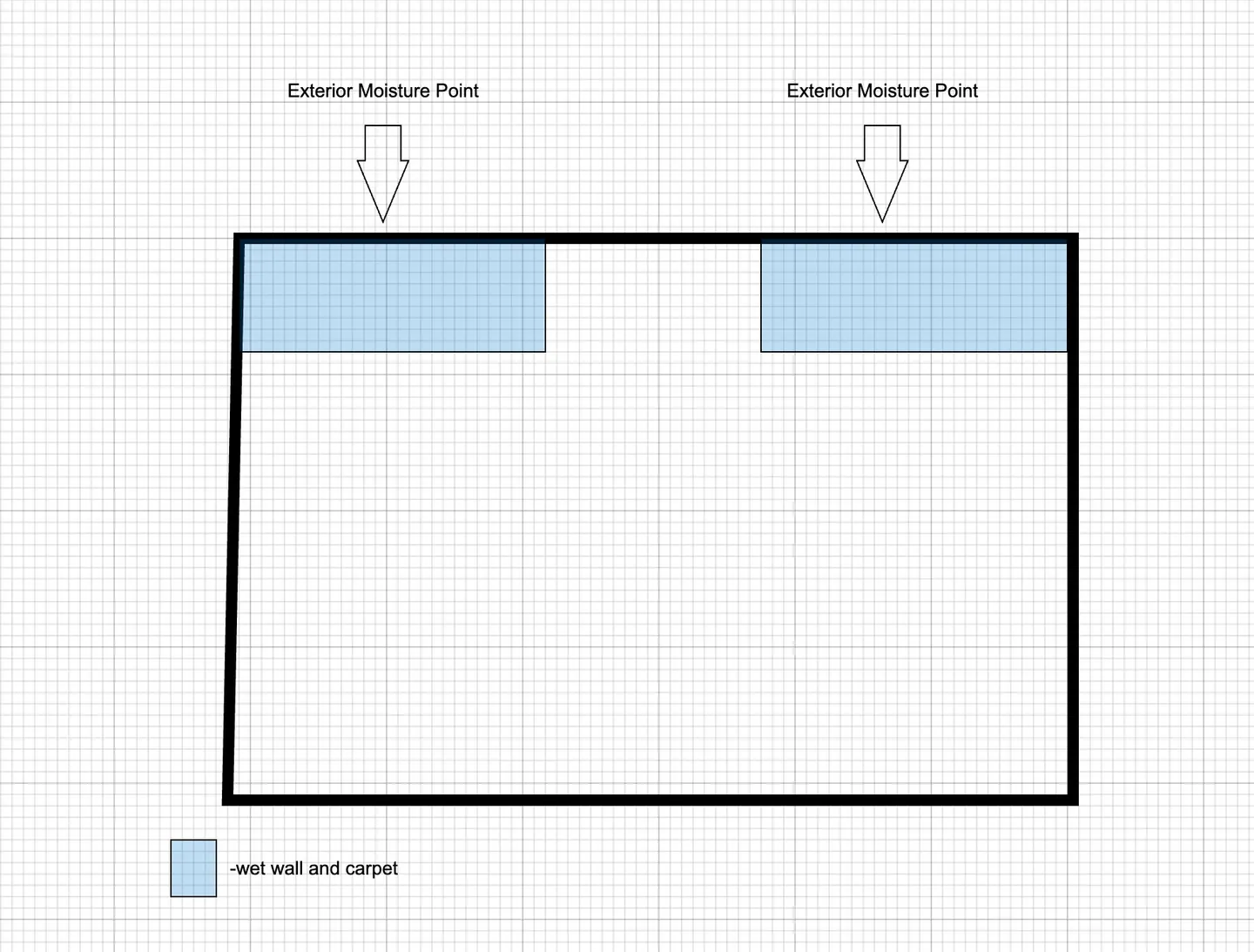
The home was slab-on-grade with painted brick veneer. Two separate interior wet zones were found along the guest bedroom's exterior wall.
What Was Inspected
- The assessment was limited and non-invasive. The wall cavity was not opened; the carpet was not lifted; the carpet pad and slab surface beneath it were not exposed. No drywall or other building materials were cut, removed, or demolished.
- Accessible carpet, lower drywall, nightstand surfaces, and the corresponding exterior were inspected. Comparative moisture screening used an Extech meter in pinless mode, and one surface swab was collected from stained carpet in a wet zone.
- No air samples were collected. Concealed moisture, growth, or material damage in unexamined areas cannot be ruled out by this inspection.
What We Observed
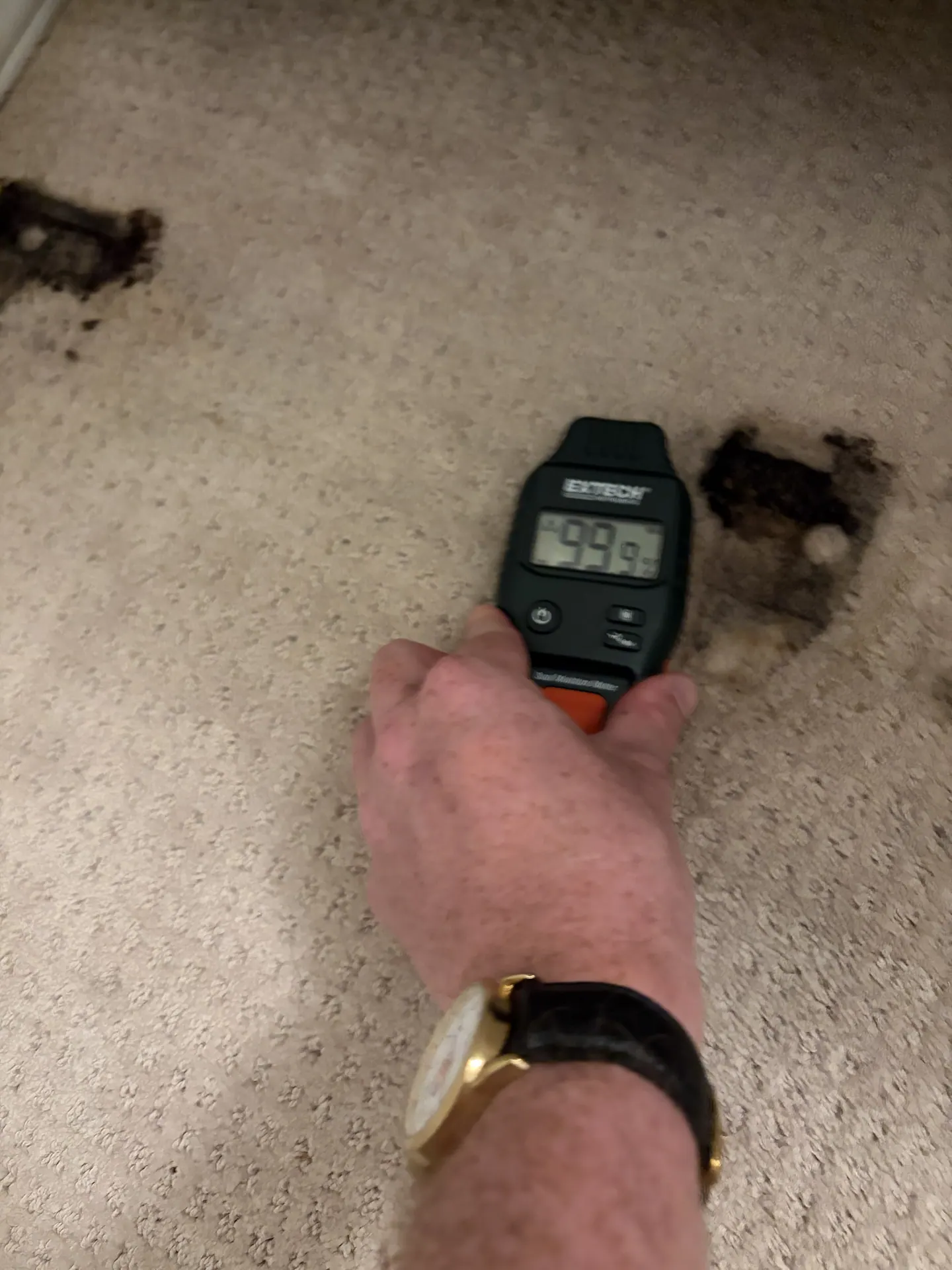
The bedroom carpet showed two well-defined dark stained areas where nightstand feet had stood. Carpet at each location was wet to the touch, with the wet area extending approximately two feet into the room. The drywall above the baseboard was wet to the touch up to about one foot above the floor at both locations.
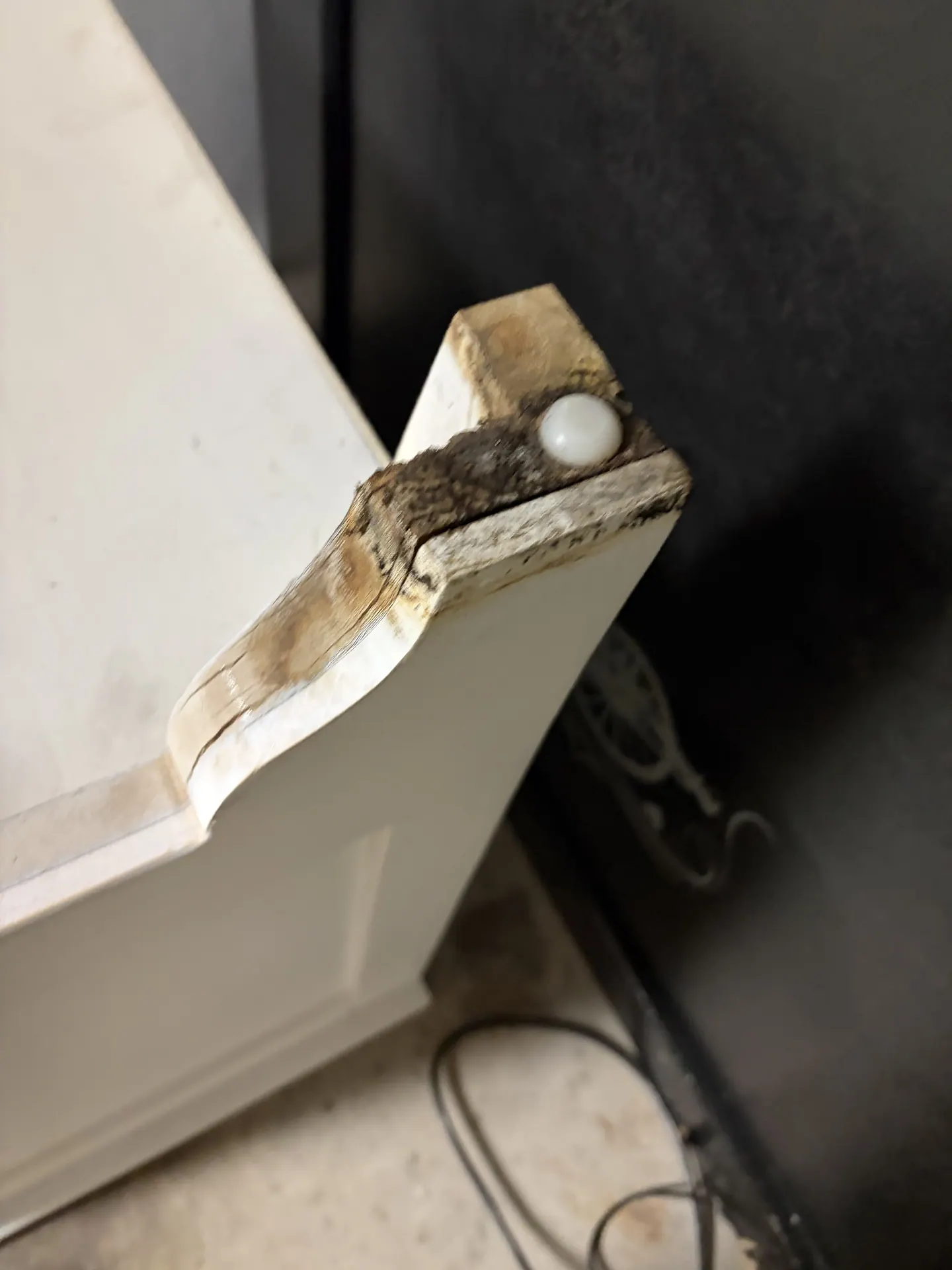
Dark growth and delamination were visible on a wooden nightstand foot and adjacent case bottom where it had contacted the wet carpet. The nightstand was not swabbed. No visible fungal growth was observed on the painted wall or baseboard.
What Was Found Inside the Bedroom?
Both carpet stains were near the exterior wall at former nightstand-foot positions. The carpet and lower drywall were wet at each area, while the accessible painted wall surface and baseboard did not show visible growth. The nightstand foot and neighboring lower wood showed dark growth and delamination, but only carpet—not furniture—was sampled.
Moisture Screening Compared Wet and Reference Areas
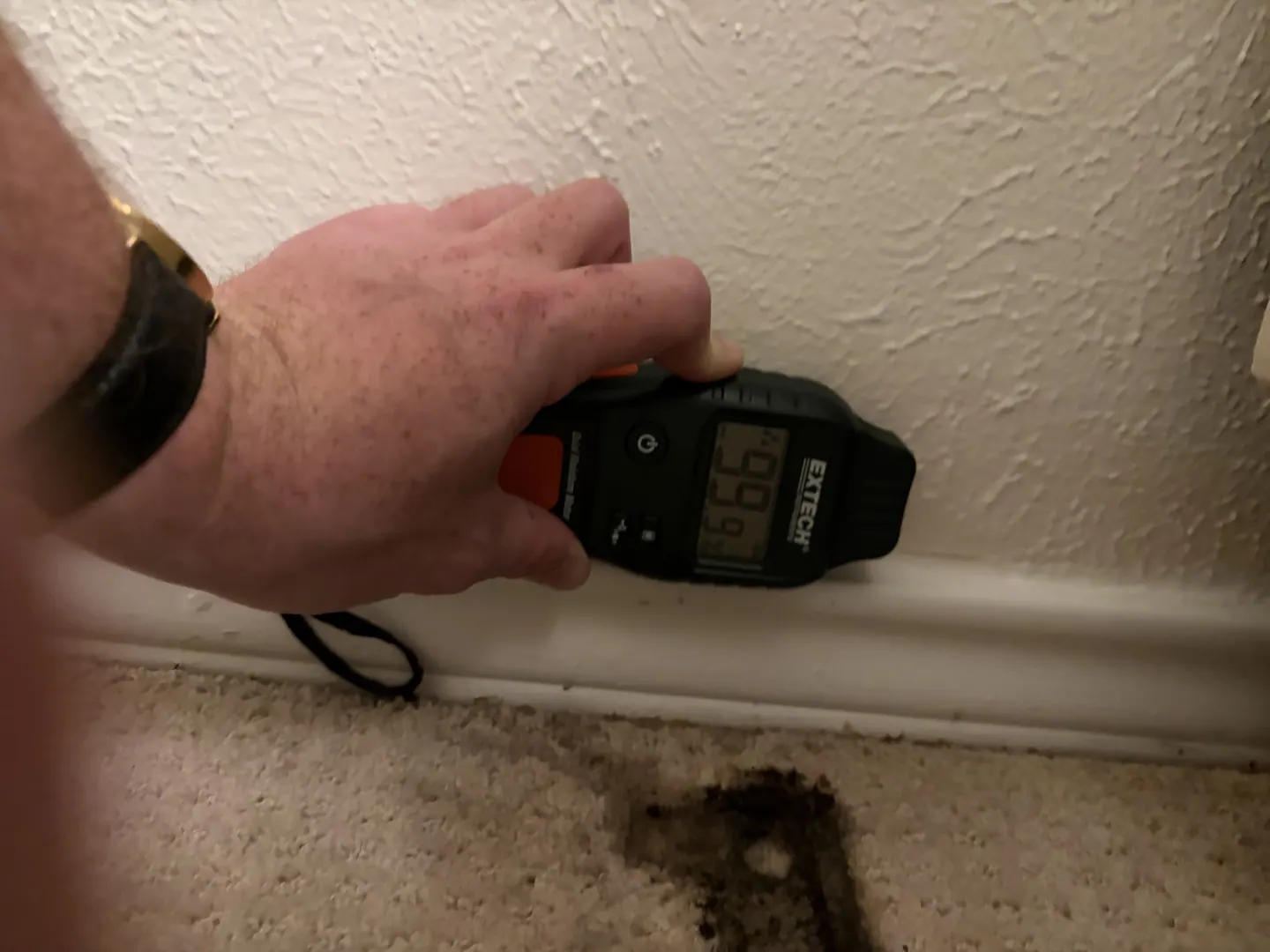
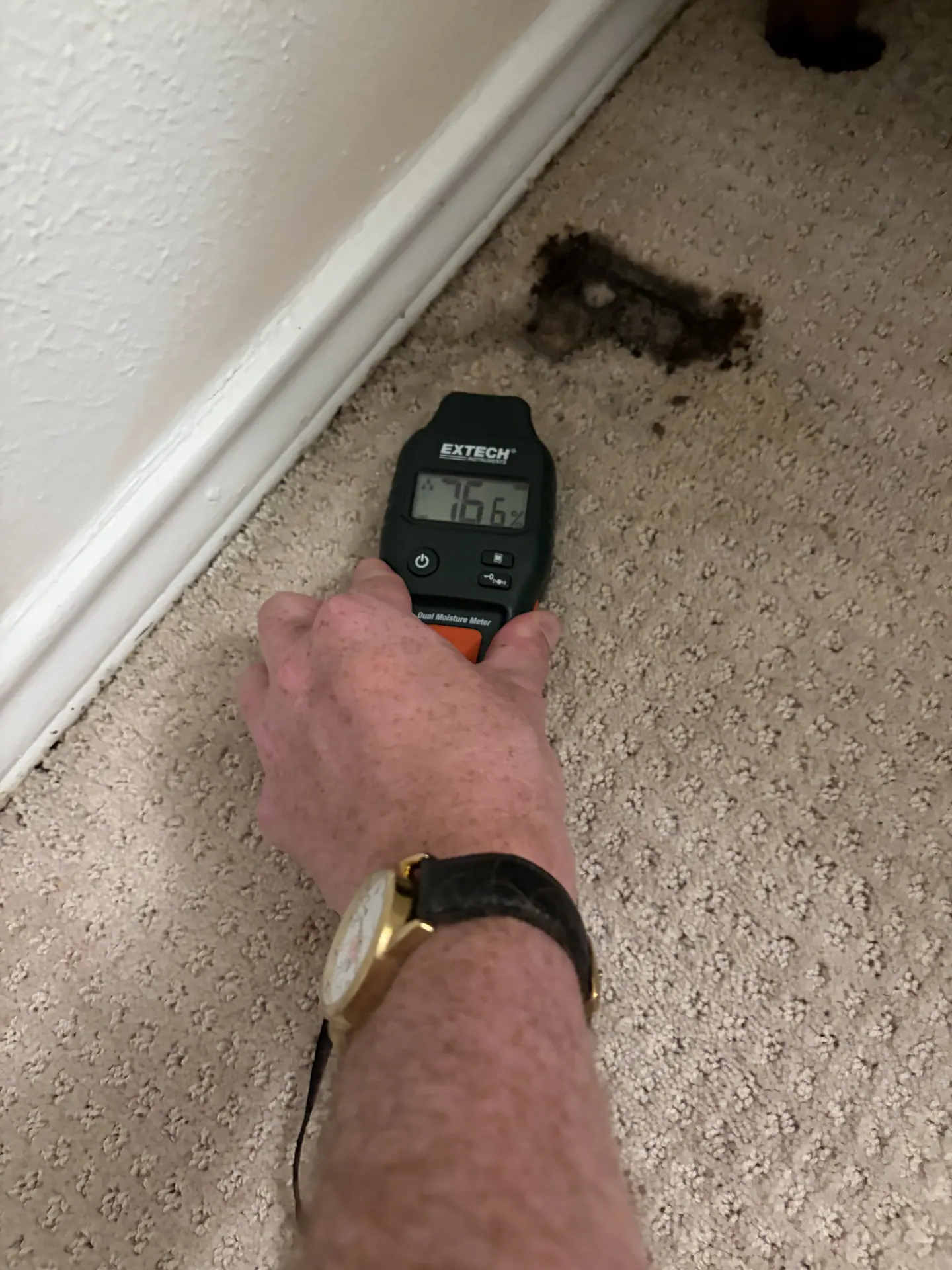
In pinless comparative mode, the meter reached its maximum displayed response of 99.9 on the left wet carpet zone where the swab was taken and on the lower drywall above the baseboard. At the right wet carpet zone it returned 76.6; its outer edge returned 64.5. An unaffected carpet reference returned 2.8.
These are comparative responses, not actual moisture-content percentages, even where a percent symbol appears on the meter. The markedly higher affected-area responses were consistent with a substantial moisture anomaly, but the readings do not locate moisture precisely in the carpet, pad, slab, or wall, establish its depth, or measure the materials' exact water content.
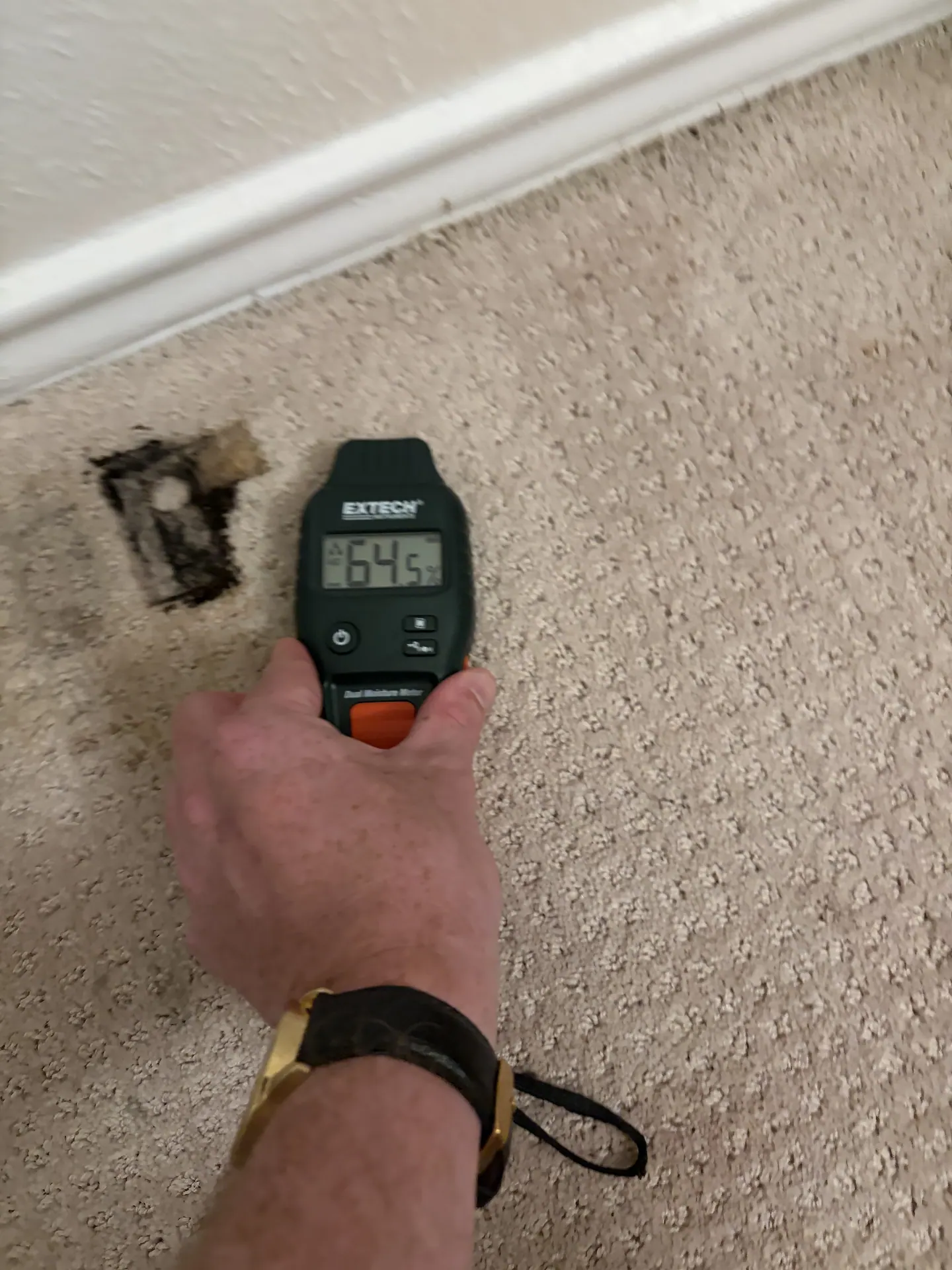
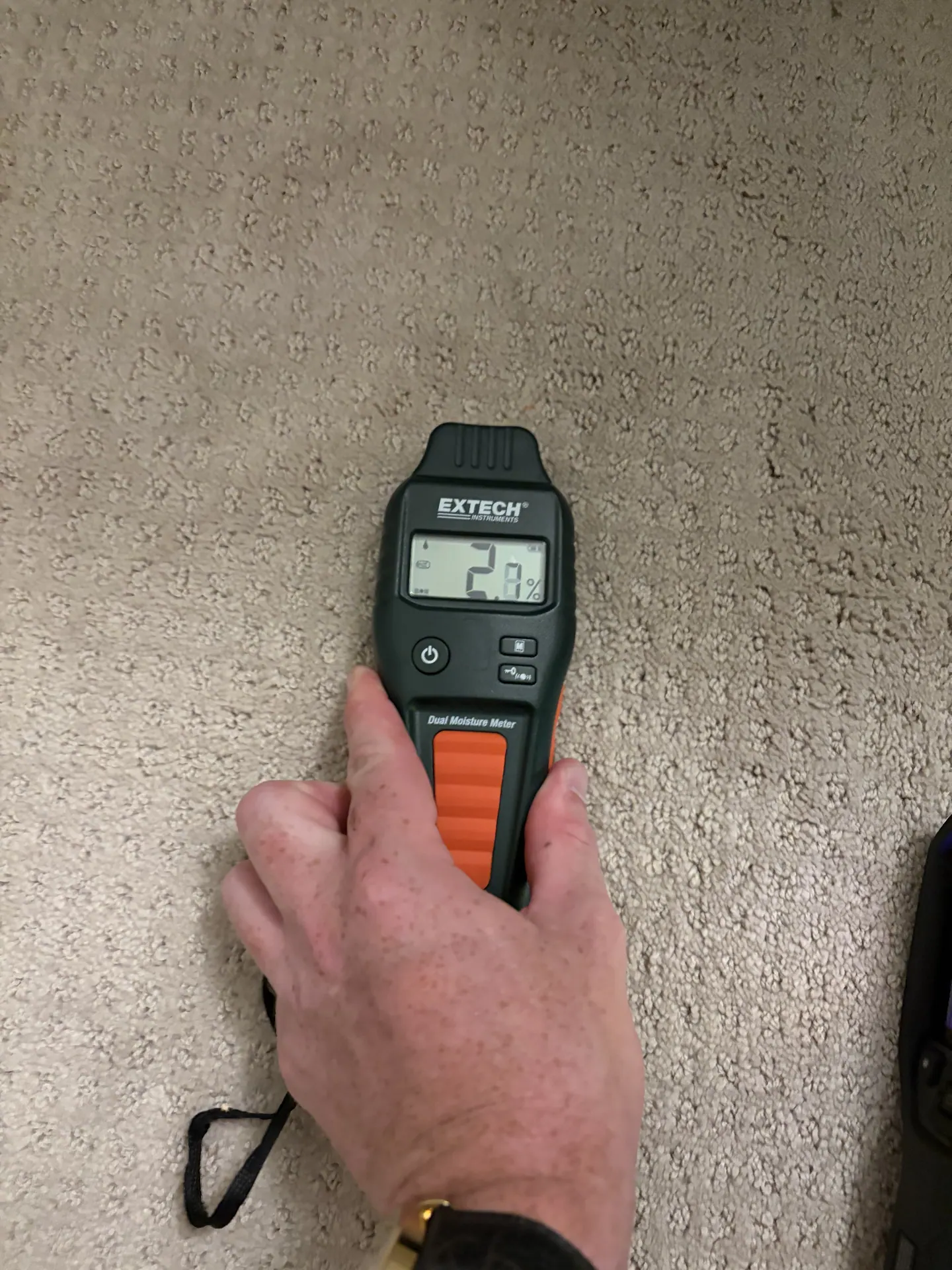
Moisture / Building Conditions
Left stained wet carpet zone and lower drywall: 99.9 comparative response at both locations, the meter maximum. Right wet carpet zone: 76.6; its outer edge: 64.5; unaffected carpet reference: 2.8. These readings describe comparative screening, not exact moisture-content percentages.
The carpet was wet to the touch for about two feet into the room at each zone, and lower drywall was wet to the touch up to about a foot above the floor. The carpet pad, slab, and wall cavity were not exposed.
Sampling Performed
- Surface swab, direct microscopic examination — Guest-bedroom stained wet carpet along the exterior wall: One wet zone was sampled. Furniture, the other wet zone, and concealed materials were not separately sampled.
Laboratory Findings
| Sample | Finding | Reported result | Context |
|---|---|---|---|
| Guest-bedroom wet carpet swab | Chaetomium | Heavy | |
| Guest-bedroom wet carpet swab | Hyphal fragments | Heavy | |
| Guest-bedroom wet carpet swab | Aspergillus/Penicillium-like structures | Minor | |
| Guest-bedroom wet carpet swab | Non-specified fungal spore | Minor |
Why Was Chaetomium Relevant?
Chaetomium is a fungal group associated with persistently wet cellulose-containing materials. It was reported at a Heavy direct-exam rating on carpet from an area with documented wetting. The laboratory's Heavy category is its highest and denotes more than three fungal structures per field of view; it is not a health-risk rating.
No Air Samples Were Collected
This assessment used a targeted surface swab, not air sampling. It did not measure airborne fungal concentrations, overall indoor air quality, or occupant exposure, or establish whether room-air spores were elevated.
What the Findings Suggested
The combination of Heavy Chaetomium and Heavy hyphal fragments with visible staining and wet material was interpreted as consistent with active fungal growth on the sampled carpet surface. It does not establish laboratory confirmation on the nightstand, unexamined pad or slab, the wall cavity, or the other carpet zone.
The alignment of two interior wet zones with two exterior wetting indicators supported landscape irrigation as a probable recurring moisture source. The specific route into or through the brick-veneer assembly was not determined.
What Was Happening Outside the Wall?
Two separate exterior areas of heavy green algae-like growth on painted brick and the slab edge aligned horizontally with the two interior wet zones. At both exterior locations, mulch and soil were bedded against the veneer and the lower brick course and slab edge were at or below nearby grade.
At one location, mortar-joint separation and an open vertical joint were visible; a landscape irrigation valve box was in the adjacent planting bed. Exterior biological growth indicated repeated wetting there, not laboratory-confirmed interior mold. The interior carpet was tested separately.
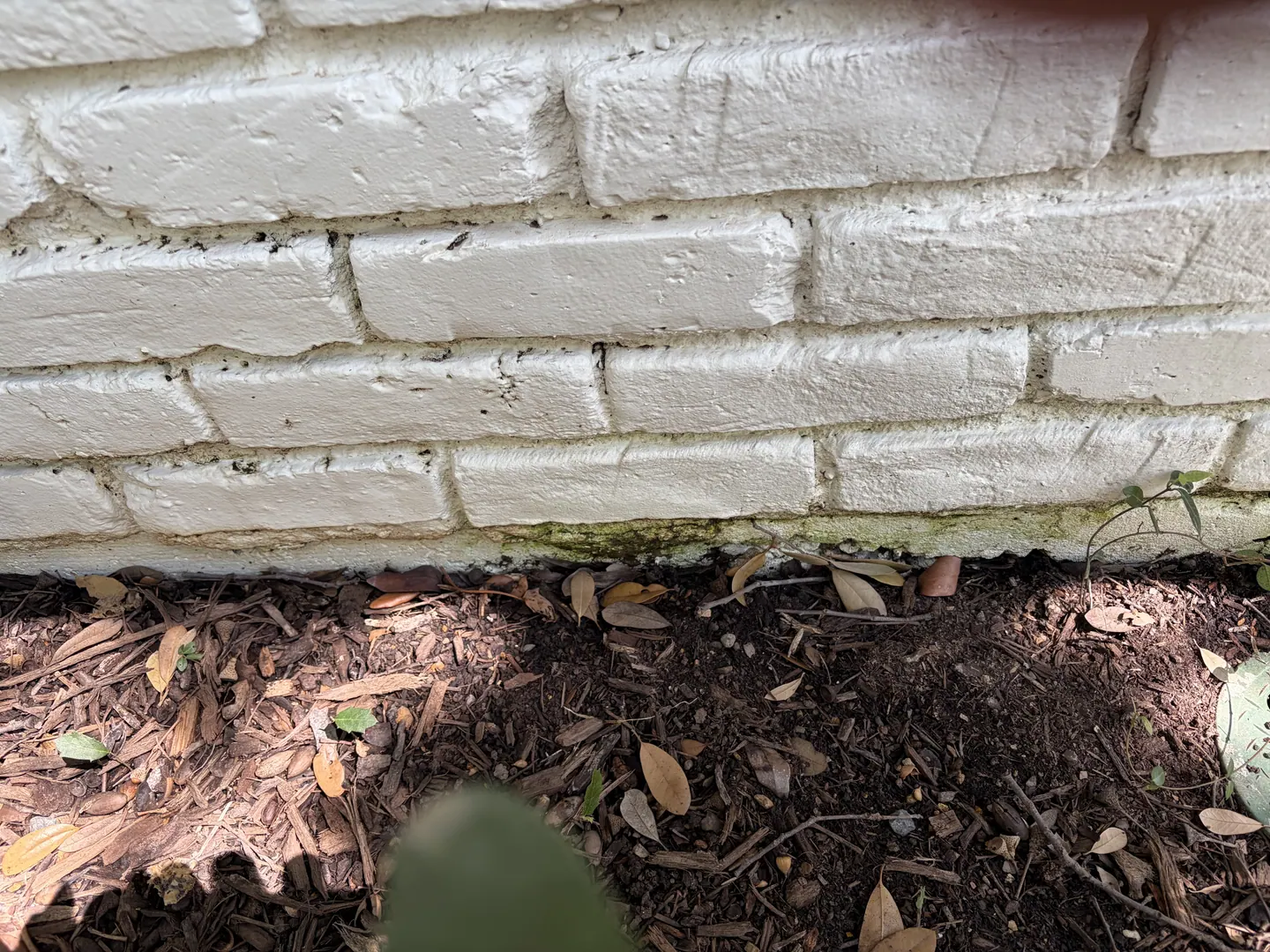
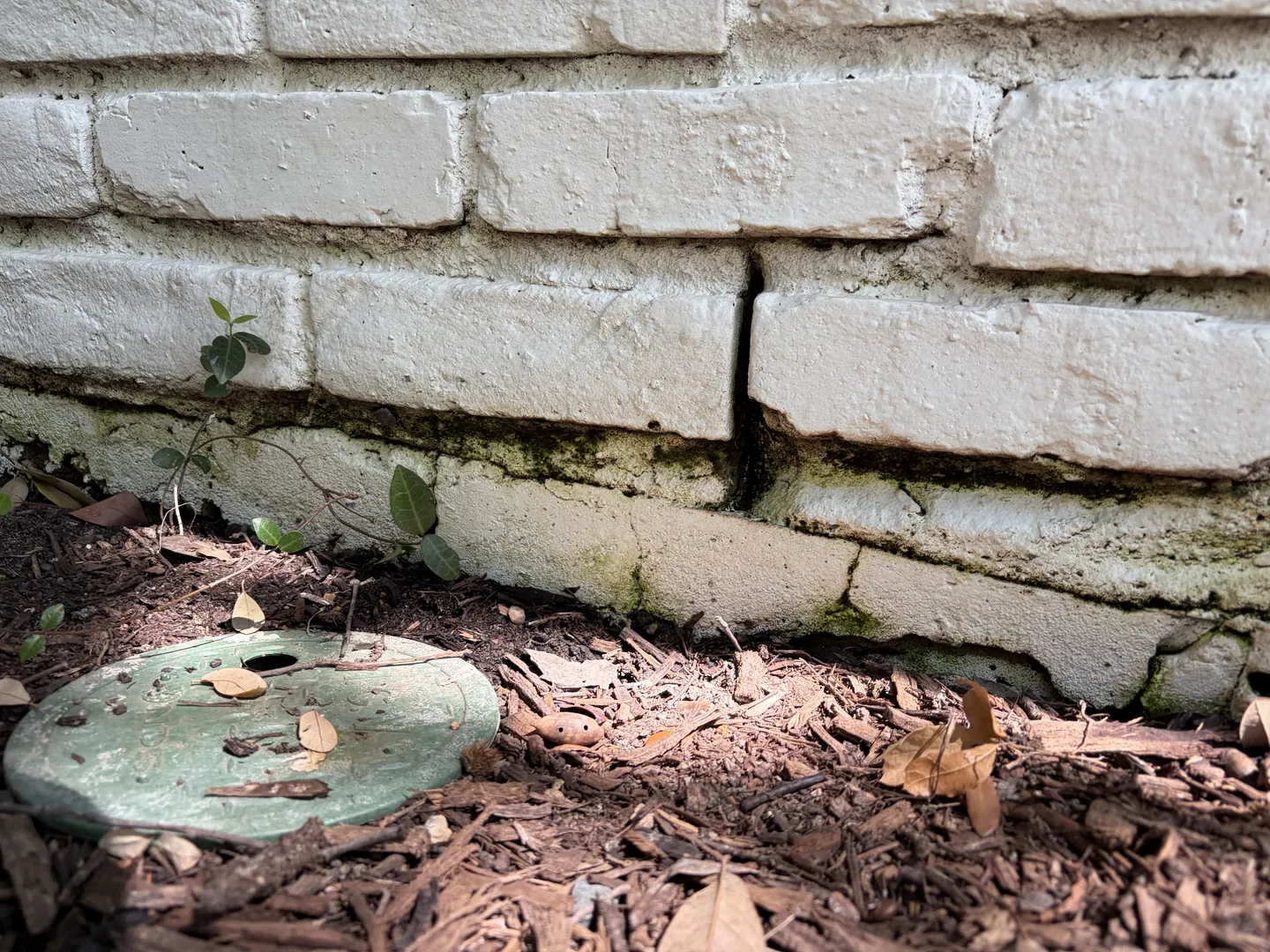
Guest Bedroom Moisture Pattern — Field Sketch
The supplied field sketch marks the approximate positions of the two wet wall-and-carpet zones against the two exterior moisture points. It is not to scale and does not establish a water-entry pathway through the wall.
Recommendations
- The assessment recommended correcting the exterior moisture source before or alongside interior remediation. Professional evaluation should consider irrigation direction, landscape drainage, mulch depth, soil and grade against brick veneer, mortar-joint condition, and the slab edge.
- Wetted carpet, pad, drywall, and potentially concealed materials were to be addressed under a formal remediation protocol prepared by a licensed Mold Assessment Consultant. This public account does not reproduce removal instructions, quantities, controls, or clearance criteria.
What Homeowners Can Learn From This Case
Interior wet carpet or wall materials are not always explained by a roof or plumbing leak. When moisture follows an exterior wall, exterior observations such as sprinkler direction, drainage, soil and mulch height, slab-edge exposure, mortar condition, and biological growth patterns can help assess possible sources.
Visible changes to carpet or furniture can accompany an exterior moisture problem. In this case the nightstand had visible growth, while a separate carpet swab supported fungal growth on the sampled carpet. The precise entry path and the condition of unopened materials remained unknown.
Questions About This Case
Can sprinklers cause mold inside a house?
Repeated irrigation against an exterior wall or drainage toward a building can contribute to moisture intrusion and fungal growth if water reaches susceptible materials. Here, interior wet zones aligned with exterior wetting indicators, so landscape irrigation was considered the probable recurring source; the exact entry path was not confirmed.
Can mulch against brick cause moisture problems?
High mulch and soil against brick veneer can retain moisture and complicate drainage, especially alongside irrigation. Both affected exterior areas in this case had mulch and soil bedded against the veneer.
Can water come through a brick wall?
Brick veneer is not a completely waterproof barrier. Water can migrate through exterior assemblies where drainage, flashing, mortar joints, grading, or irrigation conditions are unfavorable. The precise pathway at this property was not established.
Can mold grow in wet carpet after water intrusion?
Yes. A swab of stained wet carpet in this bedroom contained Heavy Chaetomium and Heavy hyphal fragments and was interpreted as supporting active growth on the sampled carpet surface. The pad beneath it was not exposed.
Does algae outside a brick wall mean there is mold inside?
No. Exterior algae-like growth can signal repeated exterior wetting but cannot prove interior mold. In this case, interior carpet was separately sampled and supported fungal growth at that sampled location.
Can mold grow on furniture sitting on wet carpet?
Porous furniture in contact with wet flooring can be affected. Dark visible growth and delamination were observed on this nightstand foot, but the furniture was not separately sampled or laboratory-confirmed.
Related Services
Wet Carpet or Wall Along an Exterior Wall?
If moisture keeps appearing along an exterior wall, the source may be outside the home rather than from interior plumbing. A mold assessment can help document moisture patterns, visible conditions, and fungal growth where appropriate.
Schedule a Mold InspectionInspection performed by Ethan Wright, TDLR Licensed Mold Assessment Technician (MAT #1589).
Related Real Inspection Cases
Compare two other water-affected inspections: growth in a shared wall after a reported plumbing-leak repair and growth on an accessible bathroom-vanity seam where the moisture source was not confirmed.
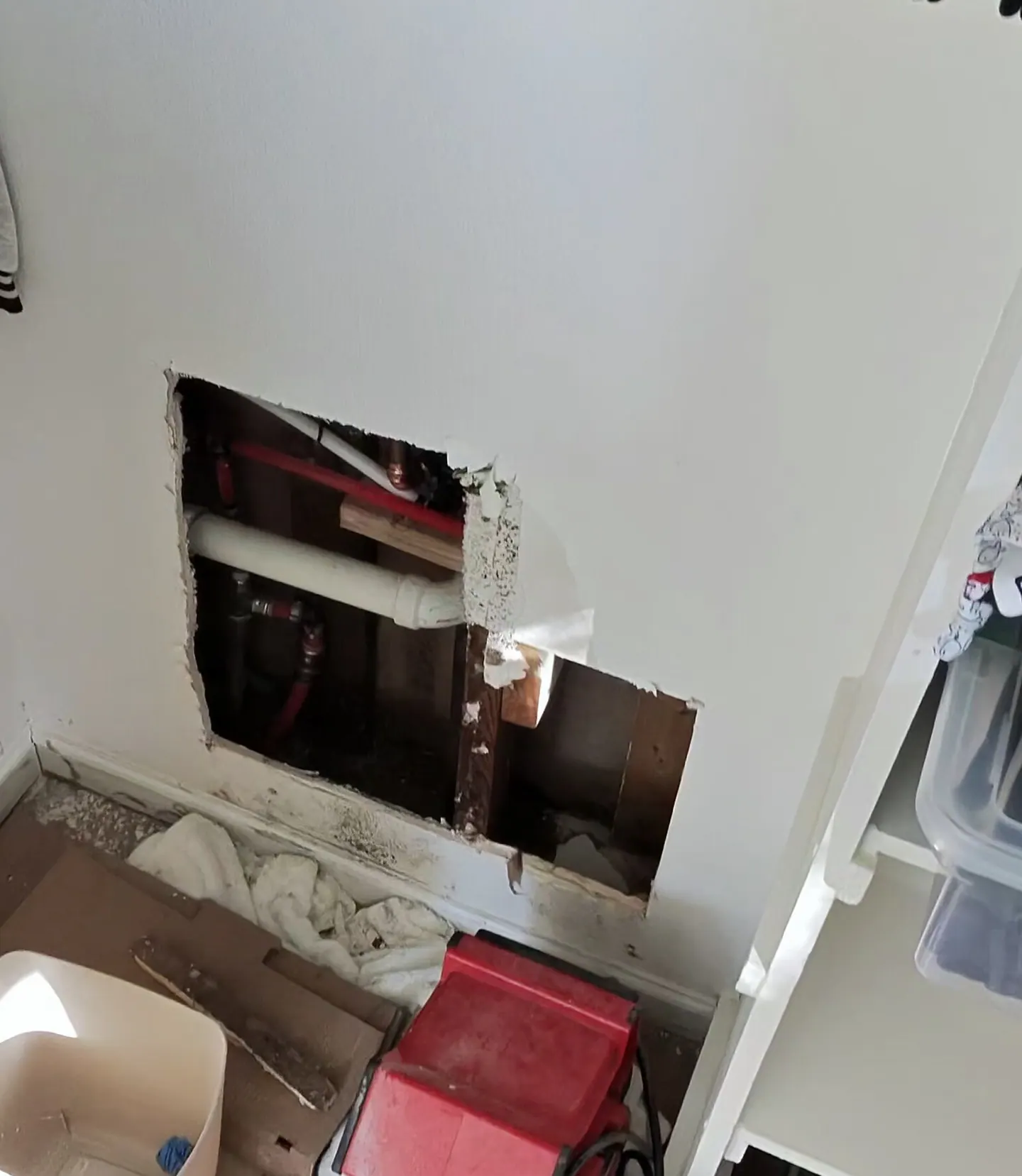
Mold Found Inside a Wall After a Plumbing Leak in Farmers Branch
A Farmers Branch homeowner requested a limited mold assessment after a reported plumbing leak affected a wall shared by a guest bathroom and two closets. The leak had reportedly been repaired, but existing repair openings exposed stained wallboard and framing. A swab through the guest bedroom closet opening supported fungal growth on sampled material. Separate ceiling and former exterior-wall concerns had different, more limited findings.
View Case Study →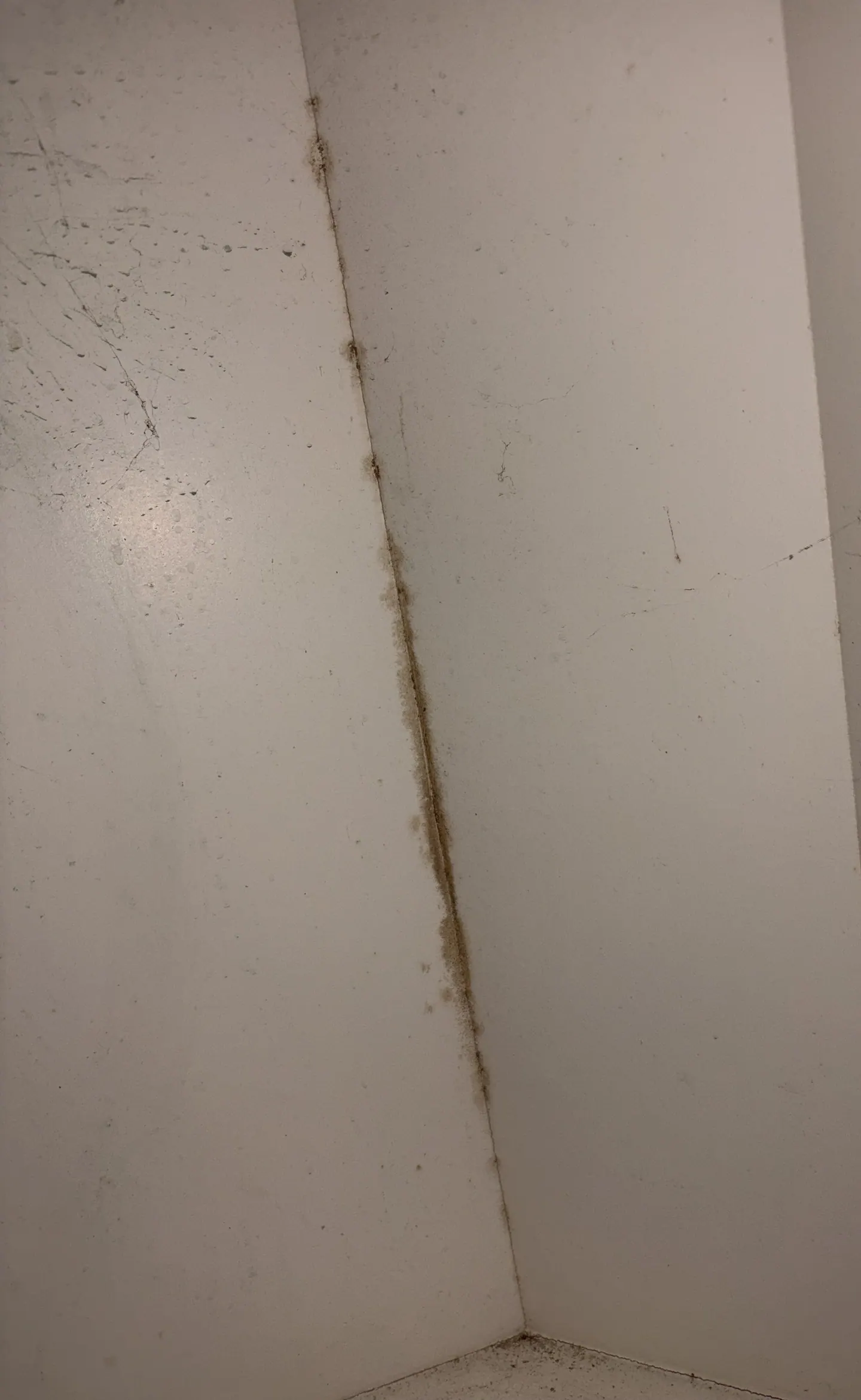
Mold Found Inside a Bathroom Vanity After a Persistent Musty Odor
A homeowner reported persistent musty odors in three adjoining or vertically stacked bathrooms. In Bathroom #1, an accessible rear vanity seam showed discoloration and its surface swab supported fungal growth. Its air sample contained more than 8,000 Aspergillus/Penicillium-like spores/m³, unlike the other two bathrooms tested. The specific moisture source was not confirmed.
View Case Study →