
- Location
- Dallas-Fort Worth, Texas
- Property type
- Residential
- Inspection type
- Limited mold assessment
- Primary concern
- Hidden fungal growth beneath a master-bath drop-in jetted tub
- Inspection
- October 2026
The Situation
A homeowner requested a limited assessment of the master bathroom drop-in jetted tub and deck enclosure and an upstairs bathroom.
An existing access panel at the faucet end provided a limited view of the under-tub cavity. The surface swab was collected through that existing opening.
What Was Inspected
- The assessment included visual observation, one direct-exam surface swab, one master-bath spore-trap air sample and one upstairs-bath spore-trap air sample.
- No building materials were removed. No wall, floor or tub-deck materials were opened, and the full concealed tub perimeter was not visually inspected.
- No outdoor reference sample was collected. Moisture-meter readings, temperature and relative humidity were not recorded by the assessor during the October 6, 2026 inspection. The later contractor-reported meter reading was not part of that initial inspection.
- Additional contractor-reported measurements and photographs were supplied after the initial assessment. Mold Testing Dallas did not personally observe or independently measure those later conditions.
What We Observed
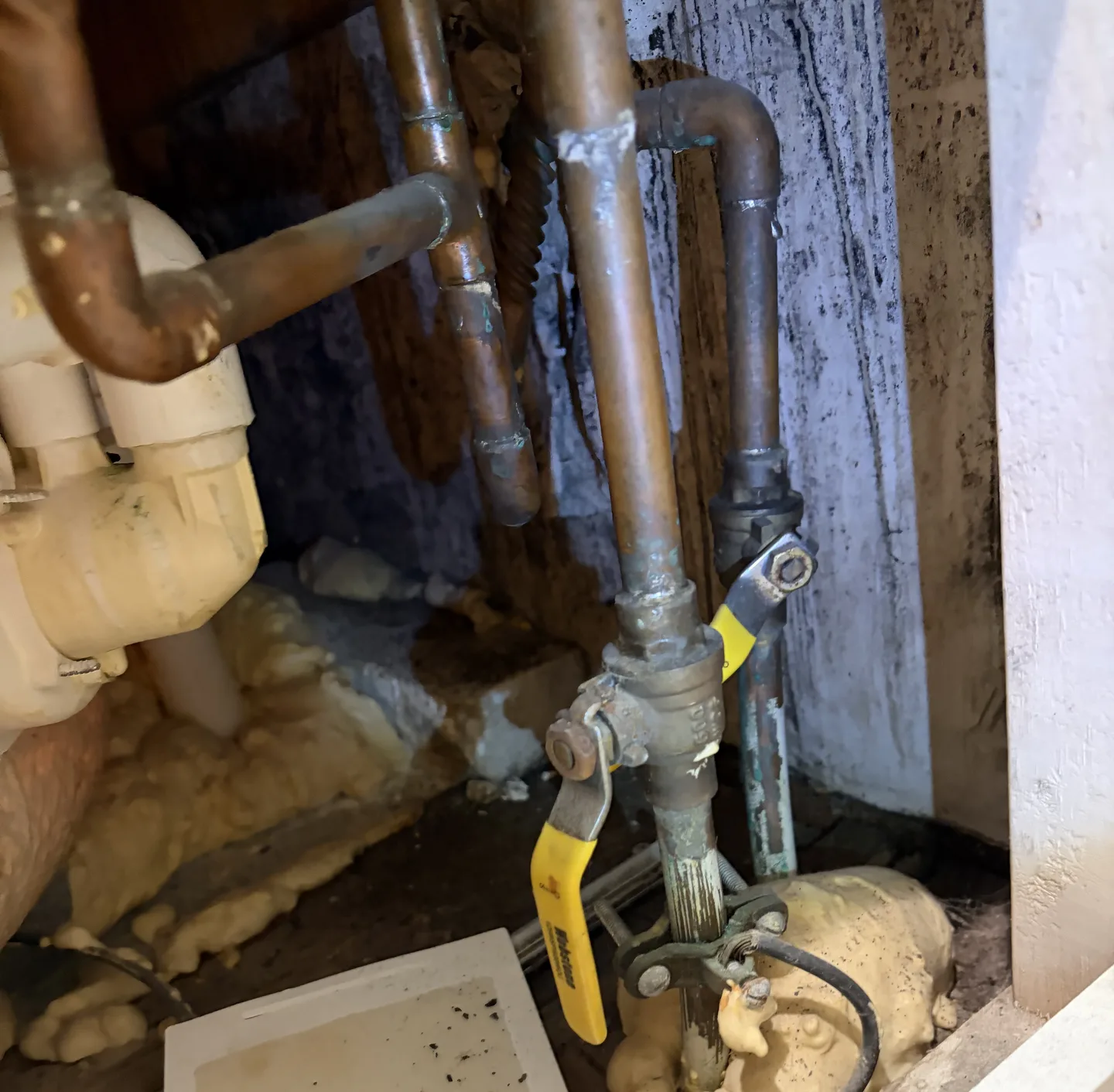
The master bathroom contained a drop-in jetted tub surrounded by a deck enclosure. Through the existing faucet-end access panel, the assessor observed dark visible growth on wall surfaces and framing behind the supply plumbing.
Spray foam was present around supply and drain penetrations. The confirmed visible area extended along the interior back-wall edge at the faucet end and the faucet-end side wall.
The remaining under-tub cavity-wall surfaces could not be seen from the access opening. The updated suspected area includes all cavity-wall surfaces not visible from that opening; growth on those surfaces was not directly sampled or visually confirmed.
What Was Found Beneath the Bathtub?
The drop-in jetted tub was surrounded by a deck enclosure. An existing faucet-end access panel allowed limited viewing of the concealed cavity without removing building materials.
Dark visible growth affected wall surfaces and framing behind the supply plumbing. Spray foam was present around supply and drain penetrations.
The confirmed visible area extended along the interior back-wall edge at the faucet end and along the faucet-end side wall. The full tub perimeter was not visually inspected.
Expanded Areas of Concern
Master-bath under-tub cavity — confirmed fungal growth at the faucet end, supported by visible growth, Heavy Stachybotrys and Moderate hyphal fragments in the surface swab.
Remainder of the under-tub cavity — suspected growth on all concealed cavity-wall surfaces not visible from the existing access panel; these surfaces were not confirmed.
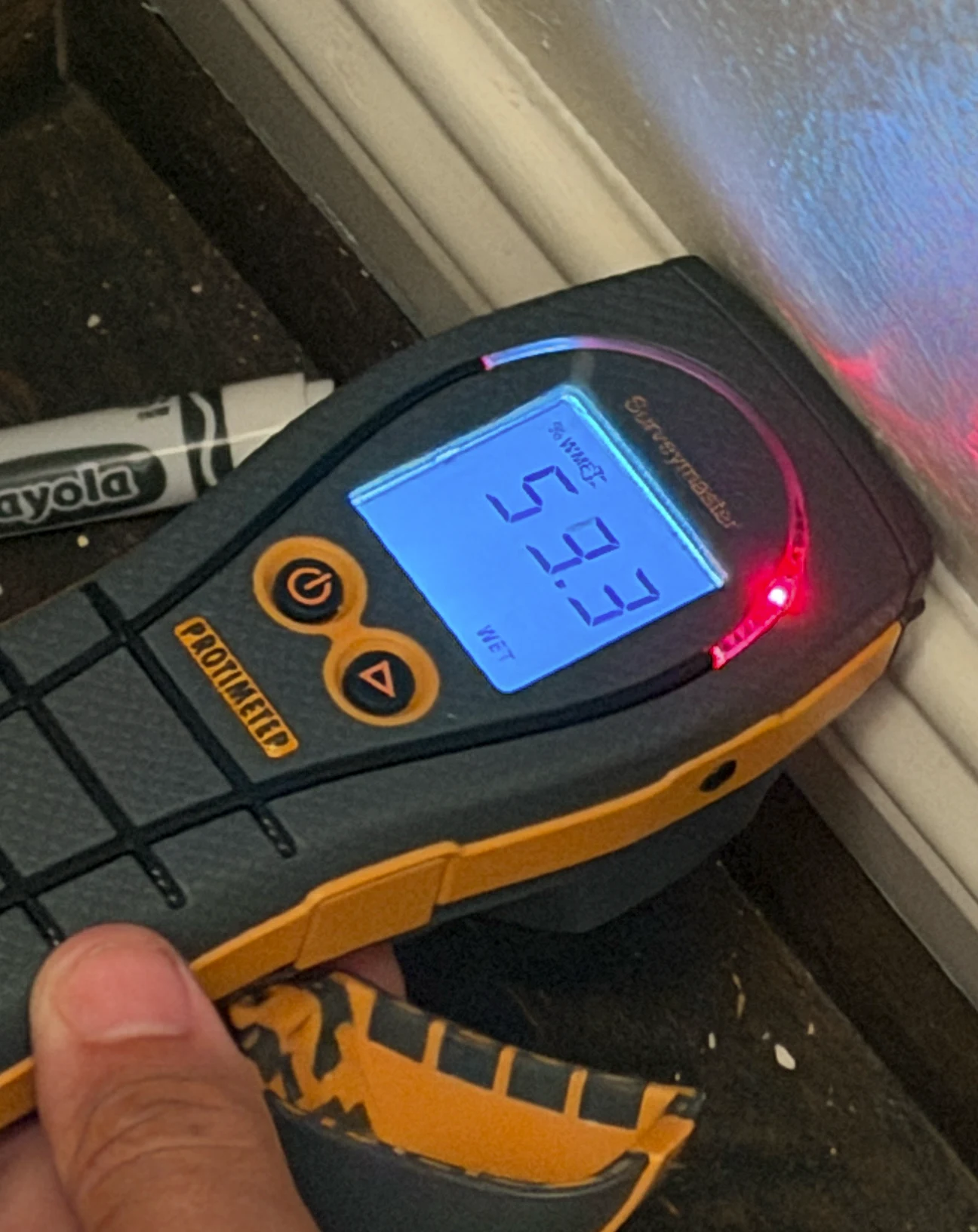
Shower enclosure / office-closet shared wall — moisture concern based on a contractor-reported reading. The homeowner elected to include the shower enclosure in the remediation project. Mold in this wall and a leaking shower were not confirmed.
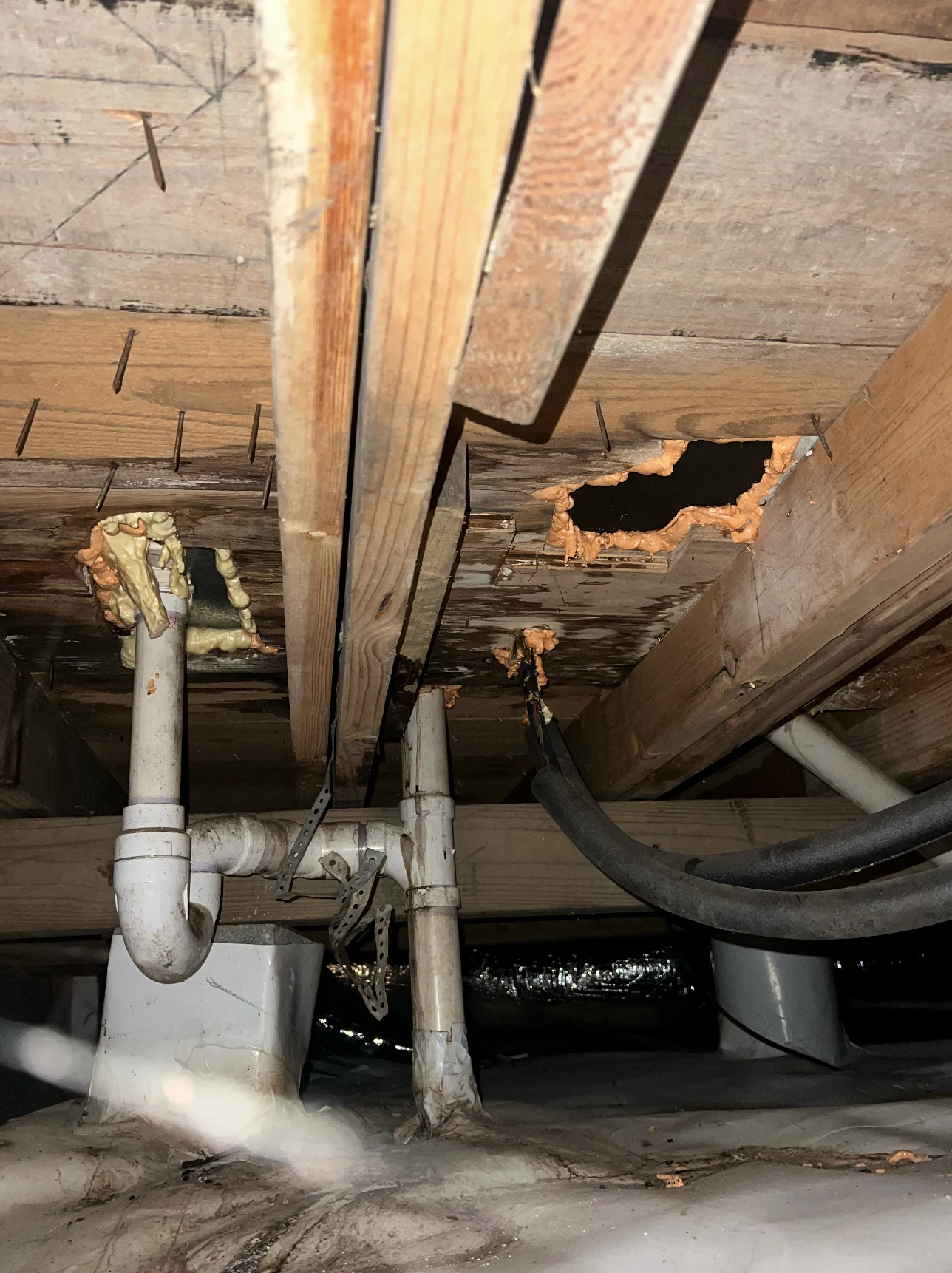
Crawlspace subfloor — water-damage concern based on contractor-provided photographs showing moisture staining and apparent deterioration around plumbing penetrations; not laboratory-confirmed mold.
How to Read the Updated Floor Plan
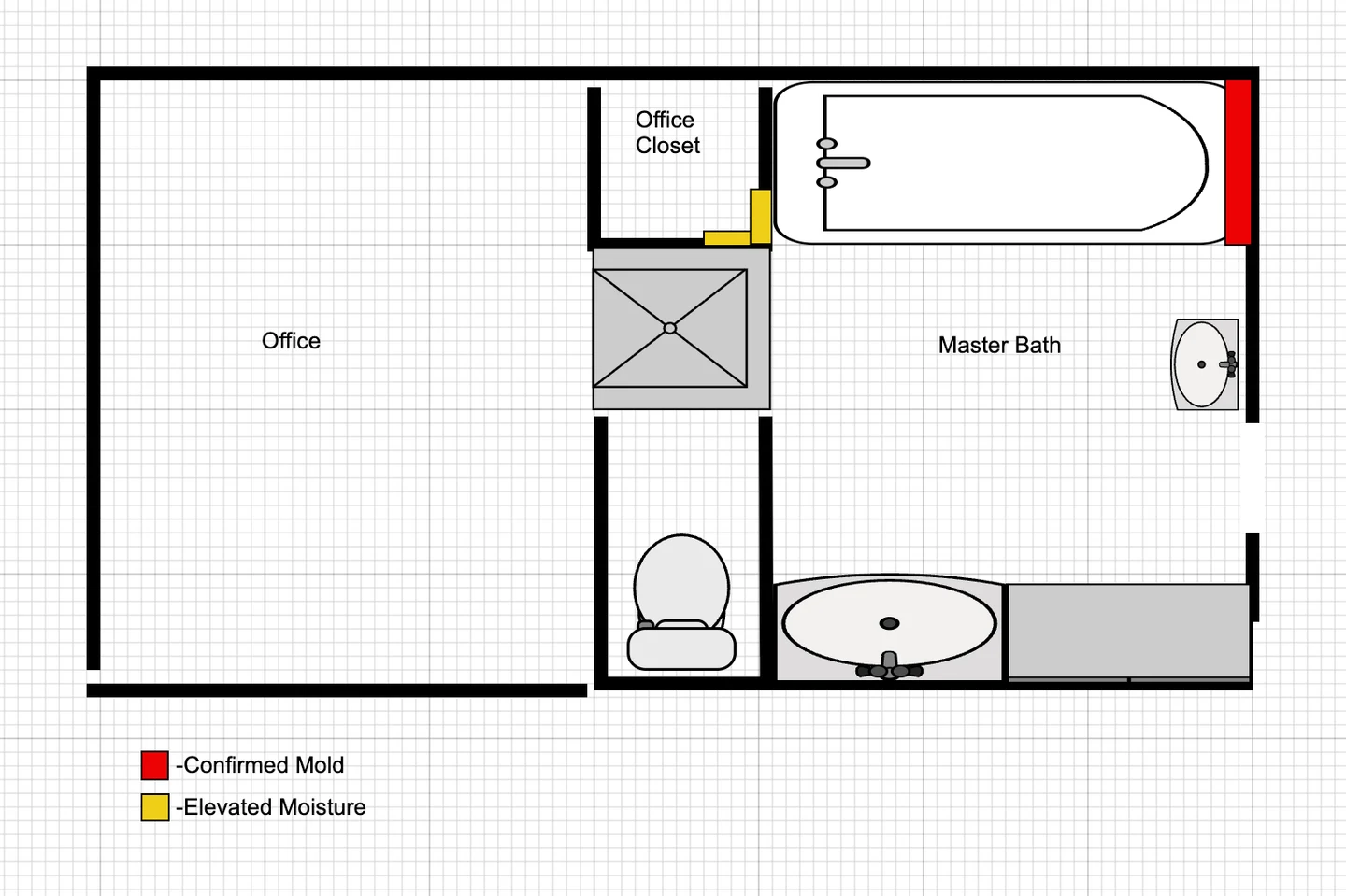
Updated floor plan: red identifies the visually and laboratory-confirmed mold location at the faucet end of the tub. Yellow identifies the contractor-reported office-closet moisture condition at the wall shared with the shower. Yellow is moisture only and does not represent confirmed mold.
The updated report separately identifies all cavity-wall surfaces not visible from the existing access panel as suspected, not confirmed. These concealed surfaces should not be confused with the yellow moisture marking on this floor plan. The plan does not establish mold throughout the tub cavity.
What Caused the Moisture Beneath the Tub?
The source of water affecting the master-bath assembly had not been conclusively identified. The shower became a suspected contributor because of the contractor-reported office-closet moisture anomaly at the shared shower wall and the homeowner's decision to include the shower enclosure in the project. That decision is not proof of a leak.
The confirmed under-tub growth was at the faucet end, the end farthest from the shower. Contractor-provided crawlspace photographs also showed staining concentrated around plumbing penetrations, so tub plumbing could not be excluded.
A licensed plumber should leak-test the shower pan, shower drain, shower valve, tub supply plumbing, tub drain plumbing and jetted-tub components. None was confirmed as the moisture source. Any additional contributing source identified during investigation must also be corrected.
Why the Source Wasn't Assumed
A moisture anomaly near a shower makes that shower a reasonable area for investigation, but the nearest suspected source is not automatically responsible. The faucet-end location of the confirmed fungal growth and staining around crawlspace plumbing penetrations meant the tub plumbing remained another candidate source.
This case illustrates why investigating mold under a bathtub from a plumbing leak, a possible shower leak, moisture behind a shower wall or crawlspace water damage under a bathroom requires tracing the actual water pathway. A hidden bathroom water leak may involve more than one component. A bathroom plumbing leak and hidden mold should not be attributed to one source without evidence.
Leak testing multiple shower and tub components was recommended rather than assuming a shower leak caused the mold under the jetted tub.
Why the Existing Access Panel Was Not Enough
The faucet-end access opening provided only a limited view. All remaining concealed cavity-wall surfaces were outside that view and remained suspected, not confirmed.
The assessor recommended full-access evaluation by the licensed Mold Assessment Consultant and noted that removal of the tub and deck enclosure appeared necessary to access the concealed perimeter.
This was the assessor's field judgment, not a final removal mandate. The final removal extent and remediation scope were to be determined by the licensed Mold Assessment Consultant.
Sampling Performed
- Surface swab; direct microscopic examination — Under master-bath tub; interior wall edge: Sample 1, collected through the existing faucet-end access opening.
- Spore-trap air sample — Master bath: One indoor sample collected in the room containing the concealed under-tub source.
- Spore-trap air sample — Upstairs bath: One indoor sample; no outdoor reference sample was collected.
Under-Tub Surface Swab: Direct Microscopic Examination
| Sample | Finding | Reported result | Context |
|---|---|---|---|
| Under master-bath tub; interior wall edge | Stachybotrys | Heavy | |
| Under master-bath tub; interior wall edge | Hyphal fragments | Moderate | |
| Under master-bath tub; interior wall edge | Cladosporium | Minor | |
| Under master-bath tub; interior wall edge | Yeast-like fungi | Minor | |
| Under master-bath tub; interior wall edge | Non-specified spore | Minor |
Master-Bath Air Sample
| Sample | Finding | Reported result | Context |
|---|---|---|---|
| Master bath | Total fungal | 380 structures/m³ | |
| Master bath | Stachybotrys | 130 structures/m³ | Raw count: 3 |
| Master bath | Cladosporium | 85 structures/m³ | |
| Master bath | Aspergillus/Penicillium-like | 43 structures/m³ | |
| Master bath | Curvularia | 43 structures/m³ | |
| Master bath | Non-specified spore | 43 structures/m³ | |
| Master bath | Hyphal fragments | 43 structures/m³ | |
| Master bath | Debris rating | Light |
Upstairs-Bath Air Sample
| Sample | Finding | Reported result | Context |
|---|---|---|---|
| Upstairs bath | Total fungal | 260 structures/m³ | |
| Upstairs bath | Cladosporium | 85 structures/m³ | |
| Upstairs bath | Ascospores | 43 structures/m³ | |
| Upstairs bath | Curvularia | 43 structures/m³ | |
| Upstairs bath | Non-specified spore | 43 structures/m³ | |
| Upstairs bath | Hyphal fragments | 43 structures/m³ | |
| Upstairs bath | Stachybotrys | Not detected |
What the Heavy Stachybotrys Surface Result Means
The laboratory defines Heavy as more than 3 structures per field of view. Heavy Stachybotrys, together with visible growth, supported active fungal growth at the sampled concealed surface.
Stachybotrys was confirmed at a Heavy rating on the sampled concealed surface beneath the tub. This result applies to that sampled location, not the entire tub perimeter, bathroom or house.
Stachybotrys Was Also Detected in Master-Bath Air
The master-bath air sample contained 380 total fungal structures/m³, including Stachybotrys at 130 structures/m³ with a raw count of 3. The debris rating was Light.
The report interpreted the airborne detection as consistent with the concealed source identified beneath the tub. It does not establish whole-home airborne contamination.
The Upstairs Bathroom Had No Detected Stachybotrys
The upstairs-bath air sample contained 260 total fungal structures/m³ and common fungal types at low counts. No Stachybotrys was detected in that sample.
The report did not recommend the upstairs bathroom for remediation evaluation. This sample-specific finding does not establish that the upstairs bathroom was free of all mold.
What the Findings Suggested
Visible growth and the Heavy Stachybotrys surface result supported active fungal growth at the sampled concealed under-tub wall edge. Moderate hyphal fragments were also present.
Stachybotrys in the master-bath air sample was interpreted as consistent with the concealed source beneath the tub, without establishing whole-home contamination or any outdoor-baseline comparison.
The confirmed faucet-end wall and side wall were distinct from all suspected, unobserved cavity-wall surfaces. Later contractor-reported office-closet moisture and apparent crawlspace water damage broadened the investigation but did not confirm mold in those areas.
The shower remained a suspected contributor, while tub plumbing remained another candidate. The source of water affecting the master-bath assembly and final remediation extent remained undetermined.
Corrective Action and the MAC Handoff
Corrective action was warranted in the master-bath tub enclosure. The updated handoff recommended that a licensed Mold Assessment Consultant prepare the formal protocol for the tub enclosure, shower enclosure, adjacent office-closet shared wall and affected crawlspace subfloor. Including a location in the planning scope does not mean fungal growth was confirmed there.
The technician's handoff distinguished the confirmed, suspected and contractor-reported moisture or water-damage areas. A separate Mold Assessment Consultant was responsible for the formal remediation protocol, containment design, engineering controls, removal extent and clearance criteria.
Those responsibilities were not replaced by this limited assessment or the technician's field judgment about access.
Recommendations
- Engage a licensed Mold Assessment Consultant to prepare the formal remediation protocol for the master-bath tub enclosure, shower enclosure, adjacent office-closet shared wall and affected crawlspace subfloor.
- Use a licensed Mold Remediation Contractor for work performed under that protocol.
- Have a licensed plumber leak-test the shower pan, shower drain, shower valve, tub supply plumbing, tub drain plumbing and jetted-tub plumbing/components.
- Correct every contributing water source identified.
- Have the crawlspace subfloor and framing evaluated by a qualified contractor for structural water damage.
- Avoid disturbing the tub enclosure or access-panel area before the protocol is in place.
- If suspected mold is exposed, stop uncontained removal, cleaning or aggressive disturbance.
- Complete independent post-remediation assessment and clearance when required.
- Maintain indoor relative humidity below 60%; no relative-humidity measurement was recorded during this assessment.
- Check asbestos, lead-based paint or other hazardous-material requirements before disturbing tile, flooring, drywall, adhesive or painted materials where applicable.
What Homeowners Can Learn From This Case
Hidden mold can develop beneath bathtub and jetted-tub enclosures where plumbing and moisture conditions are concealed from normal view. A bathroom can look relatively normal from the occupied space while fungal growth exists behind an access panel, behind plumbing, along hidden wall surfaces or inside the deck enclosure.
Useful investigation may include inspecting existing access openings, viewing plumbing penetrations, checking concealed framing, targeted surface sampling, room-air sampling and determining whether full access is possible.
A limited access panel may reveal one affected section without allowing the entire concealed cavity to be evaluated. Findings from the viewed and sampled location should not be extended to unobserved areas.
Questions About This Case
Can mold grow underneath a bathtub?
Yes. Hidden spaces beneath tubs can support fungal growth when wallboard, wood framing or other materials remain wet. In this case, visible mold growth was found beneath a jetted tub through an existing access panel.
Can Stachybotrys grow under a bathtub?
Yes, when moisture affects cellulose-containing materials such as drywall paper or wood. In this case, a surface swab beneath the tub returned a Heavy Stachybotrys rating.
Can mold under a tub be hidden from view?
Yes. Much of a tub enclosure may be inaccessible without removing trim, deck materials or the tub itself. In this case, only the faucet-end portion could be viewed through the existing access panel.
Was mold confirmed around the entire tub?
No. Growth was confirmed at the faucet-end portion of the concealed wall and side wall. The updated suspected area includes all cavity-wall surfaces not visible from the existing access panel, not confirmed growth around the entire tub.
Can mold under a tub affect the bathroom air?
It can. In this case, Stachybotrys was detected in the master-bath air sample in the same room where Heavy Stachybotrys was confirmed beneath the tub.
Was Stachybotrys found in the upstairs bathroom?
No. Stachybotrys was not detected in the upstairs-bath air sample.
What caused the moisture under the tub?
The source had not been conclusively identified. Later contractor-reported office-closet moisture made the shower a suspected contributor, but confirmed growth at the faucet end farthest from the shower and crawlspace staining around plumbing penetrations meant tub plumbing could not be excluded. Leak testing was recommended for the shower pan, drain and valve, tub supply and drain, and jetted-tub components.
Does finding Stachybotrys mean the whole bathroom is contaminated?
No. Laboratory findings apply to the specific samples and locations tested. In this case, Heavy Stachybotrys was confirmed on one concealed under-tub surface, and Stachybotrys was also detected in the master-bath air sample.
Can a shower leak cause mold under a nearby bathtub?
It can, depending on the building layout and water pathway. In this case, elevated moisture was later reported on the opposite side of the shower wall, making the shower a possible contributor, but the leak source was not confirmed and the tub plumbing remained another candidate source.
Does a high moisture reading behind a shower prove there is mold in the wall?
No. A moisture reading can identify an area that warrants further investigation, but it does not by itself prove fungal growth. In this case, the contractor-reported office-closet reading indicated a moisture anomaly, but mold was not laboratory confirmed in that shared wall.
Can plumbing beneath a bathtub cause hidden mold?
Yes. Supply lines, drains and jetted-tub components can create concealed moisture when they leak. In this case, the exact source was not confirmed, so both the shower and tub plumbing were recommended for leak testing.
Does water-damaged subfloor mean mold is present?
Not necessarily. Moisture staining and wood deterioration can justify further investigation, but mold should not be assumed without appropriate evidence. In this case, the crawlspace subfloor showed apparent water damage in contractor-provided photographs but was not sampled for mold.
Related Services
Concerned About Hidden Mold Beneath a Bathtub?
Tub decks, jetted-tub enclosures and plumbing cavities can conceal moisture problems that are not visible from the bathroom itself. Mold Testing Dallas can evaluate accessible concealed spaces and use targeted sampling where appropriate.
Schedule a Mold InspectionInspection performed by Ethan Wright, TDLR Licensed Mold Assessment Technician (MAT #1589).
Related Real Inspection Cases
In another bathroom case, mold was confirmed inside a vanity cabinet. In this case, the source was concealed beneath a jetted tub and visible only through an access opening. Related cases show different inspection locations, sample findings and access limitations; their findings do not establish conditions at this property.
Hidden Mold Found Inside Wall Cavities in a Dallas Home
A Dallas homeowner requested a limited assessment after concerns about possible concealed mold and prior water-damage conditions. Occupied-room air samples were below the outdoor reference, while two concealed wall cavities had substantially different findings. One cavity showed moisture abnormalities, deteriorated finishes and apparent growth by borescope; a second cavity returned more than 55,000 total fungal structures per cubic meter when re-sampled after its first sample was occluded. An upstairs storage area also showed moisture and apparent growth.
View Case Study →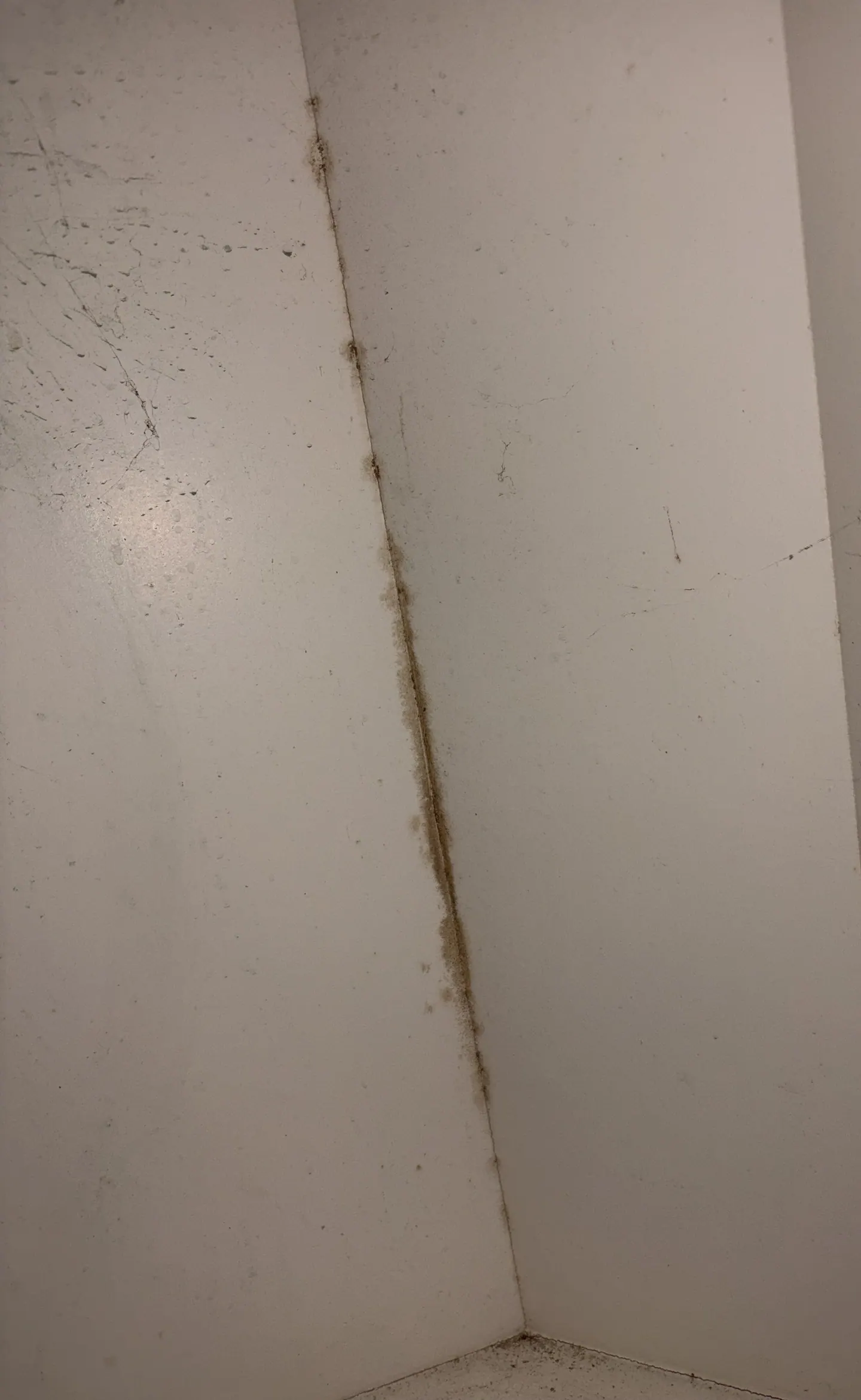
Mold Found Inside a Bathroom Vanity After a Persistent Musty Odor
A homeowner reported persistent musty odors in three adjoining or vertically stacked bathrooms. In Bathroom #1, an accessible rear vanity seam showed discoloration and its surface swab supported fungal growth. Its air sample contained more than 8,000 Aspergillus/Penicillium-like spores/m³, unlike the other two bathrooms tested. The specific moisture source was not confirmed.
View Case Study →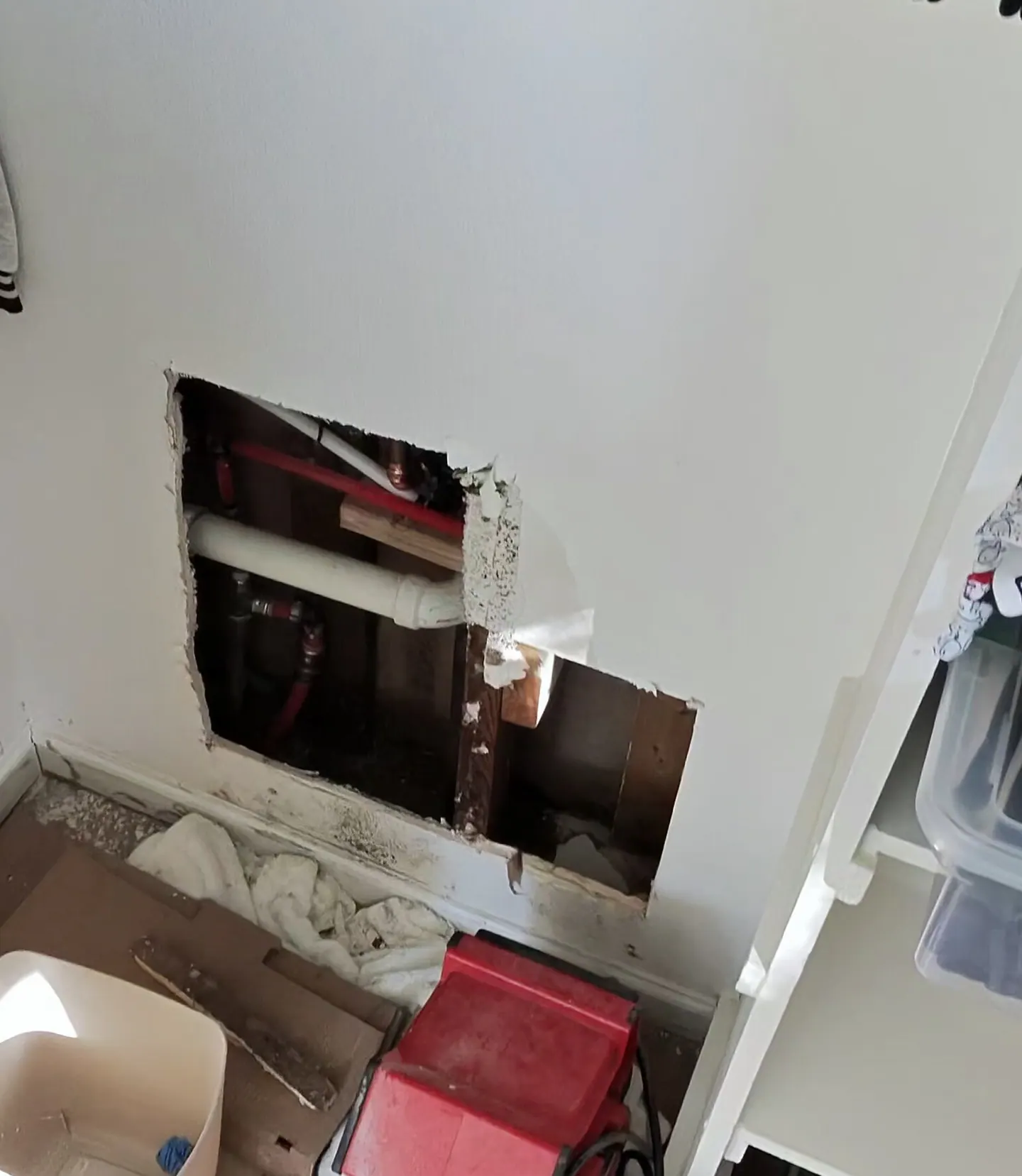
Mold Found Inside a Wall After a Plumbing Leak in Farmers Branch
A Farmers Branch homeowner requested a limited mold assessment after a reported plumbing leak affected a wall shared by a guest bathroom and two closets. The leak had reportedly been repaired, but existing repair openings exposed stained wallboard and framing. A swab through the guest bedroom closet opening supported fungal growth on sampled material. Separate ceiling and former exterior-wall concerns had different, more limited findings.
View Case Study →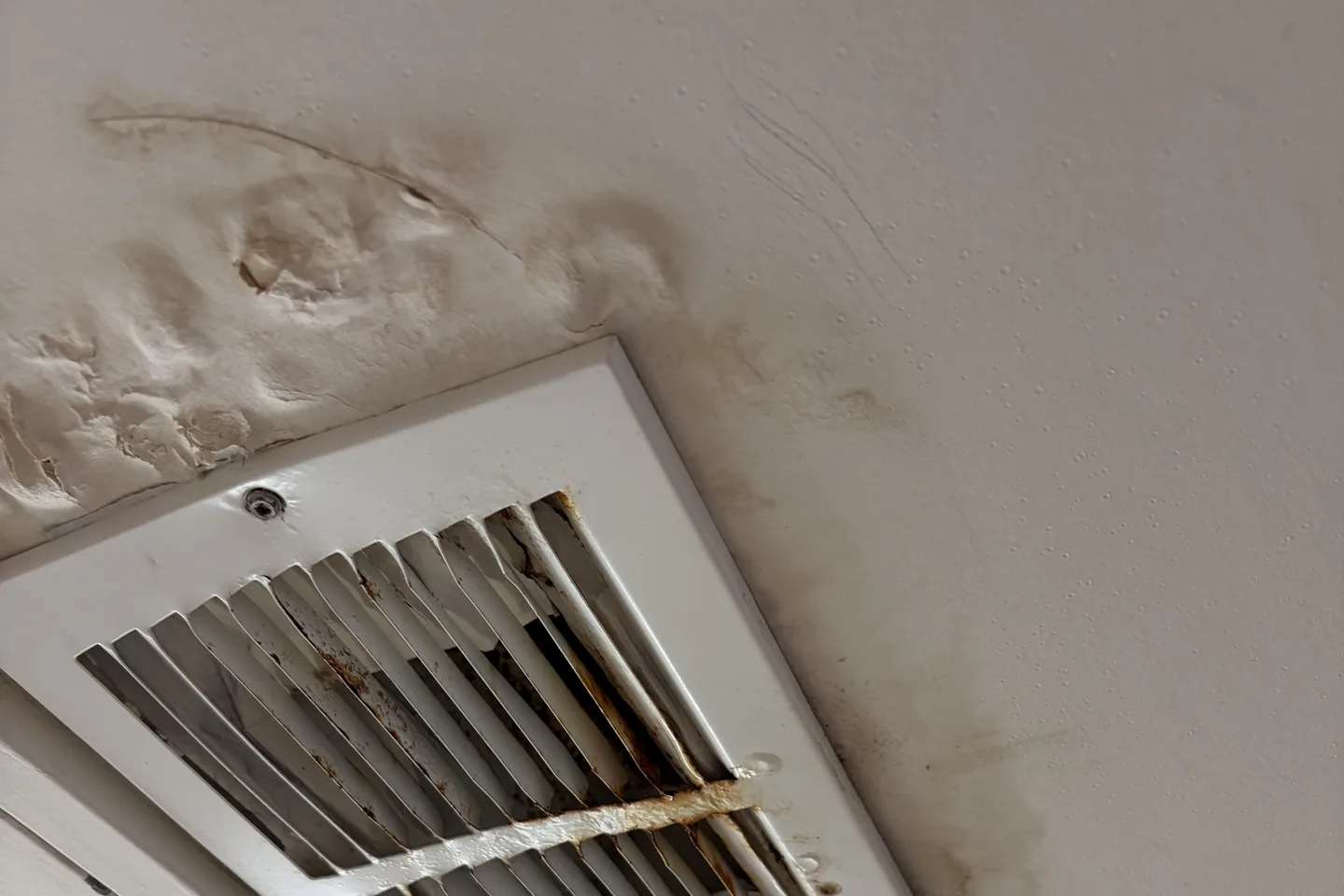
Active HVAC Leak and Wet Ceiling in a Dallas Bathroom
A Dallas property owner requested a limited mold assessment after tenants raised concerns about two bathrooms. The top-floor bathroom had a reported history of HVAC-related water leakage and prior repair attempts. During the assessment, water was actively dripping from a ceiling supply register beside the ceiling-mounted air handler, and surrounding drywall was wet, stained, blistered and bubbling. Comparative moisture responses were much higher by the register than at a same-ceiling reference area. No visible mold was observed on accessible bathroom surfaces, and indoor air samples were below the outdoor reference. The ceiling cavity and concealed materials were not opened.
View Case Study →Mold Found Inside a Bathroom Exhaust Duct in Grand Prairie
A homeowner requested evaluation of suspected mold in two bathroom shower areas and inside a downstairs bathroom exhaust vent. Surface samples from the upstairs shower, downstairs shower, and exhaust duct returned Minor fungal findings in the shower samples, which were not interpreted as active mold growth, and Heavy Cladosporium with Moderate hyphal fragments on the sampled interior duct surface.
View Case Study →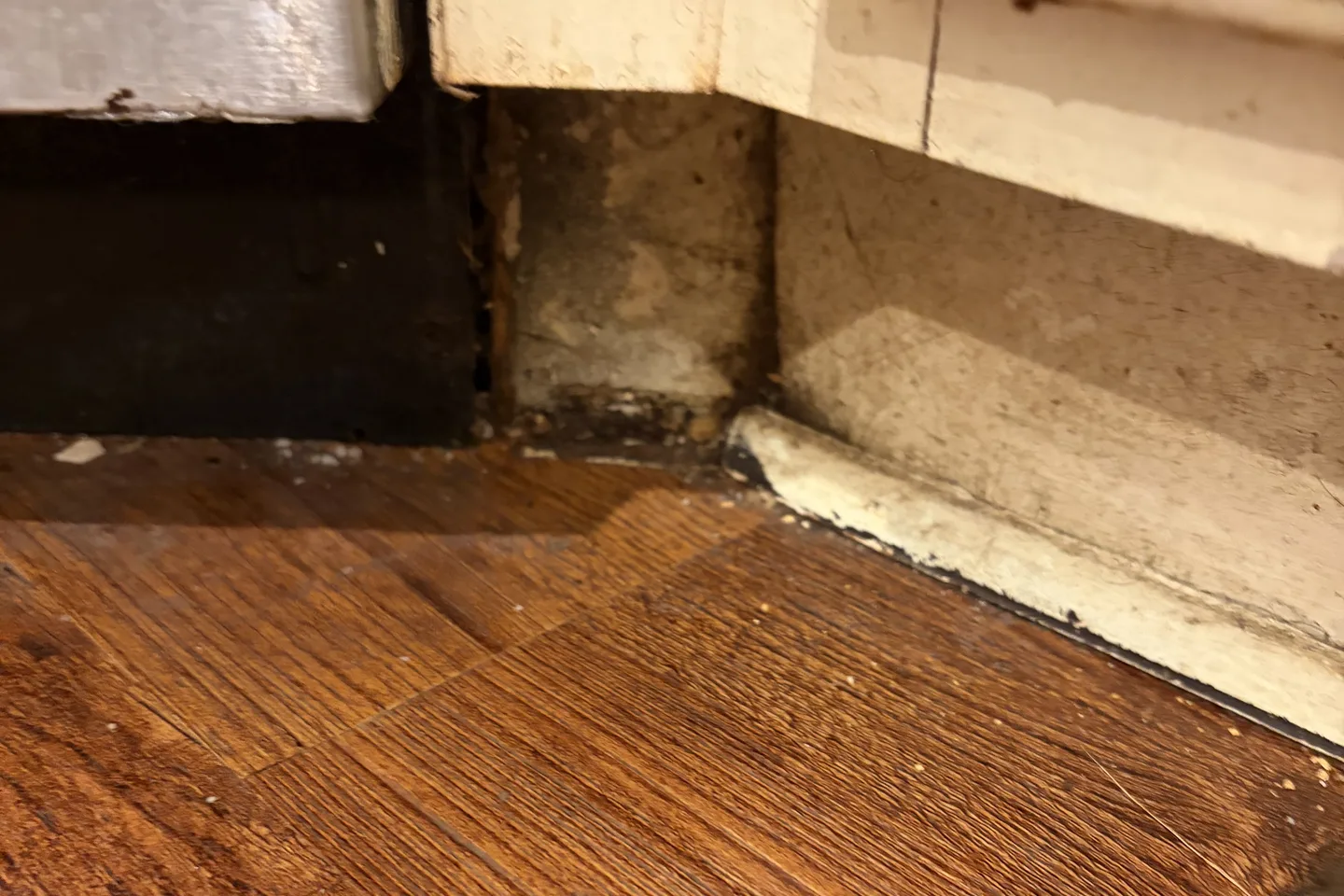
Mold Found Behind a Kitchen Toe-Kick From a Dishwasher Leak
A Frisco homeowner requested a limited mold assessment because of a musty odor near the kitchen sink. No visible mold growth was observed on accessible surfaces inside the stained sink base cabinet. Immediately to the left of the sink, beside the dishwasher, a detached and deteriorated toe-kick was very wet and visibly discolored. An active dishwasher leak was observed, and a surface swab confirmed fungal growth on the toe-kick, including Heavy Aspergillus/Penicillium-like structures and Moderate Cladosporium. Concealed areas behind and beneath the dishwasher, beneath cabinetry and at the subfloor were not opened or evaluated.
View Case Study →