
- Location
- Dallas-Fort Worth, Texas
- Property type
- Residential
- Inspection type
- Limited mold assessment
- Primary concern
- Water-damaged bathroom sink cabinet and hidden growth beneath the cabinet floor
- Inspection
- October 2026
The Situation
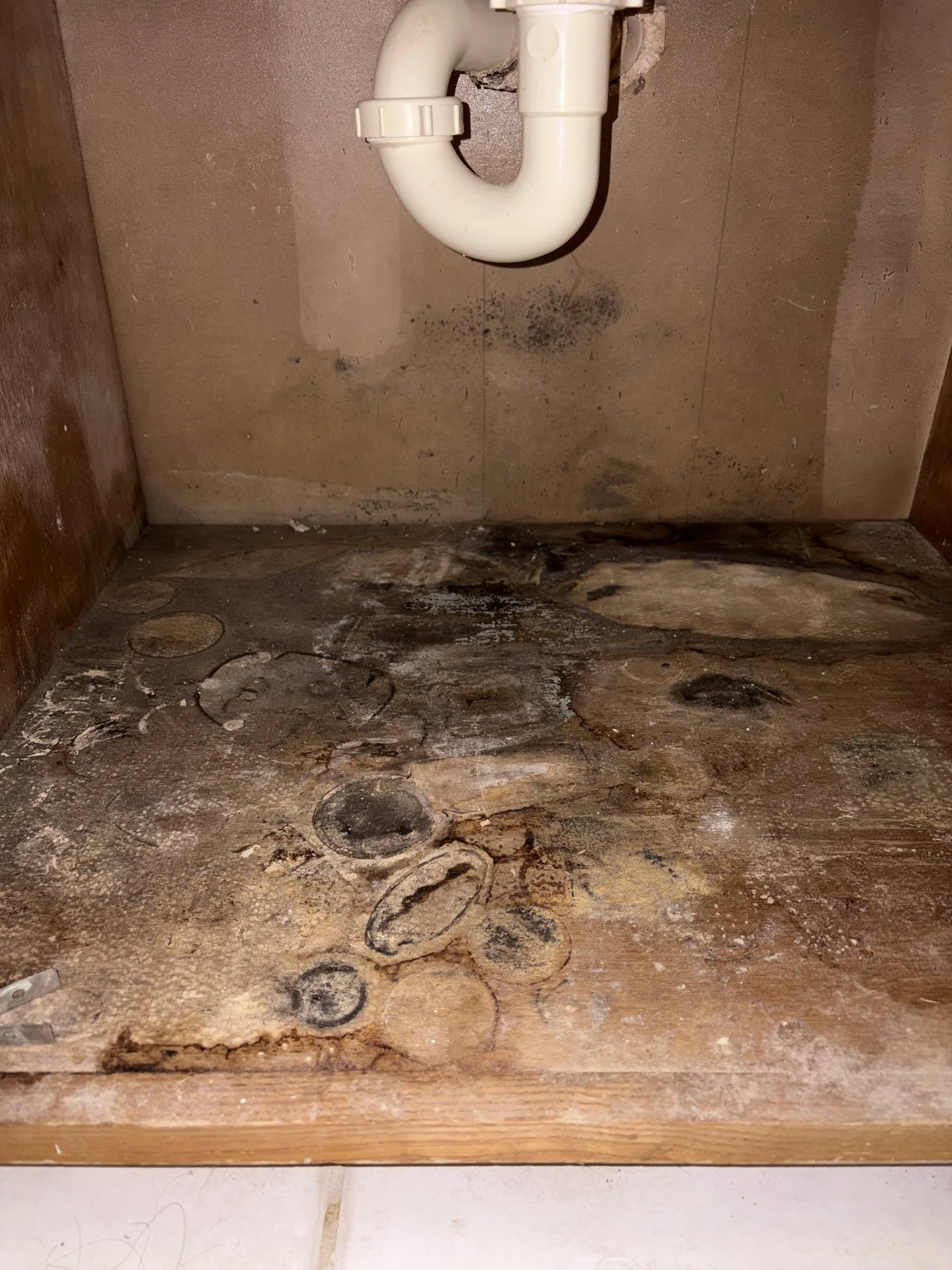
The homeowner requested a limited assessment after discovering a water leak beneath a bathroom sink cabinet. According to the homeowner, the leak occurred only when the sink was used.
The sink had reportedly not been used for several days before inspection. Despite that history, the cabinet floor, toe kick and cabinet base were still visibly wet.
What Was Inspected
- Only the bathroom sink cabinet, cabinet floor, toe kick / cabinet base, adjacent floor covering and concealed cavity beneath the cabinet floor were assessed. No other rooms or areas were inspected or sampled.
- Methods included visual inspection, comparative Extech moisture-meter screening, one cabinet-floor surface swab, one 10-liter concealed-cavity spore-trap air sample and borescope inspection.
- One small hole was drilled through the cabinet floor for borescope viewing and cavity air sampling. Apart from that hole, no materials were removed, opened or demolished.
- No outdoor reference air sample or unaffected moisture reference reading was documented. The specific plumbing failure was outside the scope of the mold assessment.
What We Observed
The cabinet floor remained visibly wet and showed extensive staining, swelling, delamination and dark and light discoloration. A metal bowl had been placed beneath the plumbing.
Suspected mold-like discoloration was also visible on the lower back panel below the drain trap, cabinet base, toe kick and adjacent flooring. Only the cabinet-floor surface was directly swabbed.
A small drilled opening allowed limited borescope viewing beneath the cabinet floor and collection of a cavity air sample. Suspected growth was observed on the underside of the cabinet floor; the entire concealed cavity was not inspected.
The Cabinet Was Still Wet Days After the Sink Was Last Used
The homeowner reported that the leak occurred only while the sink was in use and that the sink had not been used for several days. At inspection, the cabinet floor, toe kick and cabinet base were still visibly wet.
The cabinet floor showed heavy water staining, swelling, delamination and visible discoloration. A metal bowl beneath the plumbing was documented, but its presence did not diagnose a specific plumbing component.
The reported leak beneath the sink had not yet been specifically diagnosed.
Visible Discoloration Extended Beyond One Surface
Suspected mold-like discoloration was observed at multiple water-damaged cabinet surfaces, while laboratory confirmation came from the cabinet-floor sample.
Other discolored locations included the lower back panel below the drain trap, cabinet base, toe kick and adjacent flooring. Those locations were not individually swabbed and should not all be described as laboratory-confirmed mold.
Borescope Inspection Revealed Suspected Growth Beneath the Cabinet Floor
One small access hole was drilled through the cabinet floor and used for both borescope viewing and cavity air sampling. Apart from that hole, no materials were removed, opened or demolished.
Suspected growth was observed on the underside of the cabinet floor within the limited borescope field of view. This was not an inspection of the entire cavity, subfloor or adjacent wall cavity.
What Caused the Water Damage?
The leak was associated with sink use according to the homeowner, but the specific plumbing failure was outside the scope of the mold assessment.
A qualified plumber was recommended to locate and repair the leak. The assessment did not identify a P-trap, supply line or drain fitting as the confirmed failed component.
Moisture / Building Conditions
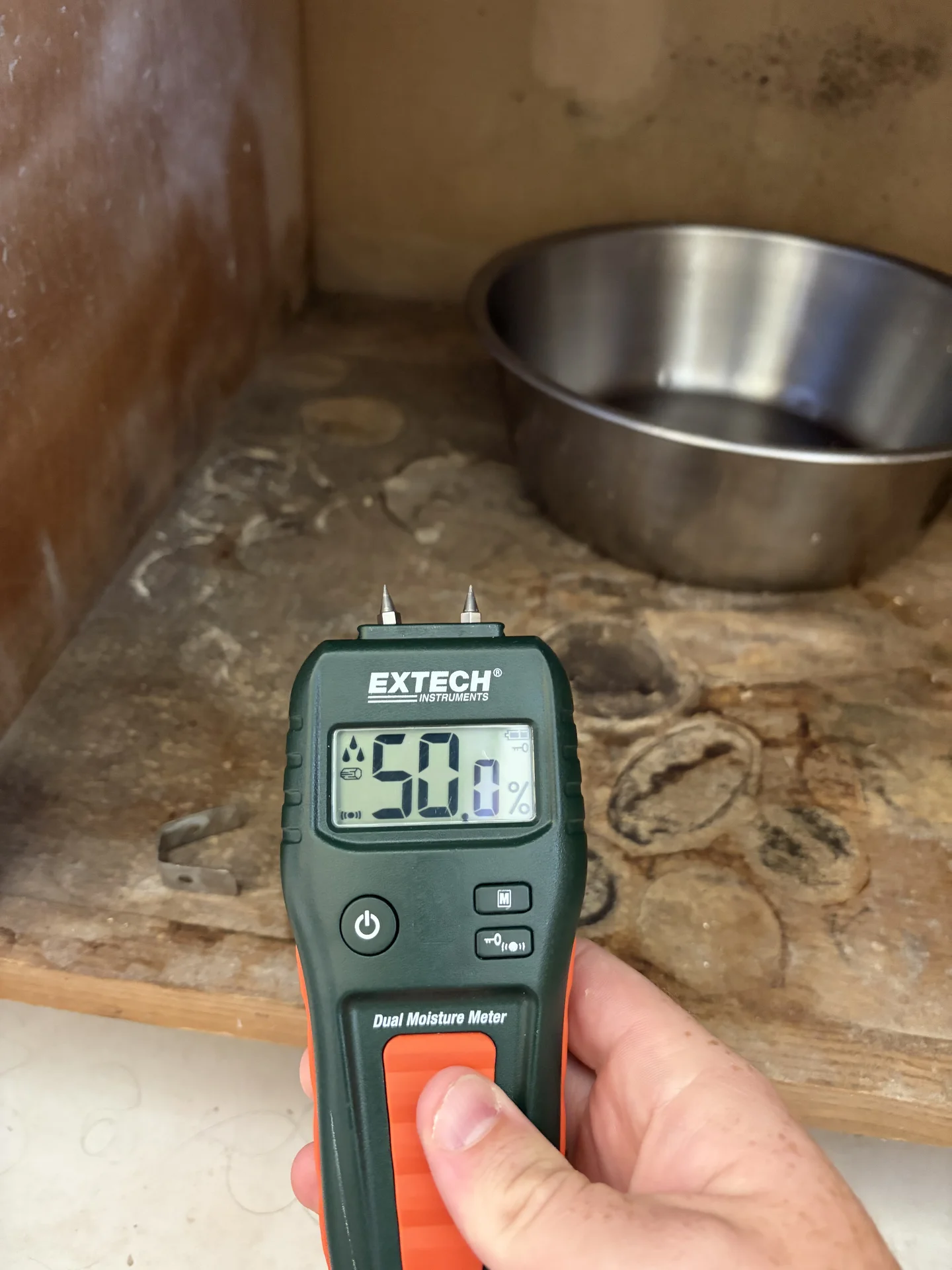
Cabinet floor: 50.0 comparative moisture response — the highest recorded response.
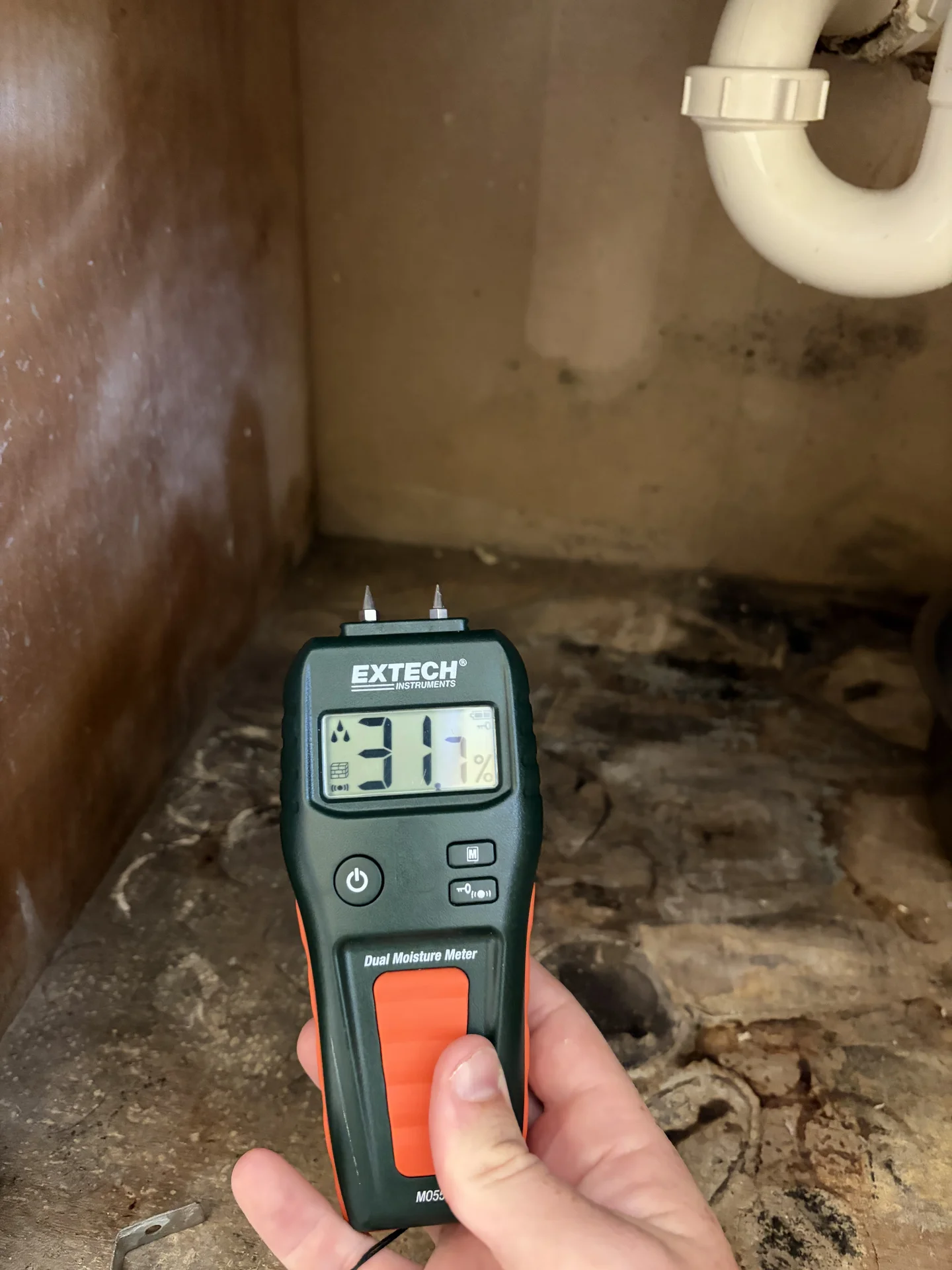
Cabinet floor: 31.7 comparative moisture response.
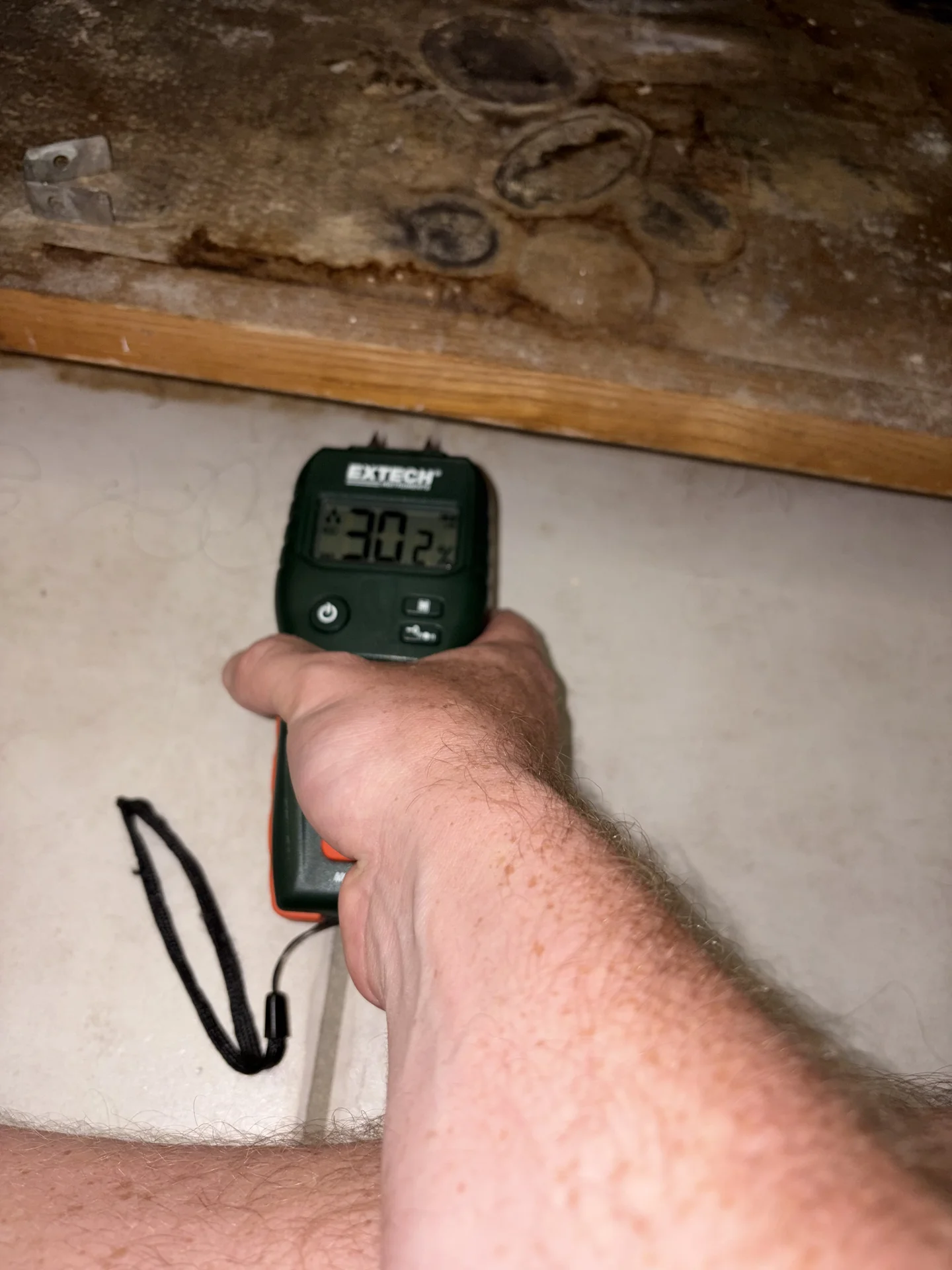
Toe kick / cabinet base: 30.2 comparative moisture response.
No unaffected reference reading was documented. These Extech readings were consistent with a moisture anomaly in visibly water-damaged materials, but do not establish exact moisture content, depth or location within the cabinet/floor assembly.
Sampling Performed
- Surface swab; direct microscopic examination — Bathroom sink cabinet floor: Only the cabinet-floor surface was directly swabbed.
- Spore trap; 10-liter concealed-cavity air sample — Cavity beneath bathroom sink cabinet floor: Collected through the small drilled cabinet-floor access hole; no outdoor reference sample was collected.
Cabinet-Floor Surface Swab: Direct Microscopic Examination
| Sample | Finding | Reported result | Context |
|---|---|---|---|
| Bathroom sink cabinet floor | Chaetomium | Heavy | |
| Bathroom sink cabinet floor | Hyphal fragments | Heavy | |
| Bathroom sink cabinet floor | Alternaria | Moderate | |
| Bathroom sink cabinet floor | Non-specified spore | Moderate | |
| Bathroom sink cabinet floor | Aspergillus/Penicillium-like | Minor | |
| Bathroom sink cabinet floor | Yeast-like fungi | Minor | |
| Bathroom sink cabinet floor | Arthrosporic fungi | Minor |
Concealed Cabinet Cavity: 10-Liter Spore-Trap Air Sample
| Sample | Finding | Reported result | Context |
|---|---|---|---|
| Beneath bathroom sink cabinet floor | Aspergillus/Penicillium-like | >76,000 spores/m³ | Raw count: >100; counting limit reached |
| Beneath bathroom sink cabinet floor | Chaetomium | 890 spores/m³ | Raw count: 3 |
| Beneath bathroom sink cabinet floor | Yeast-like fungi | 2,400 structures/m³ | Raw count: 8 |
| Beneath bathroom sink cabinet floor | Myxomycetes/Periconia/Smut/Rust | 600 spores/m³ | Raw count: 2 |
| Beneath bathroom sink cabinet floor | Cladosporium | 300 spores/m³ | Raw count: 1 |
| Beneath bathroom sink cabinet floor | Total fungal | >80,000 structures/m³ | Counting limit reached; actual concentration may have been higher |
| Beneath bathroom sink cabinet floor | Debris rating | Trace |
What the Heavy Surface Results Mean
The laboratory defines Heavy as more than 3 fungal structures per field of view. Heavy Chaetomium and Heavy hyphal fragments, together with visible water damage, discoloration and ongoing wet conditions, were interpreted as consistent with active fungal growth on the sampled cabinet-floor surface.
The surface result applies to that sampled location, not every cabinet surface or concealed area.
Why Chaetomium Mattered
Chaetomium is commonly associated with persistently wet cellulose-containing materials such as wood products and paper-facing materials.
Here, Heavy Chaetomium was identified on a cabinet floor that was visibly swollen, delaminated and still wet. This association does not establish exactly how long the leak existed and is not a medical or health-risk conclusion.
The Concealed Cabinet Cavity Showed Strong Fungal Amplification
The 10-liter spore-trap sample beneath the cabinet floor contained more than 76,000 Aspergillus/Penicillium-like spores per cubic meter and more than 80,000 total fungal structures per cubic meter. Chaetomium was also detected at 890 spores/m³.
The report interpreted the combined high reported cavity concentrations, Chaetomium presence, Trace debris rating, borescope-visible suspected growth and Heavy Chaetomium on the adjacent cabinet-floor surface as consistent with fungal amplification inside the concealed cabinet cavity.
This was a cavity sample, not a room-air or whole-home assessment. It did not establish visible growth throughout the cavity or conditions in the subfloor or adjacent wall.
Why Trace Debris Mattered
The cavity sample had a Trace debris rating, indicating that fungal counts were only minimally affected by background non-fungal particles.
This strengthens confidence that the very large reported concentration was not simply associated with a heavily obscured or occluded sample. It does not provide perfect analytical certainty or remove the sampling and access limitations.
What the Findings Suggested
Within the limited assessment, findings were consistent with mold growth associated with water damage at the bathroom sink cabinet. Evidence included visibly wet materials, staining, swelling, delamination, suspected discoloration, Heavy Chaetomium and Heavy hyphal fragments on the sampled cabinet floor.
Borescope-observed suspected growth, >76,000 Aspergillus/Penicillium-like spores/m³ and Chaetomium in cavity air supported the report's conclusion of strong fungal amplification inside the concealed cabinet cavity. No outdoor-baseline comparison was made.
Remediation of the affected cabinet and related materials appeared warranted. The concealed extent beyond the inspected cabinet area and the exact plumbing failure remained unknown. Stachybotrys was not reported in either sample.
Remediation Planning and the MAC Handoff
Within the limited assessment, mold remediation of the affected cabinet and related materials appeared warranted. The assessment data were referred for formal remediation-protocol development by a licensed Texas Mold Assessment Consultant.
The assessor operated as a Texas Mold Assessment Technician. The licensed Mold Assessment Consultant must prepare the formal protocol; this case study does not prescribe containment dimensions, demolition quantities, engineering controls, clearance criteria or removal procedures.
Recommendations
- Do not use the sink until a qualified plumber locates and repairs the leak.
- Engage a licensed Texas Mold Assessment Consultant to prepare the remediation protocol.
- Have corrective work performed by a licensed mold-remediation contractor under that protocol.
- Do not disturb, clean, demolish or remove affected cabinet or flooring materials in an uncontained manner before the protocol is issued.
- Keep cabinet doors closed and limit activity around the area.
- If additional suspected mold is exposed, stop work, document the condition and contact the Mold Assessment Consultant before proceeding.
- If the project becomes TDLR-regulated, complete independent post-remediation assessment and clearance.
- Determine whether asbestos, lead-based paint or other hazardous-material requirements apply before disturbing flooring, adhesive, cabinet materials or painted materials.
- After repair, maintain indoor relative humidity below 60%.
- Periodically check under-sink areas for future leaks.
What Homeowners Can Learn From This Case
A leaking sink can affect materials below and behind a cabinet that are not visible from the room. Here, the floor was visibly damaged and the cabinet remained wet days after reported sink use; surface sampling confirmed growth at the cabinet floor.
Limited borescope viewing showed suspected growth beneath that floor, and cavity sampling identified very high reported Aspergillus/Penicillium-like concentrations. Neither method established the full concealed extent.
Useful evaluation may include visual inspection, moisture screening, toe-kick and cabinet-base checks, viewing below the cabinet floor where access is possible, borescope inspection, targeted surface sampling and cavity air sampling where appropriate.
Questions About This Case
Can mold grow under a bathroom sink cabinet?
Yes. Sink leaks can wet cabinet flooring, toe kicks, back panels and concealed cavities. In this case, fungal growth was confirmed on the cabinet floor and suspected growth was seen with a borescope beneath it.
What kind of mold was found under the sink?
The surface swab returned Heavy Chaetomium and Heavy hyphal fragments. The concealed-cavity air sample contained more than 76,000 Aspergillus/Penicillium-like spores per cubic meter and 890 Chaetomium spores per cubic meter.
Can mold be hidden beneath the cabinet floor?
Yes. In this case, a borescope inserted through a small access hole showed suspected fungal growth on the underside of the cabinet floor.
Why was the cabinet still wet if the sink had not been used for several days?
The assessment documented that the cabinet materials remained visibly wet several days after the last reported sink use. The exact plumbing failure and full moisture pathway were not determined during the mold assessment.
Does >76,000 mean exactly 76,000 spores per cubic meter?
No. The greater-than symbol means the laboratory reached its counting limit. The actual concentration may have been higher.
Was there mold in the subfloor?
The subfloor was not evaluated, so mold there was neither confirmed nor ruled out.
Was Stachybotrys found?
Stachybotrys was not reported in the surface or cavity samples from this assessment.
Can a small sink leak create a major hidden mold problem?
Potentially. Repeated or prolonged moisture can affect porous cabinet materials and concealed cavities. In this case, the cabinet was visibly water damaged and the concealed cavity showed strong fungal amplification.
Related Services
Leak Under Your Bathroom Sink?
Water can remain trapped in cabinet materials and concealed spaces even after a sink has not been used for several days. Mold Testing Dallas can evaluate accessible water damage and concealed areas where appropriate.
Schedule a Mold InspectionInspection performed by Ethan Wright, TDLR Licensed Mold Assessment Technician (MAT #1589).
Related Real Inspection Cases
In another bathroom case, fungal growth was hidden beneath a jetted tub. Here, the source involved a leaking sink cabinet with surface-confirmed growth and strong fungal amplification in the concealed cavity below. These are separate assessments; the jetted-tub case's Stachybotrys results do not apply to this cabinet case. Other related cases illustrate different cabinet, appliance and concealed-wall investigations, not findings at this property.
Hidden Mold Found Inside Wall Cavities in a Dallas Home
A Dallas homeowner requested a limited assessment after concerns about possible concealed mold and prior water-damage conditions. Occupied-room air samples were below the outdoor reference, while two concealed wall cavities had substantially different findings. One cavity showed moisture abnormalities, deteriorated finishes and apparent growth by borescope; a second cavity returned more than 55,000 total fungal structures per cubic meter when re-sampled after its first sample was occluded. An upstairs storage area also showed moisture and apparent growth.
View Case Study →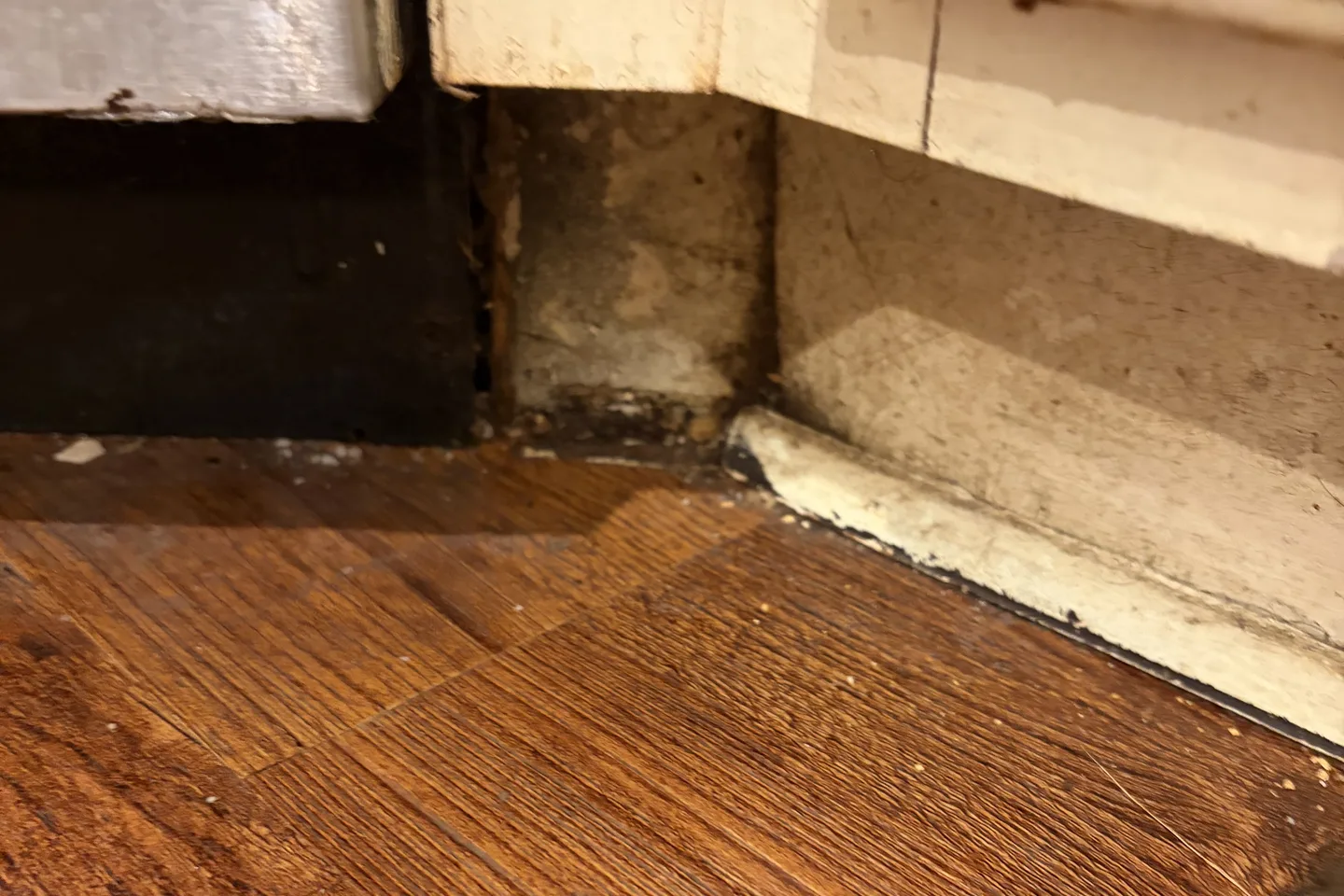
Mold Found Behind a Kitchen Toe-Kick From a Dishwasher Leak
A Frisco homeowner requested a limited mold assessment because of a musty odor near the kitchen sink. No visible mold growth was observed on accessible surfaces inside the stained sink base cabinet. Immediately to the left of the sink, beside the dishwasher, a detached and deteriorated toe-kick was very wet and visibly discolored. An active dishwasher leak was observed, and a surface swab confirmed fungal growth on the toe-kick, including Heavy Aspergillus/Penicillium-like structures and Moderate Cladosporium. Concealed areas behind and beneath the dishwasher, beneath cabinetry and at the subfloor were not opened or evaluated.
View Case Study →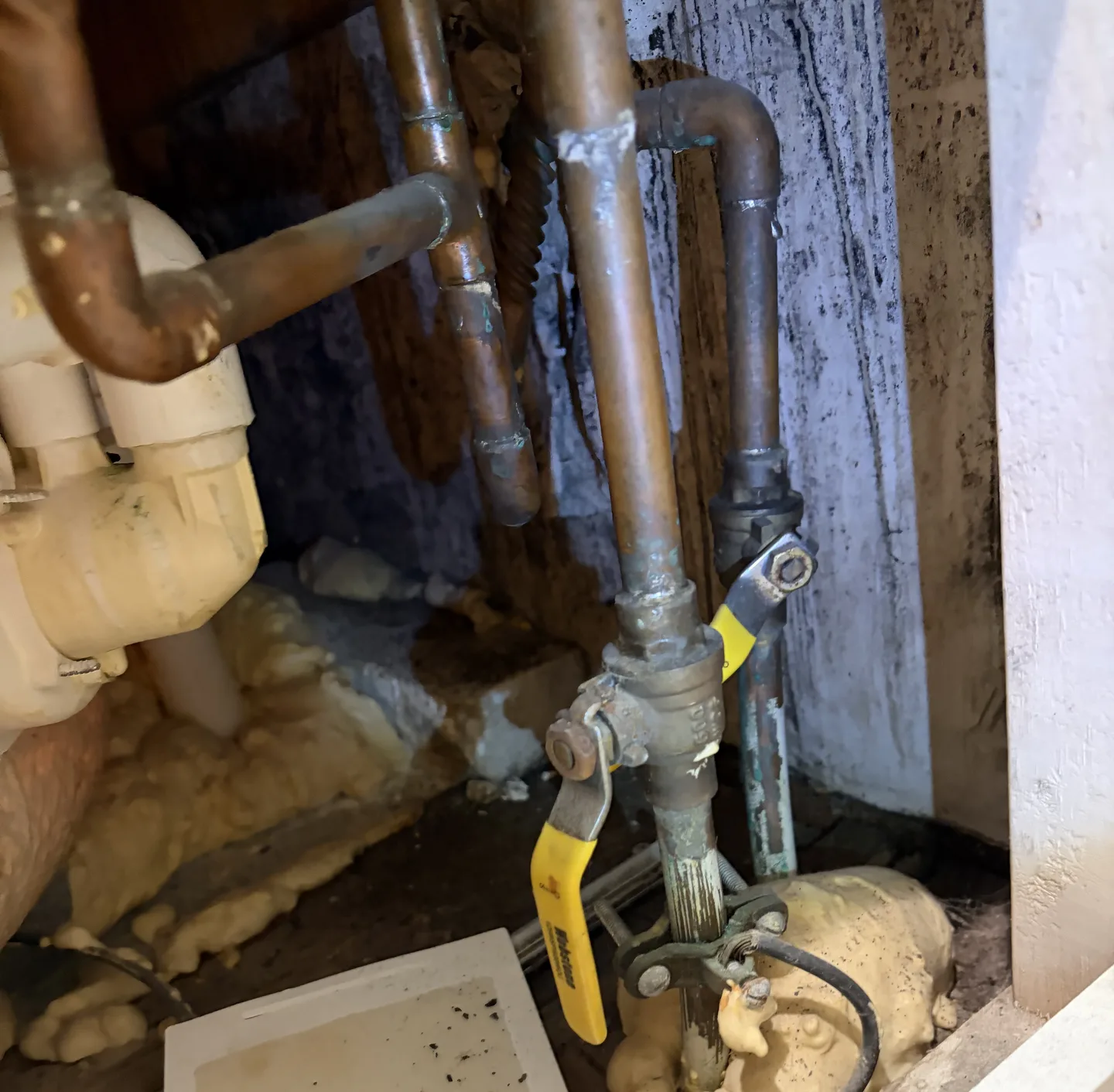
Hidden Mold Found Beneath a Jetted Bathtub
A homeowner requested a limited mold assessment of a master bathroom drop-in jetted tub and an upstairs bathroom. Through an existing faucet-end access panel, the assessor observed dark growth on concealed wall surfaces and framing behind the supply plumbing. A surface swab returned Heavy Stachybotrys and Moderate hyphal fragments, and Stachybotrys was detected in master-bath air. Growth was confirmed at the faucet-end area; all cavity-wall surfaces not visible from the opening remained suspected, not confirmed. After the initial assessment, a contractor reported an office-closet moisture anomaly at the wall shared with the shower and supplied photographs showing apparent crawlspace subfloor water damage. Mold Testing Dallas did not personally observe or independently measure those later conditions. The water source remained unconfirmed, with both shower and tub plumbing requiring investigation.
View Case Study →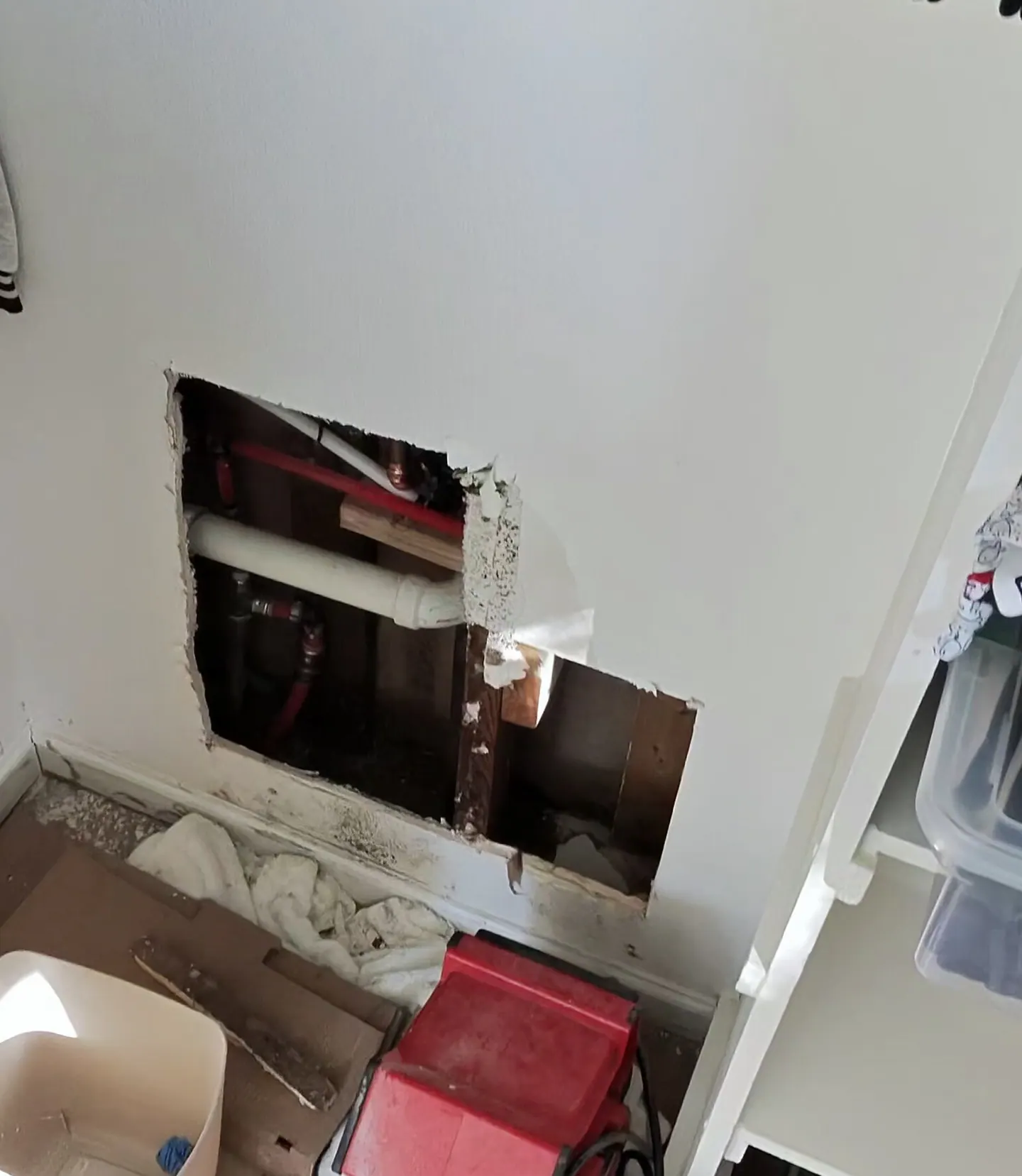
Mold Found Inside a Wall After a Plumbing Leak in Farmers Branch
A Farmers Branch homeowner requested a limited mold assessment after a reported plumbing leak affected a wall shared by a guest bathroom and two closets. The leak had reportedly been repaired, but existing repair openings exposed stained wallboard and framing. A swab through the guest bedroom closet opening supported fungal growth on sampled material. Separate ceiling and former exterior-wall concerns had different, more limited findings.
View Case Study →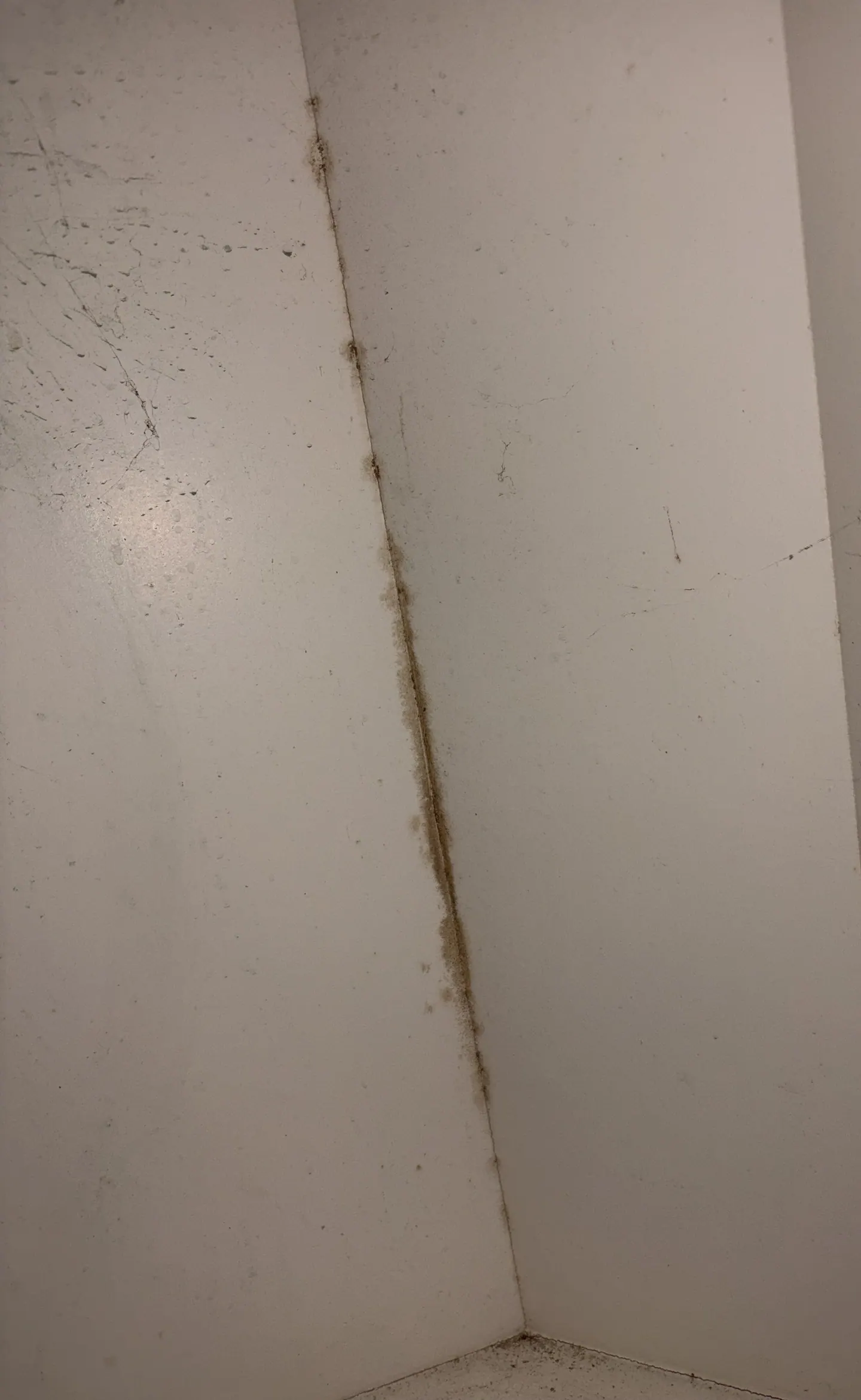
Mold Found Inside a Bathroom Vanity After a Persistent Musty Odor
A homeowner reported persistent musty odors in three adjoining or vertically stacked bathrooms. In Bathroom #1, an accessible rear vanity seam showed discoloration and its surface swab supported fungal growth. Its air sample contained more than 8,000 Aspergillus/Penicillium-like spores/m³, unlike the other two bathrooms tested. The specific moisture source was not confirmed.
View Case Study →
Hidden Mold Concern After an Undetected Water Leak in a Dallas Home
A Dallas homeowner requested an assessment after several past water events, including a master-closet leak that reportedly went undetected for a time and left stored belongings with visible mold. By inspection, the belongings and flooring were gone, the slab was exposed, and no visible mold appeared on accessible master-closet surfaces. A 5-liter air sample from the previously affected corner had the highest fungal finding among four sampled wall cavities. Two other 5-liter cavity samples had no mold detected. The closet wall was not opened, so the condition of concealed materials remained undetermined.
View Case Study →